

Carl Koller
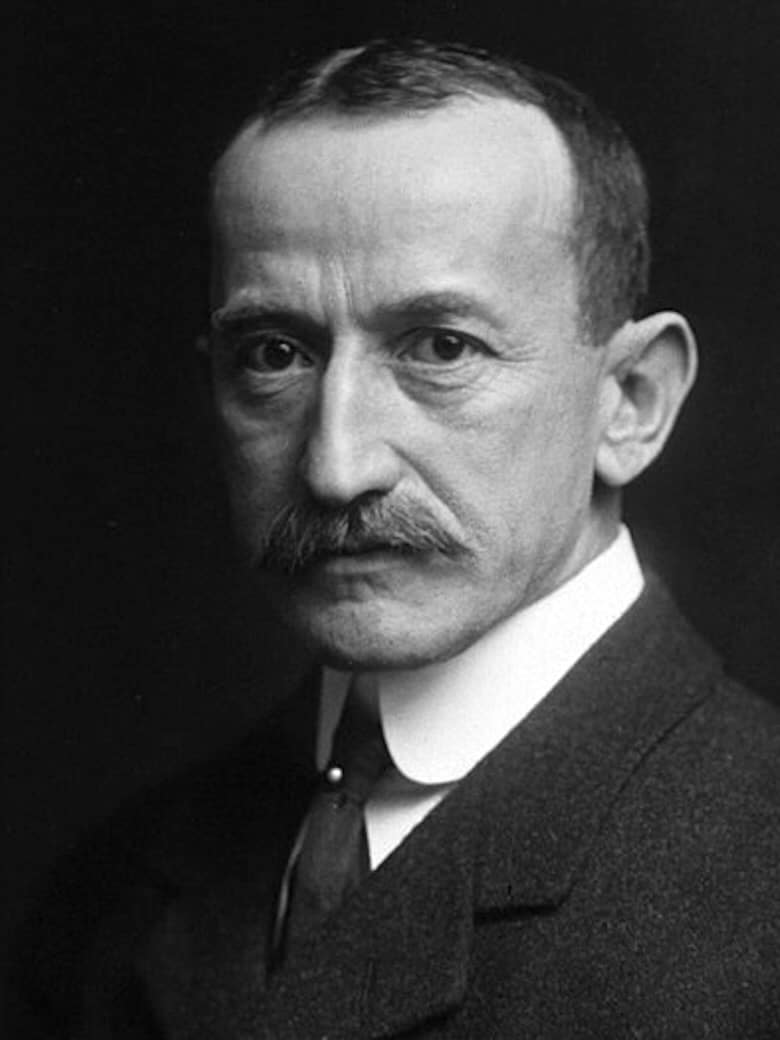
Carl (Karl) Koller (1857-1944) was an Austrian-born American ophthalmologist
Koller transformed surgery and medicine by making reliable local anaesthesia possible. Koller attempted to abolish ocular pain and reflexes without general anaesthesia through simple experiments with cocaine.
In September 1884, Koller demonstrated that topical cocaine could produce complete, painless insensibility of the cornea and conjunctiva, allowing ophthalmic procedures to be performed without narcosis. His demonstrations rapidly changed operative practice and established cocaine as the first practical local anaesthetic for clinical use. The success of topical cocaine immediately encouraged broader injection-based regional techniques, helping to catalyse subsequent developments in nerve blockade.
Biographical Timeline
- Boirn December 3, 1857 in Schüttenhofen, Bohemia (now Sušice, Czech Republic).
- 1862 – Family moved to Vienna
- 1875–1876 – Began law studies then switched to medicine in Vienna.
- 1882 – Qualified (MD) and began hospital training. Worked in Salomon Stricker’s institute on embryology research.
- 1883 – Appointed assistant (Sekundararzt/medical assistant) at the II University Eye Clinic in the Vienna General Hospital.
- 1884 (Sep 15) – Experimental findings of cocaine ocular anesthesia presented at the Heidelberg Ophthalmological Society meeting.
- 1885 (Jan 6) – Challenged to a duel by Friedrich Zinner. Koller accepted with significant legal and professional ramifications legal proceedings. Koller left Vienna, undertook study travel and then took an assistant post in Utrecht (eye clinic; Donders), then London.
- 1888 (May) – Emigrated to the United States, sailing from Southampton on the fast steamer Saale and settled in New York.
- 1902 – Became an American citizen.
- Died on March 21, 1944 in New York City
Key Medical Contributions
Cocaine local anaesthesia (1884)
In early September 1884, Koller demonstrated that a few drops of 2% cocaine solution could produce complete, reversible corneal and conjunctival anaesthesia. He noted cocaine abolished pain and protective reflexes allowing invasive ocular manipulation without general anaesthesia. In animal experiments, “all reflexes… are eliminated,” and the cornea could be scratched, punctured, or cauterised without reaction for ~10 minutes.
He confirmed the effect in experiments on himself and his colleagues, noting a brief burning followed by marked reduction of sensation and reflexes within minutes, with pupillary changes occurring later but with preserved light reaction.
August Ritter von Reuss authorised Koller to begin clinical use of cocaine following successful laboratory and early patient testing. On September 11, 1884, von Reuss performed a cataract operation on a cocaine-anaesthetised eye, marking the transition from laboratory experimentation to clinical practice.
September 15, 1884 (Heidelberg): Koller was unable not attend the Ophthalmological Society meeting in person, and arranged for Josef Brettauer to present his work as a preliminary communication
October 17, 1884 (Vienna): Koller’s report was then presented to the Medical Society of Vienna.
The report was rapidly translated and republished internationally (e.g., Lancet), with practical operative details: e.g., foreign body extraction, pterygium, discission cataract, and even major procedures performed by von Reuss without narcosis using repeated instillation regimens (including 5% solutions for deeper procedures).
Controversies
The duel and leaving Austria (career-ending scandal vs antisemitism)
January 6, 1885: Archival legal material records that Friedrich Zinner challenged Koller to a duel and that Koller accepted. This triggered legal proceedings as duelling was prohibited, and ultimately to Koller’s emigration to the United States.
The incident was precipitated by an antisemitic insult with Zinner describing Koller as “mosisch” and “impudent Jew”. However the decisive reason for emigration was the duel’s professional and legal consequences, rather than antisemitism alone.
The Freud–cocaine “credit”
Sigmund Freud published on cocaine’s general effects in 1884 and worked closely with Koller. Many secondary narratives imply Freud played a role in “discovering” cocaine anaesthesia. A more balanced account would be that Freud was aware of cocaine’s local numbing effect, but he did not pursue it experimentally, instead he helped popularise interest in cocaine in Vienna. Koller later stated unequivocally that Freud had no role in initiating cocaine as a surgical local anaesthetic:
The facts are that neither Freud nor I discovered that cocaine is a local anesthetic. This was discovered by Dr. Albert Niemann, who extracted the potent principle from coca leaves in 1860.
Freud in his Autobiography regrets the fact that he passed by this great opportunity and gives full credit to me. The facts are that Freud did not have anything whatever to do with cocaine anesthesia… Historical untruths are very difficult to destroy.
Koller 1941
Major Publications
- Koller C. Vorläufiger Mitteilung über lokale Anästhesierung am Auges. Bericht über die 16. Versammlung der ophthalmologisrhen Gesellschaft. Heidelberg. Klinische Monatsblätter für Augenheilkunde 1884; 22: 60-63
- Koller C. Ueber die Verwendung des Cocain zur Anästhesirung am Auge. Wiener medizinische Wochenschrift 1884; 43:1276-1277; 44:1310-1311
- Koller C. On the use of cocaine for producing anæsthesia on the eye. Lancet. 1884; 124(3197): 990-992
- Koller C. On the determination of astigmatism with the ophthal-mometer (Javal-Schiotz). JAMA 1890;XV;(11):380-383.
- Koller C. A remarkable case of methyl-alcohol poisoning. JAMA 1910;LIV;(23):1866-1867.
- Koller C. Personal reminiscences of the first use of cocaine as a local anesthetic in eye surgery. Anesth Analg. 1928; 7(1): 9-11.
- Koller C. Preliminary report on local anesthesia of the eye. 1934;12;(4):473-474.
References
Biography
- Keys TE. Historical vignettes: Dr. Carl Koller 1857-1944. Anesth Analg. 1975 Mar-Apr;54(2):247
- Liljestrand G. Carl Koller and the development of local anesthesia. Acta Physiol Scand Suppl. 1967;299:1-30.
- Oeppen RS. Discovery of the first local anaesthetic–Carl Koller (1857-1944). Br J Oral Maxillofac Surg. 2003 Aug;41(4):243
- Markel H. Über coca: Sigmund Freud, Carl Koller, and cocaine. JAMA. 2011 Apr 6;305(13):1360-1.
- Goerig M, Bacon D, van Zundert A. Carl Koller, cocaine, and local anesthesia: some less known and forgotten facts. Reg Anesth Pain Med. 2012 May-Jun;37(3):318-24.
Eponymous terms
- Freud S. Über Coca. Centralblatt für die gesamte Therapie. 1885; 2: 289-314
- Knapp H. Cocaine and its use in ophthalmic and general surgery. 1897: 1-9
- Seelig MG. History of cocaine as a local anesthetic. JAMA 1941;117;(15):1284.
- Honegger H, Hessler H. Die Entdeckung der Lokalanästhesie durch Karl Koller. I [Discovery of local anesthesia by Karl Koller. I]. Klin Monbl Augenheilkd. 1970 Sep;157(3):428-38.
- Honegger H, Hessler H. Die Entdeckung der Lokalanänthesie . II. Die Freundschaft zwischen Karl Koller und Sigmund Freud [The discovery of local anesthesia. II. The friendship between Karl Koller and Sigmund Freud]. Klin Monbl Augenheilkd. 1970 Oct;157(4):569-78.
- Ruetsch YA, Böni T, Borgeat A. From cocaine to ropivacaine: the history of local anesthetic drugs. Curr Top Med Chem. 2001 Aug;1(3):175-82.
- dos Reis A Jr. Sigmund Freud (1856-1939) and Karl Köller (1857-1944) and the discovery of local anesthesia. Rev Bras Anestesiol. 2009 Mar-Apr;59(2):244-57.
- Goerig M. Aus dem Nachlass von Carl Koller: Aufzeichnungen zu seinen Experimenten mit Kokain [From the legacy of Carl Koller. Notations on his experiments with cocaine]. Anaesthesist. 2015 Jun;64(6):469-77.
Eponym
the person behind the name

BA MA (Oxon) MBChB (Edin) FACEM FFSEM. Emergency physician, Sir Charles Gairdner Hospital. Passion for rugby; medical history; medical education; and asynchronous learning #FOAMed evangelist. Co-founder and CTO of Life in the Fast lane | On Call: Principles and Protocol 4e| Eponyms | Books |