
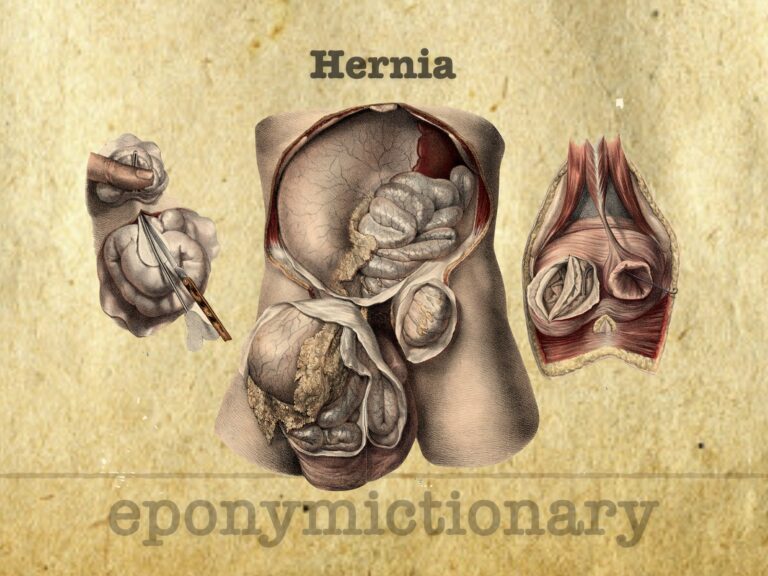
Eponymous Hernia
Eponymous hernias: clear definition, etymology, and a quick guide to types—Amyand, de Garengeot, Littre, Richter, Spigelian, Bochdalek, Morgagni.


Eponymous hernias: clear definition, etymology, and a quick guide to types—Amyand, de Garengeot, Littre, Richter, Spigelian, Bochdalek, Morgagni.

The coudé catheter has a curved tip and is derived from the French term “coudé” for “elbow.” Described by Louis Auguste Mercier in 1836
Eponymythology associated with signs, symptoms, investigation and management of ankle and talus injuries, fractures and conditions.
Authors eponymously associated with abdominal signs, symptoms, investigation and management of appendicitis

Haff disease is a rare syndrome characterized by unexplained myalgia, rhabdomyolysis and myoglobinuria, within 24 hours of freshwater fish or crustacean ingestion
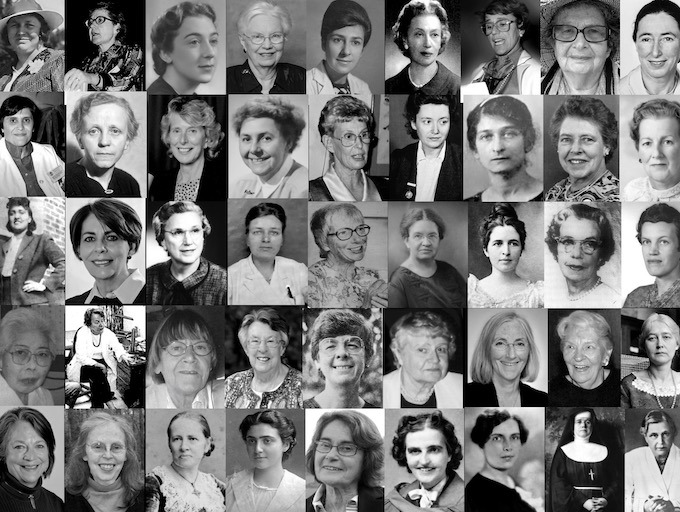
Hypothesis: Women are underrepresented in the realm of medical eponyms. Deep dive into eponymythology, and the roiling ocean of gender imbalance.
Eponymythology associated with signs, symptoms, investigation and management of foot injuries. Review of related eponyms; the person behind the name; their relevance today; and modern terminology

Chronological review of the clinical signs aortic regurgitation / insufficiency. 31 eponyms proposed by Ashrafian (2005) and Zacek (2018)

A brief history of the ECG and electrocardiography and the eponymous names behind the ECG/EKG...

Eponymythology of Second-degree Atrioventricular (AV) block including Luciani, Galabin, Wenckebach, Hay and Mobitz
Artists and anatomy through history. Was Leonardo Da Vinci the first Anatomist?

Walt Whitman’s poem sings the praises of life as a metaphor for the long and fascinating history of cardiopulmonary resuscitation...