

Charles Dotter
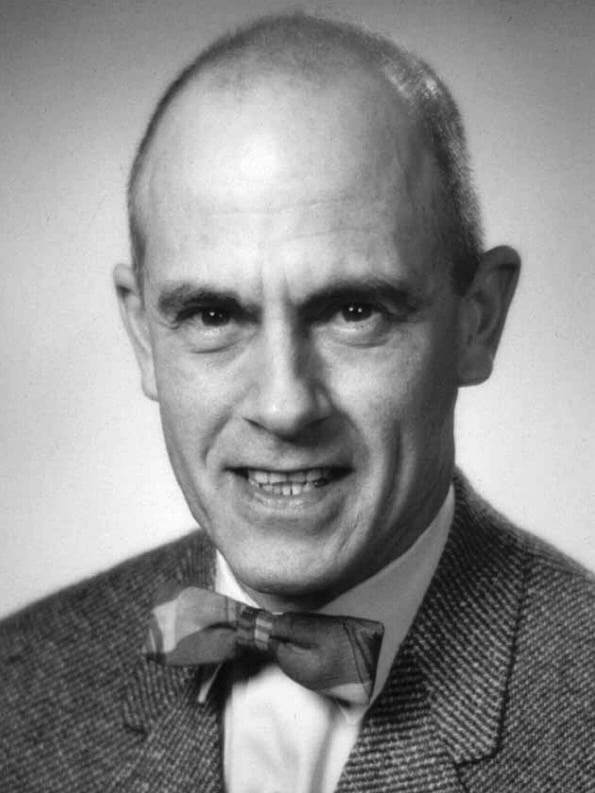
Charles Theodore Dotter (1920-1985) was an American radiologist
Long before “interventional radiology” became a discipline, Dotter treated angiography as a platform for action. Dotter reshaped what a catheter could do, moving from cardiopulmonary diagnosis and catheter-based physiology to ambitious programs in coronary imaging. His early work on balloon occlusion aortography reflected a technical boldness and a conviction that radiology had a responsibility not only to visualise disease, but to make new forms of treatment possible.
The turning point came in 1963–1964, when Dotter articulated and then demonstrated the “intraluminal operation.” In 1963 he publicly argued that the angiographic catheter should be more than a diagnostic tool; within months he and Melvin Judkins performed the first intentional percutaneous transluminal angioplasty, proving that obstructed arteries could be treated from within the lumen and foreshadowing modern endovascular therapy.
A key part of Dotter’s impact was concept-to-toolchain engineering. He imagined new catheter functions, then built the instruments to make them real. Contemporary accounts emphasise his rapid prototyping (often with improvised materials) and the importance of manufacturing partnerships that allowed catheter systems to be scaled and standardised for clinical use. His work quickly expanded beyond dilation into the wider endovascular toolkit with catheter-directed thrombolysis (streptokinase), embolisation methods, foreign-body retrieval, and early intraluminal scaffolding concepts.
Biographical Timeline
- Born June 14, 1920 in Boston, Massachusetts; raised in Freeport, Long Island.
- 1941 – BA, Duke University.
- 1944 – MD, Cornell
- 1944–1945 – Internship, US Naval Hospital, New York State (St Albans).
- 1940s – Radiology residency, New York Hospital; later staff/instructor then professor at Cornell
- 1952 – Appointed Professor and Chair of Radiology, University of Oregon Medical School (Portland); remained chair for 32 years.
- 1963 (June) – Publicly argued the catheter could be a therapeutic “surgical instrument” at the Czechoslovak Radiological Congress.
- 1964 (Jan 16) – Performed the first intentional percutaneous transluminal angioplasty with Melvin Judkins on a patient with superficial femoral stenosis and threatened limb loss.
- 1967–1969 – Developed axillary lymphadenopathy; later diagnosed with Hodgkin disease after night sweats and biopsy; continued working through radiotherapy.
- 1970 – Climbed the Matterhorn guideless after responding to therapy
- 1979–1980 – Major cardiac surgery and emergency surgery (coronary bypass; perforated duodenal ulcer); returned to work afterwards.
- Died February 15, 1985.
Medical Eponyms
Dotter technique (1964)
Percutaneous transluminal angioplasty (PTA) using progressively larger coaxial catheters to traverse and dilate an atherosclerotic stenosis/occlusion (the original “catheter dilatation” method, pre-balloon era).
Dotter dilatation set (1963–1964)
A manufactured kit of telescoping (coaxial) dilators/catheters designed for transluminal arterial dilatation. Developed after Dotter sketched plans for two telescopic catheters, which were then produced as the “Dotter dilatation set,” enabling the first PTA.
Key Medical Contributions
1949–1951: Catheter-based cardiopulmonary diagnosis and experimental physiology
Dotter’s earliest influential work was in cardiothoracic diagnosis and catheter-enabled physiology. In 1949 he co-reported congenital pulmonary artery aneurysm, and by 1951 he was using a purpose-designed cardiac catheter to model acute cor pulmonale experimentally—early evidence of his lifelong pattern: invent the tool, then use it to answer a clinical problem.
1958–1963: Coronary angiography program: balloon occlusion aortography
Dotter pursued a technically ambitious program to visualise the coronary circulation using balloon occlusion aortography, arguing that improved coronary imaging was a pressing responsibility. His 1958 Radiology paper described a double-lumen balloon catheter briefly inflated in the aorta during contrast injection; the images were striking, but the approach was overtaken once selective coronary intubation became practical.
1962: Flow-guided catheterisation
Dotter also advanced catheter navigation by describing flow-guided cardiac catheterisation. An important bridge between diagnostic angiography and later therapeutic catheter manoeuvres.
1963-1964: The intraluminal operation and first PTA
1963 (June) Dotter’s crucial conceptual leap was articulated publicly when he argued that the angiographic catheter should be used not only for diagnosis but as an active therapeutic tool. He framed the catheter as an instrument capable of intervention “used with imagination,” anticipating the entire discipline of interventional radiology and the later language of “endoluminal surgery.”
The angiographic catheter can be more than a tool for passive means of diagnostic observation; used with imagination, it can become an important surgical instrument.
Dotter 1963
Dotter’s defining clinical leap was treating occlusive disease from within the lumen. In 1963, he inadvertently demonstrated the principle when a catheter passed retrogradely through an occluded iliac artery, a case he reported at the same June 1963 congress.
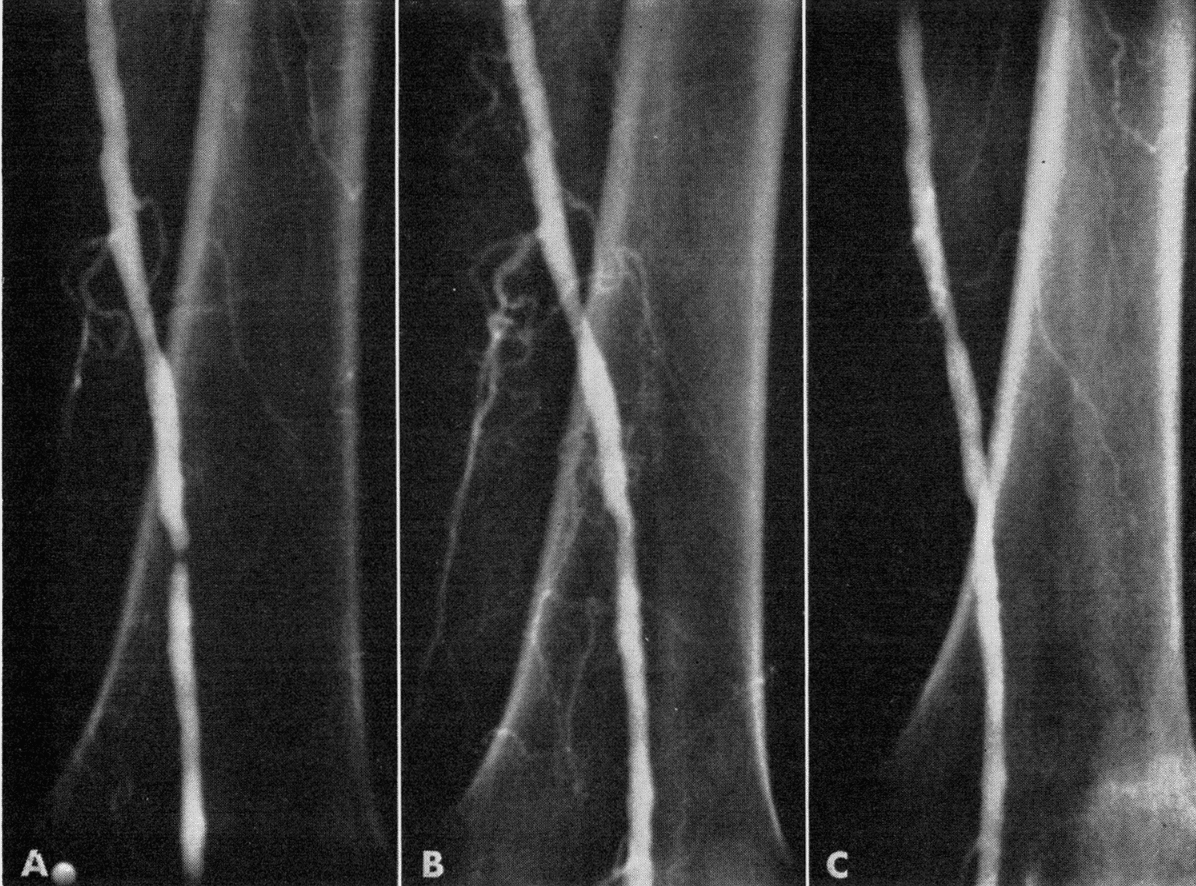
On 16 January 1964, Dotter and trainee Melvin Judkins performed the first intentional percutaneous transluminal angioplasty, using a wire guide and coaxial catheters to dilate a focal femoral lesion in Laura Shaw (aged 82), who had refused amputation; the limb reperfused immediately and the ulcer healed. This clinical “intraluminal operation” later gained wide surgical acceptance under the label “endoluminal surgery.”
1971–1975: The wider interventional toolkit: retrieval, embolization, thrombolysis
Dotter’s legacy also includes several “first-wave” catheter therapies that became core interventional radiology practice:
- Foreign-body retrieval (1971): transluminal extraction of catheter/guide fragments (29 collected cases) and GI foreign-body retrieval were reported the same year.
- Embolization (1971–1975): early work included vasoconstrictor infusion and embolization methods for GI bleeding, and later “instant” selective occlusion with isobutyl-2-cyanoacrylate (1975).
- Catheter-directed thrombolysis: Working closely with Josef Rösch, Dotter helped establish catheter-based pharmacologic therapy for vascular occlusion. His Radiology papers on streptokinase moved from broader thromboembolic treatment (1972) to the key concept of selective, low-dose clot lysis (1974), anticipating modern catheter-directed thrombolysis strategies that aim to maximise local efficacy while reducing systemic risk.
1983: Endovascular scaffolding: from coil grafts to expandable stents
Dotter also explored intraluminal “tube graft” concepts, starting with research into long-term patency of coil-spring endarterial tube grafts in animal arteries (1969). In the final phase of his career Dotter again pushed the device frontier, reporting a transluminally expandable nitinol coil stent graft (1983)
Major Publications
- Dotter CT, Steinberg I. The diagnosis of congenital aneurysm of the pulmonary artery; report of two cases. N Engl J Med. 1949 Jan 13;239(2):51-4
- Dotter CT, Lukas DS. Acute cor pulmonale; an experimental study utilizing a special cardiac catheter. Am J Physiol. 1951 Jan;164(1):254-62.
- Dotter CT, Frische LH, Hoskinson WS, Kawashima E, Phillips RW. Coronary arteriography during induced cardiac arrest and aortic occlusion. Arch Intern Med. 1959 Nov;104:720-9.
- Dotter CT, Frische LH. Visualization of the coronary circulation by occlusion aortography: a practical method. Radiology. 1958 Oct;71(4):502-24.
- Dotter CT, Straube KR. Flow guided cardiac catheterization. Am J Roentgenol Radium Ther Nucl Med. 1962 Jul;88:27-30.
- Dotter CT, Judkins MP. Transluminal treatment of arteriosclerotic obstruction. Description of a new technic and a preliminary report of its application. Circulation 1964; 30: 654-70
- Dotter CT. Cardiac catheterization and angiographic technics of the future. Background and current status of clinical catheter angiography. Cesk Radiol. 1965 Aug; 19(4): 217-236 [Czechoslovak Radiological Congress, Prague, 10 June 1963]
- Dotter CT, Rösch J, Seaman AJ, Dennis D, Massey WH. Streptokinase treatment of thromboembolic disease. Radiology. 1972 Feb;102(2):283-90.
- Dotter CT, Rösch J, Seaman AJ. Selective clot lysis with low-dose streptokinase. Radiology. 1974 Apr;111(1):31-7.
- Dotter CT, Buschmann RW, McKinney MK, Rösch J. Transluminal expandable nitinol coil stent grafting: preliminary report. Radiology. 1983 Apr;147(1):259-60.
References
Biography
- Friedman SG. Charles Dotter: interventional radiologist. Radiology. 1989 Sep;172(3 Pt 2):921-4.
- Payne MM. Charles Theodore Dotter. The father of intervention. Tex Heart Inst J. 2001;28(1):28-38.
- Linton O. Charles T. Dotter. J Am Coll Radiol. 2005 Nov;2(11):959-60.
- Taylor CP, Gunderman RB. Failing Up: Charles Dotter, the Father of Interventional Medicine. J Am Coll Radiol. 2021 Mar;18(3 Pt B):522-523.
Eponymous terms
- Kinney TB. Radiologic history exhibit. Charles T. Dotter: a pioneering interventional radiologist. Radiographics. 1996 May;16(3):697-707.
- Kostić J, Beleslin B, Nedeljković M, Ostojić M. [Pioneers of invasive cardiovascular medicine–Charles Theodore Dotter and colleagues: short historical review]. Srp Arh Celok Lek. 2014 Jan-Feb;142(1-2):131-7.
- Friedman SG. Charles Dotter and the fiftieth anniversary of endovascular surgery. J Vasc Surg. 2015 Feb;61(2):556-8.
- Behrendt CA. Generation of High Level Comparative Effectiveness Evidence and the Legacy of Charles T. Dotter. Eur J Vasc Endovasc Surg. 2024 Jan;67(1):165-166.
- Marco J, DE Biase C, Spadafora L, Barbato E, Capodanno D, Saia F, DE Rosa S, Asher E, Galli M, Bernardi M, Sabouret P. A tribute to the 60 years of angioplasty celebrating January 16th, 1964’s first angioplasty by Charles Dotter: voices from the past, messages to build the future. Minerva Cardiol Angiol. 2025 Apr 28.
- The first angioplasty – in 1964 – turned out to be a medical milestone. Cook Medical
Eponym
the person behind the name

BA MA (Oxon) MBChB (Edin) FACEM FFSEM. Emergency physician, Sir Charles Gairdner Hospital. Passion for rugby; medical history; medical education; and asynchronous learning #FOAMed evangelist. Co-founder and CTO of Life in the Fast lane | On Call: Principles and Protocol 4e| Eponyms | Books |