

Crawford W. Long
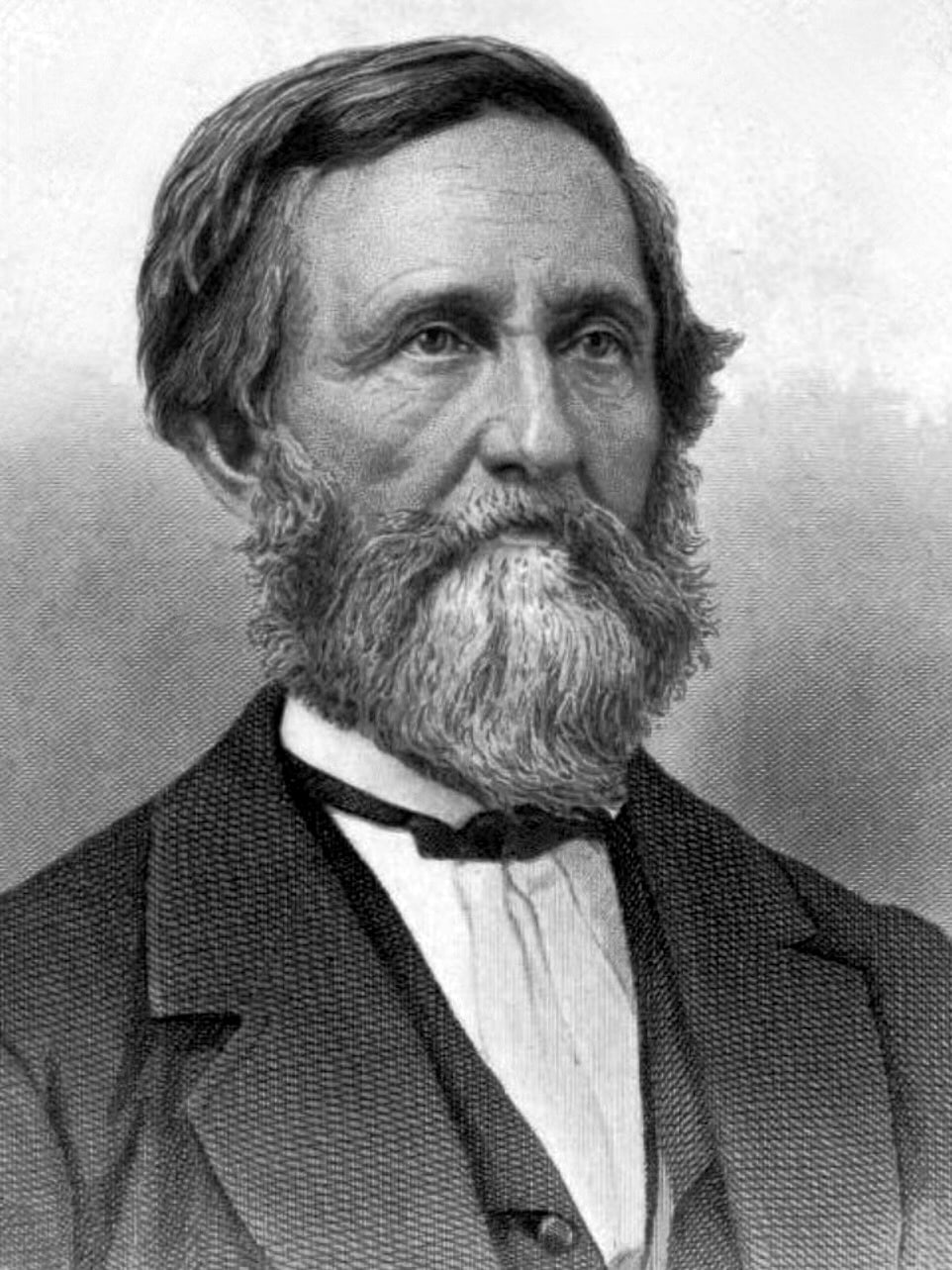
Crawford Williamson Long (1815-1878) was an American physician
Long is credited with the first surgical use of inhaled sulphuric ether to abolish pain. He performed a painless excision of a neck tumour in Jefferson, Georgia on March 30, 1842, with ether inhaled from a towel.
Concerned that apparent painlessness might reflect “imagination or mesmerism” rather than true anaesthesia, he performed simple controlled trials before announcing his work.
Long’s March 30 operation was commemorated in Winder, Georgia as the first Doctors’ Day observance in 1933. Later sanctioned federally as Public Law 101-473 which designated March 30, 1991 as National Doctors’ Day in the United States.
Biographical Timeline
- Born on November 1, 1815 in Danielsville, Georgia.
- 1829 – Entered Franklin College (University of Georgia) aged 14.
- 1835 – Graduated A. M. from Franklin College. Returned to Danielsville and served as principal of the town academy then “read medicine” with Dr Grant (Jefferson, GA).
- 1837 – Attended Transylvania University (Lexington, Kentucky)
- 1838 – Entered University of Pennsylvania Medical Department.
- 1839 – Awarded M.D. defending thesis: Functional Amaurosis
- 1841 – Settled in Jefferson, Jackson County, Georgia. Bought the practice of his former preceptor Dr Grant.
- 1841 – Introduced ether inhalation locally as an exhilarant (“ether frolics”) in Jefferson.
- 1842 (Mar 30) – First known use of sulphuric ether for surgical anaesthesia providing painless removal of a neck tumour from James M. Venable (ether on a towel).
- 1845 (Dec 17) – First use of obstetric ether. Family tradition describes ether use during birth of his second child Frances Long Taylor
- 1847 – Following reports of ether being administered in other location, Long began documenting his earlier work. He delayed public announcement while monitoring rival claims.
- 1848 – Invited to Augusta by Paul F. Eve to discuss priority and introduced to students as originator of practical anaesthesia.
- 1849 – Attended the Macon meeting that seeded Georgia’s state medical society; received encouragement from Eve to publish with affidavits. Published his account in the Southern Medical and Surgical Journal.
- 1850 – Moved with family to Atlanta for a year and developed a flourishing practice.
- 1851 – Relocated to Athens, Georgia; established practice and a drug business with family
- 1861–1865 – American Civil War period. Remained in Athens and served as surgeon to soldiers on both sides.
- Died June 16, 1878 in Athens, Georgia, reportedly after collapsing while attending a labouring patient.
Key Medical Contributions
Sulphuric ether anaesthesia (1841–1849)
In December 1841, Long substituted sulphuric ether for nitrous oxide for ‘inhalation’ at social gatherings. The ether was typically poured onto a cloth and breathed until insensible. Following these “ether frolics” Long noted that participants sustained falls and bruises yet reported little pain until recovery. This compelled him to “make an experiment in etherization“
Long progressed from amusement to clinical testing and on March 30, 1842 he removed a neck tumour from James M. Venable with ether inhaled from a towel. Witnesses later agreed it was painless. To exclude “imagination” or unusual pain tolerance, he later performed controlled comparisons removing tumours alternately with or without ether
- June 6, 1842 – Second Venable procedure under ether; slight late pain attributed to stopping ether early.
- September 9, 1843 – “Controlled” case. Three tumours removed “without, with, and without” ether. He found the pain was only abolished during etherisation.
- January 8, 1845 – Second “controlled” comparison. Amputation with vs without ether…
1849 – After reading reports of Morton’s “Letheon” (December 1846) he began to write, delayed briefly to see if any earlier claimant emerged, and finally published his ether operations with affidavits.
Major Publications
- Long CW. An account of the first use of Sulphuric Ether by Inhalation as an Anaesthetic in Surgical Operation. Southern Medical and Surgical Journal 1849; 5: 705-713
Honours and legacy (posthumous mini-timeline)
- 1879 (June 18) – The National Eclectic Medical Association passed a resolution recognising Long as the discoverer of anaesthesia.
- 1910 (April 21) – Monument erected in Jefferson, Georgia, on the public square facing the site of Long’s first ether operation.
- 1920 (August 14) – Long County, Georgia created with 403 square miles taken from part of Liberty County. Named for Dr. Crawford Williamson Long
- 1926 (March 30) – Long’s statue was unveiled in the U.S. Capitol as Georgia’s contribution to the National Statuary Hall Collection.
- 1933 (March 30) – First Doctors’ Day observance held in Winder, Georgia, initiated by Eudora Brown
References
Biography
- Hammonds WD, Steinhaus JE. Crawford W. Long: pioneer physician in anesthesia. J Clin Anesth. 1993 Mar-Apr;5(2):163-7
- Anaya-Prado R, Schadegg-Peña D. Crawford Williamson Long: The True Pioneer of Surgical Anesthesia. J Invest Surg. 2015;28(4):181-7.
- Madden M. Crawford Long. New Georgia Encyclopedia, 2018
- O’Brien R. Crawford W. Long, M.D. Discoverer of anaesthesia demonstrated on James M. Venables by the use of sulphuric ether at Jefferson, Jackson Co., Georgia, March 30th, 1842. OnView
Eponymous terms
- Long Taylor F. Crawford W. Long And The Discovery Of Ether Anesthesia. 1928
- Crawford WM. More on the ether operation. N Engl J Med. 1984 Feb 23;310(8):534.
- Young JH. Crawford W. Long in his medical setting. J Med Assoc Ga. 1992 Mar;81(3):127-35.
- Weisman MI. Dentist discovers ether anaesthesia: the 150th anniversary. Aust Endod J. 1998 Apr;24(1):45-6
- Crawford W. Long Museum
Eponym
the person behind the name

BA MA (Oxon) MBChB (Edin) FACEM FFSEM. Emergency physician, Sir Charles Gairdner Hospital. Passion for rugby; medical history; medical education; and asynchronous learning #FOAMed evangelist. Co-founder and CTO of Life in the Fast lane | On Call: Principles and Protocol 4e| Eponyms | Books |