

Eugen Aburel
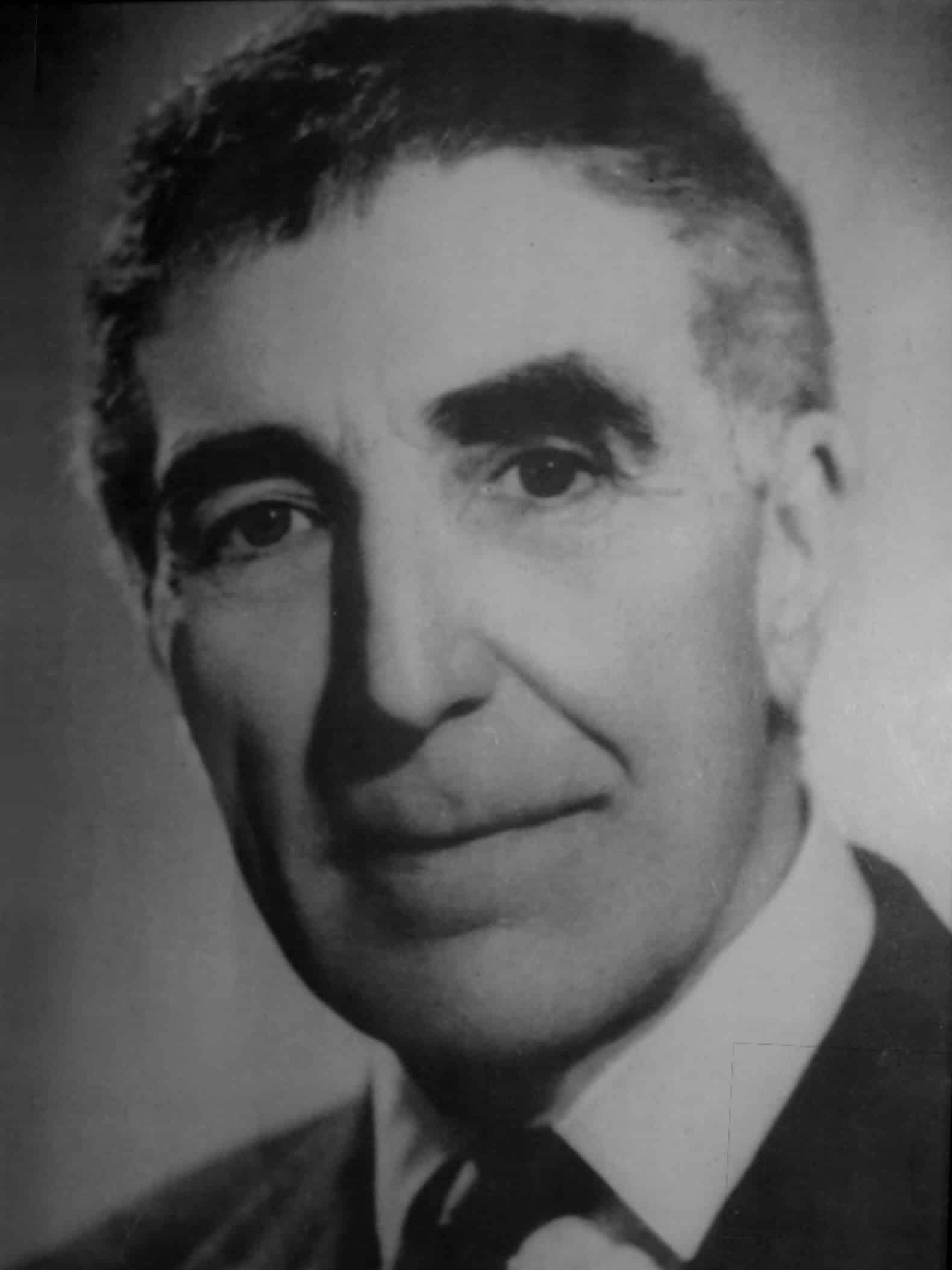
Eugen Bogdan Aburel (1899-1975) was a Romanian obstetrician and gynecologic surgeon
Aburel made pioneering innovations in labor analgesia and fertility-sparing surgery. In 1930, he proposed a dual-pathway model of uterine pain transmission, identifying both sympathetic (T11–L2) and parasympathetic (S2–S4) afferents, This insight led to his development of continuous epidural analgesia, which he first presented in 1931. His technique of leaving a silk catheter into the epidural space enabled continuous infusion of cinchocaine and marked the first systematic approach to continuous labor analgesia.
Aburel experimented with early intra-amniotic saline instillation for second-trimester abortion (1934), a method widely adopted mid-century before being supplanted by safer prostaglandin-based regimens. He also developed the operation of sub-corporeal extended colpohysterectomy (1957) as a fertility-sparing procedure for early-stage cervical cancer.
Biographical Timeline
- Born January 23, 1899 in Galați (then Kingdom of Romania).
- 1923 – Graduated Faculty of Medicine, Iași. MD thesis on puerperal infection “Contribuțiuni la tratamentul infecției puerperale“.
- 1923–1928 – Early postgraduate years. Trained in psychiatry and general surgery before committing to obstetrics and gynaecology.
- 1928–1933 – Training and research period in Paris (Tarnier and Boucicaut Hospitals; physiology research at the Sorbonne and Henry Rousselle Hospital).
- 1931 – Presented/published work on continuous regional obstetric analgesia, including catheter-through-needle concepts later standard in epidural practice.
- 1933 – Returned to Romania. Docent of Obstetrics and Gynaecology at the Faculty of Medicine, Iași.
- 1936 – Appointed Professor of Obstetrics and Gynaecology, Iași University
- 1951–1961 – President, Romanian Society of Obstetrics and Gynaecology.
- 1945 – Appointed Professor at Bucharest University
- 1952–1969 – Head/Director of Obstetrics and Gynaecology at Filantropia (Philanthropy) Hospital, Bucharest.
- 1968 – Elected foreign corresponding member of the French Academy of Medicine.
- 1969 – Retired.
- 1971 – Published major work on female genital tuberculosis with Masson (Paris)
- 1973 – Awarded Ordre des Palmes académiques for contributions including epidural anaesthesia.
- Died December 16, 1975 in Bucharest.
Medical Eponyms
Aburel’s Afferent Uterine Innervation Model (1930)
In a landmark anatomical and physiological study presented to the Société de Biologie, Aburel proposed that uterine pain during labor is transmitted via two distinct neural pathways:
- Sympathetic afferents entering the spinal cord at D.XI (T11) to L.II (L2)
- Cerebrospinal (parasympathetic) afferents entering at S.II to S.IV (S2–S4)
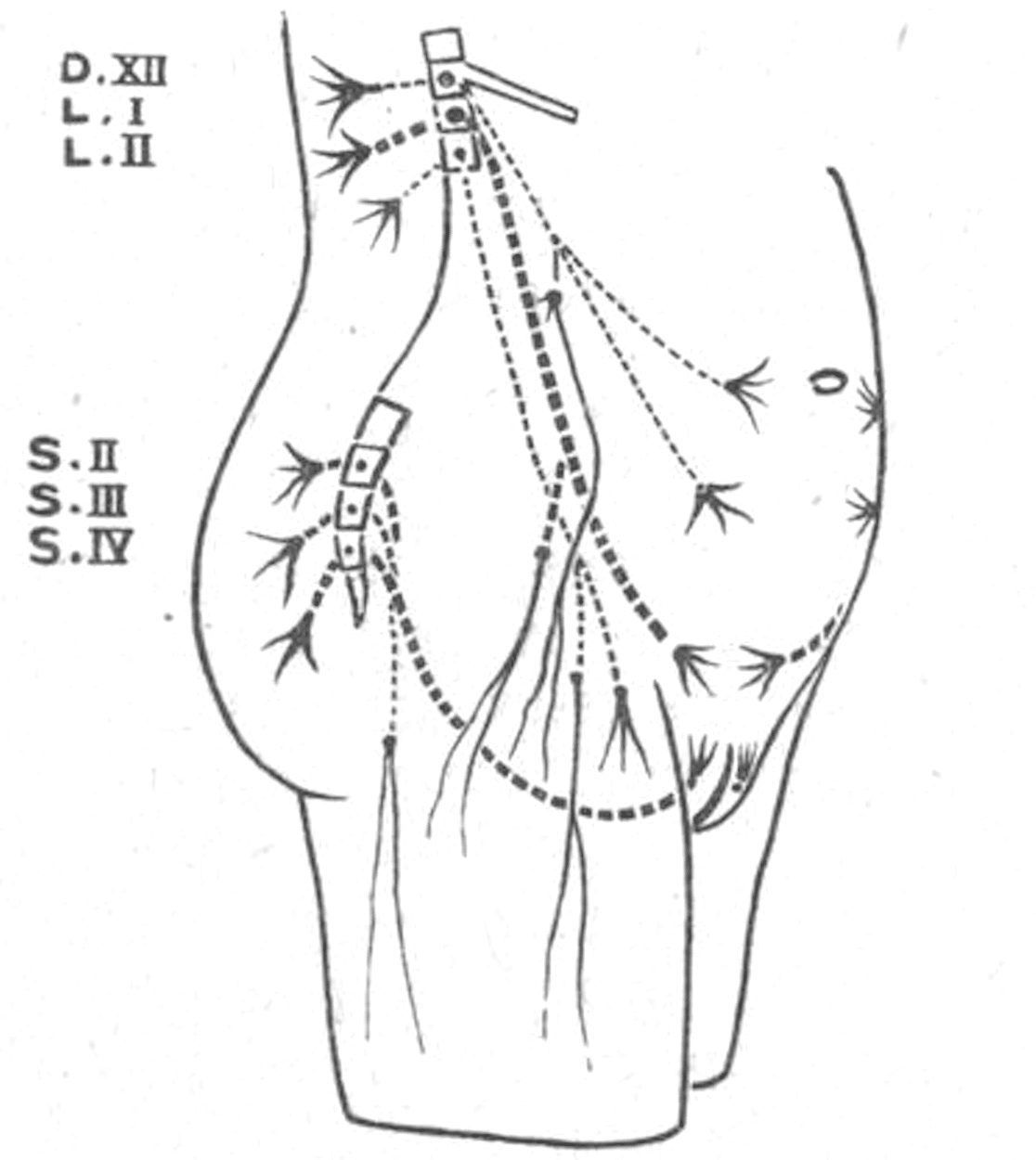
This dual pathway model contrasted with earlier theories that emphasized only sacral innervation, and it laid the scientific groundwork for Aburel’s later technique of stage-specific regional analgesia during labour.
Aburel emphasized that pain in the first stage of labor was mediated predominantly via visceral afferents travelling sympathetically, while second-stage pain was due to somatic innervation of the pelvic floor and perineum. He demonstrated that cutaneous hyperalgesia over the lower abdomen and sacrum could map labour pain and that local anaesthesia of those dermatomes alleviated symptoms long before dermatome charts became standard in anaesthetic practice.
Aburel technique; Aburel’s continuous epidural analgesia (1931)
Aburel presented one of the earliest clinical techniques for continuous pain relief in labour to the Société d’Obstétrique et de Gynécologie de Paris on January 12, 1931.
The Aburel technique involved the introduction of a needle into the epidural space via a caudal or lumbar approach and advancing a soft silk catheter through the needle. Following withdrawal of the needle, the silk catheter remained in situ. This allowed for repeated injections of local anaesthetic during labour without repeated puncture of the epidural space. The first description of a continuous epidural catheter technique in obstetric analgesia.
Aburel experimented with various local anaesthetics and achieved best results with 0.5% cinchocaine with adrenaline (1:100 000) with clinically useful durations of several hours.
Aburel’s method (Instillation abortion) (1934)
Eugen Aburel pioneered the use of intra-amniotic injection of hypertonic solutions to induce second-trimester abortion. The technique involved transabdominal insertion of a needle into the amniotic sac and instillation of a hypertonic saline solution (typically 20% NaCl), which induced foetal demise followed by uterine contractions and expulsion.
The method was significant because it was deemed:
- Safer than mechanical dilation and curettage for mid-trimester pregnancies.
- Accessible and relatively simple, requiring minimal surgical intervention.
- Adopted globally, especially in Japan and the United States, from the 1950s–1970s, prior to the widespread use of prostaglandins.
However, over time the technique was largely abandoned due to:
- Serious risks, including hypernatreamia, coagulopathy, renal failure, and maternal death.
- The development of safer and more effective alternatives, particularly prostaglandin analogues and mifepristone/misoprostol regimens.
Aburel’s Subfundal Extended Colpohysterectomy (1957)
Aburel developed a pioneering fertility-sparing surgical technique for early-stage cervical cancer. He publishedhis approach as a chapter in the influential textbook Chirurgia ginecologică. Aburel referred to this procedure as sub-corporeal extended colpohysterectomy, emphasizing that the uterine fundus and corpus remain intact, distinguishing it from classical hysterectomy.
Major Publications
- Aburel E. La topographie et le mécanisme des douleurs de l’accouchement avant la période d’expulsion. Comptes rendus des séances de la Société de biologie et de ses filiales et associées 1930; 103: 902–4
- Aburel E. L’anesthésie locale continue (prolongée) en obstétrique. Bulletin de la Société d’obstétrique et de gynécologie de Paris. 1931; 20: 35-39.
- Aburel E. Le déclenchement du travail par injections intra-amniotiques ou tocogènes, Revue médico-chirurgicale, 1939; 50(3–4): 172–174
- Aburel E. Sub-corporeal extended colpohysterectomy in therapy of incipient cancer of cervix. C R Soc Fr Gyncol. 1957 Jun-Sep;27(6):237-43.
- Aburel E. Erweiterte abdominelle Exstirpation der Cervix und des Isthmus in den Anfangsstadien des Collumcarcinoms (Carcinoma in situ und Mikrocarcinom [Proceedings: Extended abdominal exstirpation of cervix and isthmus in early stages of cervix carcinoma (carcinoma in situ and microcarcinoma)]. Arch Gynakol. 1973 Sep 28;214(1):106-8.
References
Biography
- Curelaru I, Sandu L. Eugen Bogdan Aburel (1899-1975). The pioneer of regional analgesia for pain relief in childbirth. Anaesthesia. 1982 Jun;37(6):663-9.
- Peltecu G. Eugen Bogdan Aburel, a pioneer of fertility sparing surgery. Gynecol Oncol. 2024 Feb;181:40-45.
Eponymous terms
- Frölich MA, Caton D. Pioneers in epidural needle design. Anesth Analg. 2001 Jul;93(1):215-20.
Eponym
the person behind the name

BSc MD University of Western Australia. Interested in all things critical care and completing side quests along the way

BA MA (Oxon) MBChB (Edin) FACEM FFSEM. Emergency physician, Sir Charles Gairdner Hospital. Passion for rugby; medical history; medical education; and asynchronous learning #FOAMed evangelist. Co-founder and CTO of Life in the Fast lane | On Call: Principles and Protocol 4e| Eponyms | Books |