

Fernand Cathelin
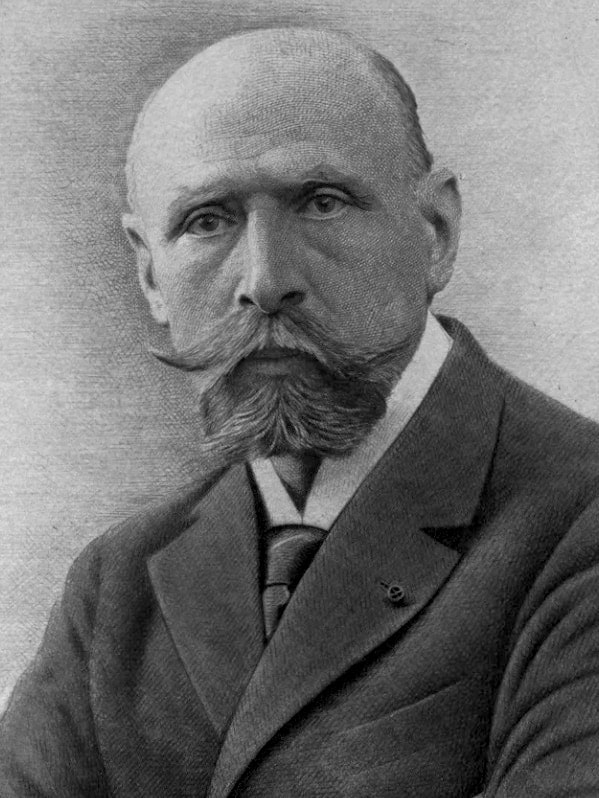
Fernand Léon Cathelin (1873-1960) was a French urologist
Cathelin is best remembered for helping to establish caudal (sacral) epidural injection at the dawn of regional anaesthesia. In 1901 he described a “new spinal route” via puncture of the sacral canal, supporting correct epidural placement with animal experiments (including dye spread in the epidural space). He extended the technique to clinical practice and defined Cathelin’s method of caudal epidural anaesthesia.
Closely associated with the Paris urological tradition of Félix Guyon (1831–1920), Cathelin explored epidural injections for operative analgesia and pelvic and urinary tract indications. He consolidated his approach in his 1903 monograph on sacral epidural injections and their applications in urinary disease.
Cathelin was also an innovator in urological instrumentation. In 1902 he introduced a urine-divider (diviseur vésical) to facilitate split urine collection in suspected unilateral renal disease, and in 1905 he developed a cystoscope à air, promoting air cystoscopy as a practical method for direct vision of bladder pathology. He also devised more than 20 further urological instruments.
Biographical Timeline
- Born May 27, 1873 in Longjumeau, Seine-et-Oise, France.
- 1898 – Interne des Hôpitaux de Paris; works particularly in bacteriology, including at the Institut Pasteur. Surgical training in the schools of Tuffier, Poirier, and Lejars
- 1901 – Performs animal experiments and early human use of sacral (caudal) epidural injections with cocaine. Presents his technique in Paris (Société de Biologie) in April 1901, independently of Jean-Athanase Sicard (1872–1929)
- 1902 – Appointed chef de clinique adjoint, then titulaire at the Paris Faculty of Medicine; attached to Félix Guyon (1831–1920), described as Guyon’s “last pupil”. Introduces his urological instrument the “diviseur vésical” a bladder partition device
- 1903 – Completes doctoral thesis on sacral epidural injections and publishes as Les Injections épidurales par ponction du canal sacré
- 1904 – Becomes Chef de clinique des voies urinaires at Hôpital Necker, Paris
- 1905 – Develops air cystoscopy (“cystoscope à air”)
- 1907 – Opens private urological practice and establishes the “Nouvel Hôpital d’Urologie de Paris”
- 1914–1918 – World War I: serves as a medical major and chief of a Centre d’urologie at Orléans
- 1919 – Publishes wartime experience: Chirurgie urinaire de guerre
- 1934 (July 8) – Inaugurates his Musée d’Histoire Naturelle at the former Hôtel du Dauphin, Longjumeau
- 1940 – German invasion: refuses to open museum to occupying forces. Survived a reported suicide attempt by hanging and subsequently withdraws from public activity
- Dies March 31, 1960 in Longjumeau, aged 86; buried in Longjumeau cemetery
Key Medical Contributions
Cathelin’s method (Caudal epidural anaesthesia) (1901)
Cathelin was one of the two Paris clinicians along with Jean-Athanase Sicard (1872-1929) who independently established caudal (sacral) access to the epidural space for analgesia/anaesthesia.
1901 – In his report to the Société de Biologie, Cathelin described experimental caudal epidural injections of cocaine in dogs, including validation of epidural spread by injecting India ink. He demonstrated blackened epidural tissues up to the cervical region at necropsy, evidence intended to confirm correct placement outside the dura and to distinguish the technique from intrathecal injection. He explicitly stated that he and Sicard had worked “simultaneously and independently,” setting aside priority disputes.
Original
English
En somme, l’injection épidurale et, la pénétration par le canal sacré constituentune méthode nouvelle qui mérite d’être étudiée par les chirurgiens et par les médecins, comme procédé d’analgésie opératoire ou simplement comme procédé pour calmer les douteurs (accouchement douloureux douleurs des cancers inopérables du rectum , fissures hémorroïdaires, etc.) Cathelin 1901
This new method of epidural injection through the sacral canal deserves to be studied by surgeons and physicians, as a method of surgical analgesia or as a method to relieve pain in childbirth, inoperable rectal cancers, and hemorrhoidal fissures, etc.) Cathelin 1901
Cathelin extended the technique to humans. He first applied the sacral approach in hospital practice on February 5, 1901, administering small concentrations of cocaine for operations including inguinal hernia repair. He argued the method offered safety (reduced risk of cord injury), with the anaesthetic acting mainly on nerve roots rather than the spinal cord, and potentially less direct cranial CSF exposure compared with subarachnoid injection.
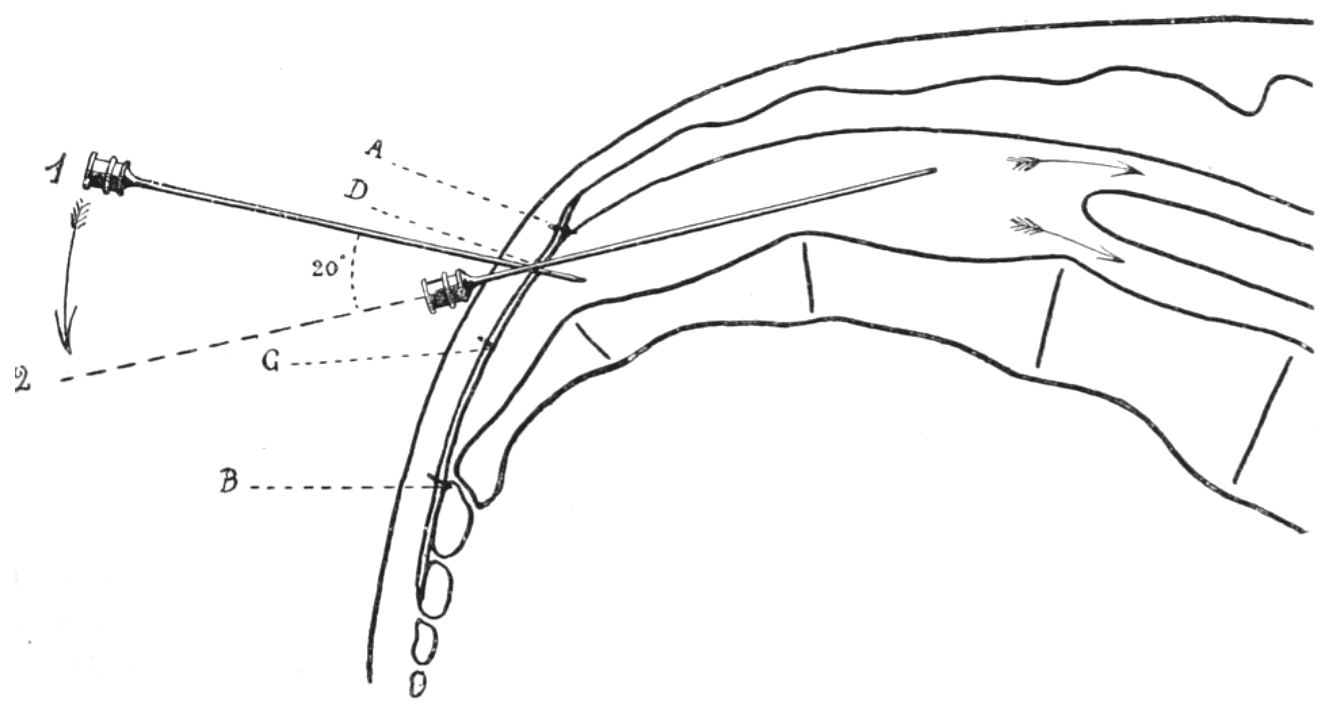
Cathelin emphasised a two-step manoeuvre: pierce the ligament at an angle, then drop the hub and advance straight in the canal.
Epidural injections applied to urology (1901–1903)
Cathelin’s framed epidural injection as a therapeutic method for urinary tract disease and urinary incontinence publishing a rapid succession of papers on indications, mechanism and techniques. His 1903 monograph, Les injections épidurales par ponction du canal sacré et leurs applications dans les maladies des voies urinaires, consolidated anatomical, experimental and clinical work from Richet’s laboratory and Guyon’s service.
“Diviseur vésical” (urine-divider) for split urine collection (1902)
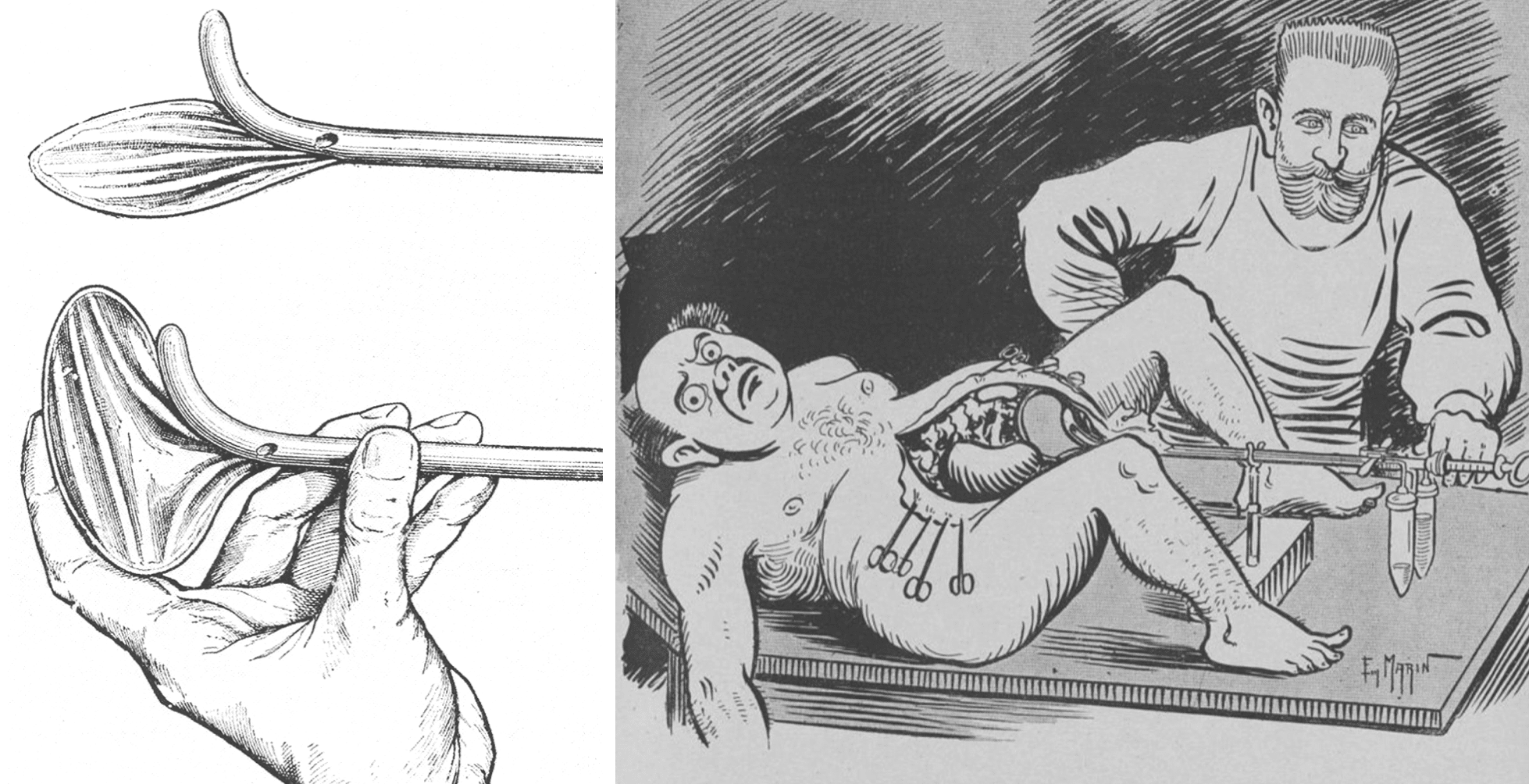
Cathelin devised the diviseur vésical, an early attempt to separate and collect urine from the right and left upper urinary tracts to assist diagnosis of unilateral renal disease. The instrument was introduced transurethrally; a metal loop opened at the tip to divide the bladder into two compartments with a membrane, allowing separate collection from each side.
The device became sufficiently well known to be lampooned in contemporary caricature (“diviser pour régner”).
“Cystoscope à air” (air cystoscopy) (1905)
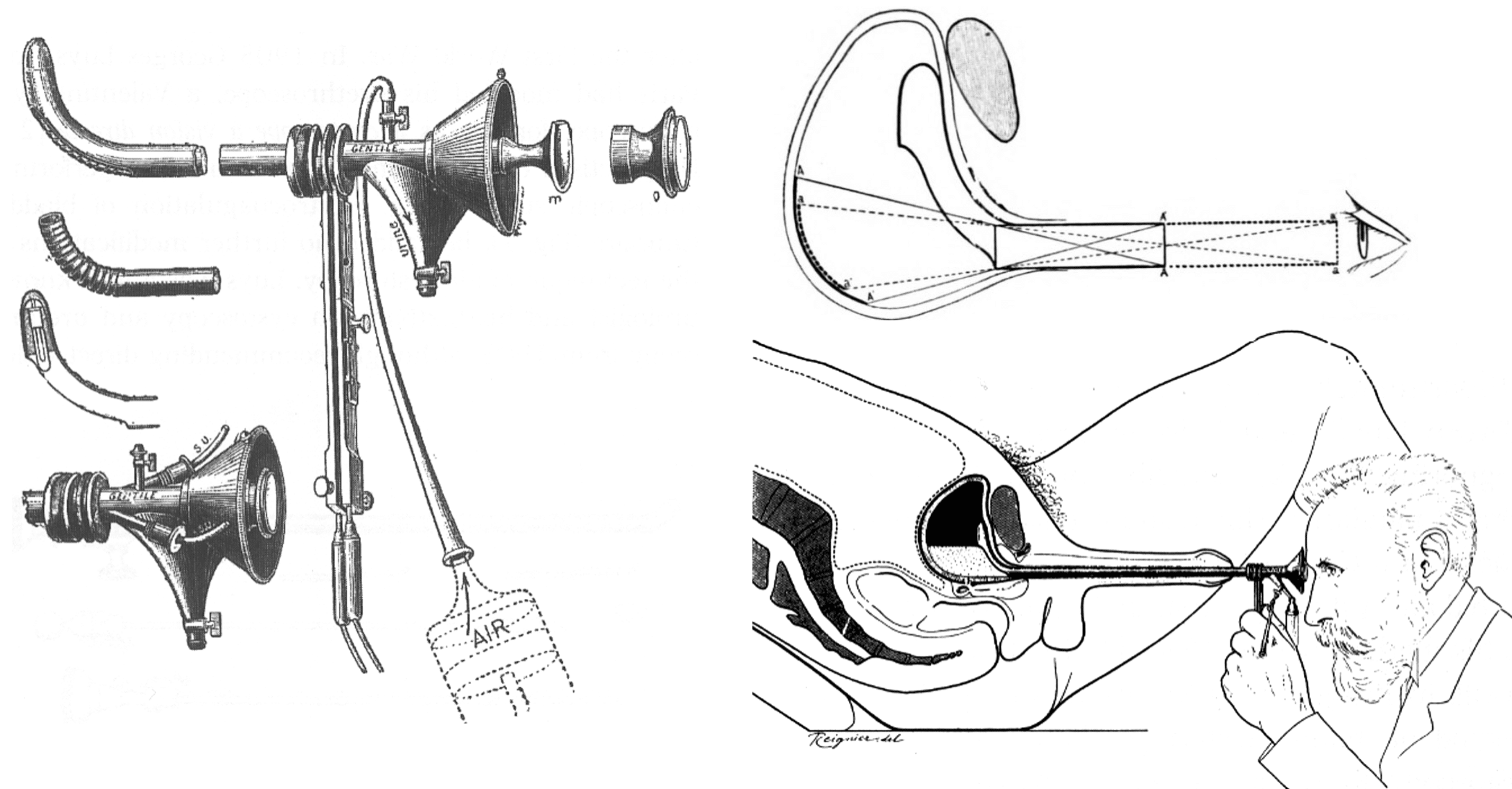
Cathelin introduced an Cystoscope à air designed for “air cystoscopy,” a technique widely used at the time (particularly among gynaecologists). The endoscope was inserted with a mandrin, the bladder examined through an ocular obturator, air introduced via syringe, and urine evacuated through a funnel.
Original
English
Un bon cystoscope doit pouvoir fonctionner dans une vessie pleine d’air… et doit montrer les objets eux-mêmes — en position droite — et non leurs images renversées
J’y ai mieux vu en une heure, qu’après un an d’études avec la cystoscopie à eau. Cathelin, 1905
A good cystoscope should be able to function in a bladder full of air… and should show the objects themselves—in their upright position—and not inverted images of them.
I saw more clearly in one hour with this method than I did after a year of studying with water cystoscopy. Cathelin, 1905
Cathelin argued that air cystoscopy enabled upright, direct viewing of true objects (not inverted optical images) and avoided magnification/size illusions seen with water cystoscopy.
Controversies
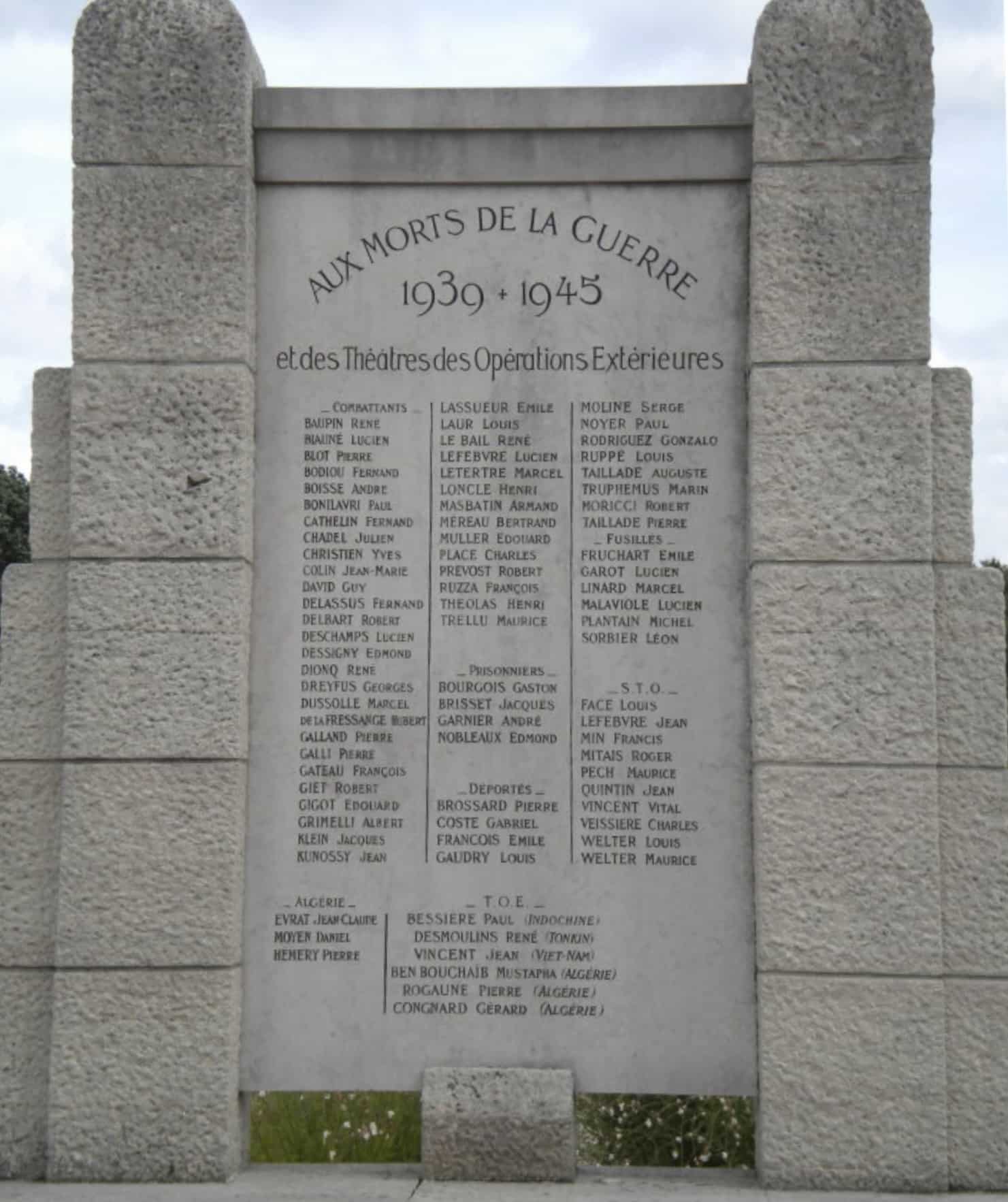
Date of death: Secondary sources variously give 1929 and 1945 as the date of death.
- The 1929 date is most plausibly a confusion with Jean-Athanase Sicard (1872–1929), who is frequently paired with Cathelin in accounts of caudal epidural anaesthesia.
- The 1945 date appears to derive from the name “Fernand Cathelin” found on a Second World War memorial at Draveil, Essonne.
Major Publications
- Cathelin F. Une nouvelle voie d’injection rachidienne. Méthode des injections épidurales par le procédé du canal sacré. Applications a l’homme. Comptes rendus des séances de la Société de biologie et de ses filiales 1901; 53: 452–453
- Cathelin F. Les injections épidurales sacrées de sérum et de cocaine dans certains cas d’incontinence d’urine, Communication faite à la cinquième session de l’Association française d’urologie, Paris, 1901
- Cathelin F. Le cloisonnement vésical et la division des urines. Applications au diagnostic des lésions rénales. 1903
- Cathelin F. Les Injections épidurales par ponction du canal sacré et leurs applications dans les maladies des voies urinaires, recherches anatomiques, expérimentales et cliniques. Baillière, Paris, 1903
- Cathelin F. Die epiduralen Injektionen durch Punktion des Sakralkanals und ihre Anwendung bei den Erkrankungen der Harnwege : anatomische, experimentelle und klinische Untersuchungen. 1903
- Cathelin F. La Circulation du liquide céphalo-rachidien. Presse médicale, 11 nov. 1903, n° 90).
- Cathelin F. Nouvelle méthode de cystoscopie: cystoscopie à air et à vision directe sans partie optique avec lampe renversée, au plafond. Annales de Maladies des Organes Génito-Urinaires 1905; 23: 1245-1260.
- Cathelin F. Chirurgie urinaire de guerre. 1919
- Cathelin F. L’infection gonococcique et ses complications. Paris, 1928
- Cathelin F. Autour de la chirurgie. Baillière, Paris, 1931
- Cathelin F. La bonne et la mauvaise technique des injections épidurales. Le prôgres médicale, 1934; 14: 593
References
Biography
- Biographie du Docteur Fernand Cathelin. L’Album du Rictus, journal humoristique mensuel : deuxième série Paris, 1908: 52-53
- Bautrait M-J. Une personnalité longjumelloise : le Docteur Cathelin urologue, muséologue et écrivain. 1994
- Schultheiss D. Fernand Cathelin (1873-1960): Eminent urologist and pioneer of sacral anaesthesia. uroweb.org 2025
Eponymous terms
- Cazalaà JB. Epidural anesthesia at the Pitié-Salpêtrière Hospital: from Fernand Cathelin (1901) to Jeanne Seebacher (1974). Anesthesiology. 2012 Dec;117(6):1161.
- Waurick K, Waurick R. Epiduralanästhesie – Geschichte und Technik der Epiduralanästhesie [History and Technique of Epidural Anaesthesia]. Anasthesiol Intensivmed Notfallmed Schmerzther. 2015 Jul;50(7-8):476-82
- Ter Meulen BC, Weinstein H, Ostelo R, Koehler PJ. The Epidural Treatment of Sciatica: Its Origin and Evolution. Eur Neurol. 2016;75(1-2):58-64.
Eponym
the person behind the name

BSc MD University of Western Australia. Interested in all things critical care and completing side quests along the way

BA MA (Oxon) MBChB (Edin) FACEM FFSEM. Emergency physician, Sir Charles Gairdner Hospital. Passion for rugby; medical history; medical education; and asynchronous learning #FOAMed evangelist. Co-founder and CTO of Life in the Fast lane | On Call: Principles and Protocol 4e| Eponyms | Books |