

Henrik Sjögren
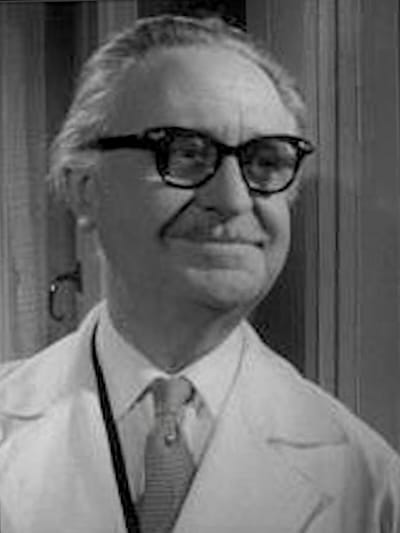
Henrik Samuel Conrad Sjögren (1899-1986) was a Swedish ophthalmologist
Working in Stockholm clinics in the early 1930s, Sjögren began to notice a recurring presentation of patients (predominantly women) with ocular dryness, dry mouth and often arthritis. Further research culminated in his 1933 thesis on keratoconjunctivitis sicca, the work that eponymised him in the fields of rheumatology and ophthalmology.
Sjögren embraced vital staining, including 1% rose bengal, to make ocular surface damage visible. After a rocky academic reception at home an English translation by Australian ophthalmologist J. B. (Bruce) Hamilton in 1943 helped drive international recognition, and the “Sjögren syndrome” label stuck.
Beyond sicca, Sjögren also described a distinct hereditary retinal disorder, later termed Sjögren reticular dystrophy, characterised by a progressive reticular pigment pattern
Biographical Timeline
- Born Henrik Samuel Konrad Johansson on July 23, 1899 in Köping, Sweden.
- 1918 – Completed secondary schooling (Gymnasium) in Västerås; undertook military service.
- 1919 – Entered medicine at Karolinska Institute.
- 1922 – Passed the Bachelor/“medical licentiate” examination.
- 1923 – Family legally changed surname from Johansson to Sjögren (mother’s maiden name).
- 1925 – Assistant surgeon at the Eye Clinic, Serafimer Hospital (Karolinska system).
- 1927 – Qualified as a physician. Continued ophthalmology training in Stockholm.
- 1929 – Sent to Jönköping to examine returning Swedish immigrants from Ukraine; trachoma and ocular dryness were common.
- 1930 (Jan) – At Serafimer Hospital, encountered the pivotal patient (dry eyes + dry mouth + arthritis). He published an early case series and coined keratoconjunctivitis sicca (KCS), describing vital staining with 1% rose bengal for damaged ocular surface cells.
- 1931 – Moved to Sabbatsberg Hospital (Stockholm), expanded case collection
- 1933 (May 8) – Defended doctoral thesis Zur Kenntnis der Keratoconjunctivitis Sicca
- 1935 – Left Stockholm for Jönköping
- 1936 – Early proposal in the literature to use the eponym “Sjögren’s syndrome” as the concept spread beyond ophthalmology.
- 1938 – Appointed head of the newly opened Eye Clinic at Jönköping Hospital
- 1939–1945 – World War II: served as a captain in Swedish armed services
- 1943 – English translation of 1933 thesis by Australian ophthalmologist Bruce Hamilton, with international exposure and recognition.
- 1950 – Described the retinal disorder later referred to as Sjögren reticular dystrophy
- 1951 – Published an influential follow-up series on Keratoconjunctivitis Sicca in Acta Ophthalmologica
- 1957 – Awarded the title Docent (University of Gothenburg) after long delay in academic recognition.
- 1961 – Received the Swedish-government honorary “Professor” title
- 1967 – Retired from active clinical work and moved to Lund.
- 1970 – Elected honorary member of the American Rheumatism Organization
- Died September 17, 1986 in Lund
Medical Eponyms
Sjögren syndrome (1933)
Sjögren syndrome is a chronic autoimmune exocrinopathy in which lymphocytic inflammation targets lacrimal and salivary glands, producing sicca symptoms with potential systemic involvement. It predominantly affects women (9:1 female:male ratio) and typically presents in mid-life, though diagnosis is frequently delayed.
Classically, patients report gritty/burning eyes, fluctuating vision, and dry mouth with dental caries, oral discomfort, dysphagia, and parotid/submandibular swelling. Fatigue and musculoskeletal pain are common, and “dryness” can extend beyond eyes and mouth (skin, vagina, airway).
Sjögren is also a systemic disease and extraglandular features can include Raynaud phenomenon, vasculitic purpura, cryoglobulinaemic vasculitis, peripheral neuropathy, glomerulonephritis, and pulmonary disease. Ongoing B-cell activation confers a clinically important lymphoma risk (~5% overall; typically low-grade indolent B-cell lymphoma).
Diagnosis is supported by objective tests often using the 2016 ACR/EULAR classification criteria (primarily for research, but very useful as a diagnostic framework) weight five objective items. A weighted score ≥4 classifies primary Sjögren’s syndrome.
Treatment is largely symptom-directed for ocular and oral dryness. For the eyes, lubricants, eyelid/meibomian management, and anti-inflammatory therapy when needed. For the mouth, saliva substitutes, dental prevention, and management of oral candidiasis when present. Systemic therapy with immunomodulatory agents is reserved for organ involvement and cases involving vasculitis, neuropathy, and renal/pulmonary disease.
Sjögren’s contribution was defining keratoconjunctivitis sicca (KCS) as a clinical entity and then showing it belonged to a broader systemic disorder. He reported his Stockholm cases in January 1930 and expanded cases in his doctoral dissertation on May 8, 1933. He collated 19 female patients with dry eye, dry mouth and frequent arthritis, supported by conjunctival/lacrimal gland histology and (in one case) salivary gland pathology.
Sjögren popularised vital staining with 1% rose bengal to reveal ocular surface damage in severe dryness. He devised the staining technique and highlighted the need for damaged cells for positive staining, and practical pitfalls such as interference from topical anaesthetics.
Major Publications
- Sjögren H. Keratoconjunctivitis sicca. Hygiea 1930; 92: 829
- Sjögren H. Zur Kenntnis der keratoconjunctivitis sicca. Keratitis filiformis bei Hypofunktion der Tränendrüsen. Acta Ophthalmol Supplementum 1933; 2: 1–151. Doctoral thesis, Karolinska Institutet, Stockholm
- Sjögren H. Zur Kenntnis der Keratoconjunctivitis sicca IV: Mikroskopische Untersuchungen über das initial-Stadium der Drüsenveränderungen. Acta Ophthalmol. 1938; 16(1): 369-382
- Sjögren H. Zur Kenntnis der Keratoconjunctivitis sicca VI: Das siccasyndrom und ähnliche zustände. Dacryo-sialo-adenopathia atrophicans. Acta Ophthalmol. 1940; 18(3-4): 369-382
- Sjögren H. Zur Kenntnis der Keratoconjunctivitis sicca VIII. Uebersicht – ätiologie. Acta Ophthalmol
- Sjögren H. Dystrophia reticularis laminae pigmentosae retinae. Acta Ophthalmol. 1950; 28(3): 279-295
- Sjögren H. A New Conception of Kerato-conjunctivitis Sicca (Keratitis Filiformis in Hypofunction of the Lachrymal Glands). Translated by J. B. Hamilton, Aust. Med. Pub. Co., Sydney. 1943
- Sjögren H. Some aspects on the sicca syndrome. Scand J Rheumatol. 1973;2(2):49-51
References
Biography
- Murube J. Henrik Sjögren, 1899-1986. The Ocular Surface. 2010 Jan;8(1):2-7.
- Pearce JMS. Henrik Sjögren and his syndrome. Hektoen International. 2018
- Jonsson R. Henrik Sjögren (1899-1986): the syndrome and his legacy. Ann Rheum Dis. 2021 Sep;80(9):1108-1109.
Eponymous terms
- Preston SJ, Arnold MH, Buchanan WW. Sjögren’s syndrome beyond the eye. Aust N Z J Ophthalmol. 1989 May;17(2):111-20.
- Talal N. Sjögren’s syndrome: historical overview and clinical spectrum of disease. Rheum Dis Clin North Am. 1992 Aug;18(3):507-15.
- Rehman HU. Sjögren’s syndrome. Yonsei Med J. 2003 Dec 30;44(6):947-54
- Murube J. Antecedents of Sjogren syndrome. Ocul Surf. 2010 Apr;8(2):49-59.
- Rodrigues JVA, Lima FAS Júnior, Barros DPM, Franklin GL, Nepomuceno AMT, Braz AS, Teive HAG, Meira AT. Sjögren: unique surname, two men, four syndromes and one disease. Arq Neuropsiquiatr. 2024 Apr;82(4):1-4.
Eponym
the person behind the name

BA MA (Oxon) MBChB (Edin) FACEM FFSEM. Emergency physician, Sir Charles Gairdner Hospital. Passion for rugby; medical history; medical education; and asynchronous learning #FOAMed evangelist. Co-founder and CTO of Life in the Fast lane | On Call: Principles and Protocol 4e| Eponyms | Books |