

Max Samter
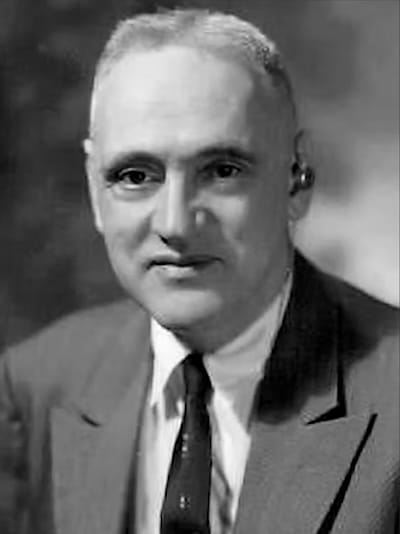
Max Samter (1908-1999) was a German-American immunologist and pioneer in allergy research
Samter is eponymously linked with aspirin-exacerbated respiratory disease (AERD), known as “Samter’s triad.” Trained in Berlin, Samter left Nazi Germany in 1937 and later served in the U.S. Army Medical Corps in Europe during WWII. After settling in Chicago, he built a distinguished academic career at the University of Illinois, becoming a leading figure in allergy practice and education.
In 1968, with Roland F. Beers Jr, Samter defined chronic rhinosinusitis/nasal polyposis, asthma, and severe respiratory reactions to aspirin as a distinct clinical entity, arguing it was “not a chance cluster.” Their work clarified its natural history (rhinitis progressing to polyps and later asthma) and described the characteristic rapid reaction pattern following aspirin challenge. Today the condition is widely termed AERD, reflecting its chronic upper and lower airway inflammation and its reproducible exacerbations with aspirin and other COX-1 inhibiting NSAIDs.
Biographical Timeline
- Born March 3, 1908 in Berlin, Germany
- 1931 – Began medical career as an intern at Charité University Hospital, Berlin.
- 1933 – Received MD (University of Berlin). While still an intern at Charité, published early work in asthma including an inhalational challenge approach using histamine/allergens ‘Asthma bronchiale und Histaminempfindlichkeit‘
- 1933–1937 – After Nazi policies barred Jewish physicians from university posts, worked in general practice in Berlin-Karow making house calls on a BMW motorcycle.
- 1937 – Emigrated to the United States via a formal appointment invitation at Johns Hopkins University.
- 1937–1942 – Worked as a (largely unpaid) research assistant: Johns Hopkins (hematology) then University of Pennsylvania (including lymphocyte studies). Translation work to support himself.
- 1943 – Commissioned First Lieutenant, U.S. Army Medical Corps.
- 1944–1945 – Served in the European theatre with a field hospital unit and later administrative duties as a military governor in occupied Germany. Developed progressive hearing loss/deafness from blast exposure.
- 1946 – Discharged; moved to Chicago and began as Research Associate in Biochemistry, University of Illinois.
- 1961 – Appointed Professor (full professor) at University of Illinois College of Medicine.
- 1958–1959 – President, American Academy of Allergy (later AAAAI).
- 1960–1967 – First Chairman, Committee on Certification (AAA/AAAAI), contributing to pathways toward specialty certification in allergy/immunology.
- 1968 – Published clinical work characterising the syndrome of aspirin intolerance, nasal polyps/sinus disease, and asthma that became widely known as “Samter’s triad”.
- 1970–1973 – President, International Association of Allergology
- Mid-1970s – Created the University of Illinois medical school course “Realities in Medicine” reviewing the ethics/humanism/societal role of physicians.
- 1975 – Established and became founding director of the Institute of Allergy and Clinical Immunology at Grant Hospital of Chicago (later named the Max Samter Institute)
- 1982 – Named “Allergist of the Year” by the Asthma and Allergy Foundation of America (AAFA).
- Died February 9, 1999 in Evanston, Illinois, aged 90
Medical Eponyms
Samter’s triad (1968)
Aspirin-exacerbated respiratory disease (AERD) is an acquired, typically adult-onset inflammatory airway disorder characterised by the combination of:
- Asthma (often late-onset and may become severe)
- Chronic rhinosinusitis with nasal polyposis (often bilateral, recurrent, frequently requiring repeated polypectomy)
- Respiratory reactions to aspirin/COX-1 inhibiting NSAIDs (classically rhinorrhoea/nasal obstruction and bronchospasm; can be severe)
Samter and Beers emphasised that the condition is predominantly non-atopic, arises after middle age, and that nasal/bronchial symptoms may precede aspirin intolerance by months to years. They also noted that reactions could be triggered by other strong “minor analgesics” (e.g., indomethacin, pyrazolones), supporting a non–IgE cross-reactivity mechanism.
1902 – Hirschberg reported an early aspirin “idiosyncrasy” documenting the adverse effects “Nebenwirkung des Aspirin” of 1 g aspirin, with facial/lip swelling, nasal obstruction, throat mucus, and urticarial/scarlatiniform rash
Original
English
…sein Gesicht, seine Augen und die Unterlippe stark aufgeschwollen und die Nase ihm verstopft seien. In den Rachen laufe ihm flüssiger Schleim herab…Man muss deshalb auch hier eine unerklärliche Idiosynkrasie des Patienten gegenüber dem Aspirin annehmen…so ist es mir doch nicht erinnerlich, dass in jüngster Zeit etwas ähnliches auch nach dem Gebrauch des Aspirins veröffentlicht worden wäre – Hirschberg 1902
…his face, eyes, and lower lip were severely swollen, and his nose was blocked. Liquid mucus was running down his throat…One must therefore assume an inexplicable idiosyncrasy of the patient to aspirin…I do not recall anything similar being published recently following the use of aspirin. – Hirschberg 1902
1922 – Fernand Widal, Pierre Abrami and Jacques Lermoyez publish the first complete description of the syndrome and early desensitisation concept. They described a patient with asthma/coryza, mucous nasal polyps, and reproducible reactions to aspirin (and antipyrine). They include a note on “desensitization” using escalating doses of aspirin, with claimed temporary tolerance.
1968 – Samter and Roland F. Beers Jr define the triad as a disease entity and conlcuded that
…the clinical triad of nasal polyposis, bronchial asthma, and life-threatening reactions to acetylsalicylic acid is a disease entity, not a chance cluster…
Samter, Beers 1968
Based on long-term clinical experience (>1,000 “aspirin-sensitive” patients (1954–1965) ), they conducted prospective ward studies in 182 hospitalised aspirin-sensitive patients.
Samter described a typical sequence:
- Early life: unremarkable.
- 2nd–3rd decade: intermittent “vasomotor rhinitis” with watery rhinorrhoea → becomes persistent nasal blockage.
- Progression to nasal polyps (often bilateral; frequent recurrence even after surgery).
- Asthma tends to develop in middle age; sometimes onset/aggravation follows polypectomy in a “suggestive number.”
- Of note: nasal polyposis and asthma continue whether or not aspirin is ingested, and aspirin reactions may appear years after respiratory disease begins.
Aspirin challenge to confirm sensitivity
Samter and Beers gave aspirin under controlled hospital conditions (explicitly warning of possible severe outcomes and recommending an anaesthesia team for airway management if needed). In one subset, 36 patients who claimed they tolerated aspirin received 0.3 g ASA; 34 reacted.
- Symptoms began within ~20 min (sometimes up to 2 hours).
- Commences with profuse watery rhinorrhoea, scarlet flush of head/neck/upper chest/extremities. May have GI symptoms.
- Followed by bronchoconstriction/wheeze/cyanosis often only minutes after nasal symptoms.
Pretreatment corticosteroids did not prevent attacks and corticosteroids given after onset appeared to shorten recovery (used in refractory cases). Aminophylline (drug of choice) ± epinephrine controlled most reactions
They then rotated aspirin-sensitive patients through multiple non-ASA salicylate/salicylate-related compounds (e.g., sodium salicylate, salicylic acid esters, choline salicylate, thioaspirin, N-acetyl-p-aminophenol) and reported no untoward reactions in those test exposures. They concluded “It is certain that intolerance to acetylsalicylic acid is not an intolerance to salicylates..”
Controversies
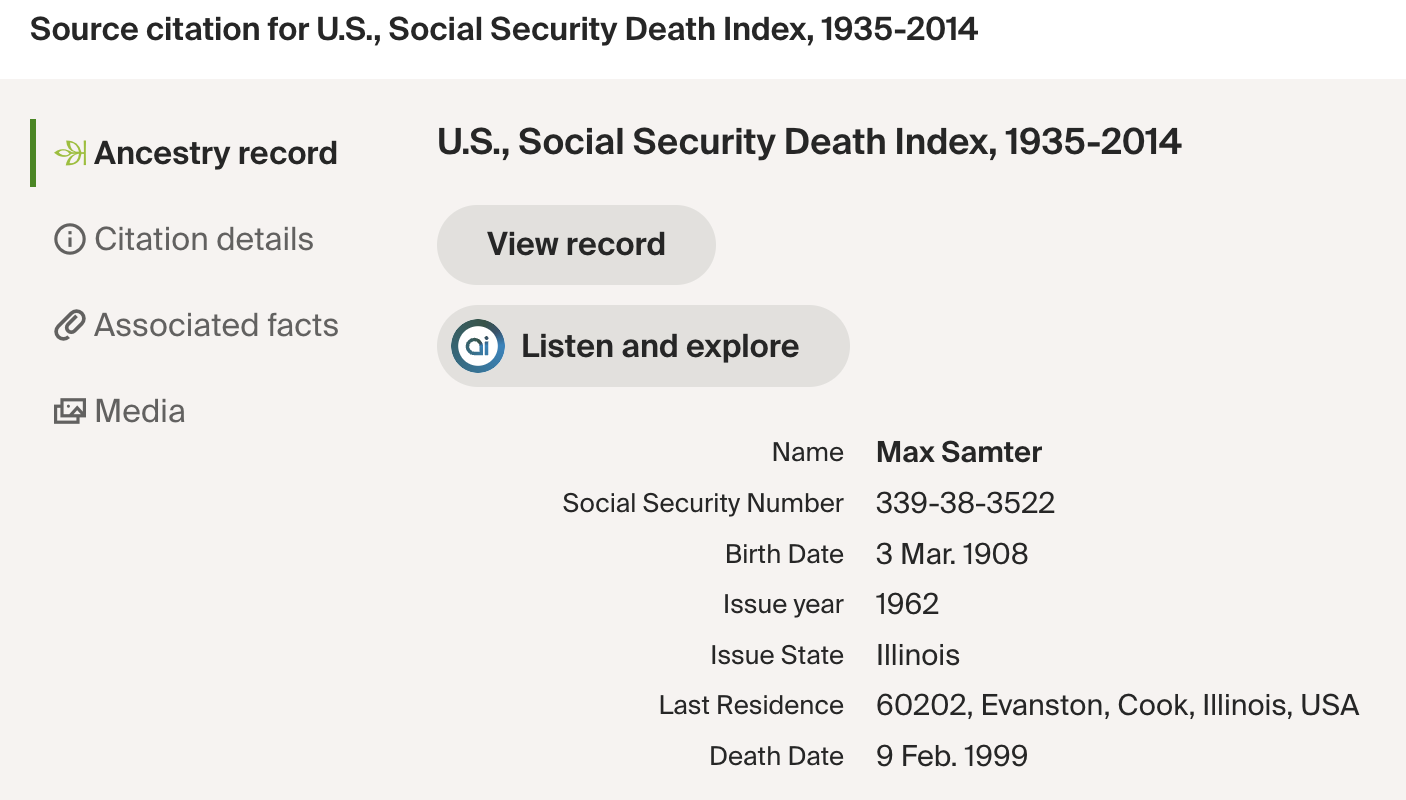
Dates of birth and death
Multiple alternate dates of birth and death in circulation on the internet and obituaries.
- Date of birth: March 3, 1908 as supported by:
- Date of death: February 9, 1999 as supported by:
Major Publications
- Samter M. Asthma bronchiale und Histaminempfindlichkeit. Zeitschrift für die gesamte experimentelle Medizin, 1933; 89: 24-35 [Bronchial asthma and histamine sensitivity. Translation: Allergy Proc. 1989 Sep-Oct;10(5):379-85.]
- Samter M. The response of eosinophils in the guinea pig to sensitization, anaphylaxis and various drugs. Blood. 1949 Mar;4(3):217-46.
- Samter M. Should one use ACTH and adrenal corticosteroids in seasonal allergies. J Allergy. 1953 Nov;24(6):556-7.
- Samter M. Use of hormones in treatment of otolaryngologic disease. J Am Med Assoc. 1957 Feb 23;163(8):613-5.
- Samter M, Beers RF Jr. Intolerance to aspirin. Clinical studies and consideration of its pathogenesis. Ann Intern Med. 1968 May;68(5):975-83. [Samter triad]
- Samter M. The acetyl- in aspirin. Ann Intern Med. 1969 Jul;71(1):208-9.
- Samter’s immunologic diseases. 5e, 1995
References
Biography
- Max Samter. USC Shoah Foundation, Holocaust – Jewish Survivor Interviews. Feb 4, 1996
- Cohen SG, Settipane GA. Max Samter, M.D. 1908-1999. Allergy Asthma Proc. 1999 Sep-Oct;20(5):329-35.
- Cohen SG. Max Samter, MD. JAMA 1999; 281(23): 2255–6.
- Cohen SG. In Lasting Tribute: Max Samter, MD. Journal of Allergy and Clinical Immunology, 1999; 104(2): 274-275
Eponymous terms
- Hirscliberg. Mitteilung uber einen Fall von Nebenwirkung des Aspirin Deutsche medizinische Wochenschrift. 1902; 28: 416
- Widal F, Abrama P, Lermoyez J. Anaphylaxie et idiosyncrasie. Presse Medicale. 1922; 30: 189–193
- Widal F, Abrami P, Lermoyez J. First complete description of the aspirin idiosyncrasy-asthma-nasal polyposis syndrome (plus urticaria)–1922 (with a note on aspirin desensitization). By F. Widal, P. Abrami, J. Lermoyez. J Asthma. 1987;24(5):297-300.
- Krouse HJ, Krouse JH. Samter’s Triad to Aspirin-Exacerbated Respiratory Disease: Historical Perspective and Current Clinical Practice. ORL Head Neck Nurs. 2015 Autumn;33(4):14-8.
Eponym
the person behind the name

MBBCh Cardiff University School of Medicine. BSC (Hons) Medical Microbiology Leeds University. I am a current ED RMO at the Sir Charles Gairdner Hospital in Perth hoping to pursue a career in ENT surgery.

BA MA (Oxon) MBChB (Edin) FACEM FFSEM. Emergency physician, Sir Charles Gairdner Hospital. Passion for rugby; medical history; medical education; and asynchronous learning #FOAMed evangelist. Co-founder and CTO of Life in the Fast lane | On Call: Principles and Protocol 4e| Eponyms | Books |