


Robert Marcus Gunn
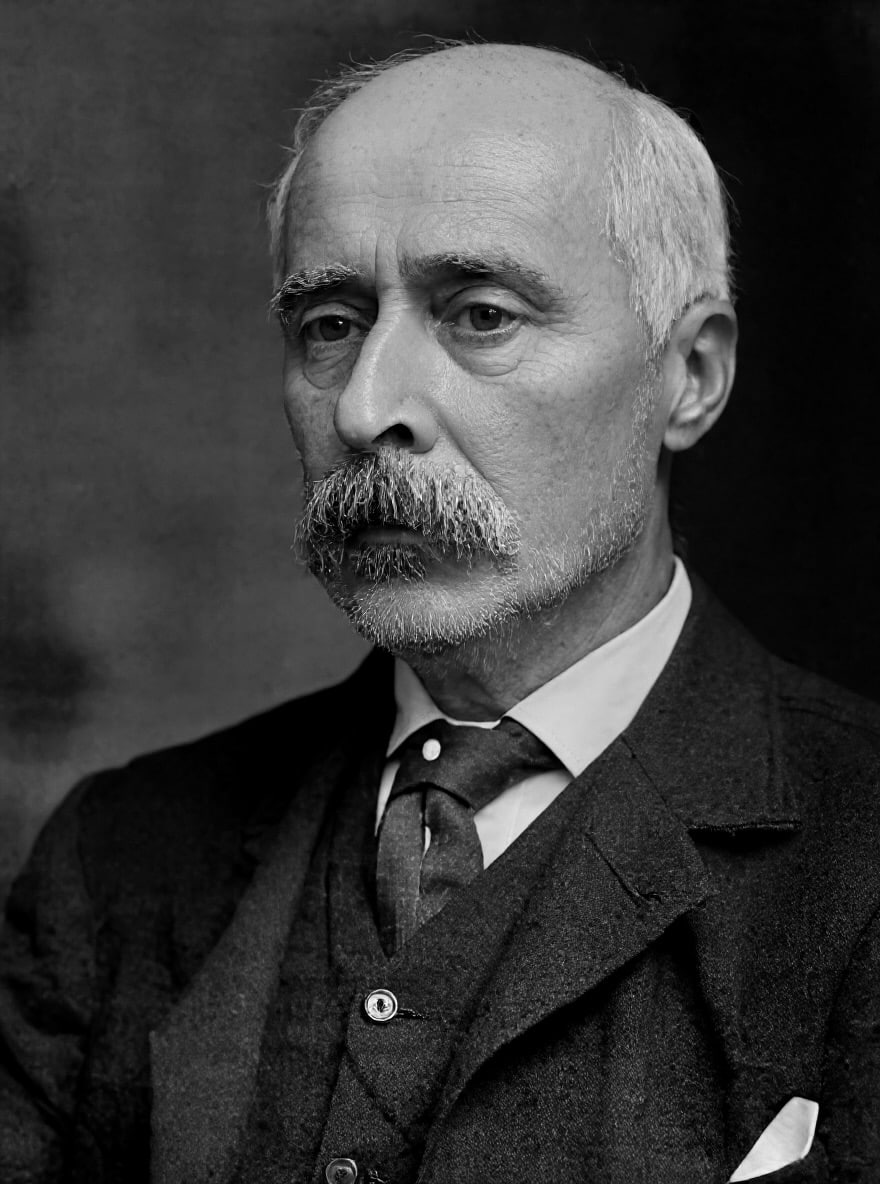
Robert Marcus Gunn (1850-1909) was a Scottish Ophthalmologist.
Marcus Gunn was a pioneering figure in the clinical application of ophthalmoscopy. He is eponymously associated with several important fundoscopic signs, including Gunn’s dots, Gunn’s sign, and Gunn’s pupil, each of which continues to serve as key diagnostic markers in modern ophthalmology.
A highly skilled ophthalmoscopist, Gunn advanced the study of retinal pathology and the optic nerve at a time when the clinical utility of ophthalmoscopy was still evolving. He was also instrumental in establishing systematic teaching of ophthalmoscopy at Moorfields Eye Hospital in London, where he served as Senior Surgeon at the time of his death. Gunn combined a passion for clinical observation with an exceptional ability to communicate visual findings, influencing generations of ophthalmologists through both his teaching and publications.
Gunn’s clinical insights extended beyond the eye; he was among the first to describe the ophthalmoscopic evidence of retinal arterial sclerosis as a reflection of systemic vascular disease — a concept now central to understanding hypertensive retinopathy and cerebrovascular risk. His lifelong interest in comparative anatomy, neuro-ophthalmology, and pathology led to a wide-ranging body of published work. Gunn’s reputation as an astute and rigorous observer was recognised internationally, and his contributions continue to underpin contemporary retinal and neuro-ophthalmic examination.
Beyond medicine, Gunn was an avid naturalist with interests in botany, marine zoology, and geology. He spent much of his leisure time collecting fossils, ultimately donating his significant collection to the British Museum. Admired for his intellectual integrity, modest character, and clinical brilliance, Robert Marcus Gunn remains one of the most influential ophthalmologists of the late 19th and early 20th centuries.
Biography
- Born August 29, 1850 at Dunnet, Scotland; youngest of four children. Attended village school and Golspie school; at age 14 moved to Edinburgh for professional training.
- 1871 – Graduated MA, University of Edinburgh.
- 1873 – Graduated MB CM, University of Edinburgh; MRCS; introduced to John Couper and began attending Moorfields Eye Hospital, London. Conducted comparative anatomical studies of the eye under Sir Edward Albert Sharpey-Schafer (1850-1935) at University College London.
- 1874 – Resident at Perth District Asylum, Murthly; performed ophthalmoscopic examinations of psychiatric patients.; studied in Vienna under Eduard Jäger von Jaxtthal (1818–1884)
- 1875 – returned to London; resumed work under John Couper at Moorfields.
- 1876 – Appointed Junior House Surgeon, Moorfields Eye Hospital; promoted to Senior House Surgeon, Moorfields Eye Hospital.
- 1879 – Travelled to Australia to collect marsupial and monotreme eye specimens.
- 1880 – Appointed Ophthalmic Surgeon to National Hospital for the Paralysed and Epileptic, Queen Square; and Hospital for Sick Children, Great Ormond Street.
- 1882 – Awarded FRCS.
- 1883 – Elected Assistant Surgeon, Moorfields Eye Hospital.
- 1888 – Promoted to Full Surgeon, Moorfields Eye Hospital; delivered Arris and Gale Lectures
- 1898 – Vice-President, Section of Ophthalmology, British Medical Association, Edinburgh Meeting.
- 1900 – Delivered Bowman Lecture Visual Sensation.
- 1902 – Published on Keratitis Nodosa.
- 1906 – President, Section of Ophthalmology, British Medical Association, Toronto Meeting; addressed American Academy of Ophthalmology and Otolaryngology on Certain Affections of the Optic Nerve.
- 1907 – Elected President, Ophthalmological Society of the United Kingdom; published Family Optic Atrophy.
- 1908 – Delivered Presidential Address History of the Ophthalmological Society.
- Died November 29, 1909 at Hindhead, Surrey, after a long illness; survived by his widow and two daughters.
Medical Eponyms
Marcus Gunn pupillary phenomenon (1902)
[aka relative afferent pupillary defect or RAPD] A pupil that responds by constricting more to an indirect than to a direct light, seen with unilateral optic nerve or retinal disease
1902 First description by Robert Marcus Gunn
It is not sufficient to find that it (the pupil) contracts well or fairly well on exposure; the eye must also be kept under direct stimulation of light and the pupil watched as to whether or not it shows that secondary dilatation under continued exposure that is found associated with the amblyopia of retro-ocular neuritis. If the vision of one eye only is affected, it is important to compare the behaviour of the two pupils when stimulated directly or consensually. Thus, in partial affection of the right optic nerve the right pupil will show this secondary dilatation during continued exposure to direct stimulation, while the left pupil will show the same behaviour on consensual stimulation. On the other hand, on stimulation of the left eye both the right and left pupil will behave normally. I need not remind you of the importance of this observation, inasmuch as it not infrequently enables us to diagnose a retro-ocular neuritis in the absence of all ophthalmoscopic evidence.
R Marcus Gunn 1902:21:275
Marin Amat syndrome (reverse Marcus Gunn syndrome)
Gunn’s dots (1883): minute bright retinal dots, typically seen around the macula; believed to be nerve fibre layer abnormalities. First described in a Peculiar appearance in the retina in the vicinity of the optic disc occuring in several members of the same family.
Gunn’s sign (1887): Tapering and banking of retinal veins at arteriovenous crossings; sign of hypertensive retinopathy (retinal signs of arterial sclerosis). Original description: On ophthalmoscopic evidence of general arterial disease
- Tendency to tortuosity of the arteries, especially the smaller vessels.
- Variation in the calibre of the vessels, especially sudden diminution for a short length passing again into normal size. The calibre is apparently sometimes narrowed by nodules in the vessel walls, imparting to the vessels a beaded appearance.
- Alteration of the normal light streak. This becomes very much brighter and very much more sharply defined.
- Indentation of veins, either by supra-pressure of the artery crossing above the vein, or infra-pressure from crossing below. When there is considerable indentation there is great obstruction followed by all the sequela of back pressure, viz., stasis, thrombosis, oedema, and haemorrhages into the surrounding tissues.
Marcus Gunn phenomenon (Gunn jaw winking syndrome): congenital syndrome (autosomal dominant) present in 5% of neonates with congenital ptosis. Widening of the ptosis when the patient opens their jaw or chews – secondary to a pathological synkinesis between the pterygoids and elevator palpebrae.
Major Publications
- Gunn RM. Congenital ptosis with peculiar associated movements of the affected lid. Transactions of the Ophthalmological Societies of the United Kingdom. 1883; 3: 283-287. [Marcus Gunn phenomenon]
- Gunn RM. Peculiar appearance in the retina in the vicinity of the optic disc occuring in several members of the same family. Transactions of the Ophthalmological Societies of the United Kingdom. 1883; 3: 110-113. [Gunn’s dots]
- Gunn RM. On ophthalmoscopic evidence of general arterial disease. Transactions of the Ophthalmological Societies of the United Kingdom. 1887; 18: 356-381. [Gunn’s sign of retinal arterial sclerosis]
- Gunn RM. Functional or hysterical amblyopia. The Ophthalmic review 1902;21:271-80. [Marcus Gunn pupil]
Controversies
Date of birth: reconciling secondary sources with primary records
Most published biographical sources list Robert Marcus Gunn’s birth simply as “1850” (often without a day or month). However, primary Scottish records support a specific date: August 29, 1850.
- Primary birth/baptism record (Dunnet, Caithness; OPR 36/2) records Robert Marcus Gunn, son of Marcus Gunn and Elizabeth Calder, born 29 Aug 1850 and baptised 23 Oct 1850, residence Ratter (Ratter House), Dunnet.
- 1851 Scotland census (30 March 1851) lists Robert M Gunn as 7 months old, independently consistent with a late-August 1850 birth.
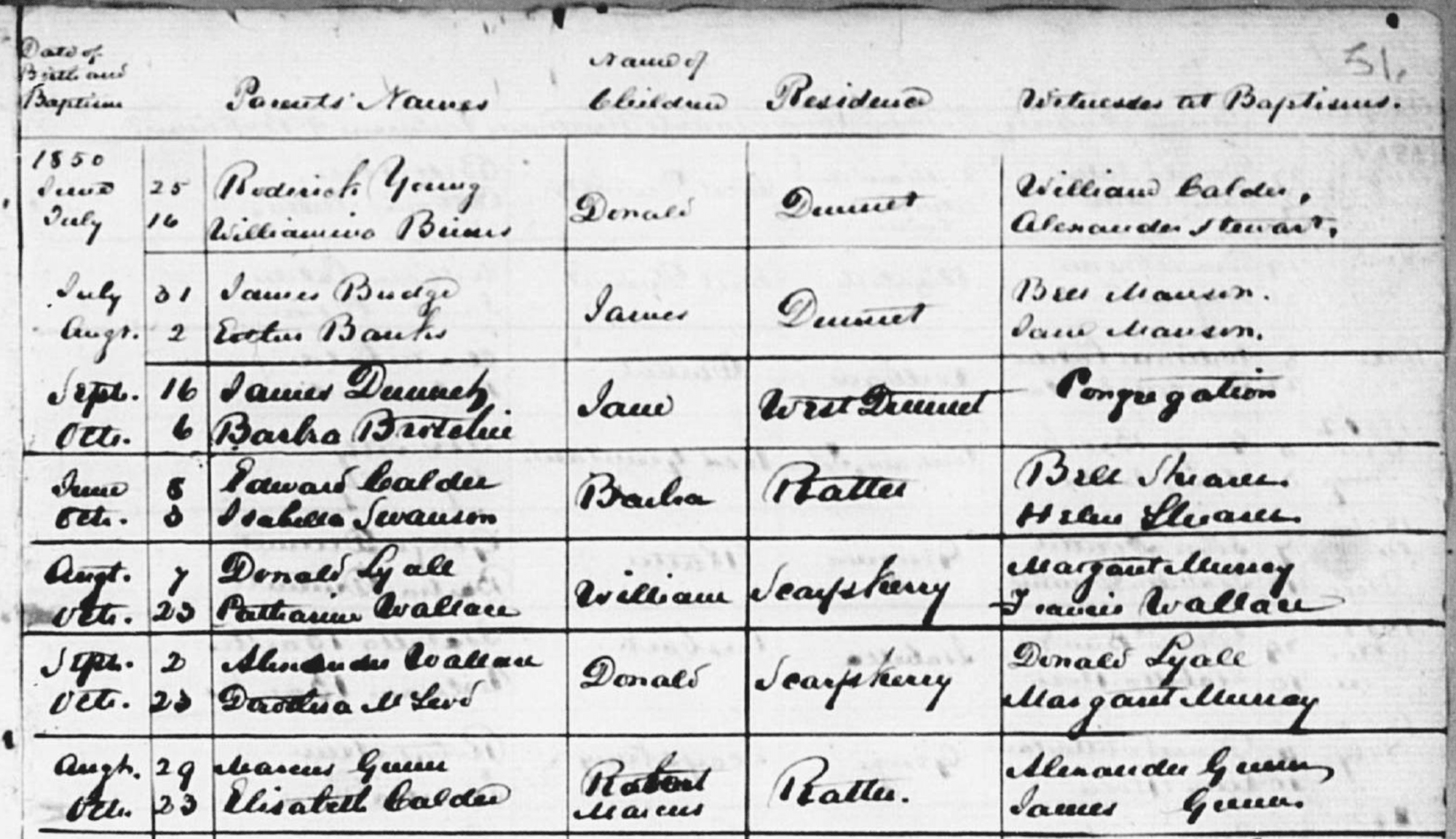

LITFL note: We therefore list Gunn’s date of birth as August 29, 1850, with supporting links to the Dunnet parish register and the 1851 census.
References
Biography
- In Memoriam: Robert Marcus Gunn. Br Med J. 1909 Dec 11; 2(2554): 1719–1721
- In Memoriam: Robert Marcus Gunn. Lancet 1909; ii: 1786
- Biography: Gunn, Robert Marcus (1850 – 1909). Plarr’s Lives of the Fellows Online. Royal College of Surgeons of England.
- Beighton G, Wiedemann HR. The Person Behind the Syndrome. Springer. 1997: 74-76
Eponymous terms
- Marin Amat M. Sur le syndrome ou phenomen de Marcus Gunn. Annales d’oculistique, Paris, 1919, 156: 513-528.
- Bardsley PC. The Retinal Signs of Arteriosclerosis compared with those due simply to Increased Blood-pressure. Proc R Soc Med. 1917; 10(Sect Ophthalmol): 34–42.
Eponym
the person behind the name

Josh Taylor, MD University of Western Australia. Medical training in Western Australia with a keen interest in Ophthalmology.

BA MA (Oxon) MBChB (Edin) FACEM FFSEM. Emergency physician, Sir Charles Gairdner Hospital. Passion for rugby; medical history; medical education; and asynchronous learning #FOAMed evangelist. Co-founder and CTO of Life in the Fast lane | On Call: Principles and Protocol 4e| Eponyms | Books |