


Rolland J. Whitacre
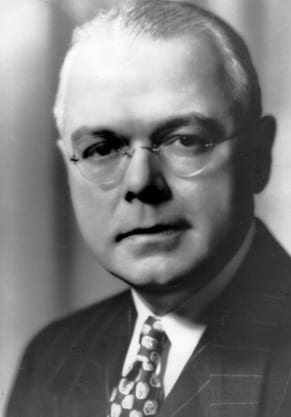
Rolland John Whitacre (1909-1956) was an American anesthesiologist.
Whitacre had a lasting impact on spinal needle design and the prevention of post–dural puncture headache (PDPH). He became the first full-time anesthesiologist in Cleveland and in 1935 founded the Department of Anesthesiology at Huron Road Hospital, developing it into one of the most prominent teaching departments in the United States.
Whitacre emerged as a national leader in anesthesiology. He served as president of the American Society of Anesthesiologists (1950), president of the American Board of Anesthesiology, associate editor of Anesthesiology, and was a central figure in the early organisation of the Academy of Anesthesiology.
His most enduring contribution was the development of the pencil-point spinal needle, described with James R. Hart in 1951. By replacing a cutting bevel with a solid, conical, non-cutting tip and lateral orifice, the Whitacre needle reduced dural trauma and cerebrospinal fluid leakage, significantly lowering the incidence and severity of postspinal headache. Derived from earlier atraumatic concepts proposed by H. M. Greene (1923), the design proved durable and formed the basis of modern atraumatic spinal needles.
Biography
- Born May 19, 1909 in Vandergrift, Pennsylvania, USA
- 1927–1929 – Premedical studies, University of Pittsburgh
- 1933 – Graduated MD, Hahnemann Medical College, Philadelphia. Commenced internship, Huron Road Hospital, Cleveland, Ohio
- 1935 – Appointed first full-time anesthesiologist in Cleveland; founded the Department of Anesthesiology at Huron Road Hospital
- 1936 – President, Cleveland Society of Anesthesiologists
- 1939 – Certified by the newly formed American Board of Anesthesiology
- 1945 – Appointed Executive Secretary, International Anesthesia Research Society
- 1946 – Became Associate Editor, Anesthesiology
- 1946 – President, Ohio Society of Anesthesiologists
- 1950 – President, American Society of Anesthesiologists
- 1951 – Published large clinical series on thoracic epidural anesthesia
- 1951 – Published on the pencil-point spinal needle (Whitacre needle) with James R. Hart
- 1952 – Founding President, Academy of Anesthesiology
- 1953 – Chairman, Section on Anesthesiology, American Medical Association
- 1955 – Participated in international planning meetings leading to the formation of the World Federation of Societies of Anaesthesiologists
- Died 16 February 16, 1956 at his home in Shaker Heights, Ohio, from myocardial infarction, aged 46
- 1956 – Awarded the ASA Distinguished Service Award (posthumous)
Medical Eponyms
Whitacre spinal (pencil-point) needle (1951)
The Whitacre spinal needle is characterised by a solid conical (“pencil-point”) tip with a lateral side-hole for injection, designed to minimise dural trauma during subarachnoid puncture. Unlike cutting bevel needles, the Whitacre tip does not incise the dura but displaces its fibres, promoting early closure of the puncture site.
- Tip design: Solid conical (“pencil-point”) tip with lateral side-hole proximal to the tip
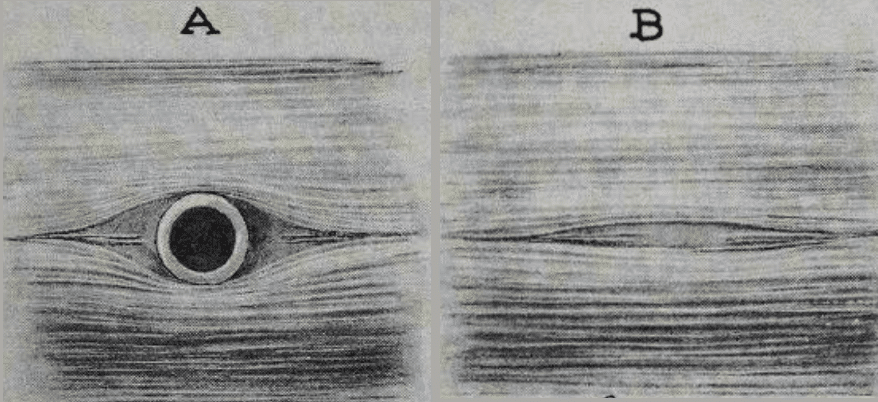
- Mechanism: Separates rather than cuts longitudinal dural fibres, allowing elastic recoil and early hole closure
- Key innovation: Side-port injection combined with a closed, non-cutting tip
- Clinical impact: Reduced post-dural puncture headache (PDPH) from ~5–10% to ~2% in large clinical series
- Early limitation: Small side-hole caused slow CSF return and directional drug flow
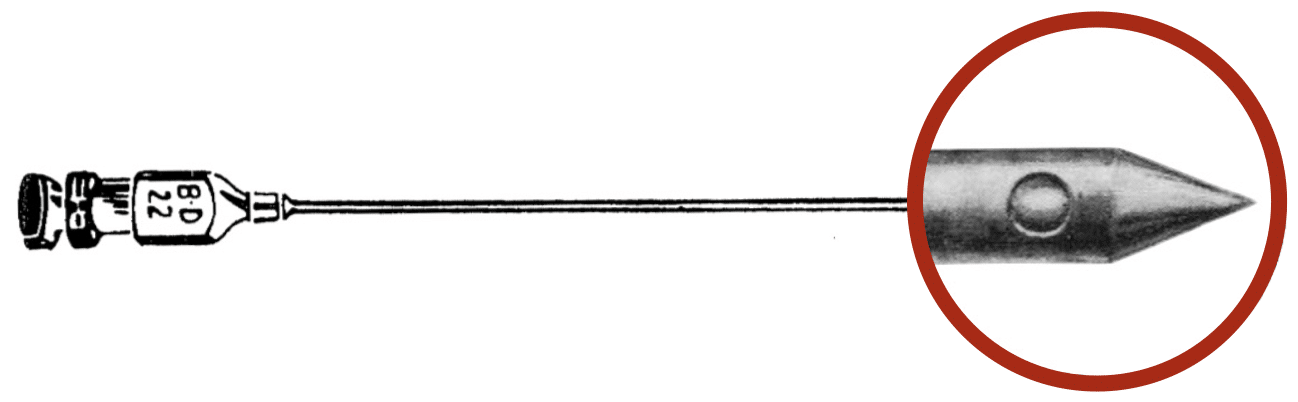
The Whitacre needle was the first atraumatic spinal needle to achieve widespread clinical adoption and remains the conceptual foundation for modern pencil-point designs.
We asked the Becton, Dickinson Company to make a 20-gauge needle with a solid end drawn to a point similar in shape to a finely sharpened pencil… Presumably this type of needle separates the longitudinal fibres of the dura and arachnoid without seriously traumatizing them… When the needle is withdrawn, the fibres quickly return to a state of close apposition, thereby permitting less leakage of fluid… After the pencil-point needle was adopted… headache developed in 2.0% of patients, compared with 5% using the ordinary short-bevel needle
Whitacre, Hart 1951
Note: James R. Hart, MD was an anesthesiologist at Huron Road Hospital, Cleveland, and Whitacre’s close clinical collaborator. Hart did not design the needle but conducted its clinical evaluation, collected outcome data, and co-authored the landmark 1951 JAMA paper.
Why needle design matters: post-dural puncture headache (PDPH)
Post-dural puncture headache (PDPH) is thought to arise from ongoing CSF leakage through the dural puncture, reducing intracranial CSF volume and causing traction on pain-sensitive intracranial structures.
Cutting needles (e.g. Quincke) incise longitudinal dural fibres and may leave a defect that gapes and leaks. Pencil-point needles (e.g. Whitacre) are designed to separate rather than cut dural fibres, encouraging rapid re-approximation after withdrawal and reducing CSF leakage, which lowers both the incidence and severity of PDPH.
Major Publications
- Whitacre RJ, Potter JK. The Subarachnoid Use of Vasoconstrictors in Spinal Anesthesia. Ann Surg. 1948 Feb;127(2):338-41.
- Whitacre RJ, Fisher AJ. Curare in cesarean section. Curr Res Anesth Analg. 1948 May-Jun;27(3):164-7.
- Whitacre RJ, DePiero N. Prevention preferred in the operating room. J Indiana State Med Assoc. 1950 Mar;43(3):181-4.
- Whitacre RJ. Early recognition of danger signals during anesthesia and their correction. Ohio State Med J. 1950 May;46(5):459-61.
- Whitacre RJ, Cressman PG. Choices of anesthesia for operative vaginal and abdominal delivery. J Am Med Assoc. 1951 Apr 14;145(15):1118-22.
- Hart JR, Whitacre RJ. Pencil-point needle in prevention of postspinal headache. J Am Med Assoc. 1951 Oct 13;147(7):657-8.
- Whitacre RJ. Anesthesiologist’s responsibility to the patient. J Am Med Assoc. 1953 Aug 8;152(15):1407-8.
References
Biography
- Whitacre J. Dr Rolland J Whitacre (1909-1956). Curr Res Anesth Analg. 1956 May-Jun;35(3):145-7.
- Bause GS. Rolland Whitacre’s wandering testament. Anesthesiology. 2010 May;112(5):1078.
Eponymous terms
- Carrie LE. Whitacre and pencil-point spinal needles: some points to consider. Anaesthesia. 1990 Dec;45(12):1097-8.
- Harms R, Cadogan M. History of Spinal Needles. LITFL
Eponym
the person behind the name

MBBS Newcastle University, UK. Currently working at Sir Charles Gairdner Hospital, Perth. Aspiring anaesthetist

BA MA (Oxon) MBChB (Edin) FACEM FFSEM. Emergency physician, Sir Charles Gairdner Hospital. Passion for rugby, medical history, medical education, and asynchronous learning #FOAMed evangelist. Editor-in-Chief and Webmaster of Life in the Fast lane, LITFL | On Call 4e| Eponyms | Books | Horology |