


Alexander Wood
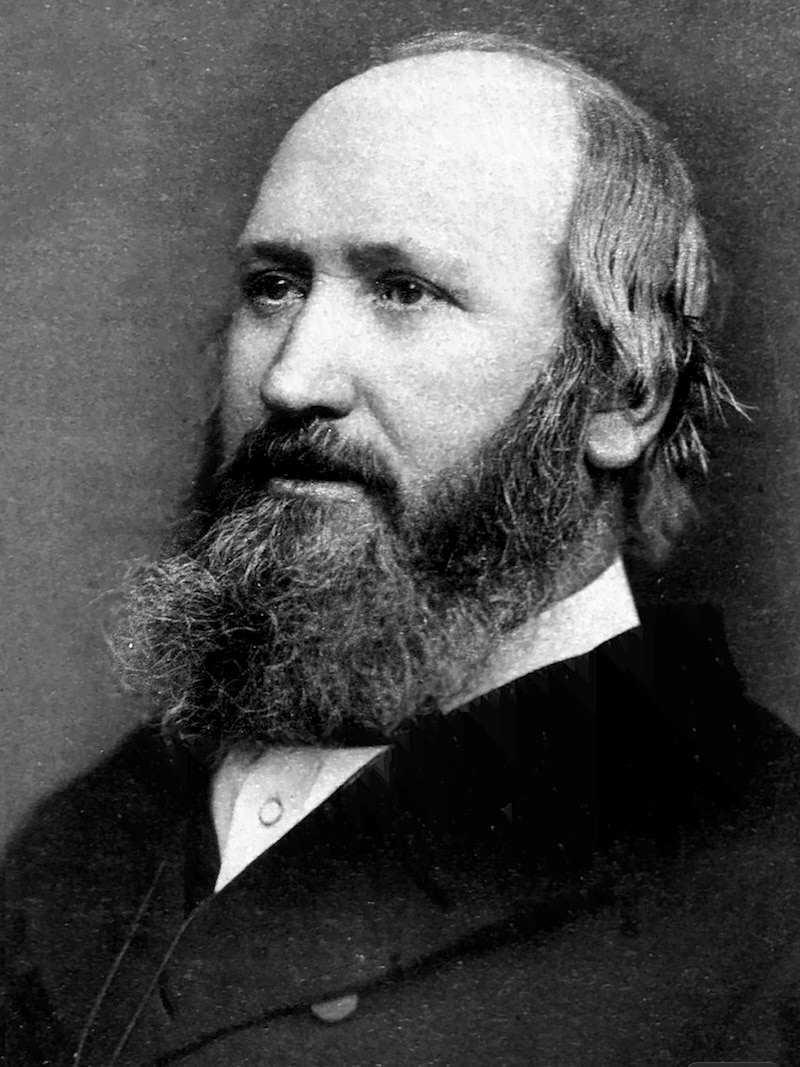
Alexander Wood (1817-1884) was a Scottish physician.
Wood was a leading figure of the mid-Victorian medical establishment, serving as President of the Royal College of Physicians of Edinburgh and later representing the College on the General Medical Council. He combined clinical practice with civic work and medical reform, and was active in the influential Edinburgh extramural teaching tradition.
Wood developed and popularised subcutaneous (hypodermic) injection for the treatment of neuralgia. In late 1853 he began injecting morphine solution under the skin near “painful points” (Valleix), and in 1855 published a detailed, clinical account that helped establish hypodermic medication as a practical therapeutic method. While the technology and ideas evolved alongside earlier work by Francis Rynd and Charles-Gabriel Pravaz, Wood’s contribution was the local hypodermic morphine therapy and dissemination of the technique.
Biography
- Born December 10, 1817 in Fife, Scotland son of Dr John Wood, a physician in Cupar, Fife
- 1821 – Family moved to Edinburgh (New Town).
- 1826–1832 – Educated at Edinburgh Academy.
- 1832 – Matriculated Edinburgh University in arts and medicine
- 1839 – Graduated MD, University of Edinburgh. Appointed physician to the Stockbridge and Royal Public dispensaries
- 1840 – Elected Fellow of the Royal College of Physicians of Edinburgh (FRCPE)
- 1841 – Began lecturing in the Edinburgh extramural medical school.
- 1842 – Married Rebecca Massey
- 1843 – Joined the Free Church of Scotland
- 1846–1852 – Served as an Edinburgh Police Commissioner and participated in wider civic committees; active in poor relief initiatives.
- 1850–1856 – Secretary, RCPE; key figure in College politics and licensing reform.
- 1852 – Failed in attempt to be appointed to the chair of Medicine in Glasgow
- 1853 – Developed/introduced the subcutaneous (hypodermic) injection technique using a fine hollow needle attached to a syringe, to treat neuralgia with morphine injected near the site of pain
- 1855 – Published landmark paper on a New method of treating neuralgia by subcutaneous injection. Failed in attempt to be appointed to the chair of Medicine in Edinburgh
- 1858–1861 – President, Royal College of Physicians of Edinburgh (re-elected for an additional year as special recognition).
- 1858–1873 – First RCPE representative on the General Medical Council, active in medical regulation and licensing reform.
- 1868 – Delivered Harveian lecture on Preliminary education, or, The general culture required by the student of medicine.
- 1873 – Retired from practice due to illness.
- Died February 26, 1884 in Edinburgh after a brief illness
Medical Eponyms
Hypodermic syringe (1853)
The concept of a peripheral approach to pain relief was developed by Alexander Wood, who sought to improve the treatment of neuralgia. Other physicians had tried applying morphine to the skin in a process similar to inoculation, but Wood reasoned that it might be more effective to inject the morphine close to the nerve supplying the painful area.
1853 – While using a Ferguson syringe for injection treatment of a naevus, Wood realised the same instrument could deliver an opiate directly to a painful “point of Valleix” in neuralgia, rather than via blisters or ointments.
I procured one of the elegant little syringes, constructed for this purpose by Mr Ferguson of Giltspur Street, London… it occurred to me that it might supply the means of bringing some narcotic to bear more-directly than I had hitherto been able to accomplish on the affected nerve in neuralgia. I resolved to make the attempt, and did not long lack opportunity
Wood, 1855
Wood documented therapeutic subcutaneous morphine injection. He injected morphia in the area of discomfort, and demonstrated both local and systemic effects
On November 28th [1853] I attended an old lady, who had suffered severely for four days from cervico-brachial neuralgia …I inserted the syringe within the angle formed by the clavicle and acromion, and injected twenty drops of a solution of muriate of morphia. In about ten minutes after the withdrawal of the syringe the patient began to complain of giddiness and confusion of ideas; in half an hour the pain had subsided, and I left her in the anticipation of a refreshing sleep.
I visited her again about 11 A.M. on the 29th; was a little annoyed to find that she had never wakened; the breathing also was somewhat deep, and she was roused with difficulty.
Wood, 1855
1855 – Wood published in Edinburgh Medical and Surgical Journal a full clinical account of subcutaneous opiate injection for neuralgia, with multiple cases and discussion of local vs systemic mechanisms.
In considering the modus operandi of this new application of remedial means…
1st, The local or topical – the particular effect of the medicine on the tissue to which it is applied; 2nd, The remote effects – being physical, chemical, or vital changes produced on parts at a distance from those to which the medicine is directly applied, or on the system at large.
Wood, 1855
Controversies
Who invented the hypodermic syringe and subcutaneous drug administration?
There is no single inventor. The “hypodermic method” emerged through a sequence of related innovations of instrument design, intended use, and clinical popularisation. These are often conflated in later retellings.
1844 – Francis Rynd (1801-1861) practised subcutaneous introduction of fluid for neuralgia at the Meath Hospital (May 1844) and published clinical use in 1845. He later provided a formal description of his instrument in (1861).
The subcutaneous introduction of fluids, for the relief of neuralgia, was first practised in this country by me, in the Meath Hospital, in the month of May, 1844.
Rynd, 1861
1853 – French surgeon, Charles Gabriel Pravaz (1791–1853), described a screw-driven syringe with a fine trocar for intravascular injection of ferric chloride into naevi in a note published in 1853. An early syringe technology milestone rather than clinical analgesic hypodermic therapy.
1853 – Alexander Wood performed early therapeutic injections in 1853 and published in 1855 the first widely reproducible clinical account of hypodermic morphine for neuralgia. He emphasised injection at tender “painful points” (Valleix) popularising the clinical method rather than the first hollow needle per se.
1859 – English surgeon Charles Hunter (1835–1878) argued that benefit did not require injection at the painful site, supporting a systemic mechanism via absorption. He promoted wider indications and helped establish the term “hypodermic”
In Summary:
- Rynd has the strongest claim for earliest documented subcutaneous instillation;
- Pravaz for early syringe engineering applied to vascular injection;
- Wood for local hypodermic morphine therapy;
- Hunter for systemic administration, terminology, and dissemination.
The myth of Wood’s wife and morphine addiction
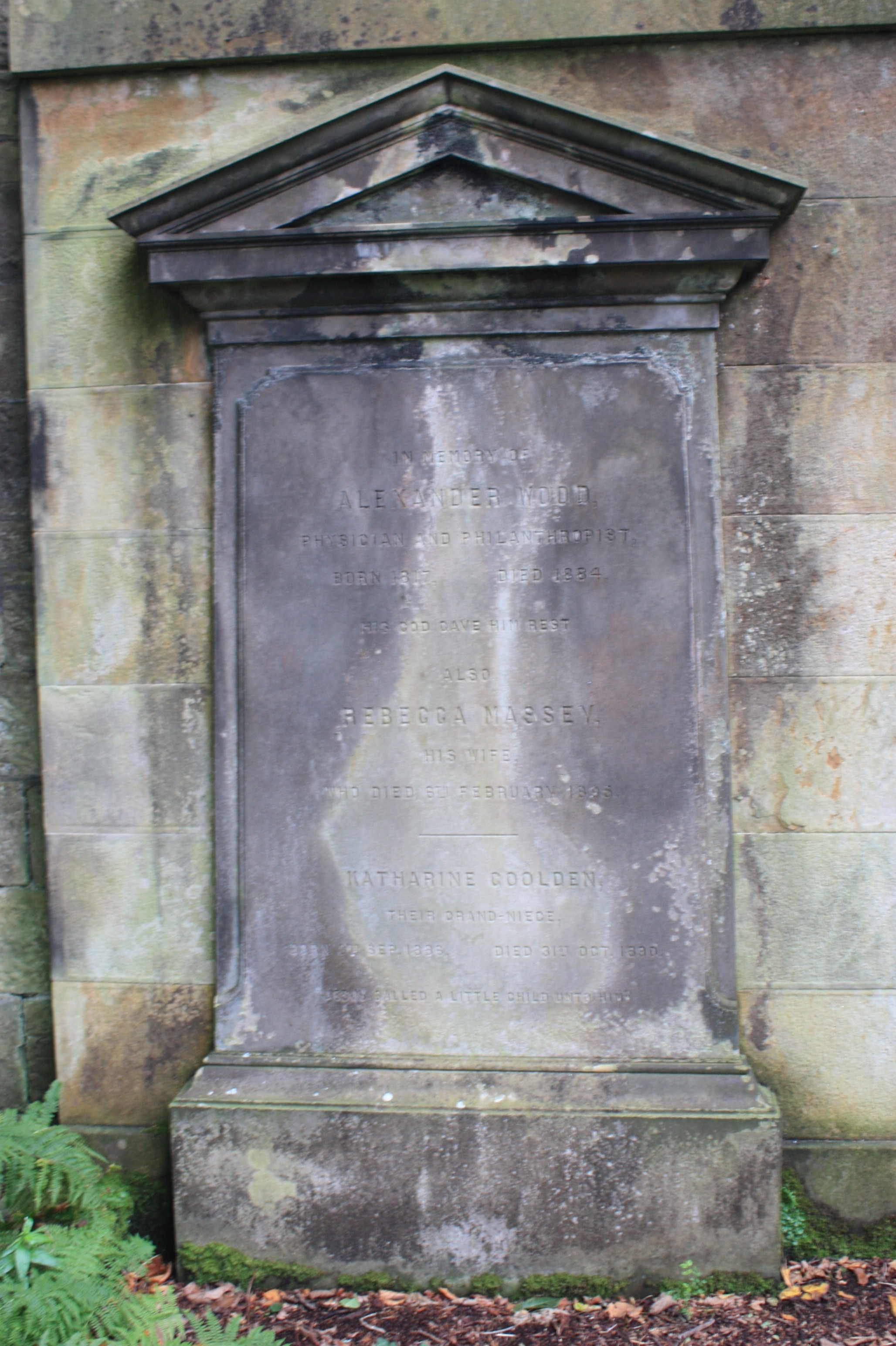
A persistent story claims Wood’s wife, Rebecca Massey, became the first “morphine addict” and died of an overdose from his syringe. Contemporary retellings aside, later accounts reject this as a false rumour. The Dean Cemetery gravestone indeed supports that she outlived him, dying on February 6, 1895.
Major Publications
- Wood A. Homoeopathy unmasked: being an exposure of its principal absurdities and contradictions. With an estimate of its recorded cures. 1844
- Wood A. Sequel to homeopathy unmasked : being a farther exposure of Hahnemann and his doctrines in reply to recent anonymous pamphleteers. 1844
- Wood A. Rational medicine, a vindication. Address delivered on the opening of the new School of Medicine, Surgeon’s Hall, Edinburgh, November 6, 1849
- Wood A. What is mesmerism? An attempt to explain its phenomena on the admitted principles of physiological and psychical science. 1851
- Wood A. New method of treating neuralgia by the direct application of opiates to the painful points. Edinburgh Medical and Surgical Journal 1855; 82: 265-281 [Hypodermic syringe]
- Wood A. Small-pox in Scotland, as it is, was, and ought to be : with hints for its mitigation by legislative enactment. 1860
- Wood A. Preliminary education, or, The general culture required by the student of medicine. 1868
- Wood A. Report on the condition of the poorer classes of Edinburgh and of their dwellings, neighbourhoods, and families. 1868
References
Biography
- Alexander Wood. Br Med J. 1884 Mar 1;1(1209):442.
- Alexander Wood. Edinb Med J. 1884 Apr;29(10):973–976.
- Brown T. Alexander Wood, M.D., F.R.C.P.E. : a sketch of his life and work. Macniven & Wallace. 1886.
- Alexander Wood. Royal College of Physicians of Edinburgh
- Bibliography. Wood, Alexander 1817-1884. WorldCat Identities
Eponymous terms
- Rynd F. Neuralgia – introduction of fluid to the nerve. Dublin Med Press 1845; 13: 167–168
- Pravaz. Sur un nouveau moyen d’opérer la coagulation du sang dans les artères, applicable à la guérison des anévrismes. Comptes rendus hebdomadaires des séances de l’Académie des sciences 1853; 36(2): 88-90
- Bonnar GL. Case of Neuralgia of the Ischiatic Nerve, Treated by Dr. Alexander Wood’s New Method, of Applying the Opiate Directly to the Painful Points. Br Med J. 1857 Aug 29;1(35):733–4.
- Hunter C. On the hypodermic administration of remedies in neuralgia and other affections : being a paper read before the St. George’s Medical Society, on Decmeber 9th, 1858
- Rynd F. Description of an Instrument for the Subcutaneous Introduction of Fluids in Affections of the Nerve. Irish journal of medical science 1861; 32: 13
- Hunter C. On the speedy relief of pain and other nervous affections, by means of the hypodermic method. 1865
- Bartholow R. Manual of hypodermic medication. 1873 (5e 1891)
- Zakon SJ. The centenary of the hypodermic syringe, 1853-1953. AMA Arch Derm Syphilol. 1953 Nov;68(5):591.
- Musto D. The Invention of the Hypodermic Syringe In: Drugs in America: A Documentary History. 2002: 202-210
- Davenport-Hines R. The Pursuit of Oblivion – A Global History of Narcotics W. W. Norton. 2004
- Rynd-type hypodermic syringe, London, England, 1860-1880. Brought to Life, Science Museum.
- Musto D. Drugs in America – A Documentary History New York University Press (July 28, 2002)
- Ellis H. Alexander Wood: inventor of the hypodermic syringe and needle. Br J Hosp Med (Lond). 2017 Nov 2;78(11):647.
- Davenport-Hines R. The Pursuit of Oblivion: A Global History of Narcotics. 2004: 100-101
- Harms R, Cadogan M. History of Neuraxial Anaesthesia. LITFL
Eponym
the person behind the name

Studied at the University of Edinburgh MBChB BSc. British doctor currently working in Emergency Medicine in Perth, Western Australia. Interests in Anaesthetics, Critical Care and trail running.

BA MA (Oxon) MBChB (Edin) FACEM FFSEM. Emergency physician, Sir Charles Gairdner Hospital. Passion for rugby, medical history, medical education, and asynchronous learning #FOAMed evangelist. Co-founder and CTO of Life in the Fast lane | On Call: Principles and Protocols 4e| Eponyms | Books | Horology