

Camillo Golgi
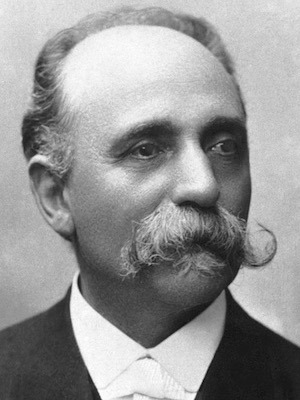
Camillo Golgi (1843-1926) was an Italian biologist and pathologist.
1906 Nobel Prize in Physiology or Medicine shared between Camillo Golgi and Santiago Ramón y Cajal “in recognition of their work on the structure of the nervous system.”
Biography
- Born July 7, 1843 Corteno, Italy
- 1906 – Nobel Prize in Physiology or Medicine
- Died January 21, 1926 in Pavia, Italy
Medical Eponyms
Anatomical eponyms
Golgi apparatus (or Golgi complex/body): Discovered in 1898, this organelle is a series of stacked membranes (cisternae) involved in packaging and exporting proteins and lipids. It was originally named apparato reticolare interno (internal reticular apparatus).
Golgi tendon organ: A proprioceptive sensory receptor located at the musculotendinous junction that detects muscle tension.
Golgi-Mazzoni corpuscles: Sensory nerve endings located in the tendons, specifically described as corpuscles that detect pressure and touch.
Golgi cells (type I and II): Specifically, Golgi cells of the cerebellum (inhibitory interneurons) and types of nerve cells categorized by axon length.
Perineuronal net: An extracellular matrix meshwork that surrounds some neurons.
Golgi method/stain: Also known as the “black reaction” (reazione nera), this silver-osmium technique is a staining method that allowed the first full visualization of nerve cells.
Golgi cycle/law: Named after his work on malaria, referring to the development cycle of the parasite in human blood and the correlation with fever.
Müller-Golgi tubules: Sometimes used for the tubules of the parietal cells of the gastric gland
Major Publications
References
- Buttner R, Lee J. De-eponymising anatomical terminology. 2020
- Bentivoglio M. Life and Discoveries of Camillo Golgi. NobelPrize.org
- Bibliography. Golgi, Camillo 1843-1926. WorldCat Identities
Eponym
the person behind the name

BA MA (Oxon) MBChB (Edin) FACEM FFSEM. Emergency physician, Sir Charles Gairdner Hospital. Passion for rugby; medical history; medical education; and asynchronous learning #FOAMed evangelist. Co-founder and CTO of Life in the Fast lane | On Call: Principles and Protocol 4e| Eponyms | Books |