
Paediatric Intubation Checklist
Paediatric intubation checklist covering preparation, weight-based equipment, pre-intubation pause, rescue plans and post-intubation care in children.


Paediatric intubation checklist covering preparation, weight-based equipment, pre-intubation pause, rescue plans and post-intubation care in children.
CICO occurs when adequate alveolar oxygen delivery cannot be achieved despite best attempts at all three upper airway rescue techniques ("Lifelines"): face mask ventilation, supraglottic airway ventilation, and tracheal intubation. CICO management involves recognition of CICO, priming for FONA, and transition to FONA.
Airway anatomy is crucial for bronchoscopy and airway management, emphasizing orientation, normal variants, and recognizing abnormalities
Flexible nasoendoscopy (FNE) uses in critical care, indications and contra-indications, technique, anatomy and key findings, and useful videos for learning.
Bronchoscopic foreign body removal including: indications, assessment and planning, flexible versus rigid bronchoscopy, retrieval tools and techniques, and critical care scenarios.
Airway foreign bodies (AFBs) are potentially life‑threatening. This CCC post considers causes/ risk factors, pathophysiology, complications, clinical features, investigations, and management.
Bronchoscopy is widely used during percutaneous dilatational tracheostomy (PDT) to improve safety and accuracy, and to facilitate procedural supervision.
VAFI is video-assisted flexible intubation and FARSI is flexiscope-assisted rapid sequence intubation. These hybrid airway techniques are used to overcome supraglottic and infraglottic airway problems, respectively.
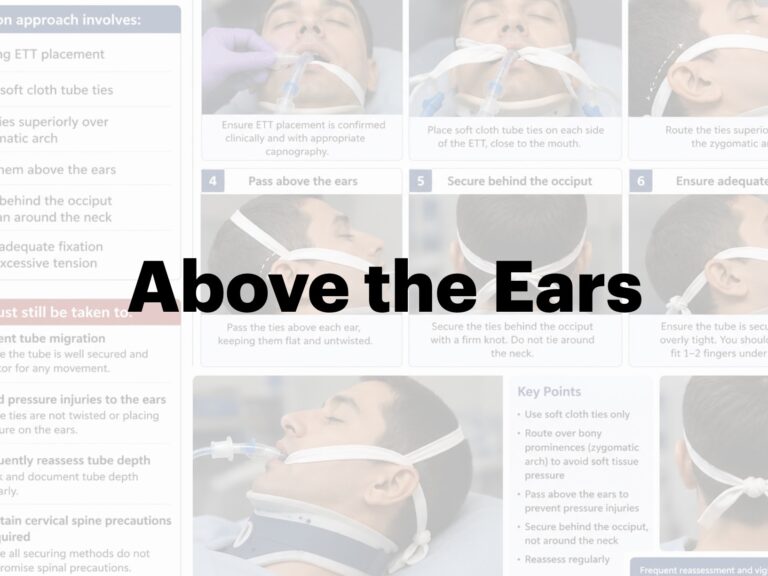
Securing the endotracheal tube (ETT) for neuroprotection with cloth ties above the ears. The airway does not end once the tube passes the cords
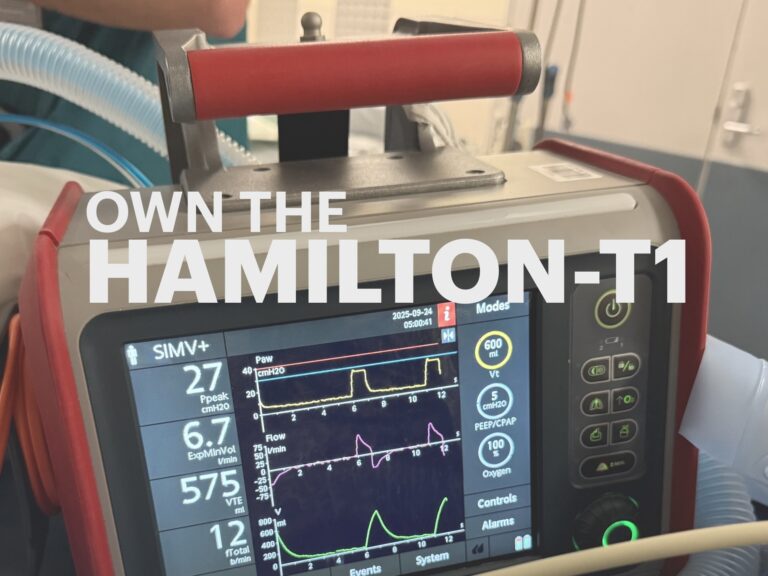
Own the Hamilton: video guide to transitioning from Oxylog to Hamilton T1. Learn manual strategies, ASV, and simulation-based ventilator training.
Unrecognised oesophageal intubation: frequency, causes, prevention, recognition, action to take, & confounders. Derived from PUMA guidelines.
Description of the airway assistant role in the ANZ critical care setting, including responsibilities, tips and pitfalls for newcomers to the role.