


Jess B. Weiss
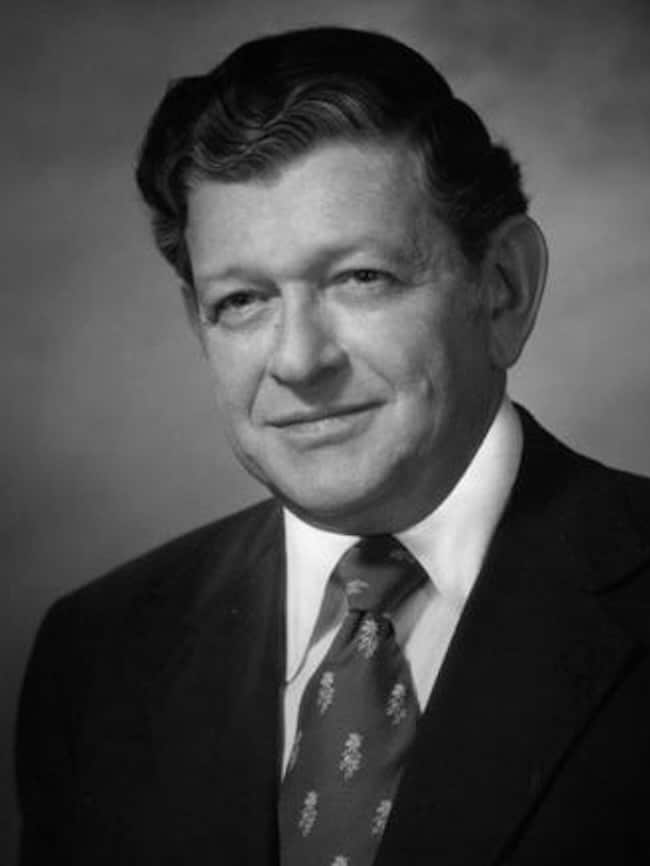
Jess Bernard Weiss (1917-2007) was an American anesthesiologist.
Weiss is best known for his redesign of the epidural needle, adapting the existing Tuohy–Huber form to better support the hanging-drop technique for identification of the epidural space. By adding stabilising wings at the hub and deliberately blunting and shortening the bevel, he improved two-handed control, visual confirmation of epidural entry, and reduced the risk of inadvertent dural puncture.
Weiss was a major institutional leader. As Anesthesiologist-in-Chief at the Boston Lying-In Hospital, President of the American Society of Anesthesiologists, and President of the Anesthesia Patient Safety Foundation, he helped shape standards of obstetric anaesthesia, professional governance, and patient safety.
Biography
- Born January 11, 1917 in the Bronx, New York, USA, to a father of Russian origin and a mother of Austrian origin. Raised in Mount Vernon, New York.
- 1938 – Graduated with a BA from the University of Alabama.
- 1939–1941 – Commenced medical studies at St Mungo’s College of Medicine, Glasgow, Scotland. Medical training interrupted by the outbreak of the Second World War.
- 1943 – Completed medical degree at Middlesex University School of Medicine, Waltham, Massachusetts.
- 1943–1946 – Served in the United States Navy during the Second World War.
- Late 1940s – Entered general medical practice in the Boston area; intermittently administered anaesthesia, prompting a career change.
- Early 1950s – Completed residency and fellowship training in anaesthesiology at Massachusetts Memorial Hospital, Boston University.
- 1950s – Recalled to naval service. Served as Chief of Anesthesia at the US Naval Hospital, Guam.
- 1960 – Appointed to the anaesthesia staff at Boston Lying-In Hospital
- 1961–1981 – Anesthesiologist-in-Chief, Boston Lying-In Hospital / Boston Hospital for Women. Under his leadership, obstetric anaesthesia shifted from predominantly inhalational techniques to regional (epidural) anaesthesia, with anaesthesiologists assuming primary responsibility.
- 1961 – Modified the Tuohy-style epidural needle by adding stabilising wings and blunting the tip, giving rise to the Weiss epidural needle.
- 1970 – Chairman, Obstetric Anesthesia Section, World Congress of the International Federation of Gynecology and Obstetrics (FIGO).
- 1979 – Elected President of the American Society of Anesthesiologists (ASA).
- 1982–1988 – Vice Chairman, Department of Anesthesia, Brigham and Women’s Hospital; Associate Professor of Anaesthesiology, Harvard Medical School.
- 1985–1987 – President, Anesthesia Patient Safety Foundation (APSF).
- 1990s – Awarded Distinguished Service Awards by: American Society of Anesthesiologists, American Society of Regional Anesthesia, American College of Obstetricians and Gynecologists (a rare honour for an anaesthesiologist)
- 1990 – Retired from clinical practice; remained active in professional and educational roles.
- Died June 28, 2007 in Fort Lauderdale, Florida, aged 90.
Medical Eponyms
Weiss epidural needle
By the early 1960s, Weiss was a leading figure in obstetric anaesthesia at the Boston Lying-In Hospital, where he favoured the hanging-drop method rather than loss-of-resistance to identify the epidural space. Existing Tuohy needles were poorly suited to this technique, as they required one-handed advancement while the other hand managed the syringe or tubing, making fine control difficult.
To address this, Weiss modified the Tuohy–Huber epidural needle by adding a T-shaped pair of stabilising wings at the hub, allowing the needle to be advanced with both hands while the operator continuously observed the fluid drop at the hub. This modification fundamentally changed the ergonomics of epidural placement for practitioners using the hanging-drop technique.
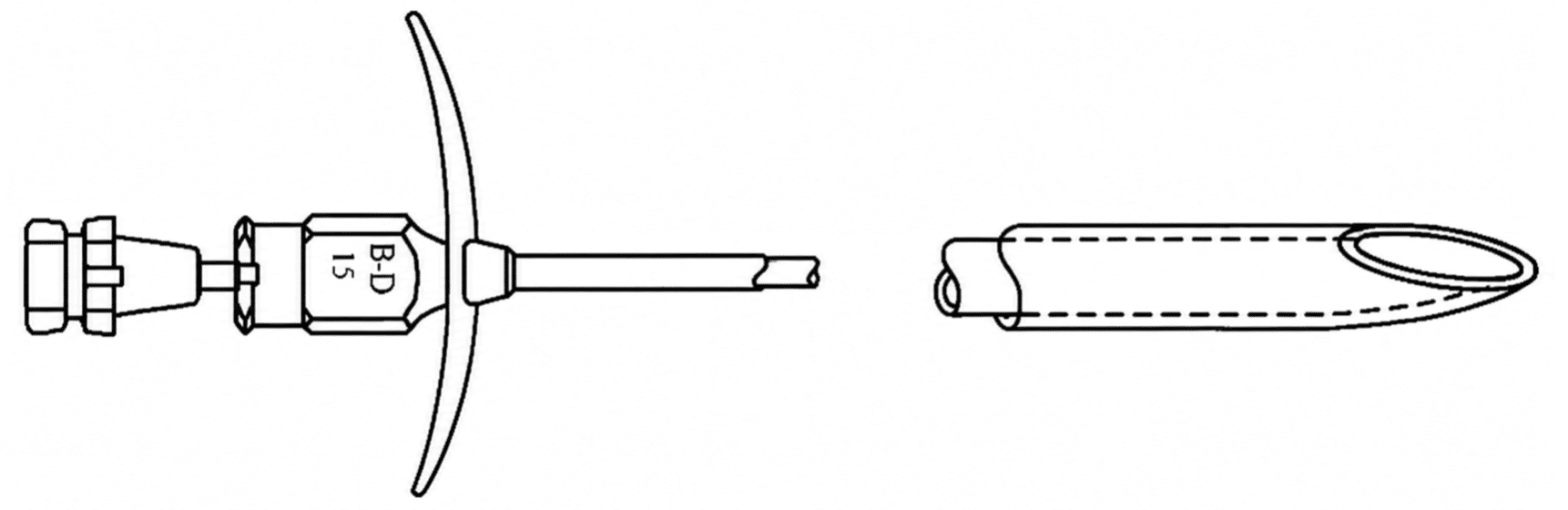
In addition to the winged hub, Weiss dulled the needle tip, shortening and blunting the bevel compared with earlier Tuohy designs. This allowed the operator, once within the epidural space, to displace the dura mater anteriorly without perforating it, thus facilitating the generation of the negative epidural pressure on which the hanging-drop method depended.
This design differed from that of Robert Frank Hustead, who refined needle geometry primarily to improve tactile feedback during loss-of-resistance. Although Weiss and Hustead were professionally acquainted, they each remained committed to different techniques for epidural identification, and their respective needle designs reflect these divergent clinical preferences.
The Weiss epidural needle entered widespread clinical use through obstetric anaesthesia training programmes, particularly in centres where the hanging-drop technique remained popular. Its winged design continues to be preferred by some practitioners for its stability and fine control.
Major Publications
- White CW Jr, Weiss JB, Alver EC, Heerdegen DK. Anesthesia and postpartum headache. Obstet Gynecol. 1962 Dec;20:734-8.
References
Biography
- Jess B. Weiss, M.D.. ASA Newsletter. 1978;42(12).
- Marquard B. Jess Weiss, 90; redesigned an epidural needle. Boston Globe, July 5, 2007
- Pierce EC. Obituary Jess B. Weiss, M.D., 1917-2007. Bulletin of Anesthesia History. 2007; 25(3): 17.
- Pierce EC Jr. Jess B. Weiss, M.D. — 1917-2007. ASA Monitor 2007; 71(9): 35-36
Eponymous terms
- Giuca MS, Desai SP. Eponyms in the operating room: careers of five American physicians. Bull Anesth Hist. 2013 Oct;31(2):32-5, 39.
- Frolich MA, Caton D. Pioneers in epidural needle design. Anesth Analg. 2001;93:215-20.
- Jess Bernard Weiss, MD (1917-2007), “Weiss Epidural Needle,” OnView, accessed February 6, 2026
Eponym
the person behind the name

BSc (Hons) Neuroscience, University of Bristol; MBBS, St George's University of London; MRCP (UK). Internal medic and aspiring Intensivist/triathlete/coffee roaster. Perth/London.

BA MA (Oxon) MBChB (Edin) FACEM FFSEM. Emergency physician, Sir Charles Gairdner Hospital. Passion for rugby, medical history, medical education, and asynchronous learning #FOAMed evangelist. Editor-in-Chief and Webmaster of Life in the Fast lane, LITFL | On Call 4e| Eponyms | Books | Horology |