

Manuel Straub
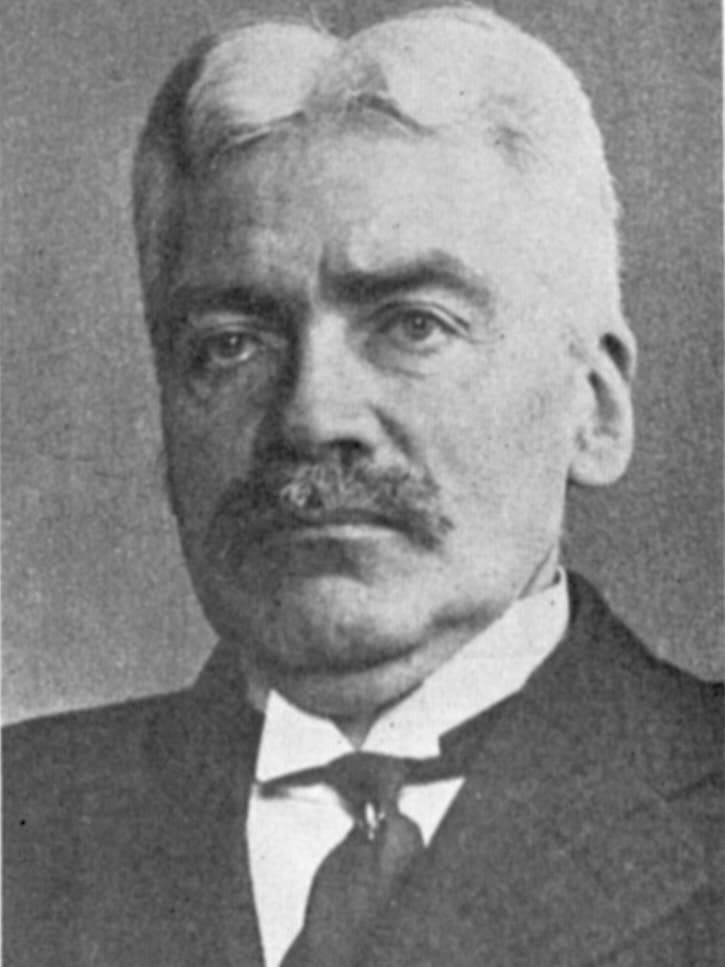
Manuel Straub (1858-1916) was a Dutch ophthalmologist
Straub decveloped einfaches diagnostisches Hülfsmittel to enhance bedside diagnostic ophthalmic examination. After medical training in Amsterdam and formative work in pathological anatomy, he moved into ophthalmology under the tutelage of Donders and Snellen.
In 1888, he published an early clinical demonstration of fluorescein solution as a diagnostic aid for corneal disease, demonstrating how the dye could expose epithelial injury and then be used serially to follow healing.
In a posthumously compiled Dutch monograph, Straub argued that resorbed lens material could drive severe intraocular inflammation (“phacogenetic” inflammation) across cataract surgery/trauma, lens dislocation, and spontaneous cataract resorption. Straub also occupied a prominent academic role as Amsterdam’s professor of ophthalmology (1896–1916) and a formative editor-manager of the Nederlands Tijdschrift voor Geneeskunde (1896–1903).
Biographical Timeline
- Born August 19, 1858 in Poortugaal, Netherlands.
- 1882 – Completed medical qualification (Artsexamen), University of Amsterdam.
- Early 1880s – Worked for several years as an assistant in pathological anatomy
- 1880s – Entered the military medical service. Transferred to Utrecht, where he trained with Franciscus Cornelis Donders (1819–1889) in his physiological laboratory and Herman Snellen (1834–1908) as his assistant.
- 1888 – Published on fluorescein as a diagnostic aid for corneal disease: Fluoreszeinlösung als ein diagnostisches Hilfsmittel für Hornhauterkrankungen
- 1893 – Awarded honorary medical doctorate (h.c.) at Leiden University
- 1895 – Appointed Buitengewoon hoogleraar (extraordinary professor) of Ophthalmology, University of Amsterdam. Delivered inaugural lecture March 18, 1895 De vorming der geneeskundigen.
- 1896 – Became Gewoon hoogleraar (full professor) of Ophthalmology, University of Amsterdam
- 1896–1903 – Served as 5th “redacteur-gérant” (editor-manager) of the Nederlands Tijdschrift voor Geneeskunde (NTVG). Credited with establishing the journal association’s first statutes, giving the publication a durable organisational foundation.
- Late 1890s–1910s – Major academic output spanning refraction/myopia and clinical pathology. Described fluorescein staining for improved visualisation of trachomatous corneal epithelial defects/ulcers
- Died April 14, 1916 in Amsterdam, Netherlands. Succeeded in the Amsterdam chair by his pupil W.P.C. Zeeman (1879–1960)
Key Medical Contributions
Fluorescein corneal staining (1888)
In 1888, Manuel Straub described fluorescein solution as a diagnostic aid for corneal epithelial defects. He showed that fluorescein rapidly reveals epithelial disruption that may be difficult to identify by inspection alone.
In a patient with suspected corneal injury after steam exposure, fluorescein distinguished the affected from the unaffected eye and produced a striking green staining pattern over the injured cornea.
Original
English
Ein Tropfen der Fluorescinlösung brachte sofort Klarheit. Während an dem rechten Auge der Farbstof nirgendwo eindrang, zeigte die ganze Hornhaut des linken Auges gleich nach der Einträufelung eine stark grüne Verfärbung, so dass die Diagnose Epithelverlust damit begründet erschien. Straub 1888
A single drop of fluorescein solution immediately provided clarity. While the dye did not penetrate anywhere in the right eye, the entire cornea of the left eye showed a strong green discolouration immediately after the solution was applied, thus confirming the diagnosis of epithelial loss. Straub 1888
Straub repeated the fluorescein staining over subsequent days to document re-epithelialisation. This simple bedside test delivered immediate diagnostic clarity and represents the earliest publication of clinical use of fluorescein for detecting and monitoring corneal epithelial defects.
Phacogenic (lens-induced) uveitis and phacoanaphylaxis
Straub’s most substantial uveitis work was assembled after his death into a Dutch monograph edited by former assistants “Over ontstekingen van het oog veroorzaakt door oplossing van lensmassa in de ooglymfe” (Amsterdam, 1919). In it he argued that resorbed/dissolved lens matter can provoke severe intraocular inflammation (“phacogenetic” inflammation). He organised his observations across three clinical settings: (1) cataract extraction and traumatic cataract, (2) lens dislocation, and (3) spontaneous resorption of senile cataract.
Straub emphasised that this inflammation could occur without infection, driven not only by surgical trauma but by the chemical effect of retained lens remnants within ocular fluids. The clinicopathological picture he described included keratic precipitates, corneal oedema and posterior synechiae, with vitreous exudation when the posterior capsule was involved.
1920 – van der Hoeve noted Straub’s attempt to modify the process using subcutaneous crystalline lens suspension, after which inflammation improved and summarised Straub’s central claim:
…while larger amounts of lens material can trigger acute or chronic inflammation, even very small, persistent quantities entering ocular fluids may sustain irritation and promote adhesive inflammation of the anterior chamber angle, with implications for glaucoma…where lens resorption is causal, the logical treatment may be lens extraction
1959 – Woods argued that Straub’s clinicopathological descriptions anticipated what became known as endophthalmitis phacoanaphylactica, and helped separate lens-induced uveitis from infectious uveitis and sympathetic ophthalmia.
Woods proposed that Straub’s clinicopathologic descriptions predated the description of endophthalmitis phacoanaphylactica and helped separate lens-induced uveitis from infectious uveitis and sympathetic ophthalmia.
Major Publications
- Straub M. Fluoreszeinlösung als ein diagnostisches Hilfsmittel für Hornhauterkrankungen. Centralblatt für Augenheilkunde. 1888; 12: 75–77
- de Haan J, Straub M. Voordrachten over bacteriologie voor praktizeerende medici en veearsten. 1895
- Straub M. Die Behandlung der Hornhaut-Entzündung. Berliner Klinik Sammlung klinischer Vorträge 1896; 97: 1-26
- Straub M. Handleiding bij het oogheelkundig onderzoek. 1898
- Straub M. Über monokulares körperliches Sehen nebst Beschreibung eines als monokulares Stereoskop benutzten Stroboskopes. 1904
- Straub M. De wetenschappelijke vorming der geneeskundigen. 1910
- Straub M. Over ontstekingen van het oog veroorzaakt door oplossing van lensmassa in de ooglymphe. Amsterdam: J.H. de Bussy, 1919.
- Straub M. Over ontstekingen van het oog veroorzaakt door oplossing van lensmassa in de ooglymphe. Ned Tijdschr Geneeskd. 1919; 63: 1385-6.
References
Biography
- van’t Hof SE. Manuel Straub, ‘redacteur-gérant’ van het Tijdschrift 1896-1903 [Manuel Straub, editor-in-chief of the Dutch Journal of Medicine 1896-1903]. Ned Tijdschr Geneeskd. 2007 Jul 7;151(27):1533-5.
- Prof. Dr. M. Straub, 1858 – 1916
Eponymous terms
- van der Hoeve J. Review of: On Inflammation of the Eye caused by Resorption of Crystaline Lens Mater in the Eye Lymph. British Journal of Ophthalmology 1920; 4: 195-197
- Woods AC. An adventrue in ophthalmic literature. Manuel Straub and the tradition of toxicity in lens protein. Am J Ophthalmol. 1959 Oct;48:463-72.
- Crone RA. Manuel Straub and the Amsterdam School of Ophthalmology. Surv Ophthalmol. 1996 Jul-Aug;41(1):90-5.
Eponym
the person behind the name

BVisSci, MD, University of Notre Dame, Fremantle. Doctor, baker, avid traveller, aspiring ophthalmologist

BA MA (Oxon) MBChB (Edin) FACEM FFSEM. Emergency physician, Sir Charles Gairdner Hospital. Passion for rugby; medical history; medical education; and asynchronous learning #FOAMed evangelist. Co-founder and CTO of Life in the Fast lane | On Call: Principles and Protocol 4e| Eponyms | Books |