


Peter Beighton
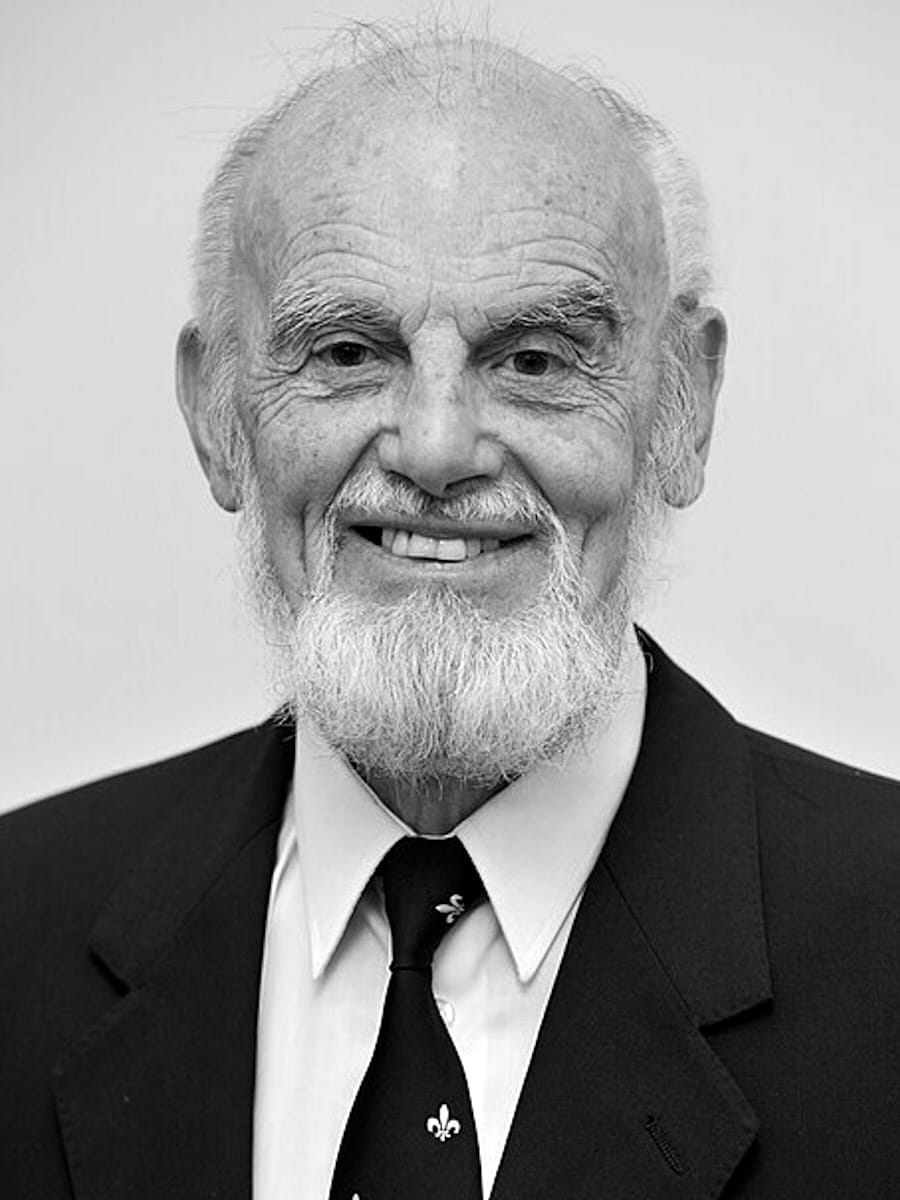
Peter Herbert Beighton (1934-2023) was a British-born physician, clinical geneticist, and medical researcher
After qualifying in medicine at St Mary’s Hospital, London in 1957, Beighton served as a Medical Officer with the Parachute Regiment and the United Nations in the Congo. His postgraduate training in internal medicine at St Thomas’ Hospital led to a Research Fellowship at Johns Hopkins Hospital, where he studied under Victor McKusick and developed a lifelong interest in medical genetics.
Relocating to South Africa in 1970, Beighton joined the University of the Witwatersrand before being appointed Professor of Human Genetics at the University of Cape Town in 1972, a position he held until 1999. Over nearly three decades, he established a vibrant department that pioneered the diagnosis, counselling, and molecular investigation of genetic disorders across the Southern African region. He directed the MRC Research Unit for Medical Genetics and supervised numerous PhD and MSc graduates who went on to lead genetics programmes nationally and internationally.
Most widely known for the Beighton Score for assessing joint hypermobility developed with his wife and collaborator Greta Beighton, and for his global fieldwork documenting inherited disorders in isolated populations. He published more than 430 scientific papers and 20 books, including The Man Behind the Syndrome and Inherited Disorders of the Skeleton. In recognition of his contributions, he was awarded South Africa’s Order of Mapungubwe in Bronze in 2002. A lifelong scholar, he earned a master’s degree in history after retirement and continued his academic engagement well into his 80s.
Biographical Timeline
- Born June 28, 1934 in Bolton England
- 1957 – Graduated medicine St Mary’s Hospital Medical School, University of London; MB BS, MRCS, LRCP
- 1957-1960 – Medical internships in London, UK. Qualified with DRCOG, DCH, DTM & H
- 1960-1962 – Captain in the R.A.M.C., Parachute Regiment, UK, United Nations, Congo
- 1963-1965 – WHO International Medical Expedition to Easter Island, South Pacific
- 1965-1968 – Residency in Internal Medicine, St. Thomas’s Hospital, London
- 1968-1969 – Fellow in Clinical Genetics at Johns Hopkins Hospital, Baltimore. Conducted clinical research in the Sahara Desert and epidemiological studies on Easter Island, Tristan da Cunha, and in Southern Africa.
- 1970 – Married Greta Janet Winch; Senior Research Associate, Dept of Orthopaedic Surgery, Univ. of the Witwatersrand
- 1972-1999 – Professor of Human Genetics, University of Cape Town. PhD (Wits), FRCP(Ed), FRCP(Lon), FRCP(Rheumatology)
- 1979 – Oppenheimer Fellowship, University of Cambridge
- 1982-1998 – Director: MRC Unit for Medical Genetics, University of Cape Town
- 1994 – Fellowship of the University of Cape Town
- 1999 – M.Phil (Lancaster) in social history
- 2000 – Emeritus Professor of Human Genetics, University of Cape Town. Senior Research Associate, Faculty of Dentistry, University of the Western Cape
- 2002 – Awarded the Order of Mapungubwe in Bronze by President Thabo Mbeki for lifetime scientific achievement.
- 2007 – Professor Extraordinarius, Faculty of Dentistry, University of the Western Cape
- 2011 – Senior Scholar, University of Cape Town
- Awards: British Orthopaedic Association, Robert Jones Gold Medal (1975); Smith and Nephew Literary Award (1977, 1979, 1986); South Africa Orthopaedic Association, President’s Medallion (1978); South African Medical Research Council, Silver Medal (1997); Ehlers-Danlos Foundation, USA International research award (1999)
- Died on June 14, 2023 in Cape Town, aged 88.
Medical Eponyms
Beighton Score (1971)
The Beighton Score is a simple, validated 9-point scoring system used to assess generalised joint hypermobility (GJH). It remains the most widely employed clinical and epidemiological tool for evaluating ligamentous laxity across populations and in diagnosing hypermobility-related conditions such as hypermobile Ehlers–Danlos Syndrome (hEDS).
1967-1968 – Beighton undertook a clinical study of over 100 families with Ehlers-Danlos Syndrome (EDS) in Southern England, applying the 5-point system of Carter and Wilkinson. He was assisted by Greta Winch (later Greta Beighton).
1969 – Beighton and Frank T. Horan (1933-2015) explored the orthopaedic manifestations of EDS; the utility of joint mobility scores; and demonstrated the dominant inheritance patterns of generalised joint hypermobility
1970 – Peter and Greta travelled to South Africa to undertake an epidemiological investigation of bone and joint disorders, based at the University of the Witwatersrand. An initial recognisance was undertaken in a semi-nomadic Bushmen community in the Kalahari Desert. Project plans were discussed while sitting around the camp fire. Greta had a flash of insight and suggested that although the limbs and digital joins were paired, they were not necessarily symmetrical and that a 9-point score would be appropriate.
1973 – Peter Beighton, Lionel Solomon, and Clive Soskolne publish “Articular mobility in an African population” in Ann Rheum Dis. This paper formally introduces the now-standard 9-point Beighton Score with photographic demonstration of each manoeuvre. The score was successfully used in a formal epidemiological survey of 1081 persons in a Tswana community in the Transvaal, South Africa
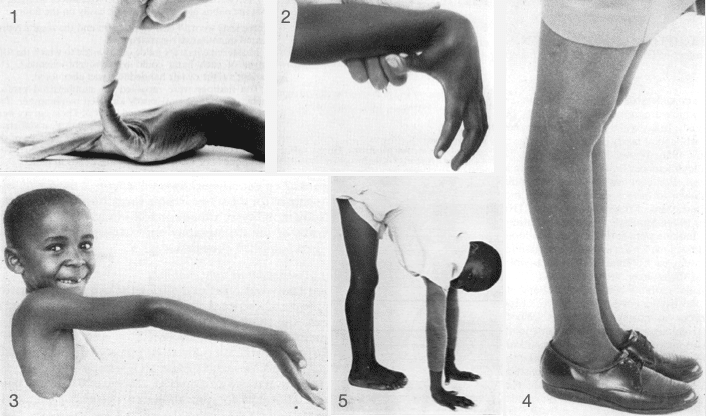
Fig. 2 Apposition of the thumb to the ventral aspect of the forearm
Fig 3. Hyperextension of the elbow joint beyond 10o
Fig 4. Hyperextension of the knee joint beyond 10o
Fig 5. Placing the palms of the hands flat on the floor while maintaining the knees in full extension
Beighton Score from Articular mobility in an African population, 1973
The method of assessing joint mobility by means of a score based upon the range of movements of certain joints has proved its value in previous investigations. Although the great majority of normal adults score values of 0, 1, or 2 on the mobility scale, individuals with inherited hypermobility syndromes achieve scores at the top end of the scale (Beighton and Horan, 1969). It is therefore reasonable to conclude that the scale is valid for the measurement of joint mobility.
The results which were obtained demonstrate that the range of movements decreases with age, falling rapidly during childhood, and more slowly throughout adult life. However, at any age, females are consistently more hypermobile than males.
Beighton et al 1973
Selected Key medical contributions [from OMIM]
Spondyloepimetaphyseal dysplasia with joint laxity, Type 1 (Beighton type; SEMDJL1): characterized by vertebral abnormalities and ligamentous laxity that result in spinal misalignment and progressive severe kyphoscoliosis, thoracic asymmetry, and respiratory compromise resulting in early death. [Beighton et al 1980, 1984]
Beukes familial hip dysplasia (BFHD): Cilliers and Beighton in 1990 identified a ‘new’ inherited skeletal disorder in 47 patients in 6 generations of an Afrikaner family in South Africa. Hip joint discomfort usually developed during childhood at age less than 2 years, but might develop either later in childhood or, as in one instance, as late as the age of 35 years. They traced the family back to a single Dutch immigrant to South Africa who arrived in 1685. Since only members of the Beukes family were identified as suffering from the condition, they proposed the designation ‘Beukes familial hip dysplasia (BFHD)’
Schwartz-Jampel syndrome: Viljoen and Beighton in 1992 gave an extensive description of SJS and pointed out that malignant hyperthermia is a potentially lethal complication during anaesthesia.
Osteoglophonic dwarfism: Beighton et al in 1980 described a seemingly ‘new’ form of dwarfism in a 10-year-old South African girl of mixed ancestry. The designation ‘osteoglophonic,’ which connotes ‘hollowed out,’ was based on the radiographic appearance of the metaphyses. The parents were nonconsanguineous and the father was 39 years old at her birth, supporting dominant inheritance. Beighton reviewed the world cases in 1989
Major Publications
Books
- Beighton P. The Ehlers-Danlos Syndrome. 1970
- Beighton P. Inherited Disorders of the Skeleton. 1978 [2e 1988]
- Cremin B, Beighton P. Bone Dysplasias of Infancy. 1978
- Beighton P, Cremin B. Sclerosing Bone Dysplasias. 1980
- Horan F, Beighton P. Orthopaedic Problems in Inherited Skeletal Disorders. 1982
- Beighton P, Sellars S. Genetics and Otology. 1982
- Beighton P, Grahame R, Bird H. Hypermobility of joints. 1983 [2e 1989, 3e 1999, 4e 2012]
- Kozlowski K, Beighton P. Gamut Index of Skeletal Dysplasias. 1984 [2e 1995, 3e 2001]
- Beighton P, Beighton G. The Man Behind the Syndrome. 1986
- Beighton P. McKusick’s heritable disorders of connective tissue 5e. 1993
- Bartsocas CS, Beighton P. Dysmorphology and Genetics of Cardiovascular Disorders. 1994
- Beighton P, Beighton G. The Person Behind the Syndrome. 1997
- Bartsocas CS, Beighton P. Genetic Counseling in the Dawn of the 21st Century. 1998
- Beighton P. Blackpool Division, St John Ambulance Brigade; The Early Years. 1998
Publications
- Beighton P, Horan F. Orthopaedic aspects of the Ehlers-Danlos syndrome. J Bone Joint Surg Br. 1969; 51(3): 444-453
- Beighton PH, Horan FT. Dominant inheritance in familial generalised articular hypermobility. J Bone Joint Surg Br. 1970; 52(1): 145-147.
- Horan FT, Beighton PH. Recessive inheritance of generalized joint hypermobility. Rheumatol Rehabil. 1973; 12(1): 47-49. [Beighton score]
- Beighton P, Solomon L, Soskolne CL. Articular mobility in an African population. Ann Rheum Dis. 1973; 32(5): 413-418.
- Beighton P, Kozlowski K. Spondylo-epi-metaphyseal dysplasia with joint laxity and severe, progressive kyphoscoliosis. Skeletal Radiol. 1980; 5(4): 205-212 [SEMDJL1 (Beighton-type)]
- Beighton P, Cremin BJ, Kozlowski K. Osteoglophonic dwarfism. Pediatr Radiol. 1980; 10(1): 46-50 [OGD]
- Sellars S, Beighton P. Autosomal dominant inheritance of conductive deafness due to stapedial anomalies, external ear malformations and congenital facial palsy. Clin Genet. 1983; 23(5): 376-379
- Beighton P, Gericke G, Kozlowski K, Grobler L. The manifestations and natural history of spondylo-epi-metaphyseal dysplasia with joint laxity. Clin Genet. 1984 Oct;26(4):308-317.
- Beighton P. Osteoglophonic dysplasia. J Med Genet. 1989; 26(9): 572-576. [OGD]
- Cilliers HJ, Beighton P. Beukes familial hip dysplasia: an autosomal dominant entity. Am J Med Genet. 1990; 36(4): 386-390. [BFHD]
- Viljoen D, Beighton P. Schwartz-Jampel syndrome (chondrodystrophic myotonia). J Med Genet. 1992 Jan;29(1):58-62 [SJS]
- Beighton P. Spondyloepimetaphyseal dysplasia with joint laxity (SEMDJL). J Med Genet. 1994 Feb;31(2):136-140. [SEMDJL1]
- Beighton P, De Paepe A, Steinmann B, Tsipouras P, Wenstrup RJ. Ehlers-Danlos syndromes: revised nosology, Villefranche, 1997. Ehlers-Danlos National Foundation (USA) and Ehlers-Danlos Support Group (UK). Am J Med Genet. 1998; 77(1): 31-37.
- Beighton P, Fieggen K, Wonkam A, Ramesar R, Greenberg J. UCT’s contribution to medical genetics in Africa – from the past into the future. S Afr Med J. 2012;102(6):446-8
- Vorster AA, Beighton P, Ramesar RS. Spondyloepimetaphyseal dysplasia with joint laxity (Beighton type); mutation analysis in eight affected South African families. Clin Genet. 2015 May;87(5):492-5.
References
Biography
- Personal communication with Peter Beighton June 2022
- Ramesar R. Obituary – Peter Herbert Beighton (1934 – 2023). SAMJ 2023; 113(8): 1302
- Emeritus Professor Peter Beighton. EDS UK 2023
- Ramesar R. Obituary: Peter Herbert Beighton (1934–2023). Transactions of the Royal Society of South Africa, 2024; 79(2): 119–120
- Bibliography. Beighton, Peter. WorldCat Identities
Eponym
the person behind the name

MBBS (Hons) FCEM. Emergency Consultant at St Mary's Hospital, Imperial College Healthcare NHS Trust

BA MA (Oxon) MBChB (Edin) FACEM FFSEM. Emergency physician, Sir Charles Gairdner Hospital. Passion for rugby; medical history; medical education; and asynchronous learning #FOAMed evangelist. Co-founder and CTO of Life in the Fast lane | On Call: Principles and Protocol 4e| Eponyms | Books |