

Salvador Gil Vernet
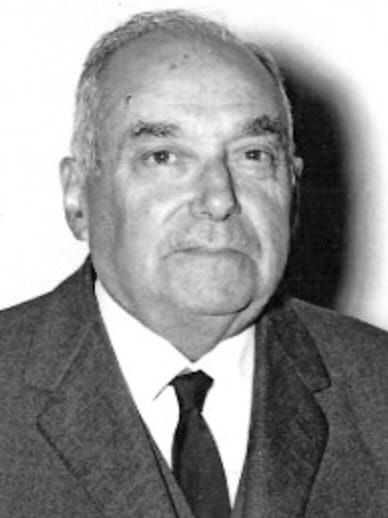
Salvador Gil Vernet (1892-1987) was a Spanish urologist
Through decades of research using histotopographic whole-mount serial sections, Gil Vernet produced precise descriptions of the vesico-prostato-urethral musculature, bladder neck, posterior urethra, external urethral sphincter, and pelvic autonomic nerves. He clarified the coordinated muscular and neural mechanisms underlying micturition, continence, erection, and ejaculation, and mapped pelvic neurovascular pathways before the advent of nerve-sparing pelvic surgery.
Gil Vernet fundamentally changed understanding of prostatic disease by demonstrating that the prostate is not a homogeneous gland, proposing a regional (zonal) model that distinguished the origins of benign prostatic hyperplasia and carcinoma. His anatomy-led surgical innovations aimed to reduce morbidity and preserve function, exemplified by techniques such as the Gil Vernet trigonoplasty for vesicoureteral reflux.
In 1917, Gil Vernet described a caudal extradural (epidural) anaesthesia technique designed specifically to provide sufficiently high neuraxial blockade for prostatic surgery.
Biographical Timeline
- Born August, 10 1892 in Vandellòs, Tarragona, Spain
- 1903 – Commenced secondary education (bachillerato) at the Instituto General y Técnico de Tarragona. Early passion for botany and natural sciences, initially aspiring to a career in natural history
- 1909 – Moved to Barcelona and entered the Faculty of Medicine, University of Barcelona
- 1915 – Graduated in Medicine with sobresaliente (highest distinction). Worked concurrently as an anatomical preparator and surgical pathology intern. Clinical exposure at the Hospital de la Santa Cruz, including early urological practice
- 1917 – Described a sacral epidural anaesthesia technique for prostatic surgery. One of the earliest neuraxial (epidural) techniques used clinically in urology
- 1919 – Submitted doctoral thesis. Appointed temporary assistant professor in Anatomy under Prof. Emili Sacanella (1860–1931)
- 1926 – Appointed Professor of Anatomy, University of Salamanca
- 1928 – Appointed Professor of Anatomy, University of Barcelona. Director of the Professional School of Urology, Hospital Clínic of Barcelona
- 1933 – Introduced histotopographic serial sectioning to urogenital anatomy. Began systematic work on pelvic neuroanatomy and urethral sphincter mechanisms
- 1936 – Dismissed from all academic posts following outbreak of Spanish Civil War. Forced into exile due to conservative political views. Lived in Toulouse, France and later Italy
- 1937 – Co-founder of the Mediterranean Urology Association
- 1939 – Returned to Barcelona. Reinstated to Chair of Anatomy and resumed academic and surgical work
- 1944 – Published Patología Urogenital. Cáncer de Próstata. Considered the most important Spanish urological monograph of the 20th century
- 1948 – Elected Member of the Royal Academy of Medicine and Surgery of Barcelona
- 1950s–1960s – Urology Department in Barcelona became a major international centre
- • Hosted visiting surgeons from Europe and North America
- 1965 – Awarded Pedro Virgili National Surgery Prize (Spain), Antoine Portal Prize, National Academy of Medicine (France)
- 1967–1973 – President, Société Internationale d’Urologie (SIU); Honorary President, Spanish Association of Urology (1967)
- 1968 – Published Morphology and Function of Vesico-Prostato-Urethral Musculature, English-language synthesis of his anatomical research
- 1977 – Appointed Honorary Academician, Royal National Academy of Medicine (Spain)
- 1986 – Awarded Narcís Monturiol Prize (with son José María Gil-Vernet Vila)
- Died October, 24 1987 in Barcelona, aged 95
Key Medical Contributions
Neuraxial Blockade and Regional Anaesthesia (1917)
In 1917, Gil Vernet described a caudal extradural (epidural) anaesthesia technique designed specifically to provide sufficiently high neuraxial blockade for prostatic surgery. Building on earlier caudal injections, he modified existing methods with the aim of achieving reliable pelvic and lower lumbar anaesthesia without general anaesthesia.
Gil Vernet’s approach was anatomy-driven. Through detailed study of the sacrococcygeal region, he recognised that the sacral canal is wider than the centrally placed dural sac, leaving a lateral epidural corridor that could be safely traversed. By introducing a long needle via the sacral hiatus and directing it laterally within the epidural space, he sought cranial spread of local anaesthetic without dural puncture.
Using small volumes of novocaine (≈10 mL of 2% with epinephrine), he reported effective anaesthesia for prostate, bladder, rectum, and perineum, publishing an early clinical series that included prostatectomies. Although the technique was later abandoned and had limited long-term uptake, it represents one of the earliest purpose-designed caudal epidural techniques and an important conceptual step in the evolution of epidural anaesthesia.
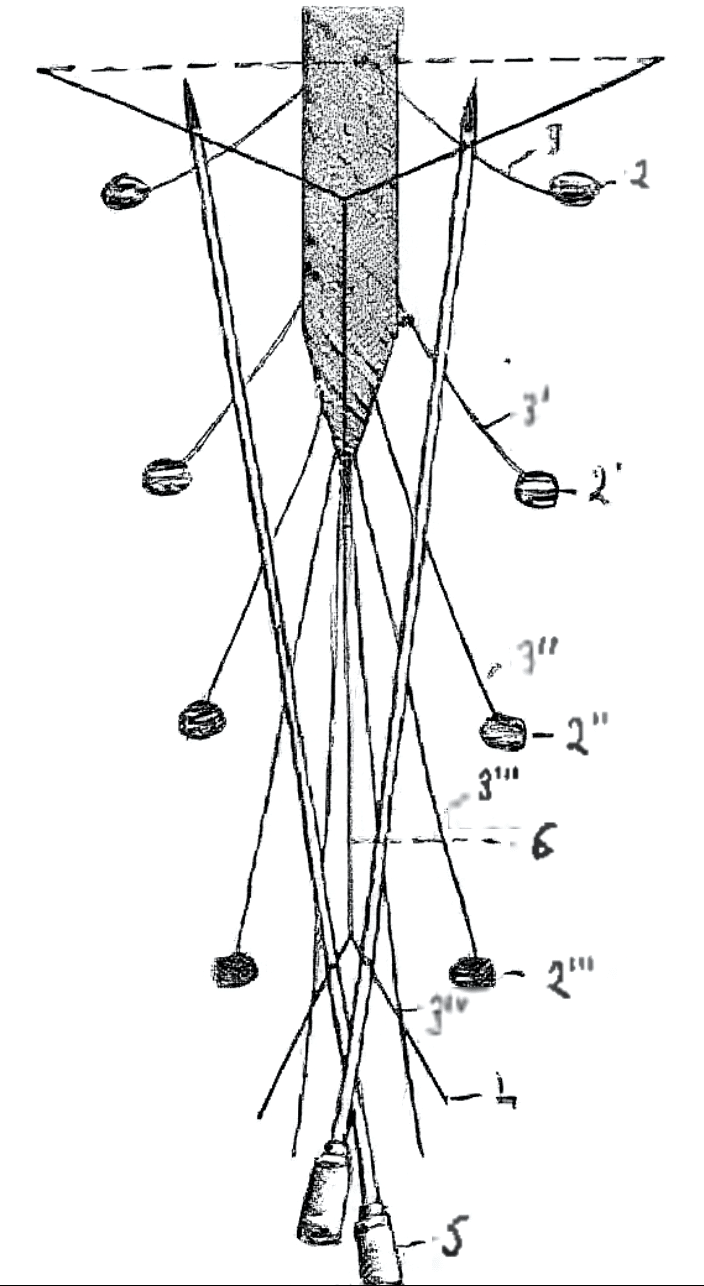
1 – Duramadre. 2 – Forámenes sacros posteriores. 3 – Raíces sacras. 4 – Astas sacras. 5 – Áculas en buen estado. 6 – Cresta sacra. Gil Vernet (1917)
Figure. Gil Vernet’s caudal extradural anaesthesia technique (1917)
Posterior view of the sacrum showing the dural sac ending centrally within the sacral canal, with bilateral sacral nerve roots descending laterally. The diagram illustrates a needle introduced via the sacral hiatus, then directed upwards and laterally alongside the dural sac, exploiting the lateral epidural space to achieve cranial spread of local anaesthetic without dural puncture. Multiple injection points along the epidural space are indicated, reflecting Gil Vernet’s aim of producing a higher pelvic and lower lumbar block suitable for prostate surgery.
Key Urological Contributions
Gil Vernet’s urological output is vast. The common theme is his insistence on functional anatomy (what structures do) rather than purely descriptive morphology (what structures look like).
Functional Anatomy of the Male Pelvis and Perineum
Transformed traditional standard pelvic anatomy with functional anatomy. He challenged “static” textbook descriptions that did not match operative findings, arguing that anatomy must explain purpose and mechanism, not simply form.
He produced detailed accounts of the vesico-prostato-urethral musculature, detrusor layers, bladder neck, and posterior urethra, and linked these structures to coordinated function in micturition, continence, and ejaculation. His framework strengthened practical understanding of pelvic voiding disorders and post-prostatectomy functional outcomes.
External Urethral Sphincter and Continence Mechanisms
He described the external urethral sphincter complex. He clarified its striated and smooth muscle components and their continuity with adjacent pelvic floor structures, and related these to the role of pubovesical/pubourethral ligamentous support. His description of the precervical arc (Gil Vernet arc) later proved relevant to models of female urethral closure
Pelvic Neuroanatomy and Erectile Function
Mapped pelvic autonomic pathways in detail. He described the pelvic plexus, autonomic innervation of the prostate and urethra, and the course of the cavernous nerves. This helped define the relationship between neurovascular bundles, prostate capsule, and sphincteric structures. Much of this neuroanatomy has just now been “rediscovered” with the development of functional-preserving pelvic surgery.
Regional Anatomy and Pathology of the Prostate
Fundamentally changed the understanding of the prostate by demonstrating it is not a homogeneous gland. He proposed a regional model (cranial, caudal, and intermediate components) and used it to argue that benign prostatic hyperplasia and carcinoma arise in different regions.
Surgical Innovation and Technique
He developed and refined pelvic and prostatic operations (including bladder neck and perineal approaches) with an emphasis on preserving continence and sexual function where possible. For example, the Gil Vernet trigonoplasty for vesicoureteral reflux, reflecting his principle of precision over radicality.
Histotopographic Method and Anatomical Illustration
He embraced histotopographic serial sectioning and generated thousands of preparations of whole-mount sections from foetal, paediatric, and adult specimens. This enabled microscopic dissection of muscle and nerve planes invisible to gross anatomy. The resulting plates and drawings consolidated as Salvador Gil Vernet Urological Drawing Collection remain among the most detailed anatomical archives in urology.
Major Publications
- Gil Vernet S. Nou procediment per anestesiar les arrels sacres. Anals de l’Academia i Laboratori de Ciències Mèdiques de Catalunya 1917;11:247-250
- Gil Vernet S. La anestesia extradural. Nueva técnica. Tipografia S. Vilalta, Barcelona. 1917.
- Gil Vernet S. El Sistema nervioso órgano-vegetativo. Contribución a su estudio anatómico y embriológico. Imprenta Badía, Barcelona, 1926.
- Gil Vernet S. Contribució a l’estudi anatómic del periné de l’home pel métode dels talls histo-topogràfics. Treballs de la Societat de Biología. Barcelona, 1933.
- Gil Vernet S. Patología Urogenital: Cáncer de Próstata. Book 1. Ed. Miguel Servet, Barcelona. 1944.
- Gil Vernet S. Patología Urogenital: Biología y Patología de la Próstata. Book 2. Vol.1. Ed. Paz Montalvo, Madrid. 1953.
- Gil Vernet S. Patología Urogenital: Enfermedades de la Próstata. Book 2. Vol.2. Ed. Paz Montalvo, Madrid. 1955.
- Gil Vernet S. Innervation somatique et végétative des organes génito-urinaries. Acta Urol Belg. 1964, 32: 265-293.
- Gil Vernet S. Morphology and Function of Vesico-Prostato-Urethral Musculature. Canova, Treviso. 1968.
References
Biography
- Gil Vernet Sedó, JM. Salvador Gil Vernet, a pioneer in urological anatomy In: De Historia Urologiae Europaeae 2017
- Gil Vernet Sedó, JM. Biography of Salvador Gil Vernet, eminent urologist anatomist (1892-1987). 2018
Eponymous terms
- Gil-Vernet Sedó, JM. The Salvador Gil Vernet Urological Drawing Collection. 2009
- Gil-Vernet Sedó, JM. The Art of Transforming Science. Salvador Gil Vernet’s modern understanding of Urologic Anatomy. Next Door Publishers S.L. Pamplona, 2015
- Gil-Vernet JM, Arango O, Álvarez-Vijande R. Topographic anatomy and its development in urology in the 20th century. The work Of Salvador Gil Vernet. Eur. J. Anat. 2016: 20(3): 231-247.
- Gil-Vernet Sedó, JM. The key role of the transverse pre-cervical arc of Gil-Vernet in urethral closure 2018
Eponym
the person behind the name

BSc (Hons) Neuroscience, University of Bristol; MBBS, St George's University of London; MRCP (UK). Internal medic and aspiring Intensivist/triathlete/coffee roaster. Perth/London.

BA MA (Oxon) MBChB (Edin) FACEM FFSEM. Emergency physician, Sir Charles Gairdner Hospital. Passion for rugby; medical history; medical education; and asynchronous learning #FOAMed evangelist. Co-founder and CTO of Life in the Fast lane | On Call: Principles and Protocol 4e| Eponyms | Books |