

William T. Lemmon
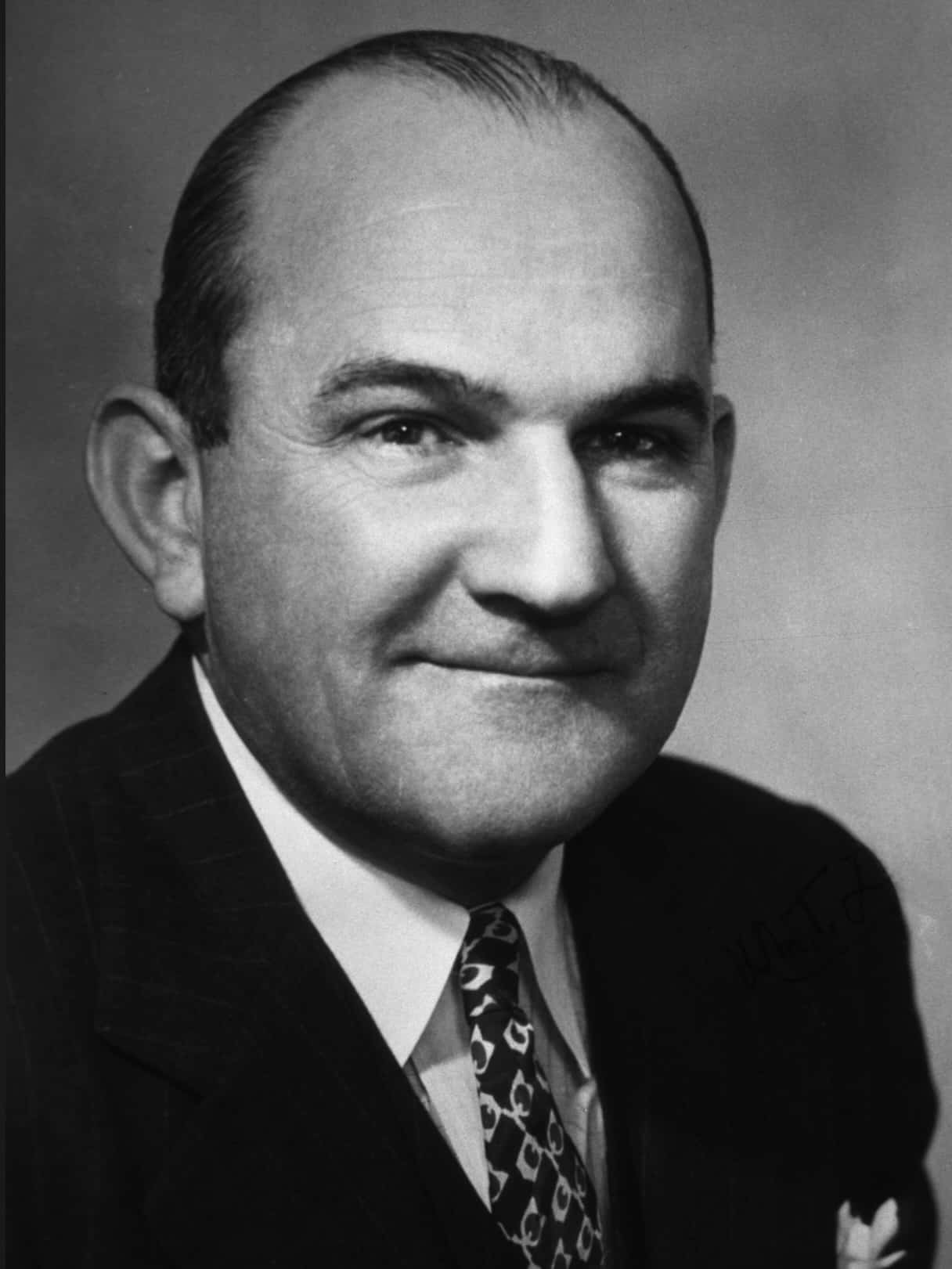
William Thomas Lemmon (1896-1974) was an American surgeon
Lemmon was an innovator whose work laid the conceptual and mechanical foundations of continuous neuraxial anaesthesia. Working at Jefferson Medical College in Philadelphia, Lemmon modified spinal anaesthesia to be suitable for prolonged and complex surgery.
In 1939, Lemmon developed and performed continuous spinal anaesthesia, maintaining access to the subarachnoid space using a malleable spinal needle left in situ. After extensive animal experimentation, he performed the first continuous spinal anaesthetic in a human and published a detailed description of the technique and apparatus. Central to his system were a specialised needle, tubing and stopcock assembly, and the purpose-built Lemmon mattress.
Biographical Timeline
- Born November 4, 1896 Lynchburg, South Carolina, USA.
- 1917 – Graduated from Clemson College.
- 1918 – Entered medical training following military-age service eligibility during World War I
- 1921 – Graduated from Jefferson Medical College, Philadelphia.
- 1922 – Appointed to the faculty at Jefferson Medical College, serving in anatomy and surgery.
- Developed a strong interest in regional and spinal anaesthesia, informed by surgical requirements rather than anaesthetic specialty training.
- 1938 – Conducted animal experiments (dogs and monkeys) demonstrating that spinal anaesthesia could be safely prolonged using repeated small doses rather than a single bolus.
- April 10, 1939 – Administered the first continuous spinal anaesthetic in a human, using a malleable spinal needle left in situ with fractional dosing. Presented his technique to the Philadelphia Academy of Surgery (December)
- 1940 – Published A method for continuous spinal anesthesia: A preliminary report in the Annals of Surgery. Introduced the full apparatus: malleable needle, tubing, stopcock system, and the specially designed Lemmon mattress with a lumbar aperture.
- 1944 – Published Continuous Spinal Anesthesia: Observations on 2000 Cases (with Henry G. Hager Jr.). Reported large clinical series with controlled dosing, low complication rates, and no direct anaesthetic mortality.
- 1969 – Retired from active surgical practice.
- Died September 2, 1974 in Woodbury, New Jersey, aged 77.
Key contributions to neuraxial blockade
Working as a surgeon at Jefferson Medical College, Lemmon approached spinal anaesthesia as a problem of duration, stability, and dosing control for prolonged operations. His work introduced the core principle that fractional, repeated dosing could extend neuraxial blockade safely.
Development of continuous spinal anaesthesia (1939–1940)
By the late 1930s, single-injection spinal anaesthesia was well established but limited by finite duration and haemodynamic instability. Lemmon addressed this by maintaining access to the subarachnoid space using a malleable spinal needle left in situ, allowing repeated administration of small doses of local anaesthetic.
After extensive animal experimentation, Lemmon administered the first continuous spinal anaesthetic in a human in 1939, and published his preliminary report in 1940. He demonstrated that prolonged operations could be conducted with controlled anaesthetic depth, arguing that continuous access permitted safer titration than large single boluses.
The Lemmon malleable needle and delivery system
Lemmon used a malleable spinal needle, designed to remain in the lumbar subarachnoid space for extended periods without fracture or migration.
Needles: The needles are malleable (made of German silver) [nickel-silver alloy] and so made that they may be bent in any direction without breaking. The caliber is No. I7 and 18 gauge. They are 2½2 to 3½ inches in length, so as to fit fairly accurately the depth of any lumbar spine.
Lemmon 1940
Unlike rigid spinal needles, it could tolerate prolonged positioning while connected to rubber tubing and stopcocks, enabling incremental dosing and aspiration. The system was mechanically simple but required meticulous attention to sterility, positioning, and fixation.
The Lemmon mattress
To support prolonged spinal access, Lemmon designed a special operating mattress incorporating a lumbar aperture. This allowed the patient to lie supine while the spinal needle and tubing exited safely through the mattress, avoiding kinking, dislodgement, or pressure on the hub.
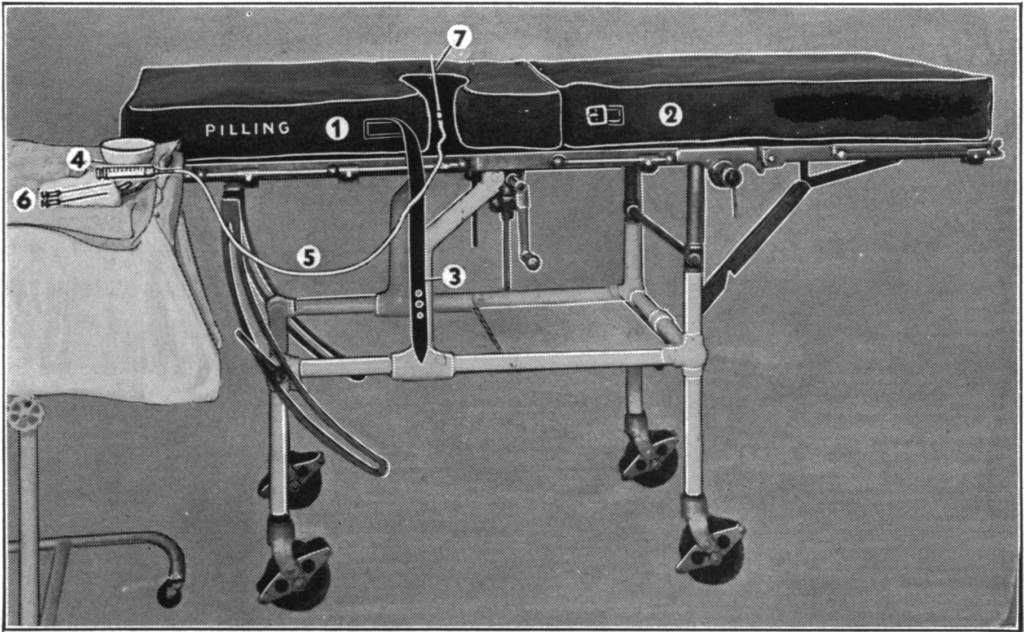
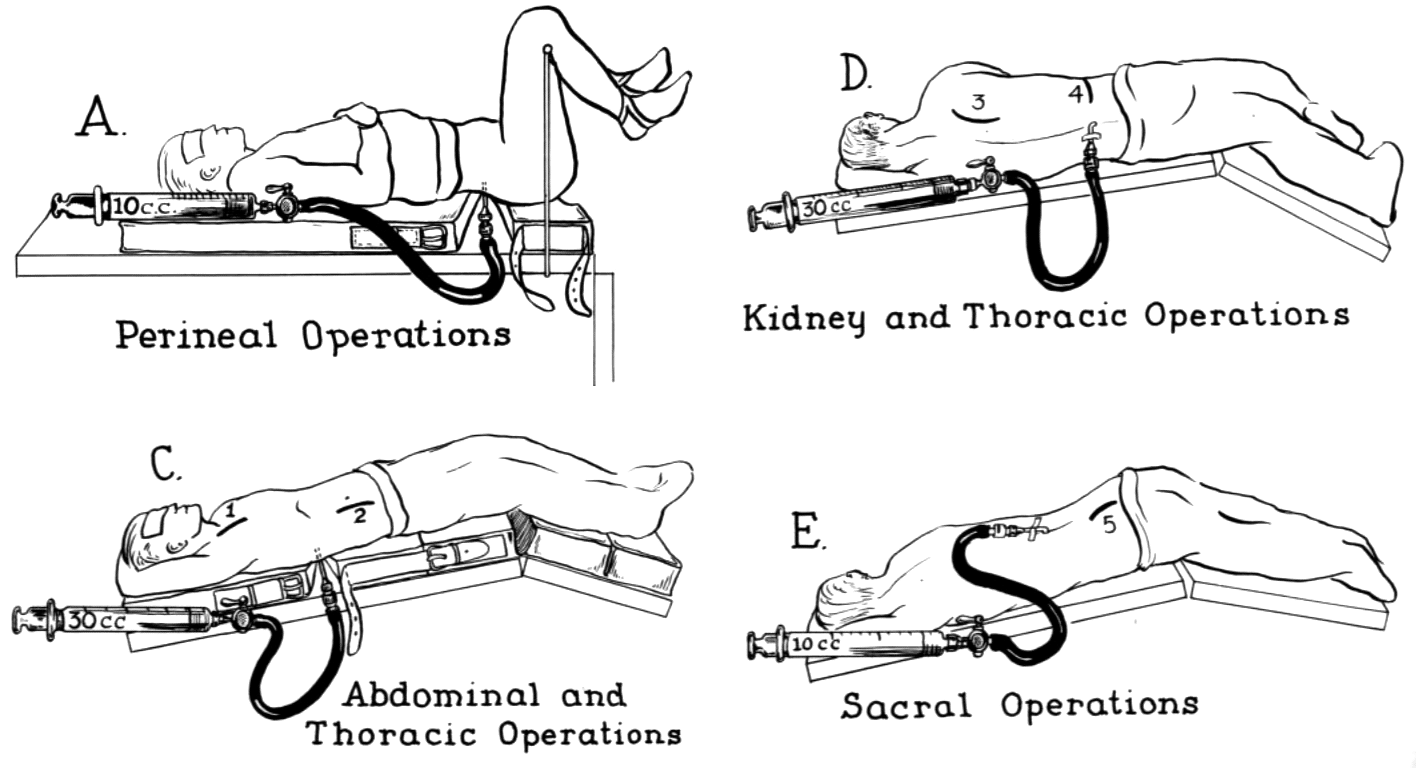
The mattress enabled a wide range of operative positions without interrupting neuraxial access. In later publications, Lemmon illustrated its use across perineal, abdominal, thoracic, renal, and sacral procedures, underscoring the adaptability of continuous spinal anaesthesia for prolonged surgery.
Clinical experience and limitations
By 1944, Lemmon and colleagues reported large clinical series of continuous spinal anaesthesia, with effective surgical conditions and low anaesthetic mortality. However, the technique remained technically complex, required specialised equipment, and carried inherent risks related to prolonged intrathecal needle placement.
These limitations stimulated further innovation. Lemmon’s work directly influenced Robert Andrew Hingson, who translated the principle of continuity to the epidural space via the caudal route, and later Edward Boyce Tuohy and Manuel Martínez Curbelo, who completed the transition to catheter-based epidural anaesthesia.
Major Publications
- Lemmon WT. A method for continuous spinal anesthesia: A preliminary report. Ann Surg. 1940 Jan;111(1):141-4
- Lemmon WT, Paschal GW. Rupture of the stomach following ingestion of sodium bicarbonate. Ann Surg. 1941 Dec;114(6):997-1003.
- Lemmon WT, Hager HG. Continuous Spinal Anesthesia: Observations on 2000 Cases. Ann Surg. 1944 Aug;120(2):129-42.
- Lemmon WT. Continuous spinal anesthesia in abdominal and thoracic surgery. Del State Med J. 1947 Jun;19(6):109-15.
- Lemmon WT, Mervine TB. Giant cell tumor of the ilium. Am J Surg. 1951 Dec;82(6):754-8.
References
Biography
- William Thomas Lemmon. Taps, Clemson University 1917
- William T. Lemmon. Pennsylvania medicine 1974; 77: 64
Eponymous terms
- Toledano RD, Tsen LC. Epidural catheter design: history, innovations, and clinical implications. Anesthesiology. 2014 Jul;121(1):9-17
Eponym
the person behind the name

MBBS Newcastle University, UK. Currently working at Sir Charles Gairdner Hospital, Perth. Aspiring anaesthetist

BA MA (Oxon) MBChB (Edin) FACEM FFSEM. Emergency physician, Sir Charles Gairdner Hospital. Passion for rugby; medical history; medical education; and asynchronous learning #FOAMed evangelist. Co-founder and CTO of Life in the Fast lane | On Call: Principles and Protocol 4e| Eponyms | Books |