


Angelo L. Soresi
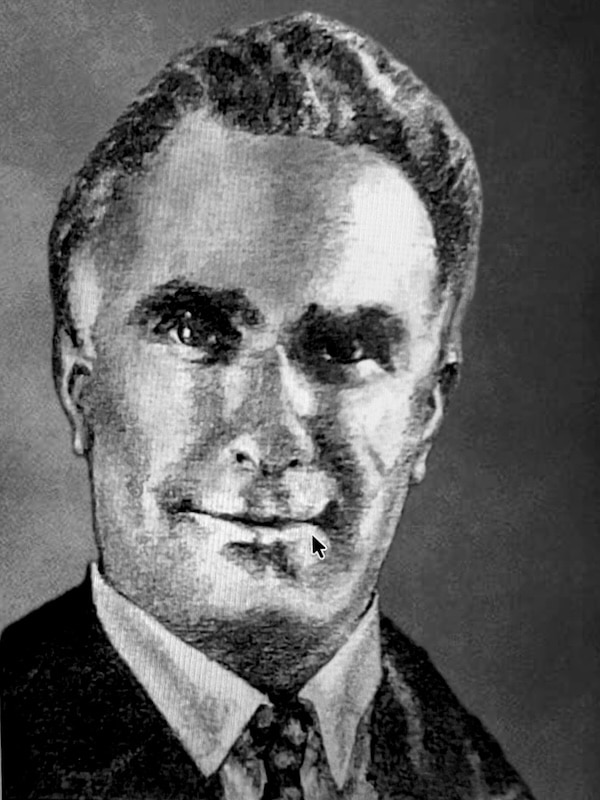
Angelo Luigi Soresi (1877-1951) was an Italian born, American surgeon, anaesthetist and inventor
Soresi’s career ranged across anaesthesia, gastrointestinal surgery, blood transfusion, operative instrumentation, and surgical publishing. Trained in Italy and active for most of his professional life in New York, he was a prolific and unconventional operator, credited with more than 160 publications and seven patents. His scientific work was unusually broad, extending from ether anaesthesia and epidural techniques to transfusion devices, abdominal surgery, radiological shielding, and operative photography.
In anaesthesia, Soresi is remembered chiefly for his work on neuraxial blockade. In 1932 he published a preliminary report on “peridural anaesthesia,” defining epidural injection as deposition of local anaesthetic outside the dura and describing the visual endpoint later known as the hanging-drop sign.
Soresi was an avid inventor and patented instruments to facilitate the transfusion of blood, surgical catgut thread, a collar, a rotary cutting and drilling instrument, and an operating table. In gastrointestinal surgery, Soresi is remembered for his 1919 paper on diaphragmatic (hiatal) hernia as the first treatise describing elective surgical repair of hiatus hernia.
Biographical Timeline
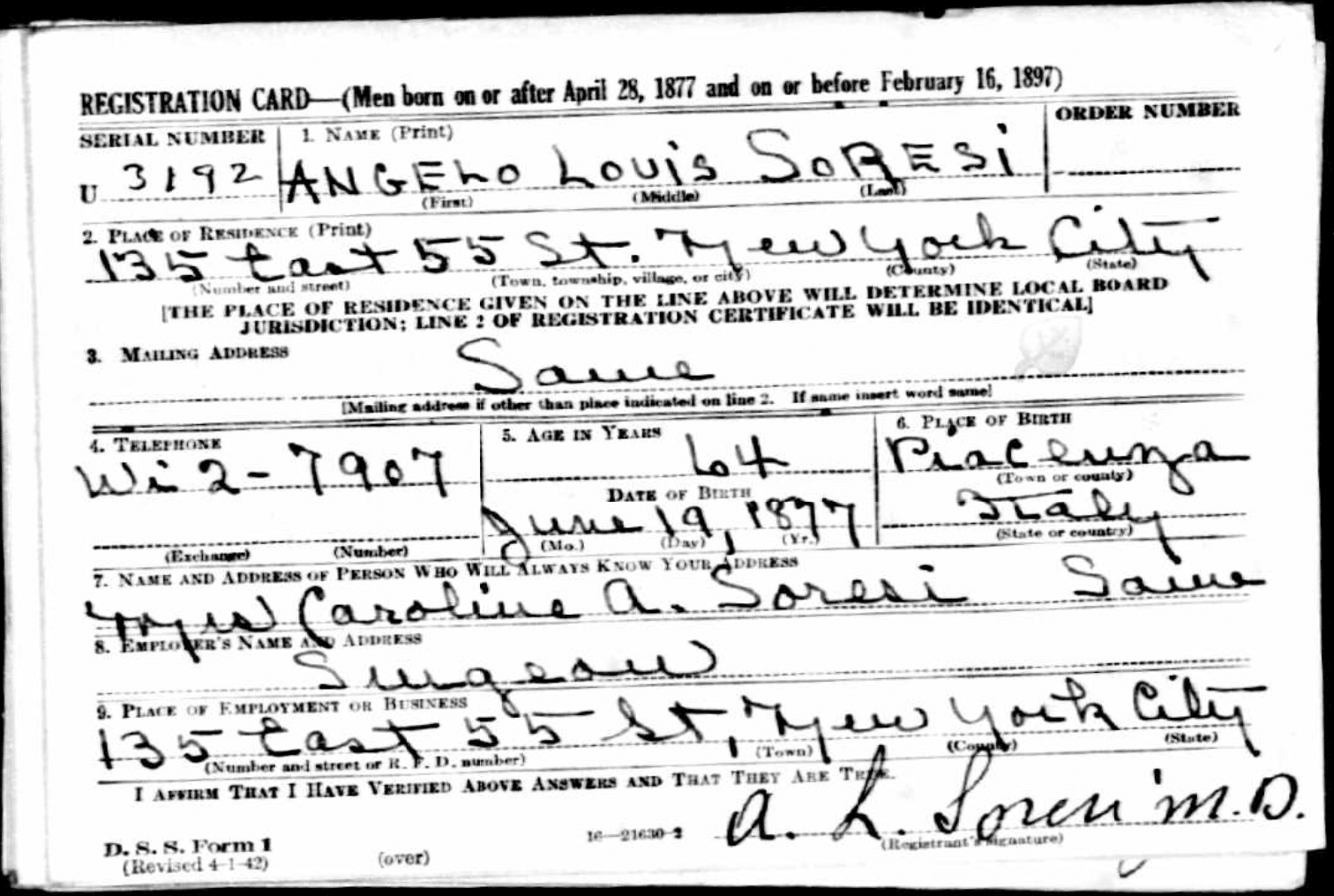
- Born on June 19, 1877 in Piacenza, Italy [confirmed with WWII registration card]
- 1900 – Medical degree, University of Rome.
- 1903 – Completed medical training at the Facoltà di Medicina e Chirurgia, Regia Università di Napoli
- 1903–1906 – Assistant posts in Genoa and in a military hospital.
- 1906 – Moved to the United States, settling in New York.
- 1908 – Working at the Laboratory of the College of Physicians and Surgeons, Columbia University, under Dr A. G. Sullivan, on bile-duct reconstruction, intestinal anastomoses, and blood transfusion; first publication appeared the same year.
- 1912 – Appointed Professor of experimental physiology and surgery at the Women’s Medical College and Flower Fifth Avenue Hospital
- 1914–1918 – Returned to Italy during World War I; served as chief surgeon at hospitals at the front, and later in Milan and Crete.
- 1919 – Published Diaphragmatic hernia: its unsuspected frequency: its diagnosis: technique for radical cure, later cited as an early landmark in elective repair of hiatal/diaphragmatic hernia.
- 1920–1939 – Surgeon at Greenpoint Hospital, Brooklyn.
- 1921 – Founded the International Journal of Gastro-Enterology, which survived for only two issues.
- 1932 – Published Peridural anesthesia; a preliminary report, describing epidural injection outside the dura and the hanging-drop sign for identifying the epidural space.
- 1937 – Published Episubdural Anesthesia, describing an early combined spinal-peridural (combined spinal-epidural) technique, reported in more than 200 patients.
- 1939 – Became honorary consultant in surgery, Greenpoint Hospital.
- 1951 – Still scientifically active; delivered two lectures in Paris in the year of his death
- Died on December 11, 1951 at Greenpoint Hospital, Brooklyn
Key Medical Contributions
Anaesthesia
Peridural anaesthesia and the “hanging drop” endpoint (1932)
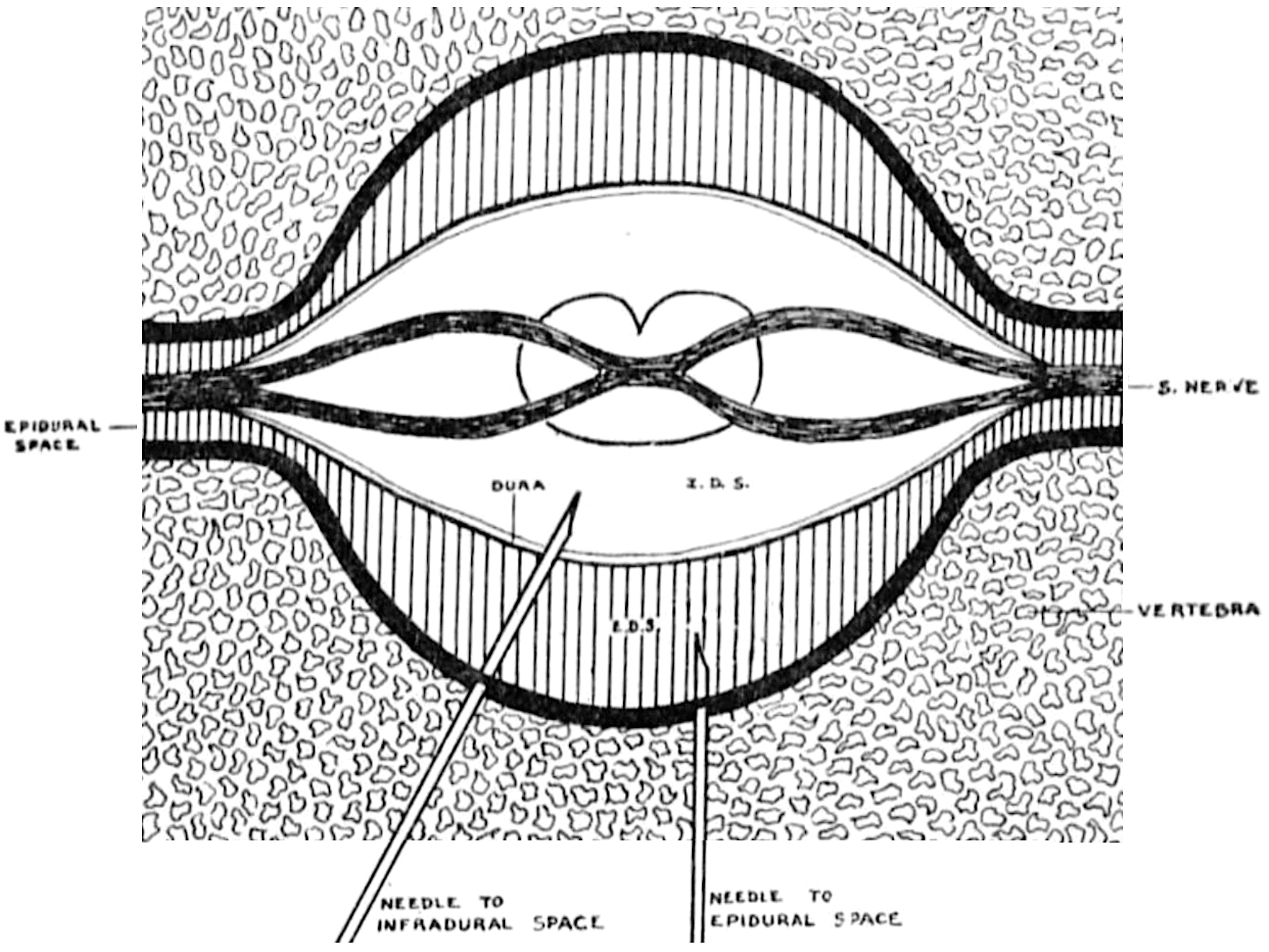
In his preliminary report (February 17, 1932), Soresi described peridural (epidural) anaesthesia as deposition of local anaesthetic outside the dura in the loose connective tissue of the epidural space, contrasting it with spinal anaesthesia where the drug is deposited within the dura and mixed with CSF.
A method of anesthesia is described by which the anesthetic fluid is injected in the peridural space, thus obtaining the same anesthetic results of spinal anesthesia without its unpleasant features.
Soresi 1932
Soresi’s core claim was that peridural injection could achieve spinal-like anaesthetic effects without typical spinal sequelae, introducing what later authors recognised as an early description of the hanging drop concept.
Soresi technique (1932)
- Premedication: caffeine by hypodermic injection 15 minutes before block (given as ⅓ grain).
- Needle and “finder” injection: a very fine 6 cm needle; inject 1% novocaine while advancing toward the spine, then remove syringe near the target depth.
- Placement confirmation (visual endpoint): after syringe removal, he watched the column of solution in the needle shank; on further slow advancement, the fluid suddenly disappeared, which he interpreted as entry into the epidural space.
- Dose: once the sign occurred, inject 30–50 cc of 1.5–2% solution very slowly.
I call the attention of the reader to a phenomenon which, to my knowledge, has not been described…The surgeon watches carefully the fluid in the shank of the needle while pushing very slowly the needle toward the spine. Suddenly it will be noticed that the fluid disappears from the shank, as if it had been sucked away. This phenomenon indicates that the needle has entered the epidural space.
Soresi 1932
Priority note: Soresi vs Gutiérrez (hanging drop)
Both Soresi (1932) and Alberto Gutiérrez (1933) independently developed their technique for using internal pressure differences to identify the epidural space. Though priority rests with Soresi’s 1932 paper.
Surgical innovation
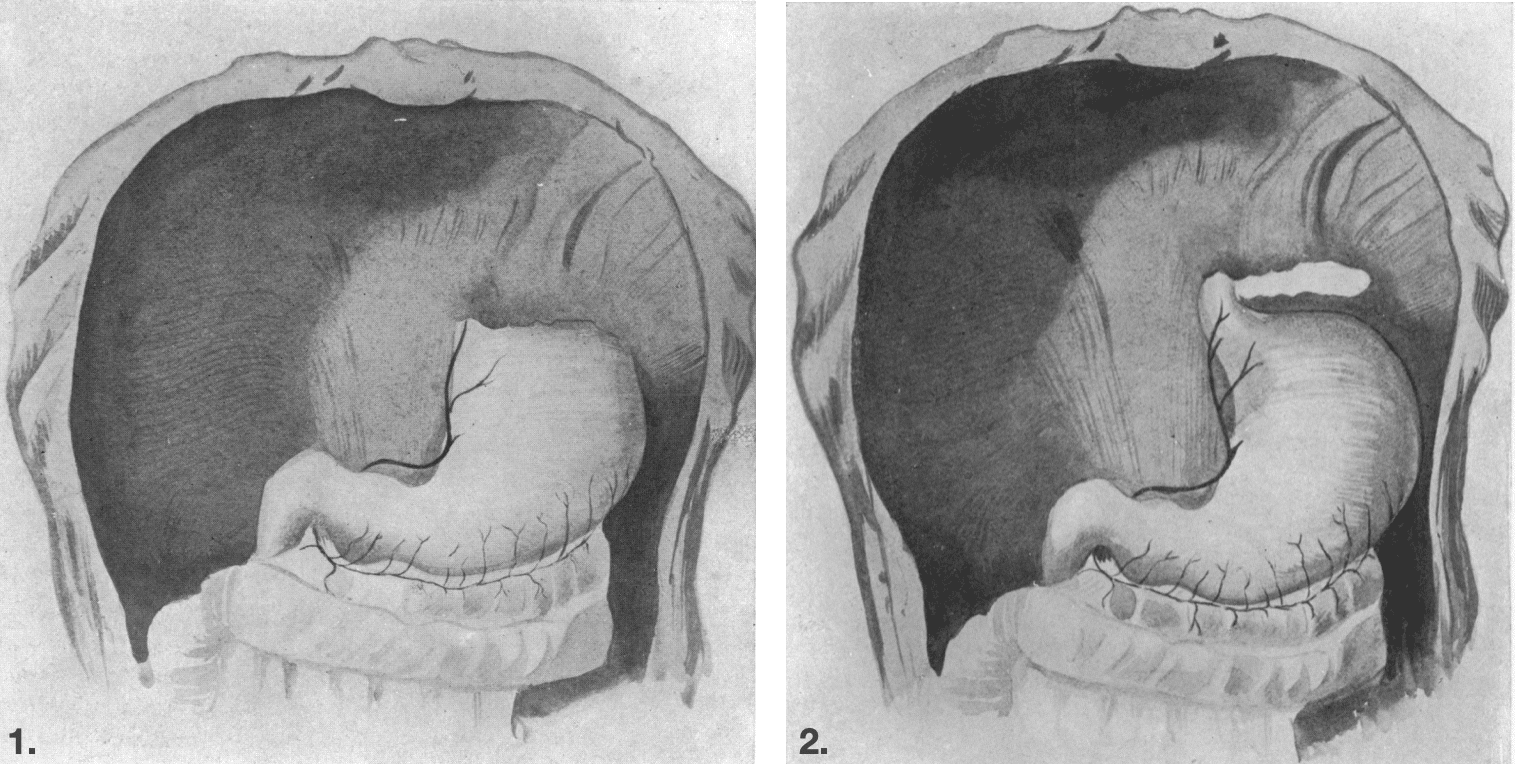
Soresi’s enduring surgical was his 1919 Annals of Surgery paper, Diaphragmatic hernia: its unsuspected frequency: its diagnosis: technic for radical cure. More than a case report, it was an early operative treatise arguing that diaphragmatic/hiatal hernia was under-recognised, diagnosable, and suitable for elective repair. Later surgical histories credit it as the first report of elective hiatal hernia repair, describing Soresi’s operation as reduction of the hernia with approximation of the diaphragmatic crura.
Surgeon-Inventor
Soresi’s inventiveness was eclectic to say the least. A good illustration is provided by the three papers he presented at the 16th International Medical Congress in Budapest in 1909: A new method of intestinal anastomosis; New instrument for direct transfusion of blood and temporary anastomosis between blood vessels; and Ether anesthesia by compressed air. This combination of gastrointestinal surgery, vascular innovation, and anaesthetic technique reflects the unusually broad scope of his surgical work.
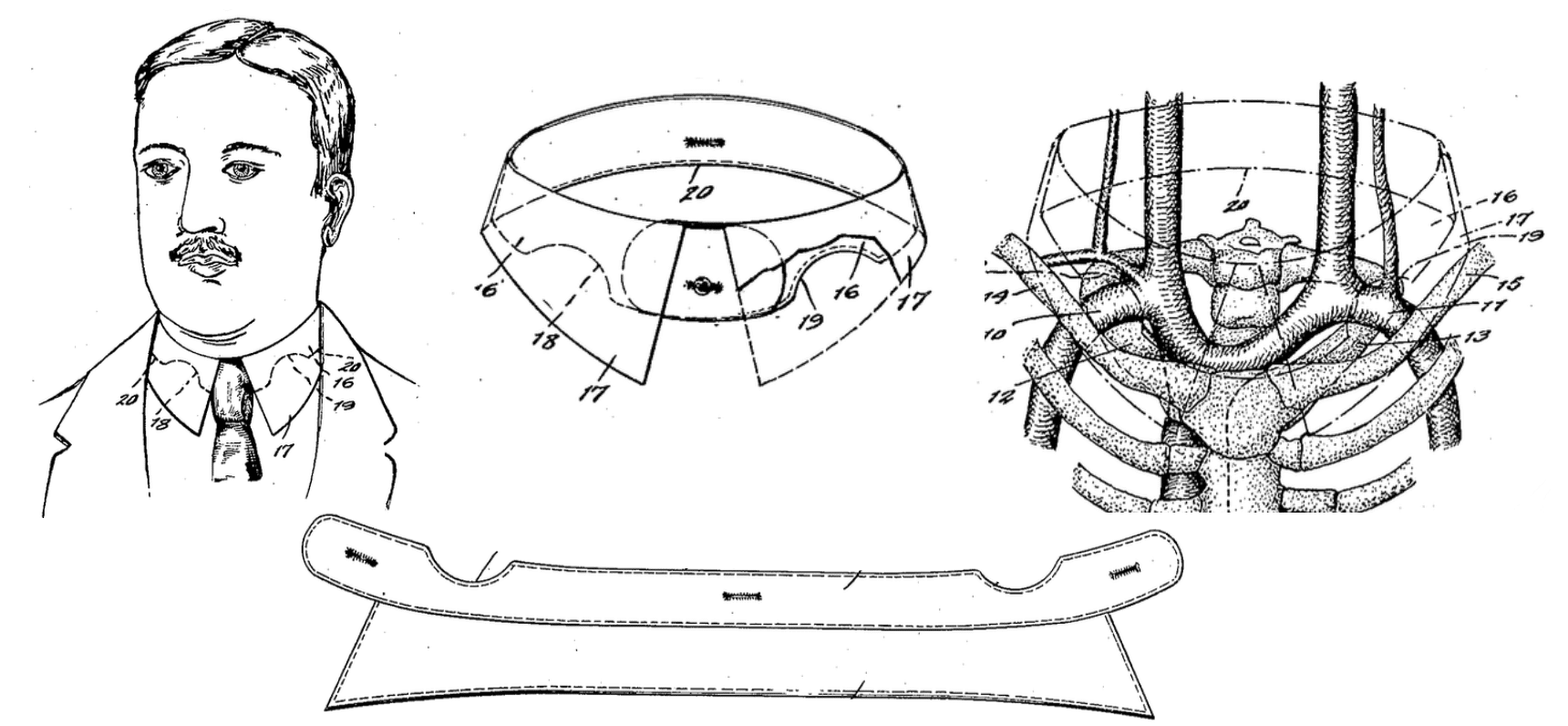
He went on to redesign the operating table, create a machine to control bone drilling, improve the visibility of surgical catgut, and even patented an anatomically shaped collar intended to avoid compression of the neck vessels…
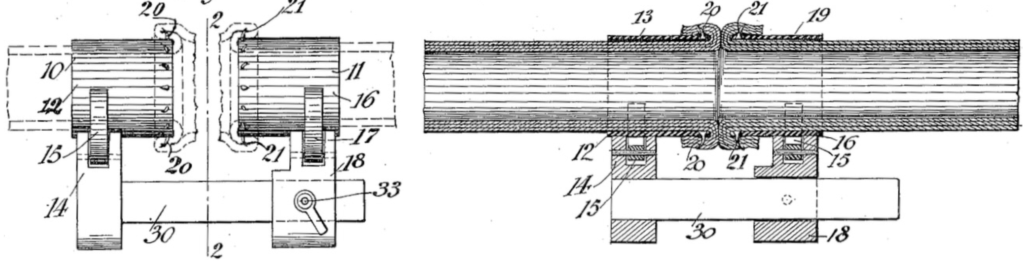
His transfusion instrument used paired split rings to hold donor and recipient vessels open, cuffed, and aligned, with the aim of making direct transfusion quicker, safer, and less traumatic, while reducing blood loss, air entry, and clotting.
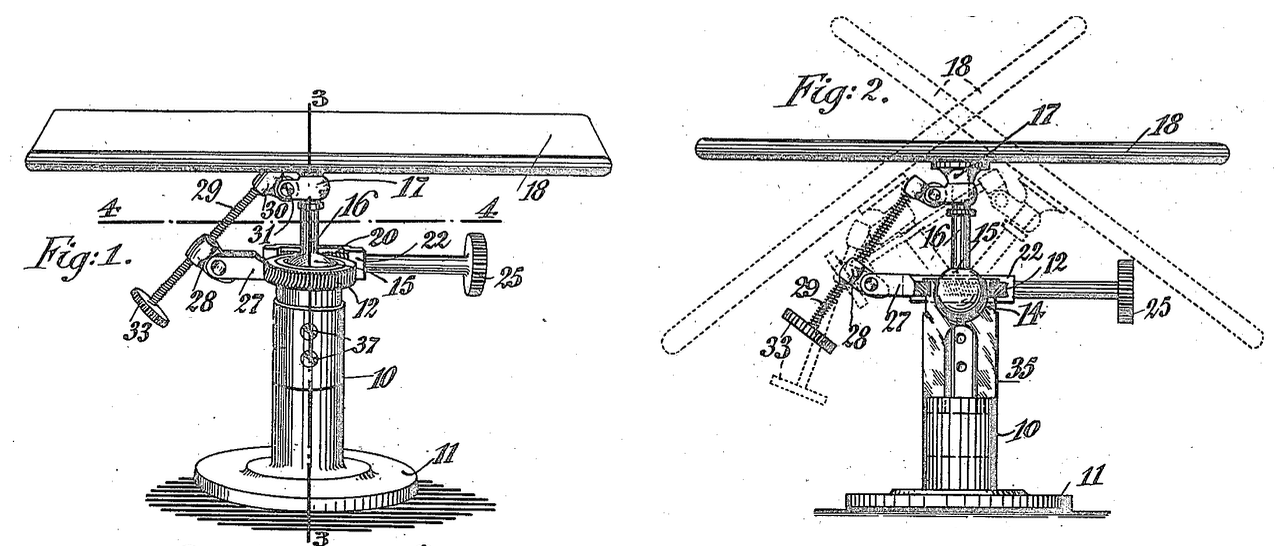
The Soresi operating table was designed so that the patient could be tilted and rotated in multiple directions during an operation, while the supporting mechanism stayed out of the operators’ way.
The Soresis shirt collar was designed to avoid pressure on the neck vessels and preserve comfort and circulation while maintaining the outward appearance of a normal collar. Great illustration of applying anatomical reasoning even outside the operating theatre.
Major Publications
- Soresi AL. A new method of intestinal anastomosis. New instrument for direct transfusion of blood and temporary anastomosis between blood vessels. Ether anesthesia by compressed air. International Medical Congress (16th: 1909, Budapest)
- Soresi AL. Diaphragmatic hernia: its unsuspected frequency: its diagnosis: technic for radical cure. Ann Surg. 1919 Mar;69(3):254-70.
- Soresi AL. Retractors made with hairpins. JAMA 1919;72;(19):1364.
- Soresi AL. Artificial pneumothorax with fractures ribs. 1921;76;(6):379.
- Soresi AL. A new diaphragm for the complete elimination of secondary radiation. Radiology 1931; 16(4): 486-491
- Soresi AL. Peridural anesthesia; a preliminary report. Medical journal and record 1932; 135: 165-166.
- Soresi AL. Anaesthetic Effects of Alcohol. 1935
- Soresi AL. Episubdural Anesthesia. Anesthesia & Analgesia 1937; 16(6): 306-310
- Soresi AL. Continuous drop feeding for the treatment of ulcers of stomach and duodenum. American Journal of Digestive Diseases 1938; 5: 39–40
Patents
- Soresi AL. Operating-table. US1166018A. 1914
- Soresi AL. Instrument for the transfusion of blood. US1151300. 1915
- Soresi AL. Rotary cutting and drilling instrument. US1377288A. 1919
- Soresi AL. Collar. US1378142A 1919
- Soresi AL. Surgical catgut thread. US1564983A 1921
- Soresi AL. Apparatus for surgical uses. US1564146A 1924
References
Biography
- DR. ANGELO SORESI, SURGEON 51 YEARS; Ex-Professor at Homeopathic College Dies–Advocated Filming of Operations. New York Times December 12, 1951, Page 3
- Angelo L Soresi. New York State Journal of Medicine. January 15, 1952
- Dr. Angelo L. Soresi. Journal of the International College of Surgeons 1952; 17(1): 131
- Soresi, Angelo Luigi. JAMA. 1952; 148(13):1138
Eponymous terms
- Stylopoulos N, Rattner DW. The history of hiatal hernia surgery: from Bowditch to laparoscopy. Ann Surg. 2005 Jan;241(1):185-93
- Neruda B, Schmitz-Franken A. 475. Angelo Luigi Soresi (1877-1951), Inaugurator of Combined Spinal Epidural Anaesthesia (CSE) and the Hanging Drop Technique. Regional Anesthesia & Pain Medicine 2008; 33: e258.
- Schmitz-Franken A. Das wissenschaftliche Werk des Angelo Luigi Maria Soresi (1877-1951): ein Erstbeschreiber und Wegbereiter der kombinierten Spinal-Peridural-Anästhesie. Düsseldorf, 2008.
- Neruda B. The search for the originator of the hanging drop technique. Reg Anesth Pain Med. 2008 May-Jun;33(3):276-7; author reply 277-8.
- Dumanian GA, Janes LE, Dumanian ZP. Northwestern and Other Historical Vignettes regarding the Vascular Anastomotic Coupling Device. Plast Reconstr Surg Glob Open. 2019 May 16;7(5):e2194.
- Harms R, Cadogan M. History of Neuraxial Anaesthesia. LITFL
Eponym
the person behind the name

MBBS, Curtin University. Junior doctor working at Sir Charles Gairdner Hospital. Interested in Emergency Medicine, education and baking.

BA MA (Oxon) MBChB (Edin) FACEM FFSEM. Emergency physician, Sir Charles Gairdner Hospital. Passion for rugby, medical history, medical education, and asynchronous learning #FOAMed evangelist. Editor-in-Chief and Webmaster of Life in the Fast lane, LITFL | On Call 4e| Eponyms | Books | Horology |