


Arthur Läwen
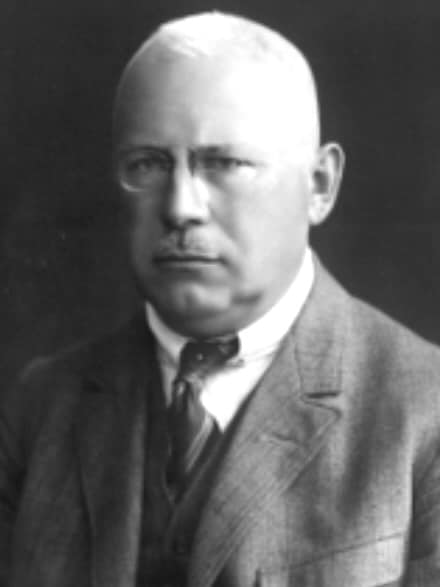
Arthur Georg Läwen (1876-1958) was a German surgeon
Läwen is an under recognised pioneer of segmental regional block, combined anaesthesia, neuromuscular relaxation, mechanical ventilation, and physiological resuscitation.
Läwen helped develop local and regional anaesthesia from experimental pharmacology into practical surgical technique. Building on the caudal epidural work of Cathelin and Stoeckel, he used larger-volume alkalinised, suprarenin-containing novocaine solutions to make sacral epidural block more reliable for operative practice. Läwen helped establish extradural anaesthesia as a surgical regional anaesthetic method.
Läwen studied bicarbonated novocaine, developed paravertebral and peripheral conduction blocks, reported early curarin use for operative muscle relaxation, and developed an electrically driven artificial respiration apparatus.
Biographical Timeline
- Born February 6, 1876 in Waldheim, Saxony
- 1895–1900 – Studied medicine at the universities of Rostock, Freiburg im Breisgau, Munich, and Leipzig.
- 1900 – Received his Dr med from the University of Leipzig. Dissertation on the growth of Vibrio cholerae. Surgical training at the Leipzig Diakonissenkrankenhaus under Heinrich Braun.
- 1903–1904 – Experimental pharmacology with Rudolf Boehm, during surgical training.
- 1904 – Assistant to Friedrich Trendelenburg (1844-1924), Leipzig University Surgical Clinic.
- 1905 – Published early clinical and experimental work on Novocain for local anaesthesia
- 1906 – Published studies comparing cocaine, novocaine, alypin, and stovain on motor nerve trunks.
- 1906 – Began experimental work on curarin (curare) in tetanus
- 1908 – Habilitated in surgery at the University of Leipzig; Privatdozent for surgery.
- 1910 – Published on sacral anaesthesia for surgical operations and on extradural anaesthesia. With Roderich Sievers, described the practical use of artificial respiration in humans, designing an electrically driven respiratory apparatus.
- 1911 – Described targeted paravertebral block from the lower thoracic to lumbar nerves using bicarbonated novocaine, including its use for renal surgery without additional general anaesthesia.
- 1912 – Published on the combination of local anaesthesia with general anaesthesia, high extradural anaesthesia, and epidural injections.
- 1912 – Reported the successful use of curare for muscle relaxation during surgery to reduce abdominal wall tension during closure.
- 1913 – Chief of the surgical department at the newly built Städtisches Krankenhaus St. Georg, Leipzig. Extraordinary professor of surgery at Leipzig.
- 1914–1918 – Served as a medical officer during the First World War, gaining extensive experience in war surgery.
- 1919 – Appointed ordinary professor of surgery and director of the Surgical Clinic and Polyclinic at the University of Marburg.
- 1924–1925 – Dean of the Medical Faculty, University of Marburg.
- 1928 – Appointed ordinary professor of surgery at the University of Königsberg.
- 1940 – Elected to the Deutsche Akademie der Naturforscher Leopoldina.
- 1941–1943 – President of the Deutsche Gesellschaft für Chirurgie
- 1945 – Fled Königsberg on a hospital ship during the final stages of the Second World War, later settling in Lower Saxony.
- 1948 – Moved to Hermannsburg, district of Celle.
- 1950 – Made honorary member of the Deutsche Gesellschaft für Chirurgie.
- Died January 30, 1958 in Lüneburg according to Marburg and biographical sources
Key Medical Contributions
Sacral and extradural anaesthesia
In 1901, Fernand Cathelin (1873–1945) introduced cocaine injection through the sacral hiatus into the epidural space but the method produced only reduced sensation rather than reliable surgical anaesthesia.
Läwen’s early epidural contribution was the transformation of caudal sacral injection from an inconsistent analgesic manoeuvre surgical regional anaesthetic technique. In 1910 he advocated larger-volume sacral injection of up to 25 mL of 1.5% alkalinised, suprarenin-containing novocaine. Läwen used his caudal extradural method for obstetric analgesia and perineal procedures but also for more complex abdominal surgery.
Positioning was central to Läwen’s technique. He preferred injection in the sitting position, but used the lateral position in weaker patients. After injection he placed patients supine, with the upper body elevated and pelvis dependent, aiming to keep novocaine within the sacral canal and lower epidural space.
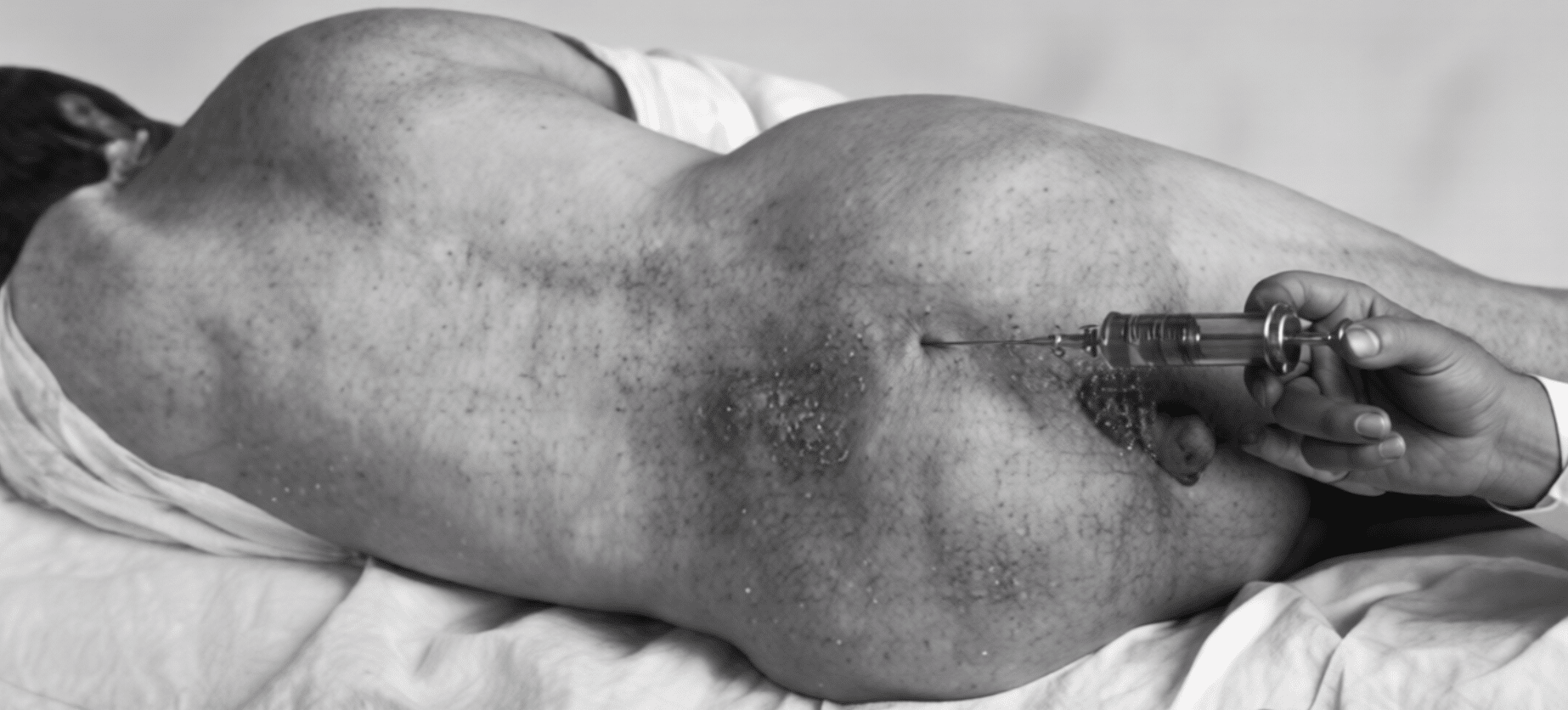
Läwen recognised the risks of systemic local anaesthetic toxicity. He recommended strict asepsis, atraumatic technique, slow cautious injection, and immediate cessation if systemic symptoms appeared.
Walter Stoeckel (1871–1961) continued the German obstetric use of sacral epidural injection, using up to 10 mL of suprarenin-containing novocaine and helped establish the term sacral anaesthesia.
Bicarbonated novocaine
Läwen studied the local effects of cocaine, novocaine, alypin, stovain and suprarenin, then adapted these findings into his regional anaesthetic technique. His research examined how concentration, volume, vasoconstrictor use, alkalinisation, toxicity and tissue spread affected clinical reliability.
In 1910, Läwen promoted novocaine in sodium bicarbonate–saline solution for local anaesthesia. Alkalinised novocaine solutions, often combined with suprarenin, became central to his sacral, extradural and paravertebral techniques. His pharmacological refinement moved early regional anaesthesia away from small, unreliable cocaine injections and toward larger-volume, segmental surgical blockade with improved control and duration.
Paravertebral and segmental conduction block
Läwen aimed to provide operative anaesthesia with segmental blockade without additional general anaesthesia where possible. In 1911 he described local anaesthesia for renal operations using paravertebral novocaine injections to block nerves from the lower thoracic to upper lumbar segments.
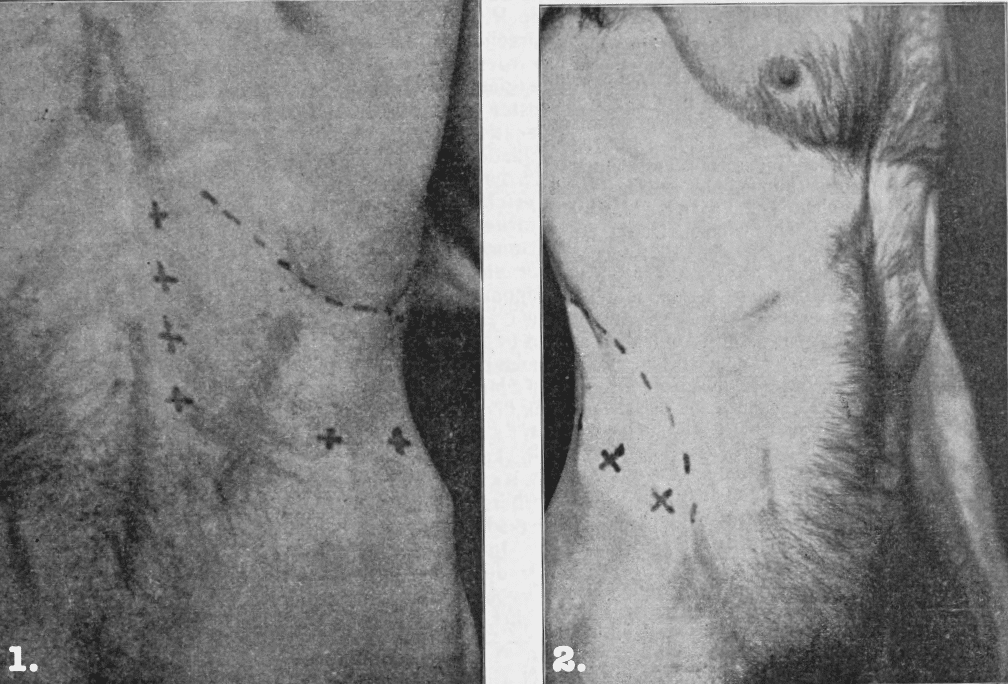
He later used paravertebral novocaine injections diagnostically and therapeutically, including for abdominal differential diagnosis, postoperative pain, and pulmonary complications.
Curare and combined anaesthesia
Rudolf Boehm had previously studied South American arrow poisons and curarin. In 1906, Läwen investigated curarin experimentally for tetanus. In his paper Experimentelle Untersuchungen über die Möglichkeit den Tetanus mit Curarin zu behandeln he proposed curarinisation as a symptomatic treatment for severe muscle spasm in combination with high-dose antitoxin, and secured artificial ventilation. This was an early use of curarin to create pharmacological paralysis requiring respiratory support.
In 1912, he published Über die Verbindung der Lokalanästhesie mit der Narkose, über hohe Extraduralanästhesie und epidurale Injektionen anästhesierender Lösungen bei tabischen Magenkrisen. Near the end of the paper, Läwen described using curarin to reduce abdominal wall tension during closure using a 2% curarin solution, given subcutaneously or intramuscularly, to a total dose of up to 0.8 mg. Rather than deepening ether/chloroform narcosis late in the operation, curarin could weaken motor impulses while regional and general anaesthesia provided analgesia and unconsciousness. Läwen is recognised as one of the first surgeons to use curare deliberately for operative muscle relaxation
Läwen recognised the limitations of curare. Local muscle paralysis was not possible, systemic effects were to be expected, and unstandardised curare preparations were too unpredictable for safe human use. Routine clinical neuromuscular blockade would be taken up by Griffith and Johnson three decades later.
Artificial ventilation and resuscitation
Encouraged by Friedrich Trendelenburg’s interest in resuscitation and pulmonary embolism surgery, Läwen and Roderich Sievers (1878-1943) undertook a series of animal experiments. They analysed artificial respiration, oxygen, strophanthin, adrenaline, cardiac massage, and cardiac arrest after temporary occlusion of the aorta and pulmonary artery. The pair recognised the importance of ventilation, oxygen administration, and intracardiac adrenaline injection in resuscitation.
In 1910, Läwen and Sievers described the practical clinical use of instrumental artificial respiration in humans. Their electrically driven respirator allowed alternating pressure ventilation, with inspiratory positive pressure and expiratory negative pressure. The tidal volume could be adjusted according to visible chest movement, and respiratory frequency was variably set around 16–20 breaths per minute. The apparatus was intended for resuscitation, poisoning, operative anaesthesia, and use with different air–oxygen mixtures.
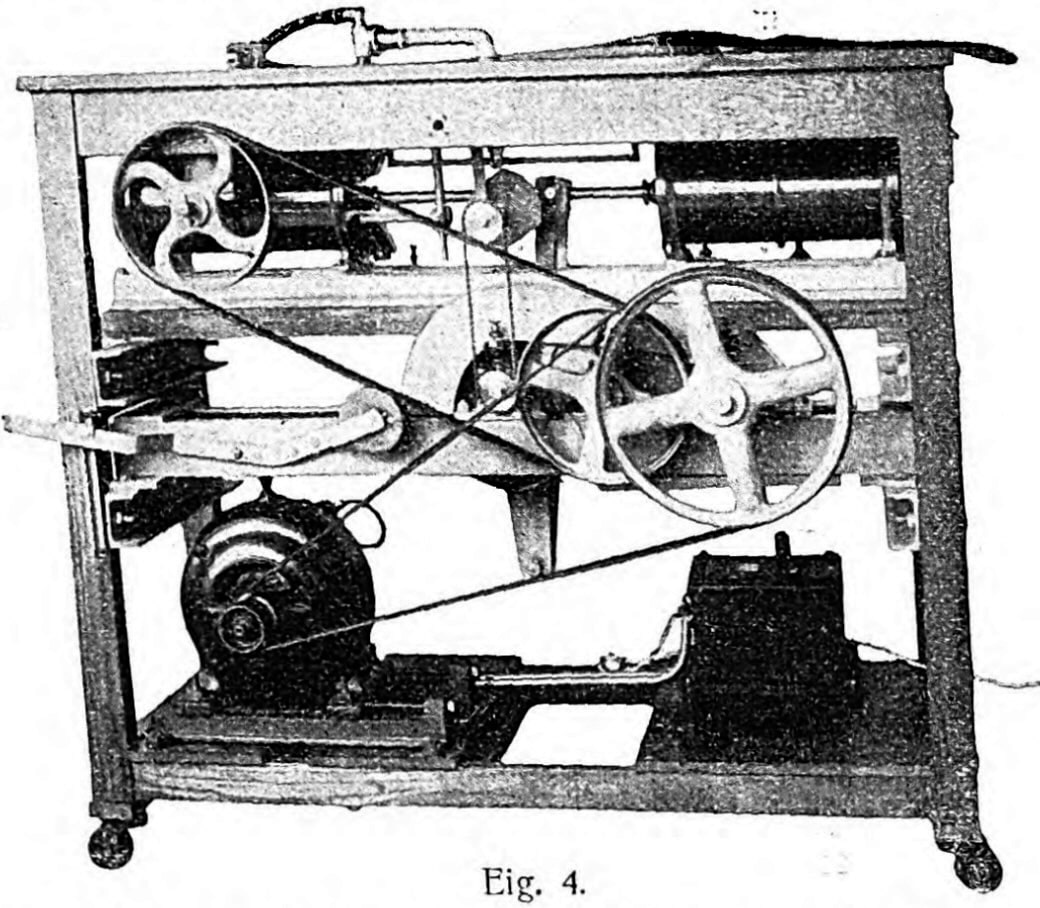
The device was not purely experimental. Läwen and Sievers reported prolonged clinical ventilation in a patient with respiratory failure attributed to raised intracranial pressure, documenting pulse and respiratory curves with a Jaquet sphygmograph. In tetanus or strychnine poisoning, Läwen proposed controlled curarin-induced paralysis with simultaneous ventilation through a Trendelenburg tracheal cannula.
Major Publications
Sacral and extradural anaesthesia
- Läwen A. Über die Verwertung der Sakralanästhesie für chirurgische Operationen. Zentralblatt für Chirurgie. 1910; 20: 708–711.
- Läwen A. Über Extraduralanästhesie für chirurgische Operationen. Deutsche Zeitschrift für Chirurgie. 1910; 108: 1–43.
- Läwen A, von Gaza W. Experimentelle Untersuchungen über Extraduralanästhesie. Deutsche Zeitschrift für Chirurgie. 1911; 111: 289–397.
- Läwen A. Die Extraduralanästhesie. Ergebnisse der Chirurgie und Orthopädie. 1913; 5: 39–84.
Bicarbonated novocaine and local anaesthetic pharmacology
- Läwen A. Experimentelle Untersuchungen über die Gefäßwirkung von Suprarenin in Verbindung mit örtlich anästhesierenden Mitteln. Deutsche Zeitschrift für Chirurgie. 1904; 74: 163–184
- Heineke H, Läwen A. Experimentelle Untersuchungen und klinische Erfahrungen über die Verwertbarkeit von Novokain für die örtliche Anästhesie. Deutsche Zeitschrift für Chirurgie 1905; 80: 180–198.
- Läwen A. Vergleichende Untersuchungen über die örtliche Wirkung von Kokain, Novokain, Alypin und Stovain auf motorische Nervenstämme. Archiv für experimentelle Pathologie und Pharmakologie. 1907; 56: 138–160.
- Läwen A. Über die Verwendung des Novokains in Natriumbikarbonat-Kochsalzlösungen zur lokalen Anästhesie. Münchener medizinische Wochenschrift. 1910; 39: 2044–2046.
Paravertebral and peripheral conduction block
- Läwen A. Über Leitungsanästhesie an der unteren Extremität, mit Bemerkungen über die Technik von Injektionen an den Nervus ischiadicus bei der Behandlung der Ischias. Deutsche Zeitschrift für Chirurgie. 1911; 111: 252–268.
- Läwen A. Lokalanästhesie für Nierenoperationen. Münchener medizinische Wochenschrift. 1911; 26: 1390–1391.
- Läwen A. Über segmentäre Schmerzaufhebung durch paravertebrale Novokaininjektionen zur Differentialdiagnose intraabdomineller Erkrankungen. Münchener medizinische Wochenschrift. 1922; 40: 1423–1426.
- Läwen A. Weitere Erfahrungen über paravertebrale Schmerzaufhebung zur Differentialdiagnose von Erkrankungen der Gallenblase, des Magens, der Niere und des Wurmfortsatzes sowie zur Behandlung postoperativer Lungenkomplikationen. Zentralblatt für Chirurgie 1923; 12: 461–465.
Curare and muscle relaxation
- Läwen A. Experimentelle Untersuchungen über die Möglichkeit den Tetanus mit Curarin zu behandeln. Mitteilungen aus den Grenzgebieten der Medizin und Chirurgie. 1906; 16: 802–825.
- Läwen A. Über die Verbindung der Lokalanästhesie mit der Narkose, über hohe Extraduralanästhesie und epidurale Injektionen anästhesierender Lösungen bei tabischen Magenkrisen. Beiträge zur klinischen Chirurgie 1912; 80: 168–189.
Artificial ventilation and resuscitation
- Läwen A, Sievers R. Zur praktischen Anwendung der instrumentellen künstlichen Respiration am Menschen. Münchener medizinische Wochenschrift 1910; 41: 2221–2225.
- Läwen A, Sievers R. Experimentelle Untersuchungen über die Wirkung von künstlicher Atmung, Strophantin und Adrenalin auf den Herzstillstand nach temporärem Verschluß der Aorta und Arteria pulmonalis, unter Bezugnahme auf die Lungenembolieoperation nach Trendelenburg. Deutsche Zeitschrift für Chirurgie 1910; 105: 174–256.
References
Biography
- Burckhardt H. Arthur Läwen zum 75. Geburtstage [To Arthur Läwen on his 75th birthday]. Zentralbl Chir. 1951;76(4):226-8.
- ARTHUR LAWEN. Chirurg. 1958 May;29(5):239-40.
- Goerig M, Schulte am Esch J. Arthur Läwen–Ein Wegbereiter moderner Anästhesieverfahren. Anasthesiol Intensivmed Notfallmed Schmerzther. 1993 Aug;28(5):315-25.
- Wiedemann B. Arthur Läwen Pionier und Wegbereiter der modernen Anästhesie. Medizingeschichte 2006; 17: 622-623
- Läwen, Arthur Georg. Professorenkatalog der Philipps-Universität Marburg
Eponymous terms
- Röse W. Leipziger anästhesie-historische Vignetten. Anästh Intensivmed 2006; 47: 232-238
Eponym
the person behind the name

BA MA (Oxon) MBChB (Edin) FACEM FFSEM. Emergency physician, Sir Charles Gairdner Hospital. Passion for rugby, medical history, medical education, and asynchronous learning #FOAMed evangelist. Editor-in-Chief and Webmaster of Life in the Fast lane, LITFL | On Call 4e| Eponyms | Books | Horology |