
Barlow syndrome
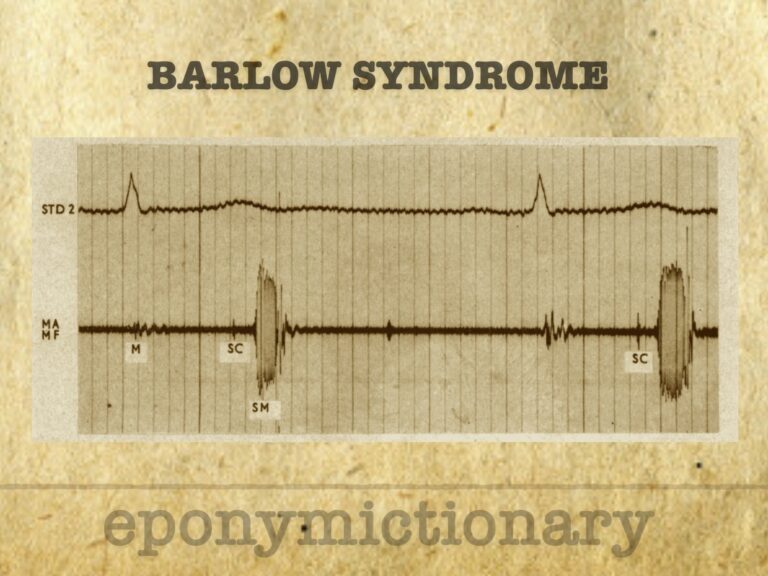
Barlow syndrome (primary billowing mitral leaflet syndrome (BMLS)). Auscultatory findings of late systolic murmur with non-ejection ('mid-late') systolic click


Barlow syndrome (primary billowing mitral leaflet syndrome (BMLS)). Auscultatory findings of late systolic murmur with non-ejection ('mid-late') systolic click
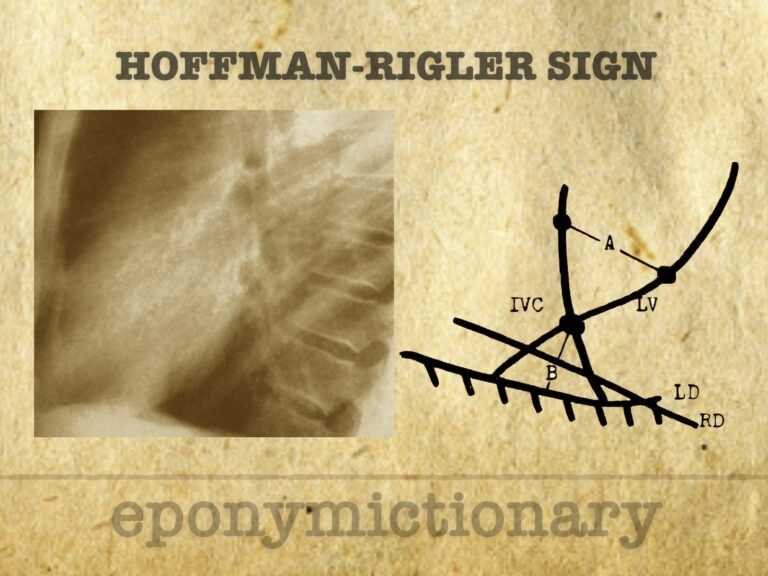
Radiographic sign of left ventricular enlargement on lateral chest X-ray, based on LV extension behind the IVC; described by Hoffman and Rigler in 1965

Rigler notch sign: Indentation in the border of a solid lung mass (thought to represent a feeding vessel) suggestive of a bronchial carcinoma

Rigler triad; Imaging findings in patients with gallstone ileus with an ectopic gallstone causing small bowel obstruction, and pneumobilia
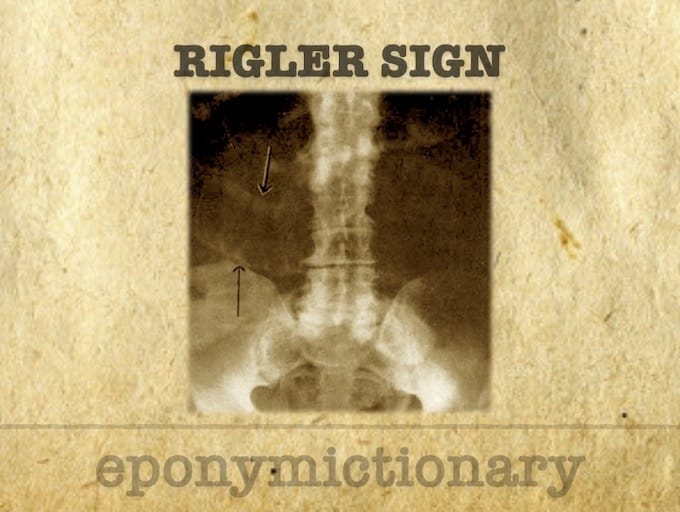
Radiological signs of pneumoperitoneum: history, diagnosis, and key eponyms including Rigler’s sign, Popper’s sign, football sign, and inverted V sign
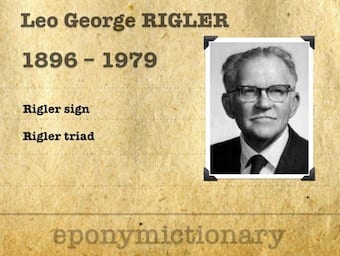
Leo George Rigler (1896-1979) was an American radiologist. Eponymously affiliated with Rigler sign; Rigler triad; Rigler notch sign; Hoffman-Rigler sign
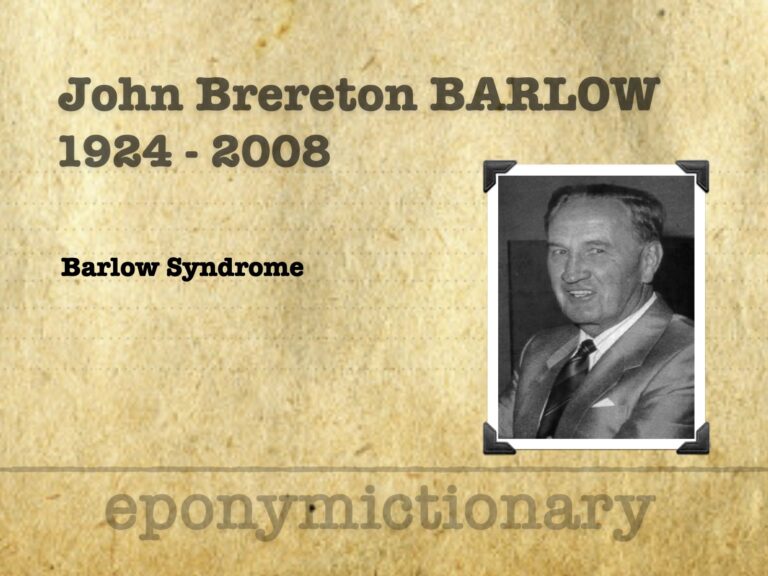
John Brereton Barlow (1924-2008) was a South African cardiologist. Barlow described mitral valve prolapse (eponymously known as Barlow’s syndrome) in 1963
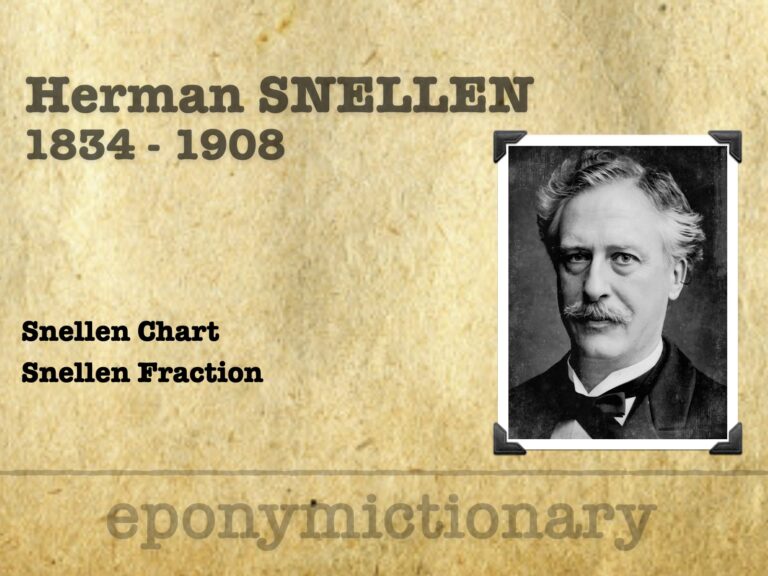
Herman Snellen (1834–1908): Dutch ophthalmologist who created the Snellen chart and standardized visual acuity testing, transforming eye care worldwide
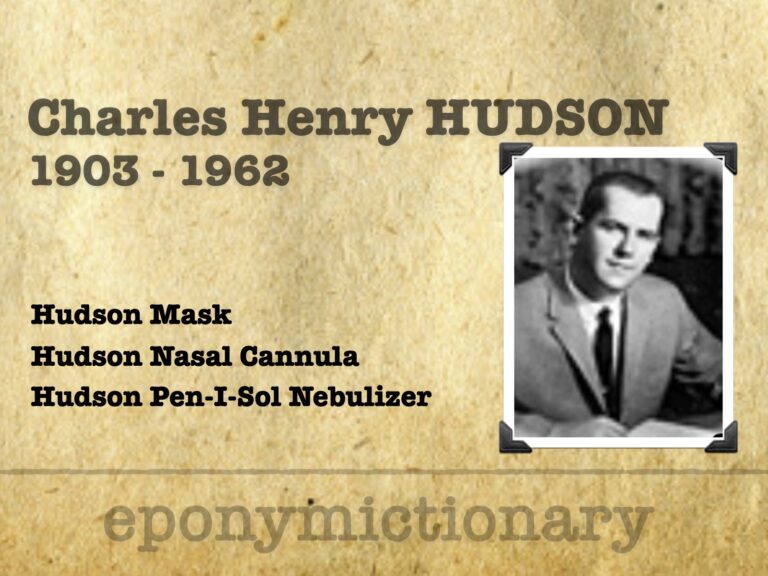
Charles Henry Hudson (1903-1962) was an American dentist, inventor and medical entrepreneur. Inventor of the Hudson Mask
Necrotizing fasciitis: life-threatening soft tissue infection, historically hospital gangrene, term coined by Ben J. Wilson in 1951
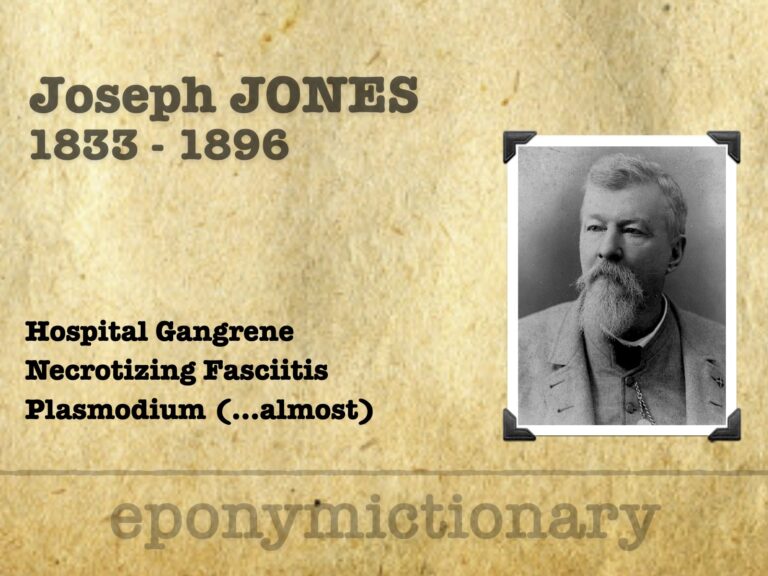
Joseph Jones (1833–1896), Confederate surgeon who defined hospital gangrene, advanced malaria research, and shaped Southern public health

Charles Foix (1882–1927), French neurologist; defined brainstem vascular syndromes, Foix–Alajouanine syndrome, and helped shape modern cerebrovascular neurology.