
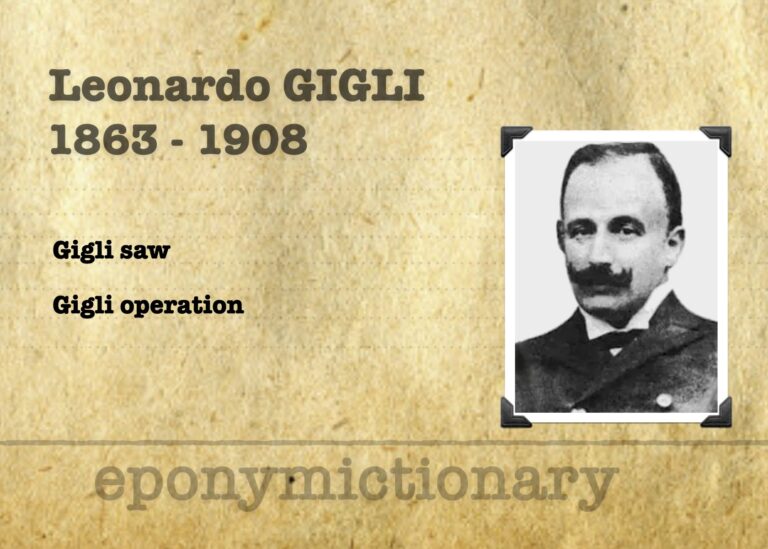
Leonardo Gigli
Leonardo Gigli (1863-1908) was an Italian surgeon and gynaecologist. Inventor of the Gigli saw for lateralised pubiotomy


Leonardo Gigli (1863-1908) was an Italian surgeon and gynaecologist. Inventor of the Gigli saw for lateralised pubiotomy

Emergency Procedure, instruction and discussion: Serratus Anterior Plane (SAP) Block; a technique most often used for rib fracture pain

Emergency Procedure: Serratus Anterior Plane (SAP) Block; a technique most often used for rib fracture pain

Update 064. Sending you FOAMed content from around the globe. Latest trends and best articles so that you stay top of your field.
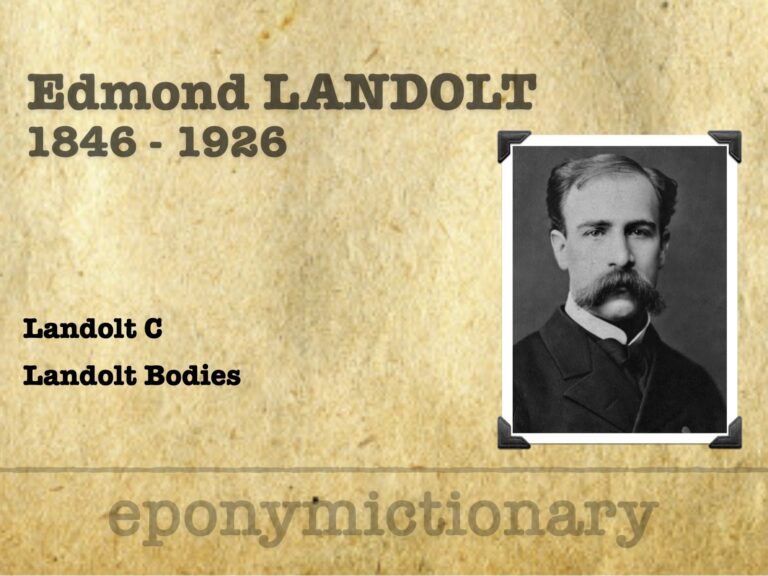
Edmund Landolt (1846–1926): Swiss-French ophthalmologist who created the Landolt C optotype, advanced strabismus surgery, and retinal anatomy studies
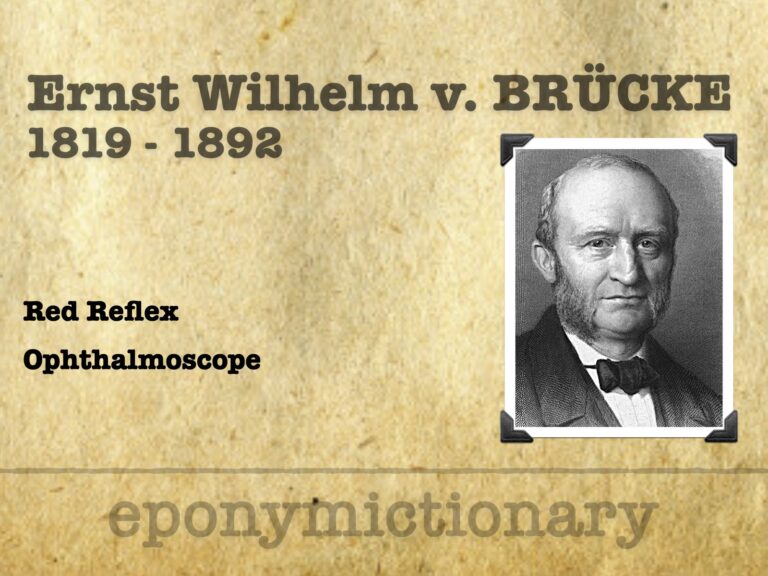
Ernst von Brücke (1819–1892) described the eye’s red reflex, paving the way for Helmholtz’s ophthalmoscope and modern retinal examination

Franciscus Donders (1818–1889), Dutch ophthalmologist and physiologist, pioneered refraction studies, eye movement laws, and mental chronometry
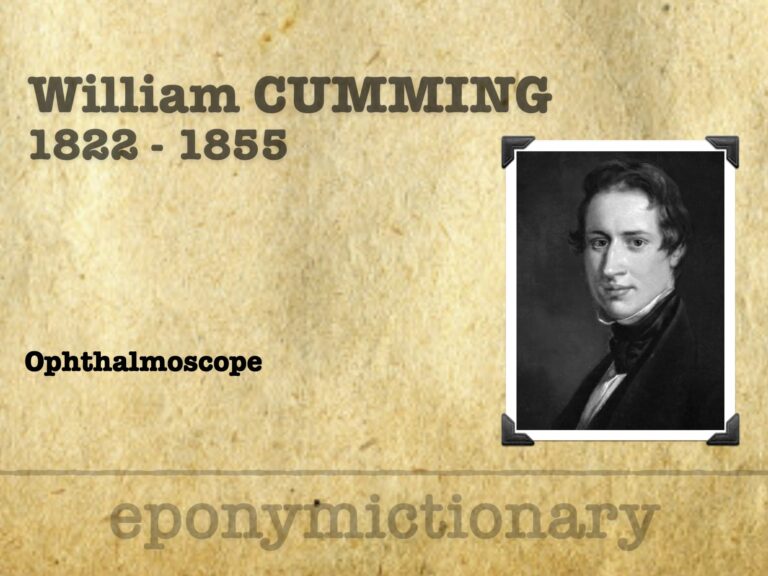
William Cumming (1822–1855), Moorfields surgeon who first observed the living eye’s luminous reflex, paving the way for Helmholtz’s ophthalmoscope.

Heinrich Küchler (1811–1873): German ophthalmologist who pioneered early eye charts, advanced corneal surgery, and reformed medical and military health services

Eduard Jaeger (1818–1884), Austrian ophthalmologist; introduced Jaeger Test-Types, advanced ophthalmoscopy, and first described diabetic retinopathy
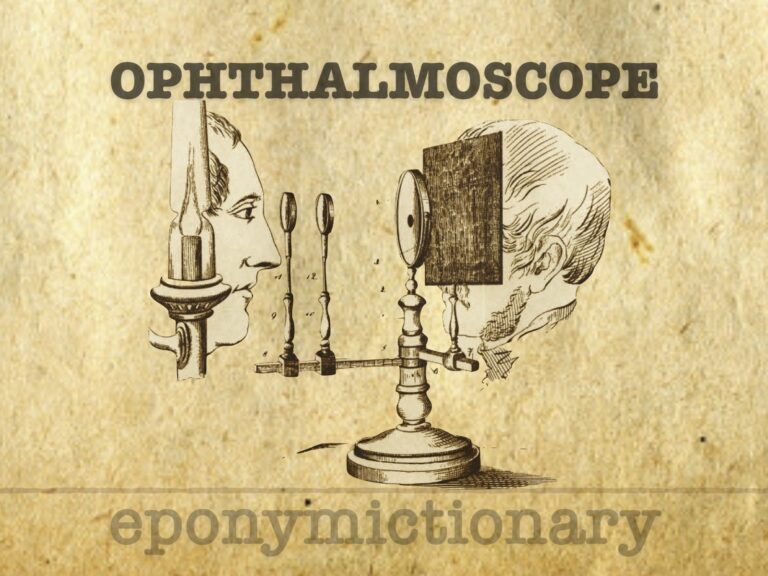
From ancient “cat’s‑eye” reflections to AI‑assisted retinal imaging: the story of the ophthalmoscope from Helmholtz’s 1851 Augenspiegel to digital, confocal and smartphone‑based system

Louise L. Sloan (1898–1982) developed Sloan optotypes (LogMAR), pioneering colour vision screening, perimetry, and low-vision rehabilitation