
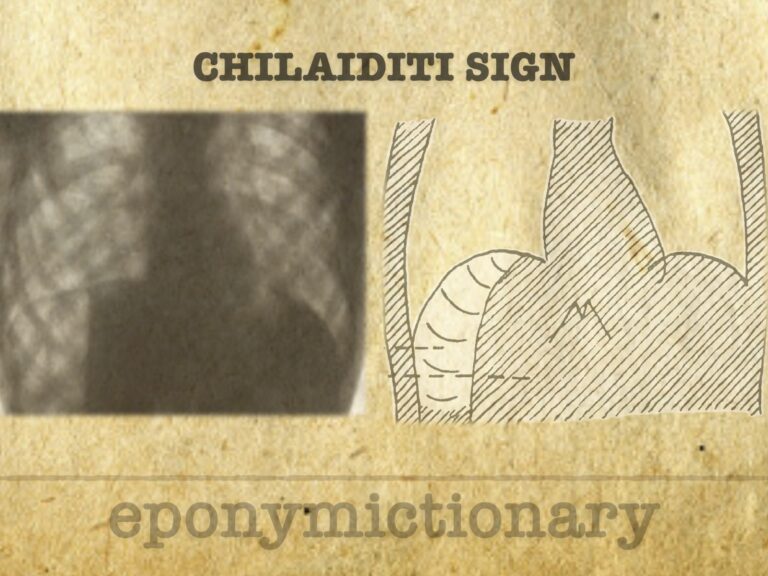
Chilaiditi syndrome
Chilaiditi sign: rare condition with bowel loops interposed between liver and diaphragm, with symptoms (syndrome). Must differentiate from free air.


Chilaiditi sign: rare condition with bowel loops interposed between liver and diaphragm, with symptoms (syndrome). Must differentiate from free air.
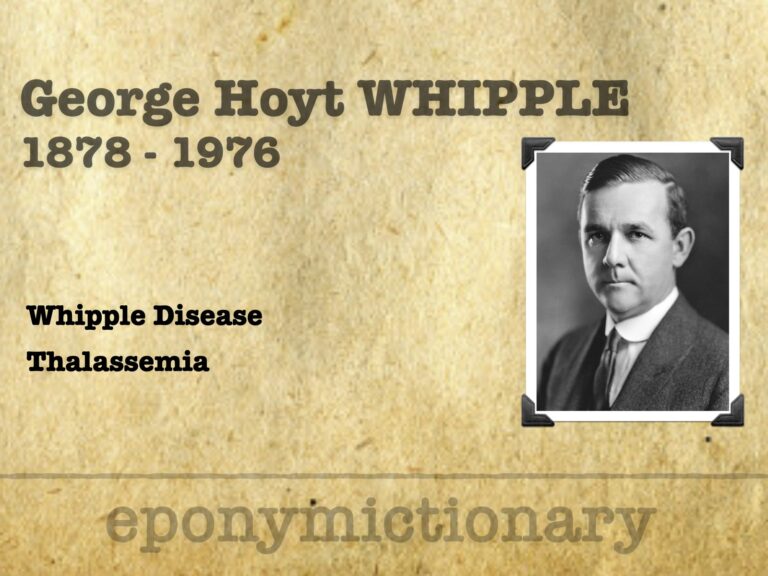
George Hoyt Whipple (1878–1976), Nobel winner, advanced anaemia therapy, coined thalassaemia, and described Whipple disease in 1907.
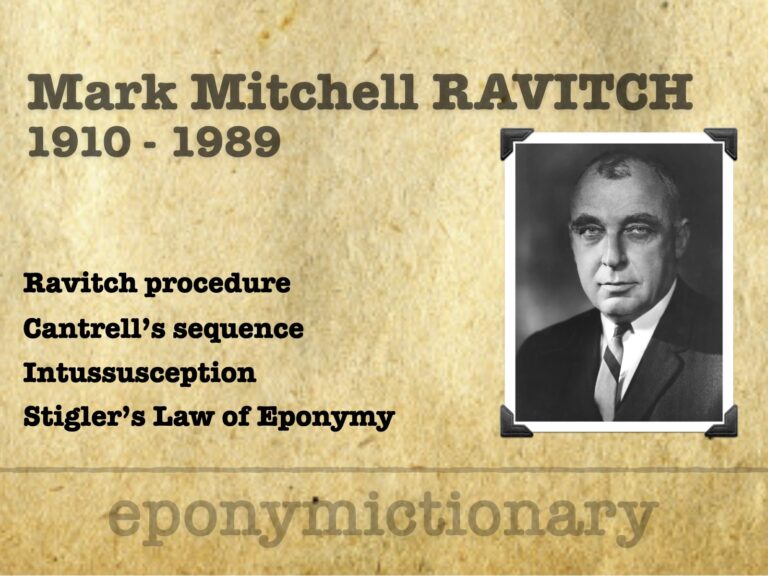
Mark M. Ravitch, pioneering pediatric surgeon, innovator of the Ravitch procedure, stapling, intussusception care, and Cantrell’s sequence.
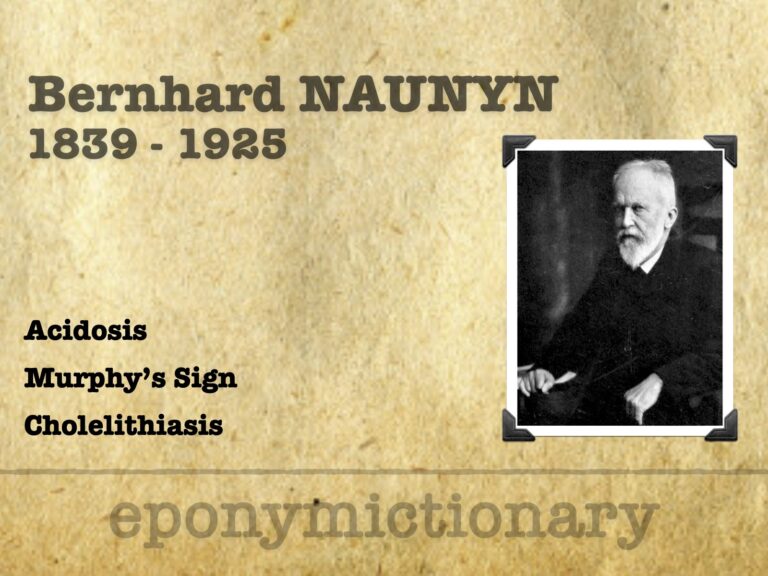
German physician Bernhard Naunyn (1839–1925), pioneer of experimental medicine, defined acidosis, advanced diabetes and gallstone research, and co-founded Naunyn–Schmiedeberg’s Archives
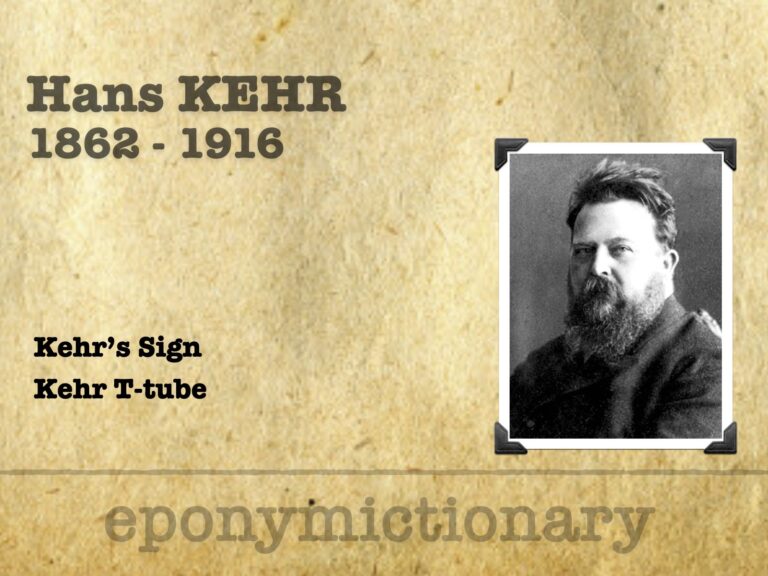
Hans Kehr (1862–1916), pioneer of gallbladder surgery, introduced the T-tube for bile duct drainage; eponymously linked to Kehr’s sign of splenic rupture.
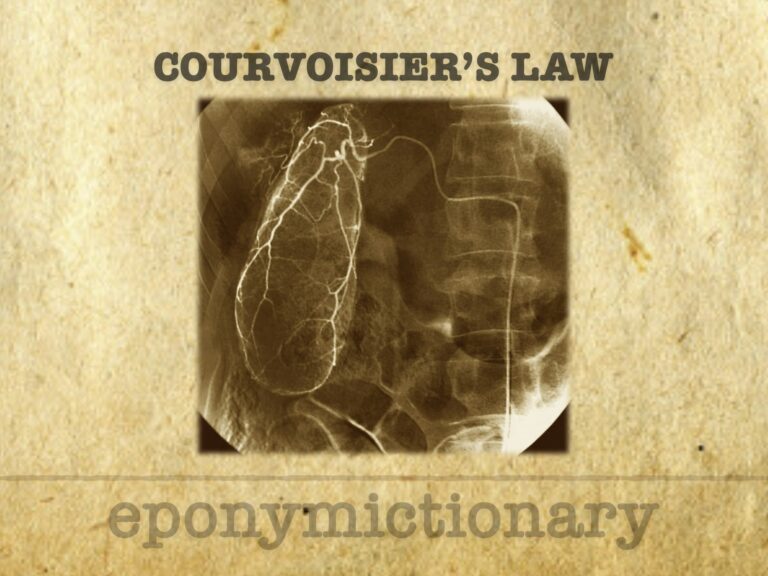
Courvoisier’s sign: palpable gallbladder with painless jaundice suggests malignant obstruction, not gallstones. A key clinical diagnostic clue.
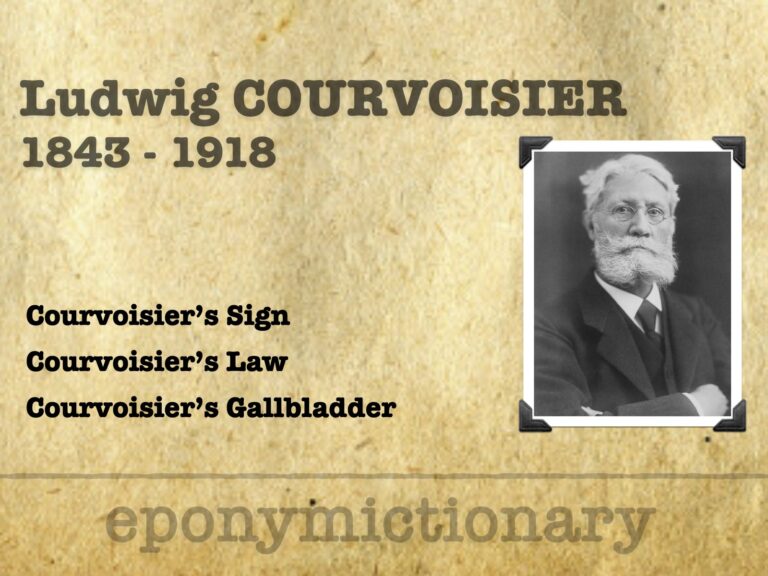
Ludwig Georg Courvoisier (1843-1918) was a Swiss surgeon, academic, and naturalist best remembered for Courvoisier’s sign / law (1890)
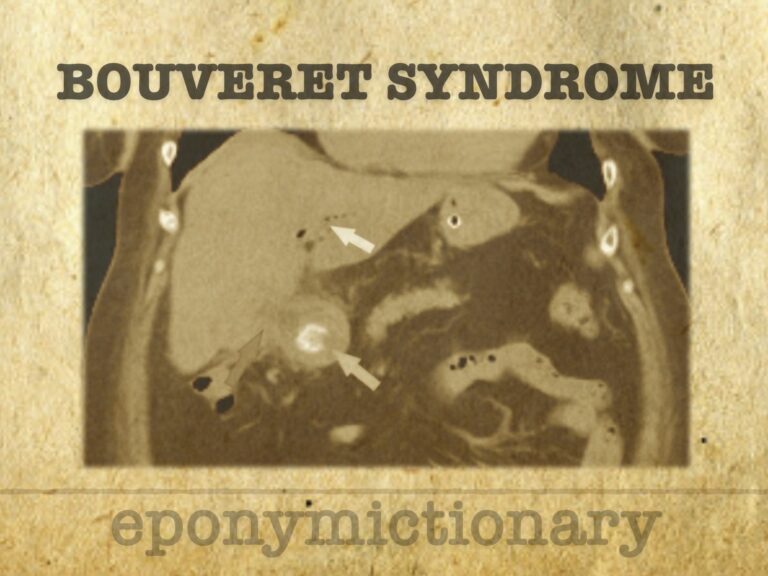
Bouveret syndrome: gastric outlet obstruction following passage of a gallstone from gallbladder to duodenum/pylorus via bilioenteric fistula
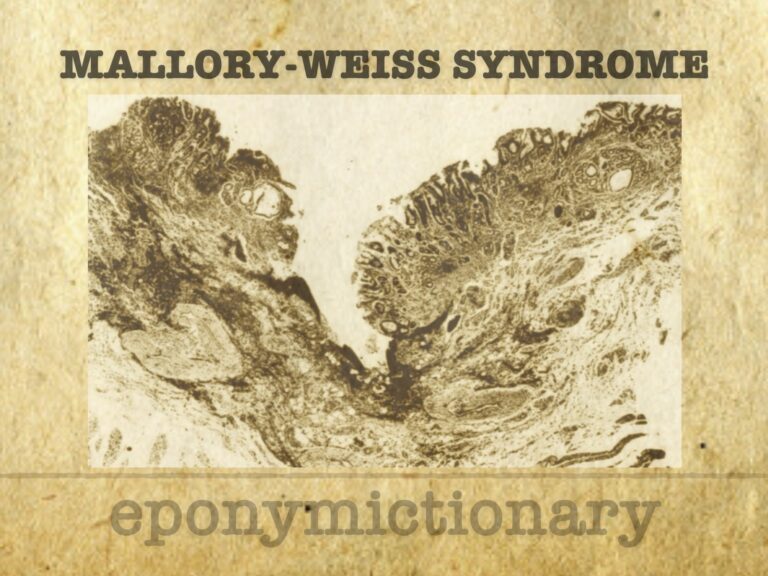
Mallory–Weiss syndrome: upper GI bleeding from gastroesophageal tears. History, key figures, first descriptions, diagnosis, and treatment.

Rigler triad; Imaging findings in patients with gallstone ileus with an ectopic gallstone causing small bowel obstruction, and pneumobilia
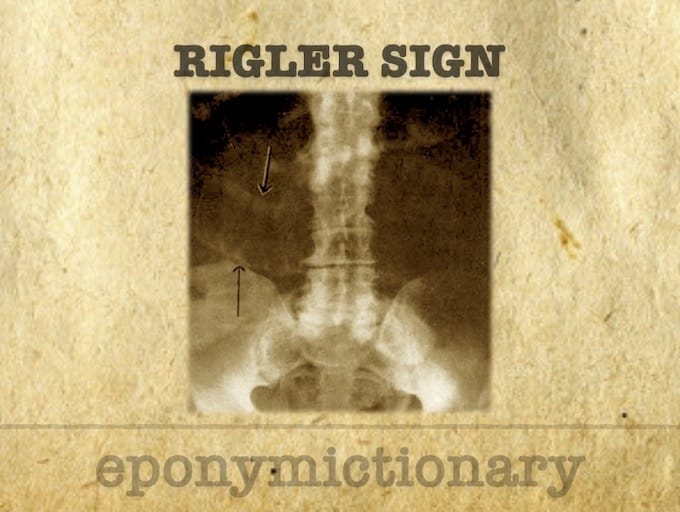
Radiological signs of pneumoperitoneum: history, diagnosis, and key eponyms including Rigler’s sign, Popper’s sign, football sign, and inverted V sign
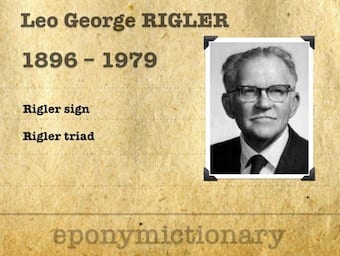
Leo George Rigler (1896-1979) was an American radiologist. Eponymously affiliated with Rigler sign; Rigler triad; Rigler notch sign; Hoffman-Rigler sign