

CT Case 108
A 60 year old male is brought in by ambulance following a head on collision at moderate speed in a car. CT c-spine is performed


A 60 year old male is brought in by ambulance following a head on collision at moderate speed in a car. CT c-spine is performed
A 70 year old woman presents with 12 hours of lower abdominal pain and one episode of haematochaezia at home. CT mesenteric angiogram is performed
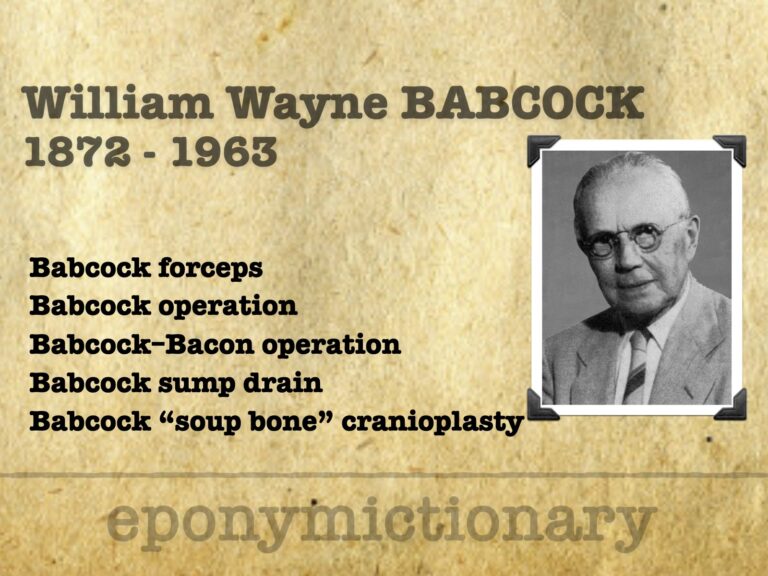
William Wayne Babcock Jr (1872-1963), American surgeon linked to spinal anaesthesia, Babcock forceps, vein stripping, cranioplasty and surgical innovation.
Aaron sign is referred pain induced by continuous firm pressure over McBurney point, described by Charles D. Aaron in 1913 for chronic appendicitis.
Rovsing sign: original 1907 technique, Perman's earlier 1904 sign, history, mechanism, diagnostic accuracy and evolution of the appendicitis sign.
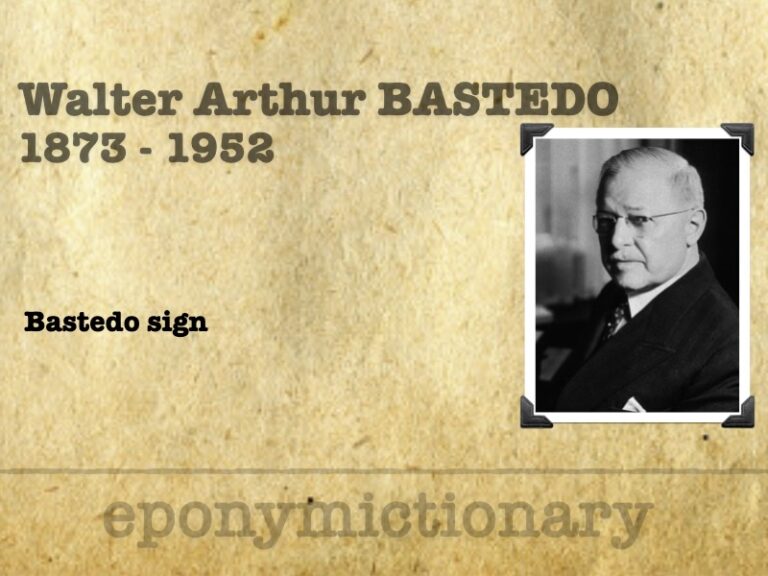
Walter Arthur Bastedo (1873–1952), American physician, pharmacologist and gastroenterologist who described Bastedo sign for chronic appendicitis.
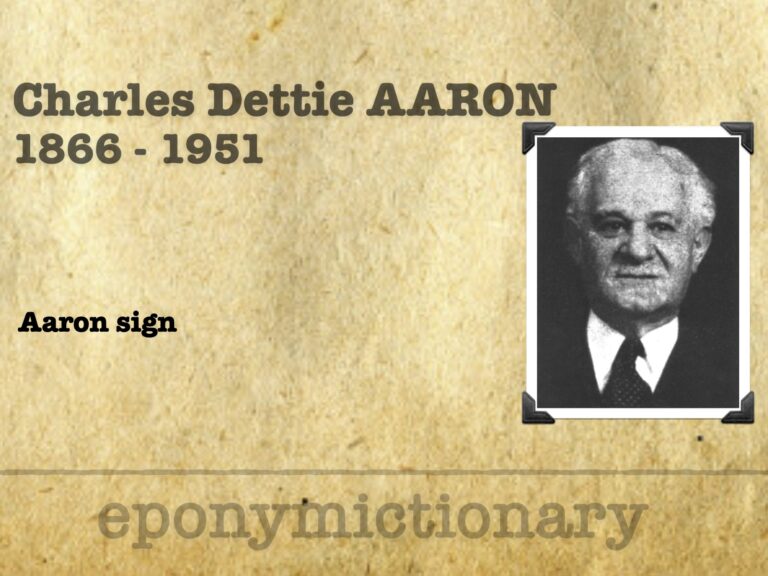
Charles Dettie Aaron (1866–1951) was an American gastroenterologist, author and educator who described the eponymous Aaron sign for chronic appendicitis.
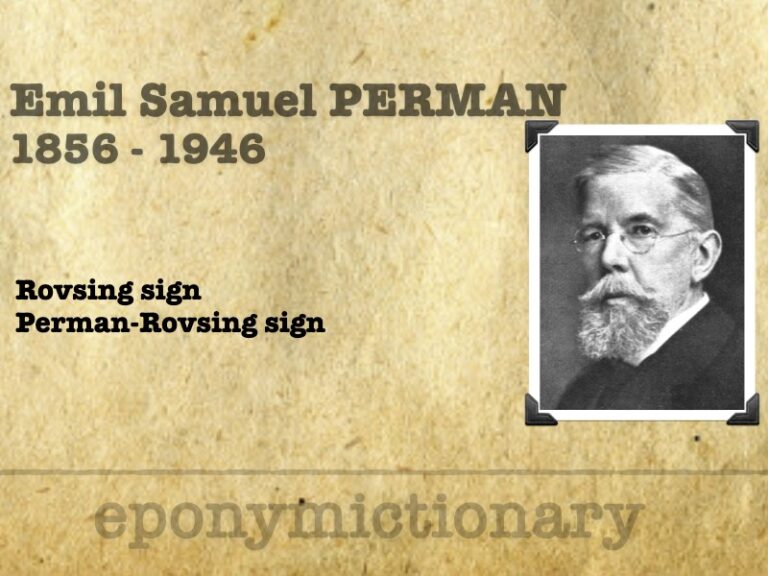
Emil Samuel Perman (1856 - 1946) was a Swedish general surgeon. Eponymsously associated with the Perman-Rovsing sign
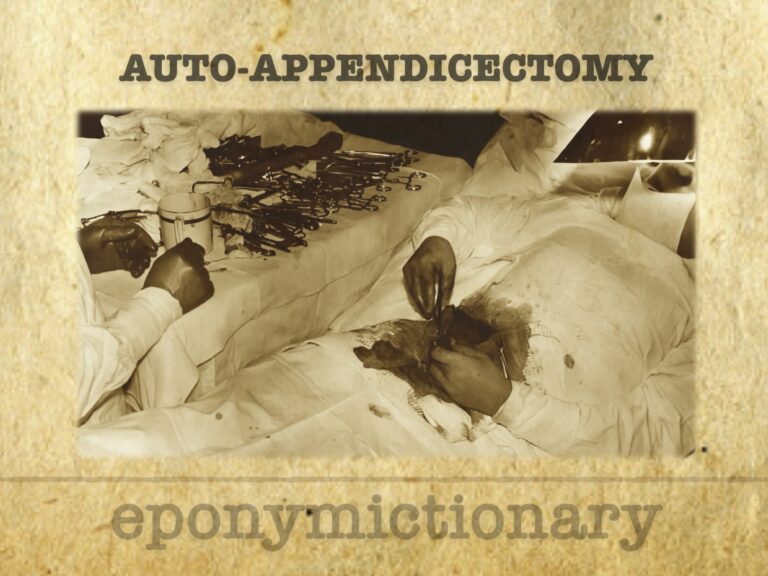
Auto-appendicectomy: three landmark self-appendectomy cases—Kane (1921), McLaren (1944), Rogozov (1961)—and what they reveal about surgery in extremis.

Théodore Tuffier (1857–1929): Paris surgeon and innovator; thoracic/cardiac pioneer, early open-chest massage, valve experiments, spinal anaesthesia and Tuffier’s line.

Cardio-biliary reflex (“Cope sign”): gallbladder disease causing vagal bradycardia or AV block that mimics cardiac events, often with normal troponin.
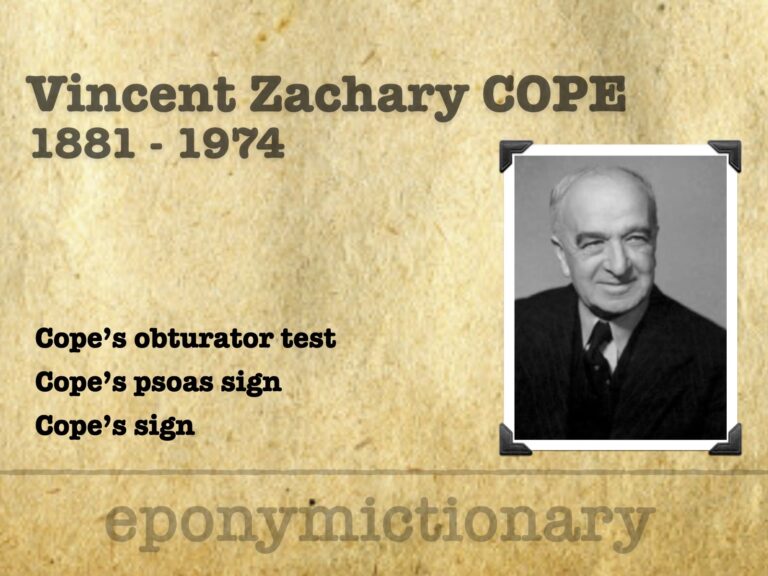
Sir Vincent Zachary Cope (1881 – 1974) was a British physician and surgeon. Eponymously linked with Cope Psoas test and obturator test.