

Edward Tuohy
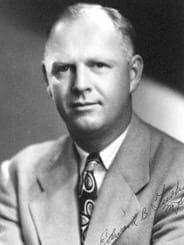
Edward Boyce Tuohy (1908-1959) was an American anaesthesiologist.
Tuohy influenced modern neuraxial anaesthesia with the clinical development, validation, and dissemination of continuous spinal and epidural catheter techniques. Trained at the Mayo Clinic and active during the rapid wartime expansion of anaesthesia as a specialty. His work helped move spinal and epidural anaesthesia from episodic procedures toward maintainable, titratable techniques suitable for prolonged surgery.
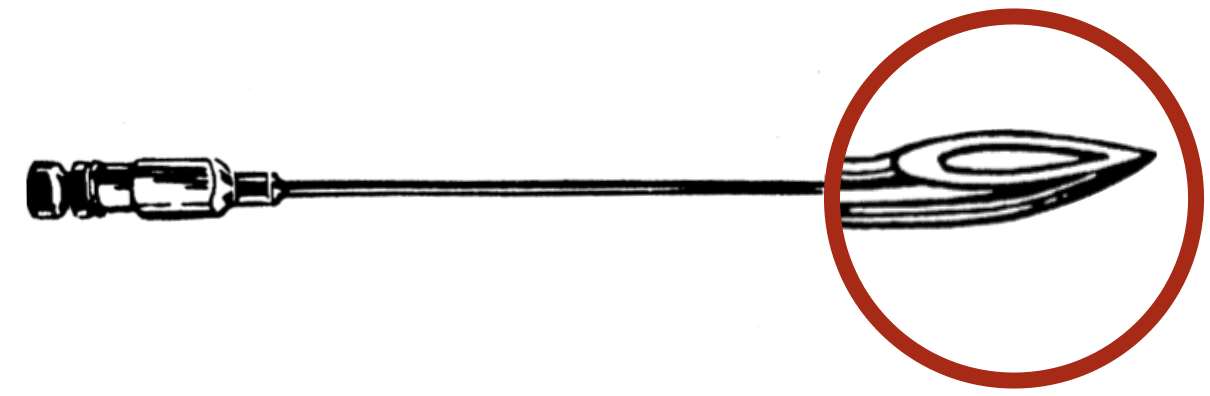
During the Second World War, Tuohy published influential descriptions of continuous spinal anaesthesia using an indwelling ureteric catheter, emphasising fractional dosing as a means of improving safety and haemodynamic stability. He argued that serial administration reduced the risks associated with large single doses of intrathecal local anaesthetic. Tuohy adopted a curved-tip, lateral-opening needle, which allowed controlled, cephalad advancement of the catheter within the neuraxial space (Tuohy Needle)
Although the curved, non-coring needle tip was invented and patented by Ralph Lee Huber, Tuohy’s publications and teaching led to its widespread adoption in anaesthetic practice, and the device became enduringly associated with his name.
Biography
- Born on March 17, 1908 in Duluth, Minnesota
- 1929 – Awarded Bachelor of Science, University of Minnesota.
- 1932 – Graduated MD from the University of Pennsylvania, Philadelphia.
- 1933 – Internship at Ancker Hospital, St Paul, Minnesota
- 1934 – Entered the Mayo Clinic, Rochester, Minnesota, as a fellow in internal medicine.
- 1935 – M.S. in Anesthesia, University of Minnesota – ‘A comparative study of the physiological activity of cobefrin and epinephrine‘. First physician in the USA to receive a Master’s degree in Anesthesiology; appointed consultant anaesthetist at the Mayo Clinic.
- 1942–1945 – Served in the US Army Medical Corps during World War II, attaining the rank of Major. Stationed at Walter Reed Army Hospital and Percy Jones General Hospital (Battle Creek, Michigan).
- 1944 – Published description of continuous spinal anaesthesia using an indwelling ureteral catheter, while on active military service.
- 1947 – Appointed Professor and Head of Anaesthesiology, Georgetown University Medical Center, Washington DC. Served concurrently as consultant in anaesthesiology to the National Naval Medical Center. Elected President of the American Society of Anesthesiologists.
- 1951 – Moved to California; appointed Professor of Anaesthesiology, University of Southern California School of Medicine, Los Angeles.
- 1951–1959 – Clinical and academic practice in Los Angeles; continued national leadership in anaesthesiology and medical education.
- Died on February 2, 1959 following a cerebrovascular accident in San Marino, Los Angeles
Key contributions to neuraxial blockade: Tuohy Needle (1944)
1944 – Tuohy published his description of continuous spinal anaesthesia, using a ureteric catheter passed intrathecally through a needle to permit repeated dosing without repeated dural puncture. This work provided a practical, reproducible method suitable for wider clinical use. Tuohy emphasised controlled dosing, haemodynamic stability, and the ability to extend anaesthesia for lengthy procedures.
There should be little doubt that the fractional or serial administration of spinal anesthetic agents is safer relatively than single large dose administration — so-called ‘single shot spinal
1945 – To facilitate catheter placement, Tuohy adopted a curved-tip needle with a lateral orifice“, allowing the “curved tip of the needle facilitates cephalad advancement of the catheter“. Although this needle geometry had been invented and patented by dentist Ralph Lee Huber, Tuohy recognised its particular suitability for neuraxial catheterisation and introduced it into anaesthetic practice. Through Tuohy’s publications and teaching, the curved, non-coring needle became widely associated with epidural and spinal catheter techniques and entered clinical use under the eponym “Tuohy needle”.
By combining catheter-based neuraxial techniques with practical needle design, Tuohy helped establish continuous spinal and epidural anaesthesia as viable clinical options. While later practice would favour epidural over intrathecal catheters for safety reasons, Tuohy’s work directly influenced the evolution of modern continuous epidural analgesia, particularly in surgery and postoperative pain management.
Major Publications
- Tuohy EB. A comparative study of the physiological activity of cobefrin and epinephrine. MS thesis, 1935
- Tuohy EB. Local anaesthesia. 1939
- Tuohy EB. Continuous Spinal Anesthesia: Its usefulness and technic involved. Anesthesiology 1944;5:142-148
- Tuohy EB. Continuous Spinal Anaesthesia: A new method utilizing a ureteral catheter. Surg clin North AM 1945;25:834-840
- Tuohy EB. Setting up an anesthesiology department. Hosp Prog. 1948 Aug;29(8):285-7
- Tuohy EB, Guenther TA, Grabill FJ. Continuous spinal anesthesia. Evaluation and chronological survey–Ten years. Surg Clin North Am. 1950 Dec;30(6):1797-1809.
- Tuohy EB. Anesthesiology and its practical adaptation into general medicine and surgery. Ariz Med. 1952 Feb;9(2):19-24.
- Tuohy EB. An outline of the prevention and treatment of cardiac arrest. Instr Course Lect. 1955;12:261-7.
References
Biography
- Edward Boyce Tuohy. Journal of the Kansas Medical Society 1948; 49(4): 142
- Obituary: Edward Boyce Tuohy. 1908-1959. Med Ann Dist Columbia. 1959 Apr;28(4):240-1.
- Martini JA, Bacon DR, Vasdev GM. Edward Tuohy: the man, his needle, and its place in obstetric analgesia. Reg Anesth Pain Med. 2002 Sep-Oct;27(5):520-3.
- Baskett TF. Tuohy, Edward Boyce (1908–1959). In: Eponyms and Names in Obstetrics and Gynaecology. 3e. 2019: 431-432
- Bibliography. Tuohy, Edward Boyce. WorldCat Identities
Eponymous terms
- Lee JA. Specially marked needle to facilitate extradural block. Anaesthesia. 1960 Apr;15:186.
- Clarke RB. The Origination of Common Eponyms Used in Anesthesia. Anesthesiology 1985; 63: 338
- Eldor J. Huber needle and Tuohy catheter. Reg Anesth. 1995 May-Jun;20(3):252-3.
- Frölich MA, Caton D. Pioneers in epidural needle design. Anesth Analg. 2001; 93(1): 215-20.
- Lubisich JW. Ralph L. Huber, DMD: forgotten inventor of the “Tuohy” needle. J Hist Dent. 2004 Jul;52(2):75-9.
- Giuca MS, Desai SP. Eponyms in the operating room: careers of five American physicians. Bull Anesth Hist. 2013 Oct;31(2):32-5, 39.
Eponym
the person behind the name

Lowri Bowen. Mwynhau fy mhrofiad Awstralia, ond rwyf yn caru cymru yn fwy | LinkedIn |

BA MA (Oxon) MBChB (Edin) FACEM FFSEM. Emergency physician, Sir Charles Gairdner Hospital. Passion for rugby; medical history; medical education; and asynchronous learning #FOAMed evangelist. Co-founder and CTO of Life in the Fast lane | On Call: Principles and Protocol 4e| Eponyms | Books |