

Frédéric Justin Collet
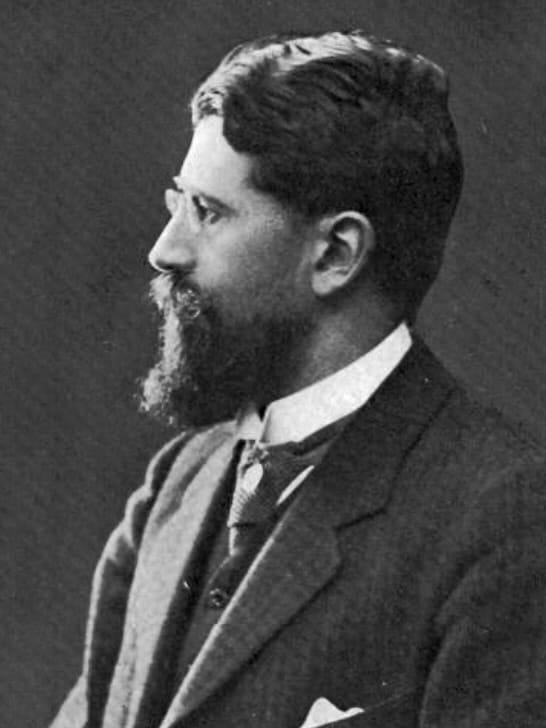
Frédéric-Justin Collet (1870–1964) was a French physician
Collet had a career which straddled internal medicine, tuberculosis medicine, and otorhinolaryngology. Trained in an era when “medical” and “surgical” boundaries were fluid, he developed particular expertise in disorders of the upper aerodigestive tract and the clinical syndromes that connect skull base anatomy to bedside neurology.
Collet’s professional life was strongly tied to the Lyon medical faculty and hospitals, where he rose through senior appointments to professorial chairs, ultimately holding the chair of ORL. His early postgraduate exposure to the Vienna school helped shape his interest in laryngeal and auditory disease, and he published widely across respiratory and ENT pathology, reflecting the overlap between laryngology, infection, and systemic medicine at the turn of the 20th century.
Collet’s enduring neurological legacy comes from wartime medicine. In 1915, he described a distinctive skull-base injury pattern producing unilateral paralysis of the last four cranial nerves (IX–X–XI–XII)—the “glosso-laryngo-scapulo-pharyngé” hemiplegia—later paired with Jean-Athanase Sicard’s 1917 anatomical localisation to become the Collet–Sicard syndrome. Today the eponym remains a useful localisation label for lesions around the jugular foramen and hypoglossal canal, far beyond its original battlefield context.
Biographical Timeline
- Born April 28, 1870 à Avignon, France.
- 1892 – Postgraduate study in Vienna in otology and laryngology with Adam Politzer (1835–1920), Leopold von Schrötter (1837–1908) and Hans Chiari (1851–1916).
- 1894 – MD thesis, Faculty of Medicine and Pharmacy, Lyon.
- 1895 – Becomes agrégé (Lyon).
- 1897 – Publishes Atlas stéréoscopique d’anatomie du nez et du larynx and Les troubles auditifs dans les maladies nerveuses.
- 1899 – Publishes Précis de pathologie interne (later reaching multiple editions).
- 1901 – Appointed médecin des hôpitaux (Lyon).
- 1904–1907 – Professor of Pathologie et thérapeutique générale, Faculty of Medicine, Lyon.
- 1910–1927 – Appointed professor in pathology/internal pathology at Lyon
- 1910 – Co-founds the Bibliothèque de la Tuberculose with André Chantemesse (1851–1919) and Antonin Poncet (1849–1913).
- 1913 – Publishes major tuberculosis/respiratory texts including La tuberculose du larynx et des voies respiratoires supérieures
- 1915 – Describes “glosso-laryngo-scapulo-pharyngé hemiplegia” from skull-base injury (Collet–Sicard syndrome).
- 1927–1938 – Professor of Oto-rhino-laryngology (O.R.L.), Faculty of Medicine, Lyon.
- 1938 – Retired from the Lyon chair; returned to the Comtat Venaissin (wintering in Menton), continuing private study and writing
- Died in 1964 (see Controversies)
Medical Eponyms
Collet–Sicard syndrome (1915; Sicard expanded 1917)
Unilateral palsy of the lower cranial nerves IX, X, XI and XII, usually localising to a skull-base lesion involving the jugular foramen (IX–XI) with extension to the hypoglossal canal (XII).
- IX / X: dysphagia, palatal droop, impaired gag; dysphonia/hoarseness (vocal cord palsy)
- XI: sternomastoid/trapezius weakness → shoulder droop, impaired head turn
- XII: tongue weakness/wasting with deviation toward the lesion
1915 – Collet described a new war-injury pharyngo-laryngeal paralytic syndrome in a soldier with a bullet wound to the skull base. Injury caused unilateral glosso–laryngo–scapulo–pharyngeal paralysis of cranial nerves IX–X–XI–XII which Collet described as “hémiplégie glosso-laryngo-scapulo-pharyngée”
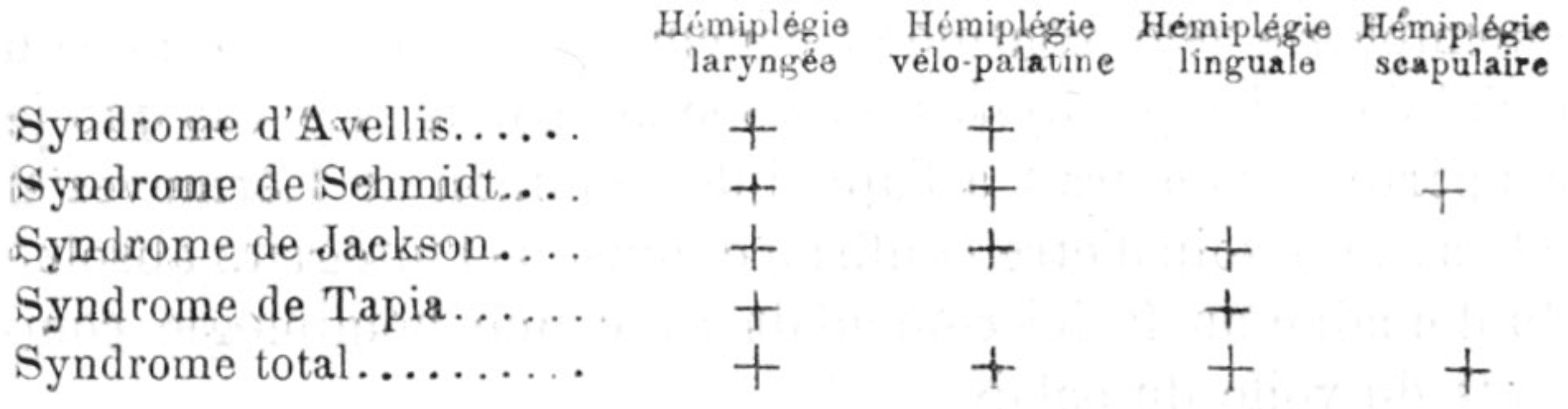
1917 – Jean-Athanase Sicard (1872-1929) reported a comparable (and more anatomically localised) entity as a “pure type” paralysis of the last four cranial nerves, naming the skull-base crossroads the “carrefour condylo-déchiré postérieur” (posterior condylar–lacerum region), again rooted in trauma.
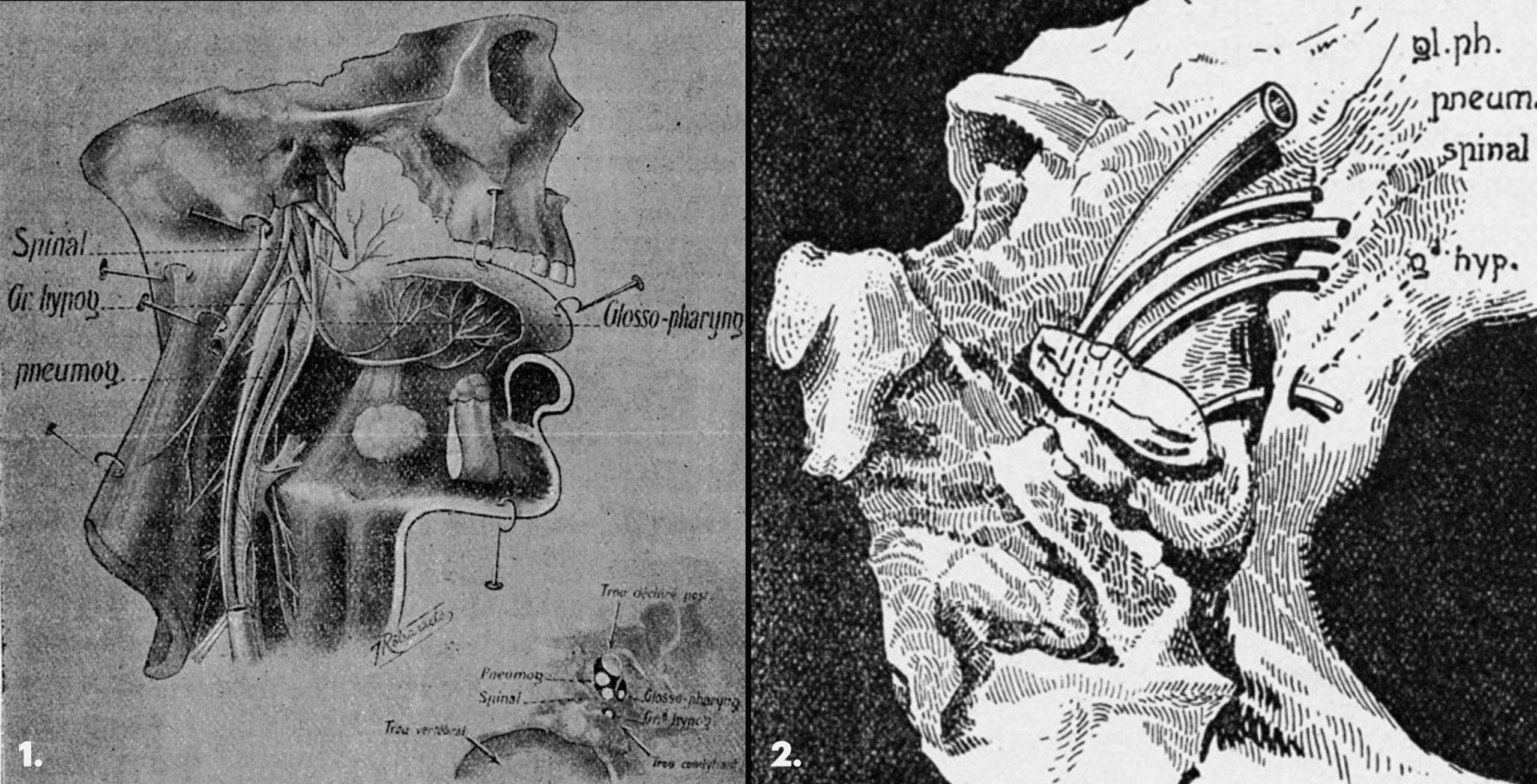
Figure 2. Sicard’s wartime skull-base illustration showing a retained projectile in the posterior condylar region and the adjacent lower cranial nerve pathways—anatomical justification for combined IX–X–XI–XII palsy following penetrating trauma.
Modern interpretation: Originally a war-trauma skull-base localisation syndrome, Collet–Sicard syndrome is now used for IX–X–XI–XII palsy from any pathology at the jugular foramen/hypoglossal canal region. Most commonly associated with skull-base tumours/metastases, basilar skull fractures/occipital condyle injuries, vascular lesions (e.g. carotid dissection), inflammatory/infective and iatrogenic causes.
Controversies
Year of death (1964 vs 1966)
Most English-language summaries list Frédéric-Justin Collet’s death as 1966, often repeated verbatim across derivative biographies.
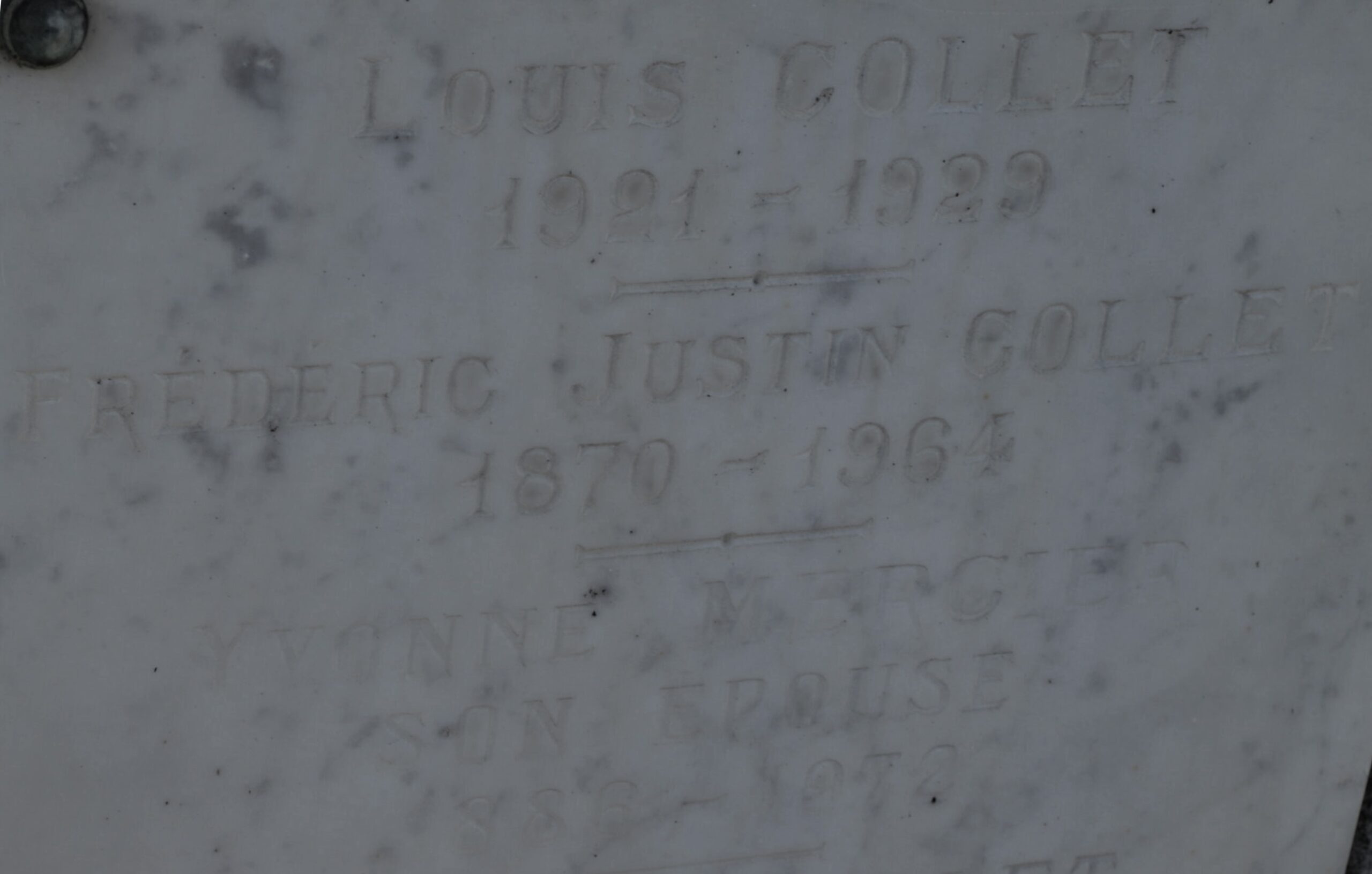
For LITFL we use 1964, supported by French authority-style biographical data recording Date de mort: 1964 alongside his full birth date and Lyon appointments. This aligns with French library authority identifiers and tombstone evidence.
- IdRef (ABES) authority record: explicitly gives date de mort: 1964.
- BnF data authority entry for Collet: lists (1870–1964).
- SUDOC catalogue records show the author heading “Collet, Frédéric-Justin (1870–1964)”.
- VIAF authority cluster also records (1870–1964).
- Cemetery – Saint-Saturnin-lès-Avignon confirms Tombstone photograph confirms 1964
- Local journal obituary (Lépine J. Journal de médecine de Lyon 1965) is consistent with a 1964 death.
Major Publications
- Garel J, Collet FJ. Atlas stéréoscopique d’anatomie du nez et du larynx (anatomie nouvelle et pathologique). 1897
- Collet FJ. Les troubles auditifs dans les maladies nerveuses. 1897
- Collet FJ. L’odorat et ses troubles. 1904
- Collet FJ. La tuberculose du larynx et des voies respiratoires supérieures. Paris, 1913.
- Collet FJ. Précis des maladies de l’appareil respiratoire. Paris, 1914.
- Collet FJ. Sur un nouveau syndrome paralytique pharyngo-laryngé par blessure de guerre (hémiplégie glosso-laryngo-scapulo-pharyngée) Lyon médical, 1915; 124: 121-129
- Collet FJ. Oto-laryngologie avec applications a la neurologie. Paris, 1928.
References
Biography
- Lépine J. Frédéric-Justin Collet. Journal de médecine de Lyon. 1965 May 20;46(77):1023-5
- Grave of Frédéric Justin Collet (1870–1964). Cemetery – Saint-Saturnin-lès-Avignon
- Frédéric-Justin Collet (1870-1964). BNF
- Collet, Frédéric-Justin (1870-1964). idREF
Eponymous terms
- Gutiérrez Ríos R et al. Collet-Sicard syndrome. Neurologia. 2015 Mar;30(2):130-2.
- Mnari W et al. An unusual etiology of posttraumatic Collet-Sicard Syndrome: a case report. Pan Afr Med J. 2016 Mar 30;23:143
- Aguilera-Pena MP et al. Collet-Sicard syndrome: a scoping review. Neurosurg Rev. 2023 Sep 14;46(1):244
- Tekiner H, Yale ES, Draves J, Yale SH. Trauma eponyms (1837-1950): a comprehensive historical review. J Trauma Inj. 2025 Sep;38(3):168-180.
Eponym
the person behind the name

BSc MD University of Western Australia. Interested in all things critical care and completing side quests along the way

BA MA (Oxon) MBChB (Edin) FACEM FFSEM. Emergency physician, Sir Charles Gairdner Hospital. Passion for rugby; medical history; medical education; and asynchronous learning #FOAMed evangelist. Co-founder and CTO of Life in the Fast lane | On Call: Principles and Protocol 4e| Eponyms | Books |