


Greta Beighton
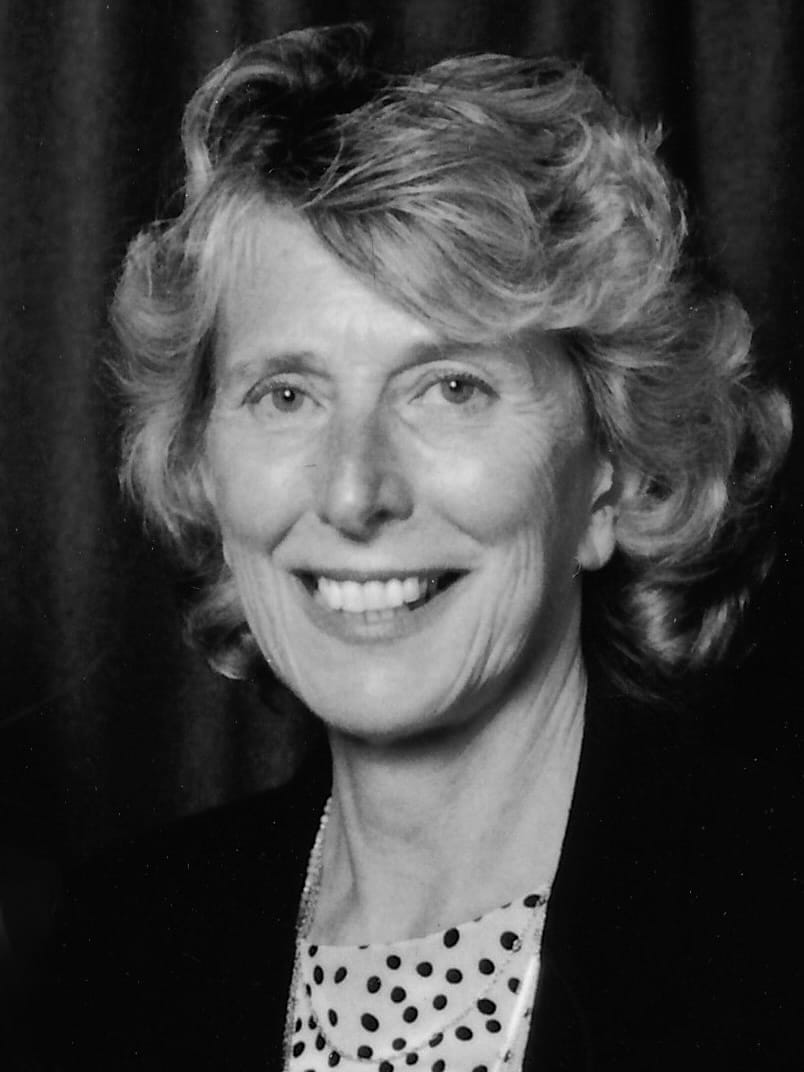
Greta Janet Beighton (née Winch) (1939-2017) was an English nurse and genetic researcher
Greta began her training at St Mary’s Hospital in London, and worked in various roles across the UK and the United States before emigrating to South Africa with her husband, clinical geneticist Peter Beighton. At the University of Cape Town, she held senior positions in the Department of Human Genetics, where she contributed significantly to clinical research and public health genetics.
Greta was instrumental in the conception and implementation of the Beighton Score, a widely used clinical tool for assessing joint hypermobility. Developed during field research in Southern Africa in the early 1970s, the score emerged from epidemiological studies into musculoskeletal disorders and connective tissue syndromes. Although the eponym is often associated with her husband, it is now recognised that Greta’s clinical insight and fieldwork were essential to the formulation of the score, including the discussions that took place around a campfire in the Kalahari Desert.
In addition to her scientific contributions, Greta co-authored “The Man Behind the Syndrome” (1986) and “The Person Behind the Syndrome” (1997).
Biographical Timeline
- Born Greta Janet Winch on May 5, 1939 in Luton, Bedfordshire, England
- 1957 – Student nurse at St Mary’s Hospital, Harrow Road, London (Paddington General branch)
- 1960 – Qualified as State Registered Nurse (UK); began working at East Surrey Hospital and Edgware General Hospital
- 1966 – State Certified Midwife (UK); working at Queen Charlotte’s Hospital
- 1967 – Health Visitor at Lambeth Borough Council, London
- 1969 – Registered Nurse (USA); staff nurse at Johns Hopkins Hospital
- 1970 – Registered Nurse (South Africa); Married Peter Beighton and moved to South Africa. Co-led joint mobility and genetic epidemiology studies across South Africa and Namibia; co-developed the Beighton Score for assessing joint hypermobility
- 1970–1972 – Research Associate, University of the Witwatersrand, South Africa
- 1972 – Genetic Nursing Sister, Department of Human Genetics, University of Cape Town (UCT)
- 1973–1986 – Research Associate, Department of Human Genetics, UCT
- 1988–2000 – Senior Scientific Officer, Department of Human Genetics, UCT
- Died May 19, 2017 in Cape Town, South Africa
Key Medical Contributions
Beighton Score (1971)
The Beighton Score is a simple, validated 9-point scoring system used to assess generalised joint hypermobility (GJH). It remains the most widely employed clinical and epidemiological tool for evaluating ligamentous laxity across populations and in diagnosing hypermobility-related conditions such as hypermobile Ehlers–Danlos Syndrome (hEDS).
The Beighton Score evaluates five physical manoeuvres, four of which are assessed bilaterally. A score of ≥4 in adults is generally considered diagnostic of GJH, although thresholds vary in paediatrics and by sex and ethnicity.
In the early 1970’s, major epidemiological projects were undertaken by Greta and Peter Beighton, in indigenous populations in Rustenburg, Transvaal and in Keetmanshoop, South West Africa. The main focus of these studies was the influence of articular mobility on orthopaedic disorders such as severe Osteoarthritis. For this purpose, they developed a numerical index of the range of joint movements in both normal and affected individuals. This index proved to be of much wider use in Medicine and it became known as the “Beighton Score”.
It is relevant that Greta made a major contribution in the conception and implementation of this “Score” and it is entirely appropriate that she should share the eponymous recognition that is usually accorded to Peter.
Following her initial suggestion in 1971 concerning the 9-point score, Greta Beighton retained her involvement in the elucidation and publication of research material in the broad field of hypermobility for almost 50 years.
During this period, she compiled ten books and more than 400 articles in medical journals. As a matter of principle, rightly or wrongly, her name was deliberately withheld from the deserved co-authorship in order to avoid any suggestion of nepotism. This article is essentially a posthumous attempt to ensure the eponymous recognition that she richly deserves.
Peter Beighton 2020, personal communication
Personal Biography
Greta enjoyed a happy childhood together with her elder brother, Brian, in her parents’ home in Luton, Bedfordshire, England. She had ambitions to become a medical doctor, but due to financial constraints, decided upon a career in Nursing. In October 1957 she became a nurse at Paddington General Hospital, which is a branch of the well-known St Mary’s Hospital, London.
In October 1958 Greta met Peter Beighton, a recently qualified doctor, who was undertaking a 6-month internship at Paddington General Hospital. This was the beginning of a classical Nurse-Doctor relationship which lasted for the next 12 years, prior to their marriage in 1970. During this lengthy period, Greta qualified as a State-Registered Nurse (SRN) and then enrolled for midwifery training at the renown Queen Charlotte’s Hospital, London and obtained her State Certified Midwife (CSM) qualification. Thereafter she moved to the University of Surrey and trained as a Social Worker (Health Visitor Certificate). In this role she obtained practical experience in Lambeth. A few months later, in June 1968, Greta accompanied Peter to the USA where she was employed as a Staff Nurse at the John’s Hopkins Hospital, Baltimore. In the 12 months that followed, she travelled extensively around the USA, accompanying Peter in her Genetic Nursing capacity and involved in research in families with rare genetic disorders.
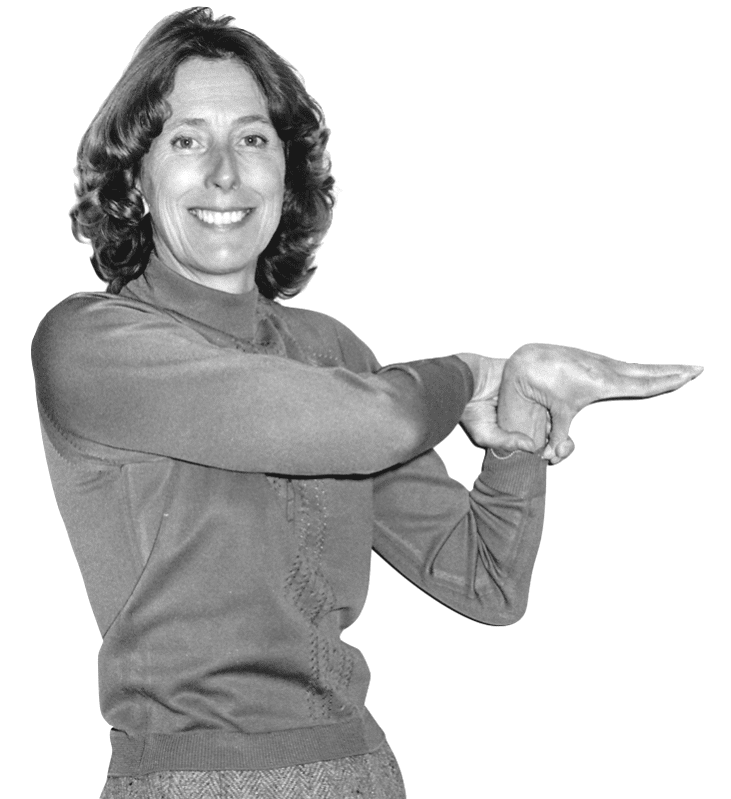
The couple returned to England and were married in April 1970. On the following day they sailed to South Africa in order to undertake an epidemiological project, based at the University of the Witwatersrand, Johannesburg. Greta was employed by the University as Peter’s research assistant, and in this context they travelled extensively around Southern Africa. Major epidemiological projects were undertaken in indigenous populations in Rustenburg, Transvaal and in Keetmanshoop, South West Africa. The main focus of these studies was the influence of articular mobility on orthopaedic disorders such as severe Osteoarthritis. For this purpose, they developed a numerical index of the range of joint movements in both normal and affected individuals. This index proved to be of much wider use in Medicine and it became known as the “Beighton Score”. It is relevant that Greta made a major contribution in the conception and implementation of this “Score” and it is entirely appropriate that she should share the eponymous recognition that is usually accorded to Peter. It is of interest that their discussion which led to this formulation was undertaken around a camp fire in the Kalahari Desert.
While in Johannesburg, they established regular clinics for patients and families with genetic disorders. At that time, this approach was unique and it attracted considerable medical and community interest. The end result was an offer from the University of Cape Town (UCT) of a Professorship with a mandate to establish a new Department of Human Genetics (DHG) and provide impetus for the development of this speciality in South Africa. By this time, Greta had developed considerable knowledge and experience in Medical Genetics and she was formally appointed by UCT in this new department. She initially began as secretary; shortly afterwards becoming the first Genetic Nursing sister in the DHG. In this way, she was the initiator of Genetic Nursing in South Africa, which is now a well-established profession. She was subsequently designated as Research Assistant and a few years later accorded the status of Senior Scientific Officer.
Greta had extensive secretarial skills and these had an important role in correspondence, scientific articles, chapters and doctoral theses. She also applied these abilities in the co-authorship of two major books, “The Man Behind the Syndrome” (1986) and “The Person Behind the Syndrome” (1997). Her active participation in research activities and the compilation of publications warranted recognition in numerous scientific articles, but in order to avoid any possible suggestion of nepotism, her name was deliberately omitted.
Permanent employment at UCT provided stability and it was possible to have a permanent home at last. Greta identified a charming old house in a quiet suburb close to the medical school and associated hospitals. This was the first time that we had lived together and procreation was now possible. On 17.11.1972 our daughter, Victoria, was born. Our son, Robert, followed on 29.09.1977. Both children were born in England during brief visits made by Greta to her parents’ home in Luton.
The lifestyle at UCT and the climate in Cape Town were conducive to athletics and Greta was a regular competitor in women’s events in cross-country and middle-distance road races. By this time, she was in her 40s and as there were very few other ladies in her age group, she achieved some success. The sport of Orienteering subsequently became popular and as she had good map-reading skills in addition to her athleticism, she became the Provincial and SA National Champion in her age category on several occasions.
Greta had a very pleasant personality, a well-developed sense of humour and a considerable generosity of spirit. Her home life in Cape Town was filled with happiness and contentment and when the time came, she enjoyed the joys of motherhood. Both children were educated in the Cape and eventually moved, married and produced their own families. In 2014 Greta became unwell and developed a progressive neuro-degenerative disorder. She was nursed in our home for the next two years and died peacefully in May 2017.
Peter Beighton, 2020
Major Publications
- Beighton G. The role of the nurse in clinical genetics. Australas Nurses J. 1975; 4(4): 8, 19.
- Sellars S, Beighton G, Horan F, Beighton PH. Deafness in Black children is Southern Africa. S Afr Med J. 1977; 51(10): 309-312.
- Beighton G. Antenatal diagnosis of genetic disease. SA Nurs J. 1977; 44(6): 14-16.
- Beighton P, Beighton G. The Man Behind the Syndrome. 1986 [13 editions published in English and German]
- Beighton P, Sellars SL, Goldblatt J, Viljoen DL, Beighton G. Childhood deafness in the Indian population of Natal. S Afr Med J. 1987 Aug 1;72(3):209-211.
- Beighton P, Viljoen D, Winship I, Beighton G, Sellars S. Profound childhood deafness in southern Africa. Ann N Y Acad Sci. 1991; 630: 290-291
- Beighton P, Beighton G. The Person Behind the Syndrome. 1997 [11 editions published in English and German]
- Ianakiev P, Kilpatrick MW, Daly MJ, Zolindaki A, Bagley D, Beighton G, Beighton P, Tsipouras P. Localization of an acromesomelic dysplasia on chromosome 9 by homozygosity mapping. Clin Genet. 2000; 57(4): 278-283.
References
With sincere thanks to Emeritus Prof Peter Beighton for providing the biography.
- Bibliography. Beighton, Greta. WorldCat Identities
- Bibliography. Greta Beighton (1939-2017). BnF
- Stuart-Smith J, Scott K, Johnston M. Where are all the Women? LITFL
Eponym
the person behind the name
MBBS (Hons) FCEM. Emergency Consultant at St Mary's Hospital, Imperial College Healthcare NHS Trust

BA MA (Oxon) MBChB (Edin) FACEM FFSEM. Emergency physician, Sir Charles Gairdner Hospital. Passion for rugby; medical history; medical education; and asynchronous learning #FOAMed evangelist. Co-founder and CTO of Life in the Fast lane | On Call: Principles and Protocol 4e| Eponyms | Books |