


Joseph-Frédéric-Benoît Charrière
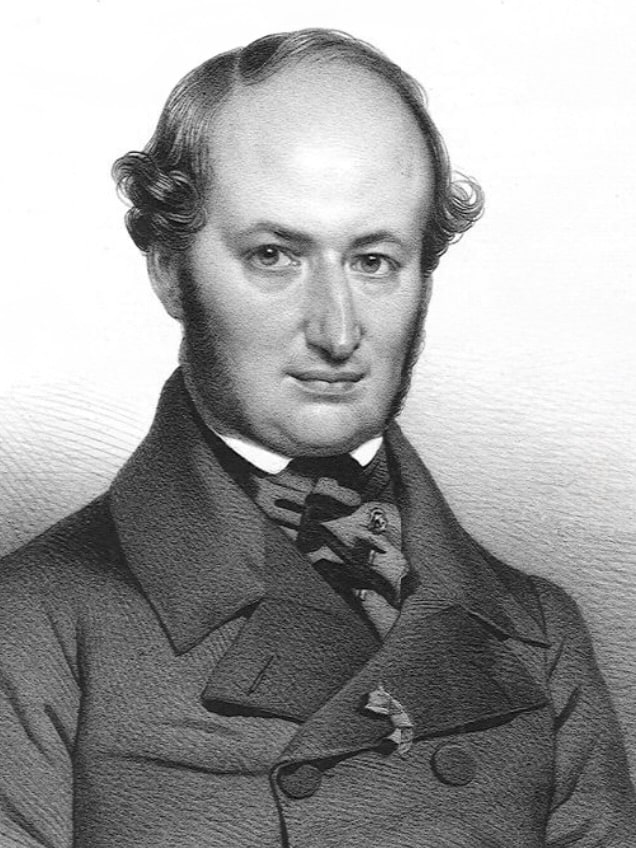
Joseph-Frédéric-Benoît Charrière (1803-1876) was a Swiss-born French cutler and surgical instrument
enduring contribution is the Filière Charrière, a graded gauge introduced to standardise the external diameter of sounds, bougies, catheters, and related tubular instruments. Born in Cerniat, Canton of Fribourg, he moved to Paris as a teenager and trained as a cutler before establishing Maison Charrière, one of the most influential surgical instrument workshops of nineteenth-century Europe.
Charrière manufactured myriad medical instruments and brought precision and standardisation to surgical practice. Working in close proximity to the Paris medical faculty and major hospitals, he refined instruments in response to the needs of surgeons, urologists, and physicians. His catalogues record an extensive range of surgical, urological, orthopaedic, prosthetic, veterinary, hygienic, rescue, and anaesthetic apparatus.
Biographical Timeline
- 1803 – Born March 19, 1803 in Cerniat-en-Gruyère, Canton of Fribourg, Switzerland. Son of Étienne Charrière, employed in France as a bank clerk, and Agnès Maradan, a seamstress.
- 1816 – Brought by his grandfather to Paris and apprenticed as a cutler under a master named Vincent at the Enclos Saint-Jean-de-Latran, near the Collège de France.
- 1820 – Took over Vincent’s workshop after Vincent’s death by drowning in the Seine; Charrière reportedly paid 2,500 francs for the business.
- 1820s – Came under the patronage of Guillaume Dupuytren (1777–1835), surgeon-in-chief at the Hôtel-Dieu.
- 1825 – Dupuytren made him a personal supplier and exposed him to operative practice so he could design and refine instruments from direct surgical observation.
- 1833 – Moved the firm to 9 rue de l’École-de-Médecine, Paris.
- 1834 – Awarded his first medal at the Exposition of National Industry
- 1837 – Travelled to Sheffield, England, to study metalwork, alloys, and steel tempering techniques
- 1842 – Moved to a larger premises at 6 rue de l’École-de-Médecine. Introduced the filière Charrière, a regular metric gauge for sondes, bougies, and catheters; later known internationally as the French scale.
- 1847 – Applied for a patent for an ether inhalation apparatus device designed to lower the temperature of the mixture and reduce explosion risk known as the “Charrière inhaler.”
- 1851 – Promoted to Officier de la Légion d’honneur.
- 1852 – Ceded the firm to his son Jean-Jules Charrière (1829–1865).
- 1865 – Death of Jean-Jules Charrière during the Paris cholera outbreak. Former pupils Louis Apollinaire Robert and Anatole Collin (1831–1923); Robert and Collin issued a major catalogue in 1867. 1871 – Death of Robert; the Collin family subsequently controlled the firm, which continued the Maison Charrière legacy. 1874 – Death of his wife Madeleine-Elisabeth Berrurier.
- 1871 – Death of Robert. The Collin family subsequently controlled the firm, which continued the Maison Charrière legacy.
- Died April 28, 1876 in Paris, aged 73 and buried in the family grave at Montparnasse Cemetery.
- Posthumous legacy: Apprentices and successors included Georg Wilhelm Amatus Lüer (1802–1883), Louis-Joseph Mathieu (1817–1879), Anatole Collin (1831–1923), Josef Leiter (1830–1892), and Camillus Nyrop (1843–1918).
- 1930 – The Collin establishment was acquired by Gentile.
- 1978 – The instrument and book collections of the Charrière, Collin, and Gentile enterprises were auctioned in Paris.
Medical Eponyms
The Filière Charrière
The Charrière scale, abbreviated Ch, is a unit used to describe the external diameter of catheters and other cylindrical medical instruments. It is equivalent to the French scale, abbreviated Fr or F. One Charrière unit represents one-third of a millimetre so, dividing the Charrière/French number by three gives the external diameter in millimetres.
Charrière recognised that surgeons often struggled to obtain sondes and bougies of the precise calibre requested. The difficulty, he wrote, arose because “on ne possédait pas une mesure générale” that there was no general standard of measurement shared between doctor and manufacturer. His solution was a reproducible workshop gauge “j’ai divisé ma filière par tiers de millimètre”. This division into thirds of a millimetre became the basis of the Charrière scale (Ch), later known internationally as the French scale (Fr).
Charrière created a standardised gauge with regular graduations, together with a master matrix to ensure uniformity across the gauges produced in his workshop. The illustrated filière contains 30 holes, each corresponding to a numbered size. The upper number gives the order number, while the lower number gives the diameter of the instrument.
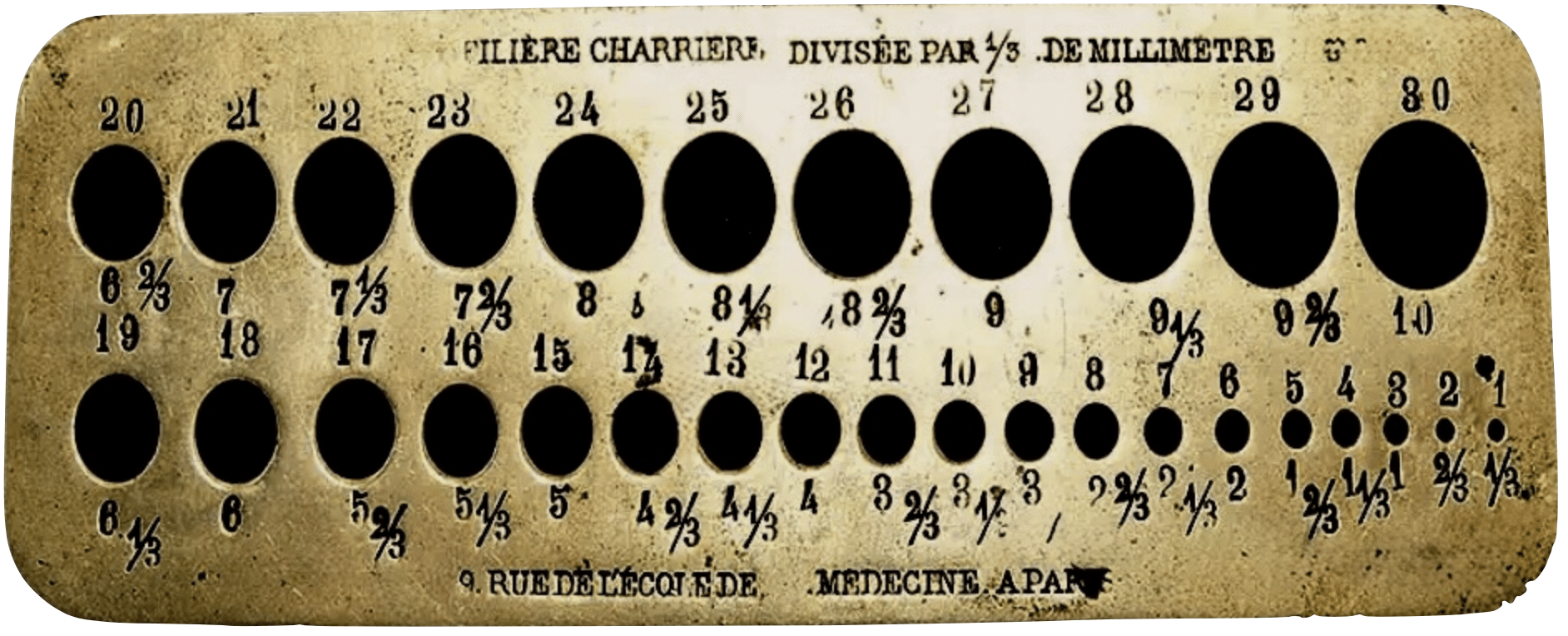
The difference between two consecutive numbers equal to one-third of a millimetre and the scale is linear. Unlike wire gauge (G) systems, the larger the Charrière/French number the larger the external diameter.
1 Charrière = 1 French = ⅓ mm external diameter
Once the scale was established, a doctor needed only specify the desired number to obtain an instrument of predictable calibre. Charrière noted that the system could be extended beyond sondes and bougies to other tubular instruments, such as tracheotomy cannulas. In this way, the filière Charrière became one of the earliest durable standards linking surgical practice to industrial precision manufacture.
Charrière (French) versus Guage system
The gauge (G) system used for needles and peripheral cannulae derives from wire-measuring systems, particularly the Birmingham Wire Gauge or Stubs Iron Wire Gauge. It was originally a practical industrial scale for wire and small tubing.
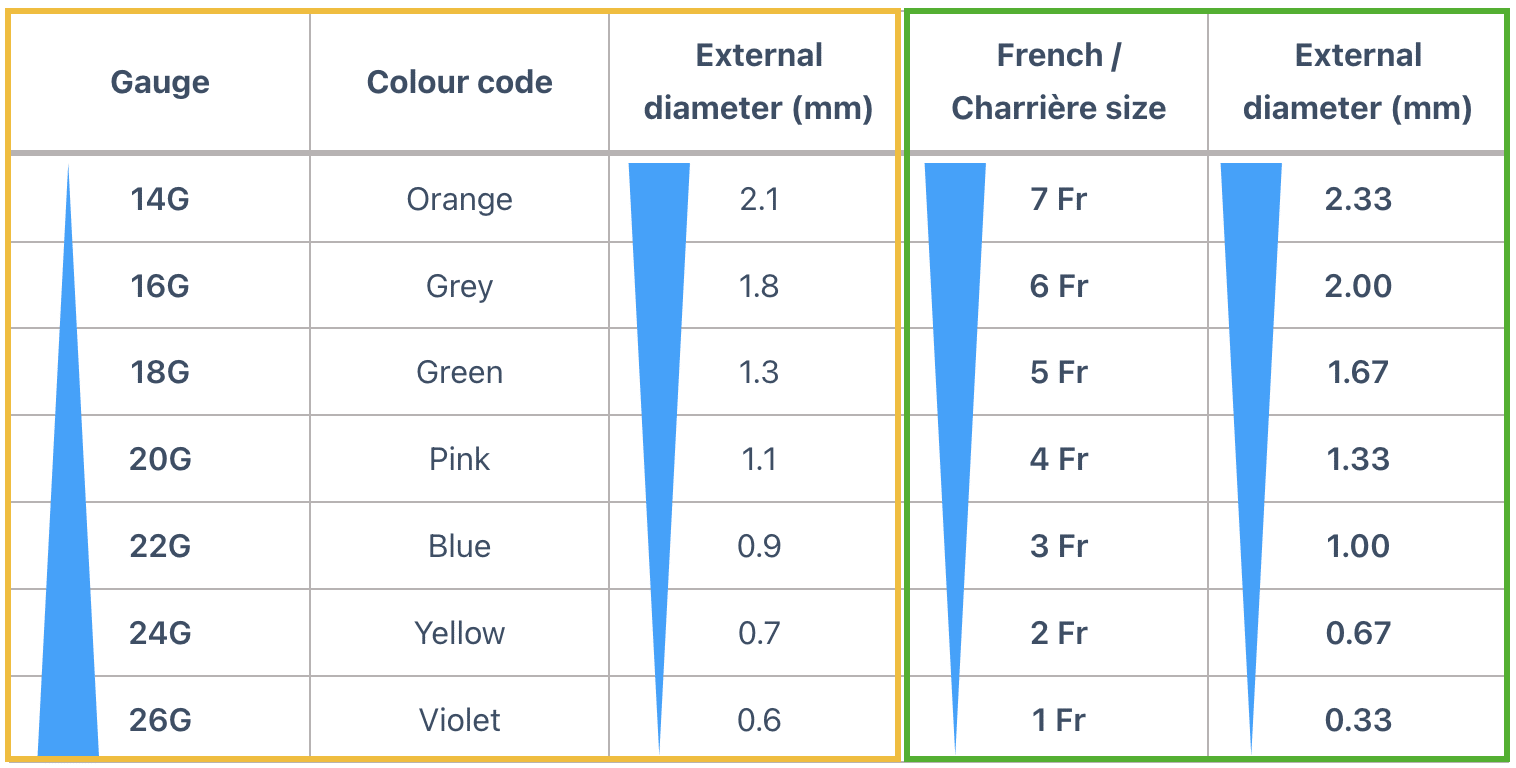
In medical use, both the French / Charrière scale and the gauge system describe the external diameter of a device. However, the two systems differ fundamentally. Unlike the Charrière / French scale, the gauge system is not linear and each step does not represent a fixed metric change. It is also inverse, so as the gauge number increases, the external diameter decreases. Thus, a 22G cannula is smaller than an 18G cannula. By contrast, the French / Charrière scale is linear and larger French numbers correspond directly to larger external diameters.
Key Medical Contributions
Surgical instrument contributions
Charrière began as a Parisian cutler and transformed surgical instrument making from a craft trade into a precision medical industry. Working near the Paris medical faculty and major hospitals, he built Maison Charrière into one of the leading European surgical instrument firms of the nineteenth century. His workshops produced not only knives and operative instruments, but also catheters, bougies, sounds, syringes, pumps, irrigators, orthopaedic apparatus, prostheses, rescue equipment, veterinary instruments, and anaesthetic inhalers.
Rather than manufacturing instruments as static objects, he refined them in response to operative practice, particularly in Parisian surgery and urology. His catalogues and exposition notices adapted to service medical advancements of the time. His catalogues demonstrate the huge breadth of work as exemplified in his Spécimen d’instruments de chirurgie modèles Charrière (1854) and Notice des instruments de chirurgie humaine et vétérinaire (1862).
Urological and catheter instruments
Charrière’s most durable contributions were in the manufacture and standardisation of tubular instruments including bougies, sounds, probes, dilators, and catheters with reliable external diameters. For urological practice in particular, small differences in calibre mattered clinically, but inconsistent manufacture made ordering and reproducing instruments difficult. Charrière’s adressed this with his filière Charrière
Major Publications
- Nouvelles dragues de sauvetage et nouveaux instruments pour donner des secours aux asphyxiés. 1840
- Exposition nationale de l’industrie. Instruments et appareils hygiéniques, seringues, pompes, siphons et irrigateurs, sondes et bougies, pessaires, ceintures hypogastriques et ventrières, bas lacés, ceintures, bas et genouillères en tissu de caoutchouc vulcanisés, bandages herniaires de toutes sortes, bandages à fractures, goutières, cerceaux, appareils à pied-bot, ceintures et corsets orthopédiques, bras et jambes artificielles et tous appareils à prothèse, coutellerie de poche, coutellerie de table et de cuisine, nécessaires de toilette et de voyage 1844
- Charrière, fabricant d’instruments de chirurgie. 1846
- Appareils pour l’inhalation de la vapeur d’éther. 1847
- Supplément aux notices publiées les 11 février et 27 mars 1847 sur les appareils à inhalation de la vapeur d’éther. 1847
- Spécimen d’instruments de chirurgie modèles Charrière. 1854
- Notice des instruments de chirurgie humaine et vétérinaire, appareils et coutellerie, de la maison Charrière. 1862
- Catalogue général illustré d’instruments de chirurgie. Maison Charrière. Collin & Cie, Successeurs. 1925
References
Biography
- Chéreau A. Charrière, notice biographique. 1876
- Iserson KV. J.-F.-B. Charrière: the man behind the “French” gauge. J Emerg Med. 1987 Nov-Dec;5(6):545-8.
- Boschung U. Joseph-Frédéric-Benoît Charrière (1803-1876): Paris surgical instrument maker from Switzerland. Caduceus. 1988 Summer;4(2):34-46.
- Casey RG, Quinlan D, Mulvin D, Lennon G. Joseph-Frédéric-Benoît Charrière: master cutler and instrument designer. Eur Urol. 2003 Mar;43(3):320-2.
- Badawi JK. Joseph-Frédéric-Benoît Charrière – How to Explain His Success as One of the Most Famous Surgical Instrument Makers Regarding His Life from Childhood to Death. Urol Int. 2017;98(2):236-240.
- Portrait: Charriere, Joseph Frédéric Benoit (1803-1876). Bibliothèques d’Université Paris Cité
Eponymous terms
- Tucker RA. History of sizing of genitourinary instruments. Urology. 1982 Sep;20(3):346-9.
- Iserson KV. The origins of the gauge system for medical equipment. J Emerg Med. 1987;5(1):45-8.
- Pöll JS. The story of the gauge. Anaesthesia, 1999; 54: 575-581
- Osborn NK, Baron TH. The history of the “French” gauge. Gastrointest Endosc. 2006 Mar;63(3):461-2.
- Bowen DK, Wan J, Engel R, Lyon RP, Dielubanza E, Bloom DA. Sounds and Charrière: the rest of the story. J Pediatr Urol. 2014 Dec;10(6):1106-10
Eponym
the person behind the name

BA MA (Oxon) MBChB (Edin) FACEM FFSEM. Emergency physician, Sir Charles Gairdner Hospital. Passion for rugby, medical history, medical education, and asynchronous learning #FOAMed evangelist. Editor-in-Chief and Webmaster of Life in the Fast lane, LITFL | On Call 4e| Eponyms | Books | Horology |