


Lincoln F. Sise
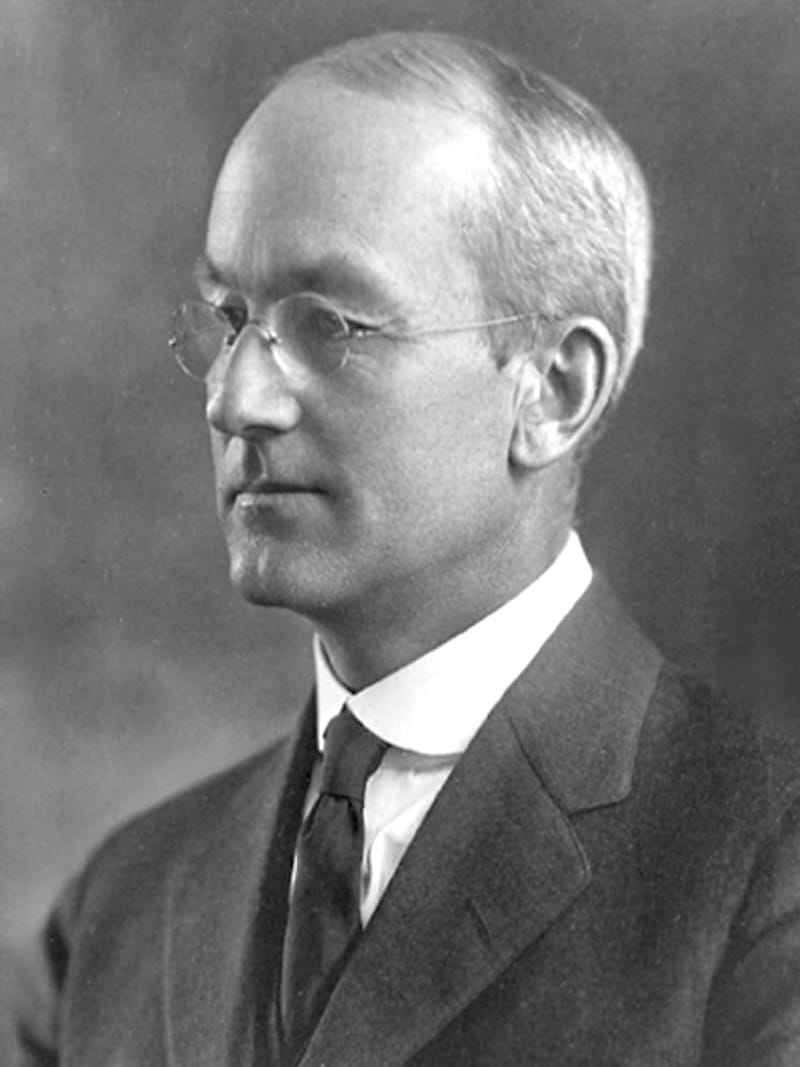
Lincoln Fleetford Sise (1874-1942) was an American anaesthetist
A Harvard graduate and physician, Sise served in the United States Naval Reserve Force during the First World War and later became one of Frank H. Lahey’s key collaborators. He was among the early physicians to see surgery as a team activity requiring complementary specialist roles, with the anaesthetist central to preparation, physiology, and operative safety.
Sise’s clinical work involved high-risk anaesthesia. At the Lahey Clinic he provided the anaesthetic management of toxic goitre and thyrocardiac patients, and published on nitrous oxide–oxygen, ethylene, cyclopropane, sodium amytal, avertin, pentothal sodium, and carbon dioxide regulation.
Sise is remembered for the Sise introducer cannula for fine-gauge lumbar puncture needles and for his work on lumbar puncture technique, minimising post-puncture headache, and managing hypotension and vascular depression with ephedrine.
Biographical Timeline
- Born on July 1, 1874 at Medford, Middlesex County, Massachusetts
- 1897 – Graduated AB, Harvard University.
- 1901 – Graduated MD, Harvard Medical School, Boston.
- 1916 – Served as clinical assistant in anaesthesia at Harvard Medical School, Courses for Graduates.
- 1917–1919 – Served in the Medical Corps, United States Naval Reserve Force. Appointed Lieutenant (junior grade), assigned to Naval Hospital, Chelsea, Massachusetts, promoted Lieutenant in July 1919, and released from active duty on October 25, 1919.
- 1920–1923 – Lecturer on anaesthesia at Tufts College Medical School, Boston. Assistant visiting anaesthetist at Boston City Hospital and visiting anaesthetist at Long Island Hospital, Boston.
- 1923 – Associated with the founding and early development of the Lahey Clinic, Boston, with Frank H. Lahey.
- 1924–1925 – Published on anaesthesia for thyroid surgery and toxic goitre
- 1926 – Published “Spinal anesthesia” in Surgical Clinics of North America
- 1928 – Developed the Sise introducer device to support the use of fine-gauge lumbar puncture needles
- 1928–1930 – Published widely on spinal anaesthesia practice, including ephedrine use, blood pressure control, fatality prevention, vascular depression, lumbar puncture technique, and spinal anaesthesia for abdominal operations.
- 1937 – With Woodbridge and Eversole, published on the clinical use of cyclopropane.
- 1940 – With Nickerson, published on Pentothal sodium anaesthesia for encephalopathy
- Died on April 28, 1942, aged 67, in Brookline, Massachusetts, from arteriosclerosis.
Key Medical Contributions
The ‘Sise introducer’ for fine-gauge lumbar puncture needles
In 1928, Sise described a small introducer cannula designed to make fine-gauge lumbar puncture needles practical for spinal anaesthesia. He noted that fine needles were desirable because they reduced the incidence of postoperative headache, but their flexibility made them difficult to direct through resistant tissues such as the posterior spinous ligament.
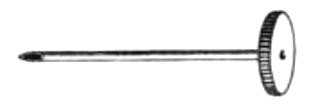
In order to overcome these difficulties I have devised a small cannula, the lumen of which just fits the spinal needle to be used. This cannula has a sharp cutting point and a somewhat wide flange at the The cannula. It is inserted through the skin and posterior spinous ligament much like a thumb-tack. Thus it acts as a guide and path for the slender spinal needle, which will then traverse the remaining distance very easily.
Sise 1928
In his 1928 paper on lumbar puncture technique, Sise described a systematic approach to safe spinal puncture. He suggested using small rustless needles, careful positioning, midline puncture, local infiltration, steady controlled needle advancement, avoidance of traumatic repeated attempts, and free CSF flow before injection.
The Sise introducer allowed the use of finer needles without losing directional control, making small-gauge spinal puncture more practical. In his reported experience, the method produced no cord or nerve injuries, no failures of anaesthesia after puncture, and a low incidence of headache.
In 1939, Sise and Neil W. Swinton reported that low spinal anaesthesia for anal and rectal surgery was superior to sacral block, but severe post-puncture headache had become frequent enough that they were considering abandoning the method. Switching from 21G spinal needles to a 24G needle, using the Sise introducer, seemed to fix the PDPH problem. In 41 deliberately early-ambulated patients, mild transient headaches occurred, but no severe or prolonged headache of the type previously seen with larger needles. Sise and Swinton concluded that post-puncture headache had been reduced from a major drawback to a mild annoyance.
Spinal anaesthesia safety: hypotension, ephedrine, and fatalities
Sise was concerned with the physiological dangers of spinal anaesthesia, particularly vascular depression, hypotension, and sudden collapse. Safe spinal anaesthesia required careful selection of cases, accurate lumbar puncture, controlled drug dosing, patient positioning, blood pressure observation, and active management of cardiovascular depression.
Sise was an early adopter of vasopressor support for spinal hypotension. in 1928 Sise published on the use of ephedrine in spinal anesthesia. Ephedrine offered a practical means of counteracting the vascular relaxation and blood pressure fall associated with spinal anaesthesia.
In 1929, Sise published further on safety with Spinal anesthesia fatalities and their prevention and Vascular depression of spinal anesthesia. He analysed fatal and near-fatal events outlining failures of physiology, monitoring, preparation, or case selection. SIse emphasised that prevention depended on recognising vascular depression early and treating it promptly, rather than waiting for collapse to declare itself.
Thyroid surgery and toxic goitre anaesthesia
At the Lahey Clinic, Sise was exposed to myriad patients undergoing thyroid surgery. Toxic goitre and thyrocardiac disease were among the most dangerous operative problems of the period, requiring collaboration between surgeon, physician, and anaesthetist.
Sise’s thyroid anaesthesia papers addressed anaesthetic technique, prediction of postoperative thyroid reaction, and management of patients with toxic goitre complicated by heart failure. This work helped define the anaesthetist’s role in endocrine surgery: not merely administering an agent, but assessing risk, managing physiology, and collaborating in perioperative planning.
Evaluation of new anaesthetic agents
Sise was also a practical evaluator of new anaesthetic agents. His publications covered ethylene, sodium amytal, avertin, cyclopropane, and pentothal sodium. These papers show him working during a period of rapid change in anaesthetic pharmacology, when clinicians were comparing new agents for safety, controllability, respiratory effects, and suitability for high-risk surgical patients.
Controversies
Lincoln F. Sise is often cited as Lincoln Fleetwood Sise, but family-linked records support Lincoln Fleetford Sise.
The evidence for Fleetford includes his gravestone, Harvard service record, Who’s Who entry, and family genealogy. Census records generally list him as Lincoln F. Sise, while the Lahey tribute by his close colleague also uses only the middle initial. The name Fleetford is familial with his father and son both named Albert Fleetford Sise.
Major Publications
Thyroid and toxic goitre anaesthesia
- Sise LF. Clinical observations on 100% N₂O–O₂ anesthesia in cases of hyperthyroidism. The American journal of surgery Quarterly supplement of anesthesia & analgesia. 1921; 35: 9–12.
- Sise LF. Technique of anesthesia for thyroid surgery. Surgical clinics of North America. 1924; 4(6): 1359–1372.
- Sise LF. Aids in predicting the degree of postoperative thyroid reaction in a study based on 1000 consecutive cases. Surgery, gynecology and obstetrics. 1925; 41: 57–62.
- Sise LF. Anesthesia for thyrocardiac patients. JAMA. 1935;105:1662–1665.
Anaesthetic agents and inhalational physiology
- Sise LF. Ethylene. Boston medical and surgical journal. 1925; 192(6): 287–291.
- Sise LF. Regulation of CO₂ during inhalational anesthesia. Surgical clinics of North America. 1928; 8: 201–207.
- Sise LF. Clinical impression of two new anesthetic agents, sodium amytal and avertin. Surgical clinics of North America. 1929; 9: 1381–1386.
- Sise LF, Woodbridge PD, Eversole UH. Clinical uses of cyclopropane. Surgery, gynecology and obstetrics 1937; 64:1 56–164.
- Sise LF, Nickerson MJ. Pentothal sodium anesthesia for encephalopathy. NEJM 1940; 222: 994–996.
Spinal anaesthesia
- Sise LF. Spinal anesthesia. Surgical clinics of North America. 1926; 6: 723–728.
- Sise LF. The use of ephedrine in spinal anesthesia. Surgical clinics of North America. 1928; 8: 195–200.
- Sise LF. A device for facilitating the use of fine gauge lumbar puncture needles. Journal of the American Medical Association 1928; 91(16): 1186
- Sise LF. Lumbar puncture technique. American journal of surgery. 1928; 5: 577–580.
- Sise LF. Spinal anesthesia fatalities and their prevention. NEJM. 1929; 200: 1071–1074.
- Sise LF. Vascular depression of spinal anesthesia. Surgical clinics of North America. 1929; 9: 1369–1379.
- Sise LF. Spinal anesthesia for abdominal operations. New York state journal of medicine. 1929; 29: 1182–1186.
- Sise LF. Pontocaine-glucose solution for spinal anesthesia. Surgical clinics of North America. 1935; 15: 1501–1511.
- Sise LF, Swanton NW. A method for the prevention of post-puncture headache in cases of spinal anesthesia. Surgical clinics of North America. 1939; 19: 695–698.
References
Biography
- Lincoln Fleetford Sise, Obituaries, JAMA 1942: 119: 824.
- https://www.findagrave.com/memorial/58117453/lincoln-fleetford-sise#view-photo=107022144
- https://www.newspapers.com/image/431927383/?article=50646568-7d7d-436b-b82b-28f5afc689ea&focus=0.6139025,0.84659714,0.7321989,0.86272824&xid=3355
- Lahey FH. Tribute to Lincoln F. Sise, M.D. Anesthesiology. 1942;3(6):686-687
- Menendez JV, Burns T, Bacon DR. Lincoln Fleetwood Sise: regional anesthesia’s forgotten man? Reg Anesth Pain Med. 1999 Jul-Aug;24(4):364-8.
- Schoetz DJ. The “Other” Founder – Lincoln Fleetwood Sise, The Lahey Journal 2024; 2(1): 3.
Eponymous terms
- Lahey FH. The evolution of a thyroid clinic. Surg Clin. 1924;4(6):1359-1372.
- Harms R, Cadogan M. History of Spinal Needles. LITFL
Eponym
the person behind the name

BA MA (Oxon) MBChB (Edin) FACEM FFSEM. Emergency physician, Sir Charles Gairdner Hospital. Passion for rugby, medical history, medical education, and asynchronous learning #FOAMed evangelist. Editor-in-Chief and Webmaster of Life in the Fast lane, LITFL | On Call 4e| Eponyms | Books | Horology |