


LITFL Update 066

Sending you free open-access medical (FOAM) content from around the globe. We keep an eye on all the trends and best articles and share them with you so that you stay top of your field.
ECG Case 100: A 31-year-old female who is 5 days post-partum was brought to the ED following an episode of collapse. On arrival to the ED, she was hypotensive (systolic BP ~80 mmHg) with an altered conscious level, chest pain, and headache.

Practical Longevity Supplement Guide: What can shift workers, emergency workers, and health professionals do to ensure they are not just producing expensive urine? Here is an in depth review to assist in the practical application of 30 Minutes to Longevity.
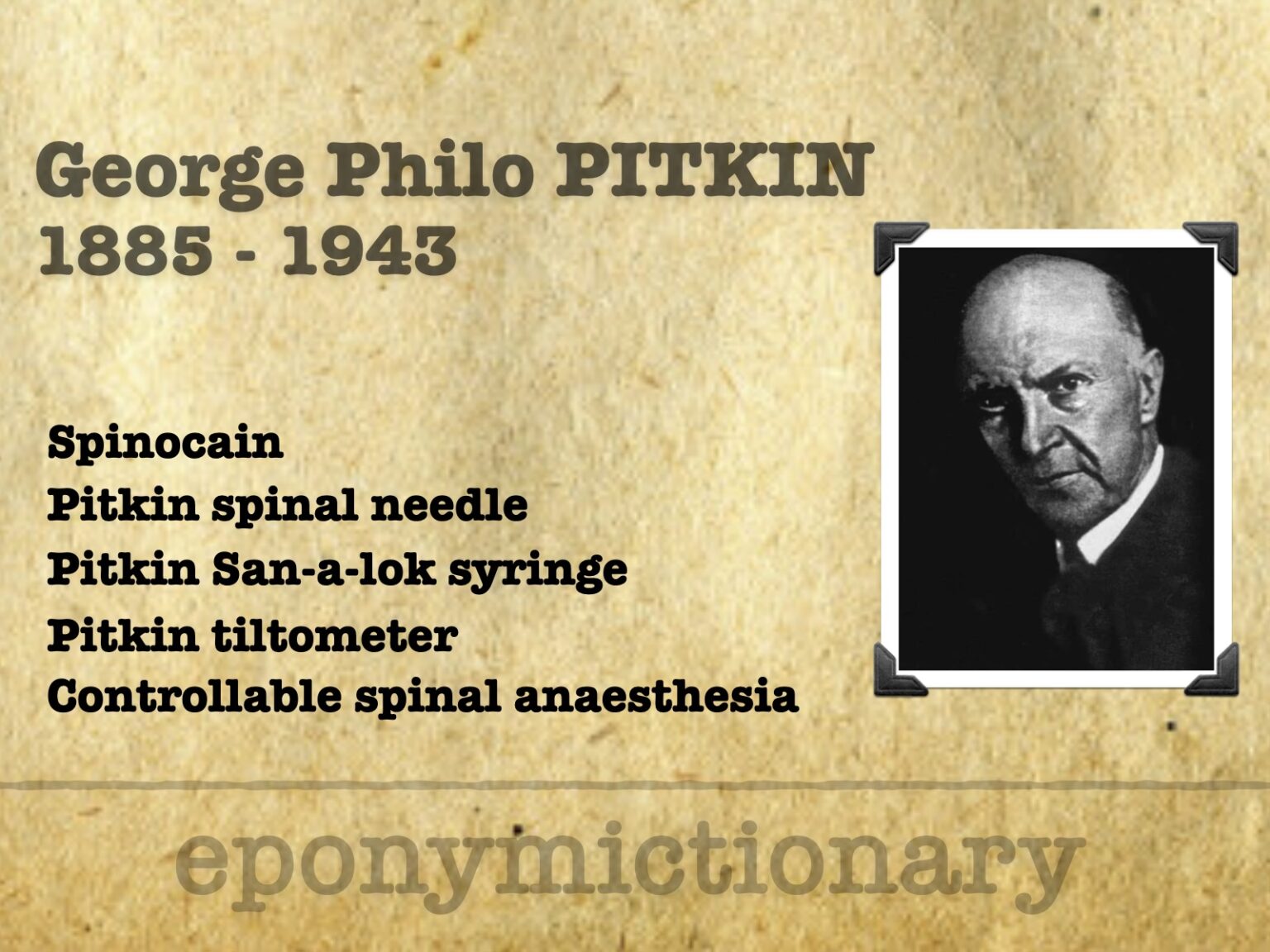
George Pitkin: George Philo Pitkin (1885-1943) was an American surgeon, inventor, and pioneer of controllable spinal anaesthesia. Pitkin was a regional anaesthesia advocate based in Bergenfield and Teaneck, New Jersey.
Latest updates from the #FOAMed world
A fascinating new NeuroResus podcast explores the chaotic early management of subarachnoid haemorrhage (SAH) through a real-world ED and pre-hospital scenario—co-hosted by both clinicians and AI. The discussion tackles controversial frontline decisions, including airway management, blood pressure targets, seizure control, hyperventilation, and when to prioritise CT versus stabilisation. Rather than reciting guidelines, the episode focuses on nuanced clinical reasoning under pressure, while also highlighting both the promise and pitfalls of AI-assisted medical discussion.
A practical new ultrasound review from EMOttawa expands the traditional AAA scan into a broader “3-view aortic PoCUS” approach for detecting thoracic aneurysm and aortic dissection. The article highlights the value of adding hepatic window, parasternal long-axis, and suprasternal notch views to assess much more of the aorta at the bedside, particularly when standard abdominal views are limited. A useful refresher for emergency clinicians looking to improve bedside detection of life-threatening aortic pathology.
A practical and high-yield SSEM 2025 talk from Kane Guthrie exploring the crashing patient with refractory shock who fails to respond to standard resuscitation. The session focuses on recognising occult causes of shock, troubleshooting vasopressor-resistant hypotension, and escalating beyond first-line therapies in the ED resus bay. A strong refresher on advanced shock physiology, diagnostic frameworks, and the importance of reassessing the “why” when patients are not improving as expected.
A new clinical review from REBEL EM highlights that CT angiography (CTA) in lower GI bleeding should be used selectively—not routinely. Patients with haemodynamic instability, ongoing bleeding, or bleeding within the previous 4 hours are most likely to benefit from CTA, while stable patients without active bleeding have a very low diagnostic yield. The article reinforces a targeted, high-value imaging approach, reserving CTA for cases where rapid localisation may guide urgent intervention.
LITFL Comms
Newsletter Updates

Emergency nurse with ultra-keen interest in the realms of toxicology, sepsis, eLearning and the management of critical care in the Emergency Department | LinkedIn |

BA MA (Oxon) MBChB (Edin) FACEM FFSEM. Emergency physician, Sir Charles Gairdner Hospital. Passion for rugby, medical history, medical education, and asynchronous learning #FOAMed evangelist. Editor-in-Chief and Webmaster of Life in the Fast lane, LITFL | On Call 4e| Eponyms | Books | Horology |