


Oral B. Crawford

Oral Bascom Crawford Jr (1921–2008) was an American anesthesiologist
Crawford is best remembered for the development of the Crawford epidural needle, a blunt-bevelled Quincke-type needle designed to improve the safety of thoracic and caudal epidural anesthesia.
Crawford belongs to the post-Tuohy generation of epidural innovators, alongside Hustead and Weiss, who refined needle geometry to reduce complications rather than reinvent technique. His needle reflects a safety-first philosophy, prioritizing blunt entry and controlled catheter direction at a time when thoracic epidural anaesthesia was still viewed as hazardous.
Crawford was a major clinical investigator in the 1960s during the early evaluation of prilocaine (Citanest/propitocaine), contributing to the evidence base for its tolerability and effectiveness as an alternative local anaesthetic. He built an enduring training infrastructure in southwest Missouri by establishing a board-approved anaesthesiology residency and a school for nurse anaesthetists.
Biographical Timeline
- Born July 3, 1921 Brookfield, Missouri
- 1938 – Graduated Hickman High School, Columbia, Missouri
- 1942 – BSc, University of Missouri and
- 1944 – MD, Louisiana State University; internship, Kansas City General Hospital
- 1944 – Served as a Captain in the U.S. Army Medical Corps during World War II
- 1949 – Appointed Clinical Associate Professor, University of Missouri School of Medicine
- 1951 – Published landmark series on thoracic epidural anesthesia (677 cases); Introduced the Crawford epidural needle
- 1964 – Elected Vice President, American Society of Anesthesiologists
- 1973–1985 – Member, ASA Board of Directors
- 1983–1984 – President, American Board of Anesthesiology
- 1994 – Retired from clinical practice
- Died July 8, 2008, Springfield, Missouri
Medical Eponyms
Crawford Needle (1951)
A Quincke-type epidural needle characterized by an extremely short, flat, blunt bevel, developed to reduce the risk of dural puncture during thoracic and caudal epidural anaesthesia.
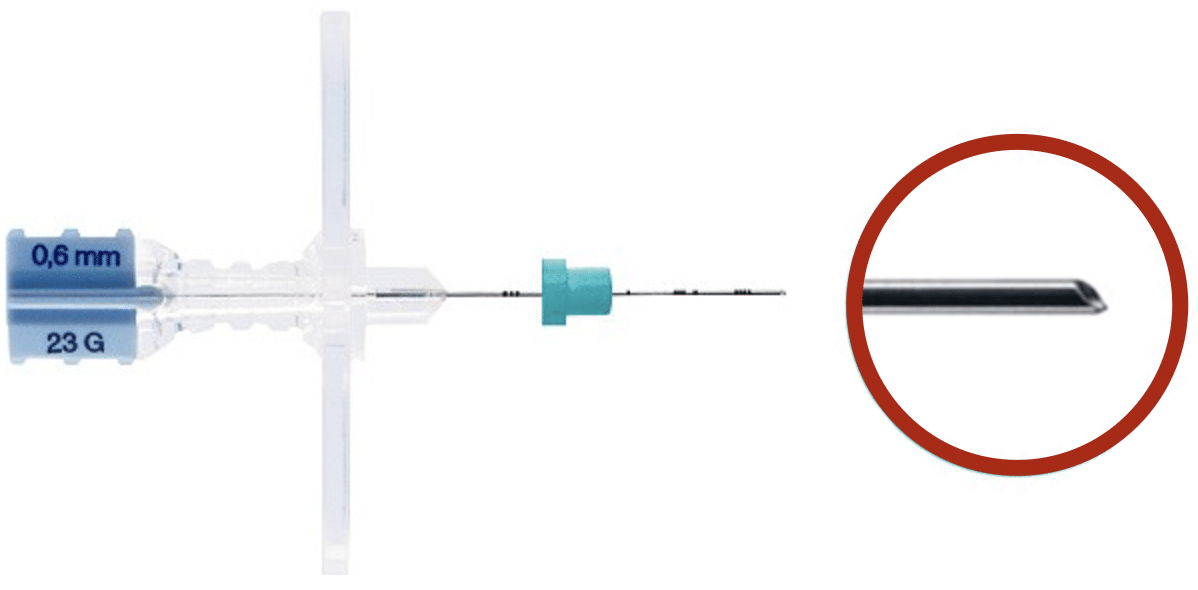
Key design features:
- Very short bevel (≈10 mm) with no sharp cutting edge
- Flat bevel geometry (≈60° relative to needle shaft)
- Designed for insertion with the bevel parallel to longitudinal ligaments
- Facilitates catheter advancement after 180° rotation
- Depth markings (10 mm intervals)
- Optional depth stopper for paediatric and caudal use
In 1951 Crawford and colleagues published Peridural anesthesia in thoracic surgery; a review of 677 cases one of the earliest American outcome datasets for high thoracic/cervical epidurals. Crawford preferred the “hanging drop” technique for identifying the epidural space and designed the needle specifically to support this method.
Variants of the Crawford needle remain in production and are particularly used in paediatric caudal aneasthesia.
Major Publications
- Crawford OB, Chester RV. Caudal anesthesia in obstetrics; a combined procaine-pontocaine single injection technic. Anesthesiology. 1949 Jul;10(4):473-8.
- Crawford OB, Buckingham WW, Ottosen P, Brasher CA. Peridural anesthesia in thoracic surgery; a review of 677 cases. Anesthesiology. 1951 Jan;12(1):73-84.
- Crawford OB. Peridural anesthesia for thoracic surgery. N Y State J Med. 1952 Nov 1;52(21):2637-41.
- Crawford OB. The teaching of the part-time anesthesiologist. Anesth Analg. 1957 May-Jun;36(3):26-8
- Crawford OB. Methemoglobin in man following the use of prilocaine. Acta Anaesthesiol Scand Suppl. 1965;16:183-7.
- Crawford OB. Clinical evaluation of the regional and topical anesthetic activity of prilocaine. Acta Anaesthesiol Scand Suppl. 1965;16:213-22.
- Crawford OB, Hollis RW, Covino BG. Clinical tolerance and effectiveness of propitocaine, a new local anesthetic agent. J New Drugs. 1965 May-Jun;5(3):162-70.
- Crawford OB. The basic principles of anesthesia patient care. Clin Anesth. 1967;2:1-14.
References
Biography
- Oral Bascom Crawford Jr. The Springfield News-Leader (Springfield, Missouri) · Wed, 9 Jul 2008
Eponymous Terms
- Frölich MA, Caton D. Pioneers in epidural needle design. Anesth Analg. 2001 Jul;93(1):215-20.
Eponym
the person behind the name

BSc (Hons) Neuroscience, University of Bristol; MBBS, St George's University of London; MRCP (UK). Internal medic and aspiring Intensivist/triathlete/coffee roaster. Perth/London.

BA MA (Oxon) MBChB (Edin) FACEM FFSEM. Emergency physician, Sir Charles Gairdner Hospital. Passion for rugby, medical history, medical education, and asynchronous learning #FOAMed evangelist. Editor-in-Chief and Webmaster of Life in the Fast lane, LITFL | On Call 4e| Eponyms | Books | Horology |