


Palla sign
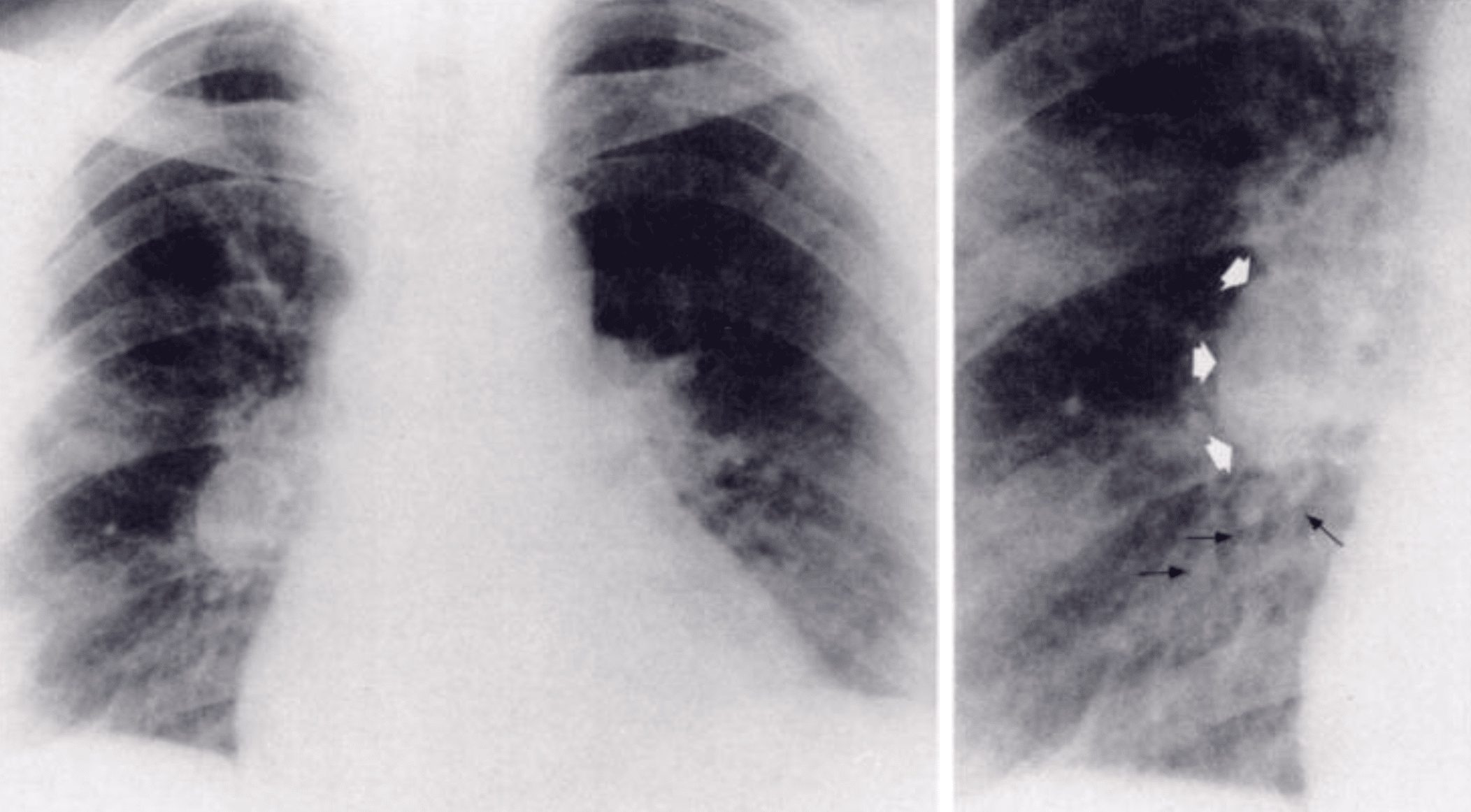
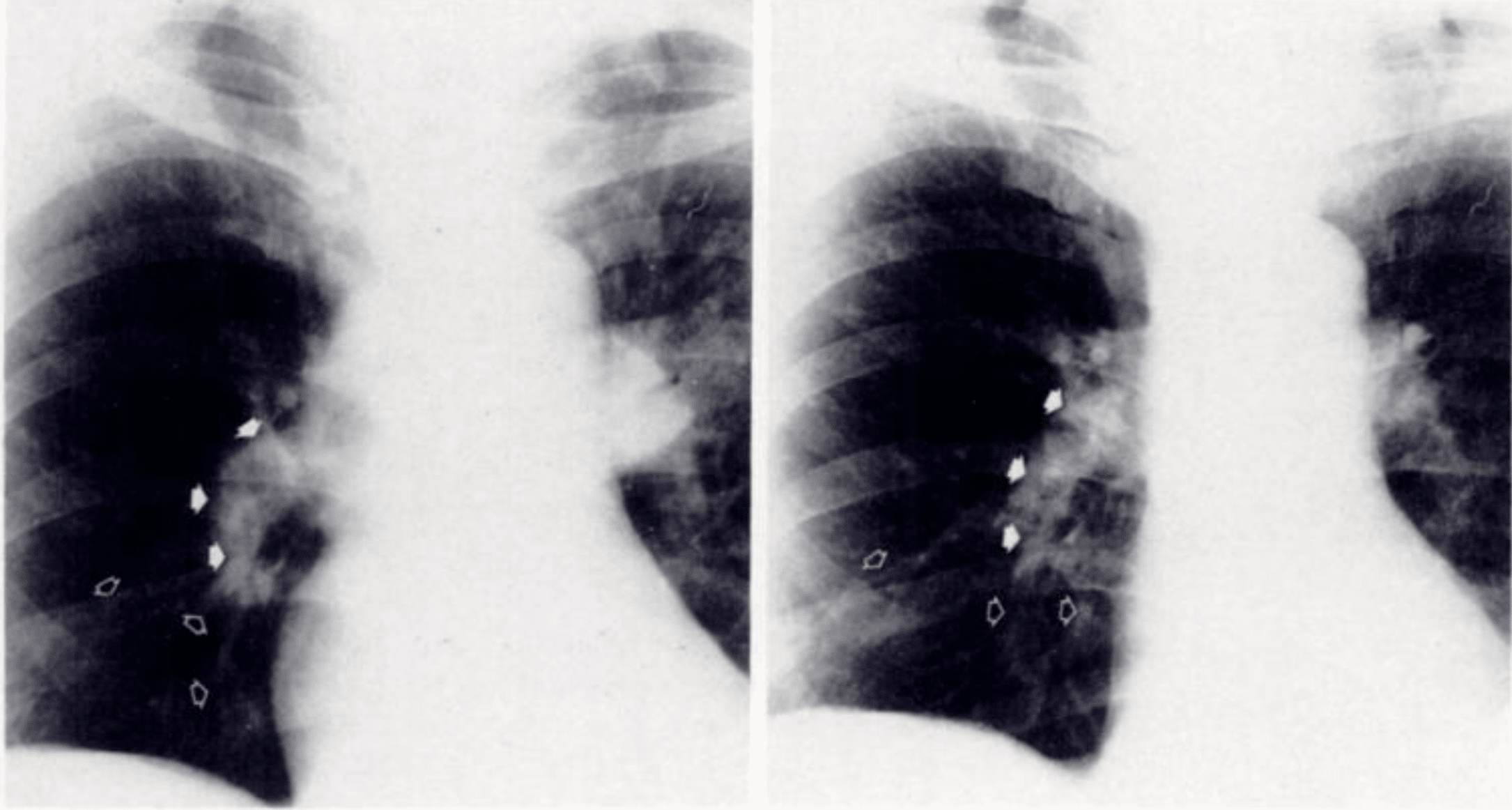
Palla sign describes enlargement and characteristic shape distortion of the right descending pulmonary artery on chest radiography during acute pulmonary embolism. Disproportionate proximal arterial dilatation with relatively abrupt distal tapering produces a plump or “sausage-shaped” appearance, often with poor visualisation of the middle- and lower-lobe arterial branches.
The appearance reflects altered pulmonary haemodynamics proximal to major embolic obstruction and may regress as the embolic episode resolves. In Palla’s original series, the characteristic sausage morphology occurred in approximately one-quarter of patients with confirmed PE and was not observed in patients in whom PE was subsequently excluded.
Palla sign is an uncommon radiographic clue rather than a diagnostic test for PE. Contemporary evaluation of suspected PE relies on appropriate clinical assessment and definitive imaging, usually CTPA. An enlarged right descending pulmonary artery should increase suspicion rather than establish the diagnosis.
Historical development
1962 – C. H. Joseph Chang established normal radiographic dimensions for the right descending pulmonary artery in 1,085 subjects, reporting upper inspiratory limits of approximately 16 mm in adult men and 15 mm in adult women. These measurements provided the normal reference standard used by Palla as cited in the methodology and analysis of his 1983 study.
1965 – Chang and Davis published A Roentgen sign of Pulmonary Infarction, describing transient enlargement of a previously normal right or left descending pulmonary artery in 23 consecutive cases of pulmonary infarction. The arterial enlargement developed early and regressed with recovery, establishing descending pulmonary arterial dilatation as a radiographic manifestation of PE/infarction nearly two decades before Palla.
1983 – Antonio Palla, Donnamaria, Petruzzelli, Rossi, Riccetti and Giuntini published Enlargement of the right descending pulmonary artery in pulmonary embolism. They reviewed 374 consecutive patients admitted with suspected PE. Upright CXRs were available in 118 patients with confirmed PE and 147 in whom PE was not confirmed. The right descending pulmonary artery measurable in 73 and 85 patients respectively.
The proximal right descending PA was significantly larger during acute embolisation than after recovery. At the superior venous angle, mean diameter fell from 17.1 to 15.1 mm, and at 1 cm distal from 15.4 to 14.1 mm. Compared with patients without confirmed PE, the first three arterial measurements were also significantly larger in embolic patients.
Palla described specific “sausage-shaped” radiographic appearance. The proximal vessel became enlarged, dense and plump while tapering sharply distally, with poor visualisation and distortion of the middle- and lower-lobe branches.
About one-quarter of patients with confirmed PE demonstrated this readily recognisable configuration, whereas it was not observed in patients whose suspected PE was subsequently excluded.
Palla proposed that major vascular obstruction increased pulmonary vascular resistance and transmural pressure, producing dilatation of the arterial segment proximal to the obstruction. In patients with the sausage appearance, angiography demonstrated proximally situated large emboli associated with particularly marked arterial dilatation and poor visualisation of distal branches
2006 – Piazza and Goldhaber included an enlarged right descending pulmonary artery among the classic but rare CXR manifestations of PE and termed it Palla’s sign
Eponymythology
Palla et al. used Chang’s 1962 normal measurements of the right descending pulmonary artery as their reference standard but did not cite Chang and Davis’s 1965 report describing transient descending pulmonary arterial enlargement in pulmonary infarction. Palla’s contribution was therefore not the first observation of arterial enlargement, but its quantitative evaluation in confirmed PE and the description of the characteristic “sausage” morphology.
Associated Persons
- C. H. Joseph Chang (1929-2017) [Chang sign]
- Antonio Palla (1950 – ) [Palla sign 1983]
Alternative names
- Palla’s sign
Related sign
Chang sign is the earlier and broader observation of transient enlargement of a previously normal right or left descending pulmonary artery during pulmonary embolism/infarction. Palla sign is restricted to the right descending pulmonary artery and, in its original description, incorporates characteristic shape distortion with proximal enlargement and relatively abrupt distal tapering producing the “sausage” configuration.
Eponymythology
Palla et al. did not claim to be the first to describe descending pulmonary arterial enlargement in PE. Their 1983 paper acknowledged that transient enlargement had previously been reported by several authors and used Chang’s 1962 normal measurements as its principal reference standard. However, they did not cite Chang and Davis’s 1965 report specifically describing transient enlargement of the right or left descending pulmonary artery in pulmonary infarction.
Palla’s principal contribution was quantitative evaluation of right descending pulmonary arterial enlargement in a larger, comparative PE cohort and description of its characteristic “sausage” morphology, rather than discovery of arterial enlargement itself. Subsequent literature increasingly used Palla sign more broadly for any prominent or enlarged right descending pulmonary artery, blurring the distinction between the earlier Chang sign and Palla’s more specific morphological description.
References
Original articles
- Chang CH. The normal roentgenographic measurement of the right descending pulmonary artery in 1,085 cases. Am J Roentgenol Radium Ther Nucl Med. 1962; 87: 929-35.
- Chang CH, Davis WC. A Roentgen sign of Pulmonary Infarction. Clin Radiol. 1965 Apr;16:141-7.
- Chang CH. The normal roentgenographic measurement of the right descending pulmonary artery in 1,085 cases and its clinical application. Part II. Clinical application of the measurement of the right descending pulmonary artery in the radiological diagnosis of pulmonary hypertensions from various causes. Nagoya J med. Sci. 1965;28:67-80.
- Palla A, Donnamaria V, Petruzzelli S, Rossi G, Riccetti G, Giuntini C. Enlargement of the right descending pulmonary artery in pulmonary embolism. AJR Am J Roentgenol. 1983; 141(3): 513-7.
Review articles
- Piazza G, Goldhaber SZ. Acute pulmonary embolism: part I: epidemiology and diagnosis. Circulation. 2006 Jul 11;114(2):e28-32.
- Taylor BT, Pezzo SP, Rumbak M. Palla’s sign and Hampton’s hump in pulmonary embolism. Respiration. 2010;80(6):568.
- Ladeiras-Lopes R, Neto A, Costa C, Sousa M, Ferreira P, Dias VP, Ribeiro VG. Hampton’s hump and Palla’s sign in pulmonary embolism. Circulation. 2013 May 7;127(18):1914-5
- Hsu CW, Su HY. Palla’s sign and Hampton’s hump in pulmonary embolism. QJM. 2017 Jan;110(1):49-50.
- Cadogan M. CXR eponyms in pulmonary embolism. LITFL
eponymictionary
the names behind the name

BA MA (Oxon) MBChB (Edin) FACEM FFSEM. Emergency physician, Sir Charles Gairdner Hospital. Passion for rugby, medical history, medical education, and asynchronous learning #FOAMed evangelist. Co-founder and CTO of Life in the Fast lane | On Call: Principles and Protocols 4e| Eponyms | Books | Horology