


Thomas E. Twitchell
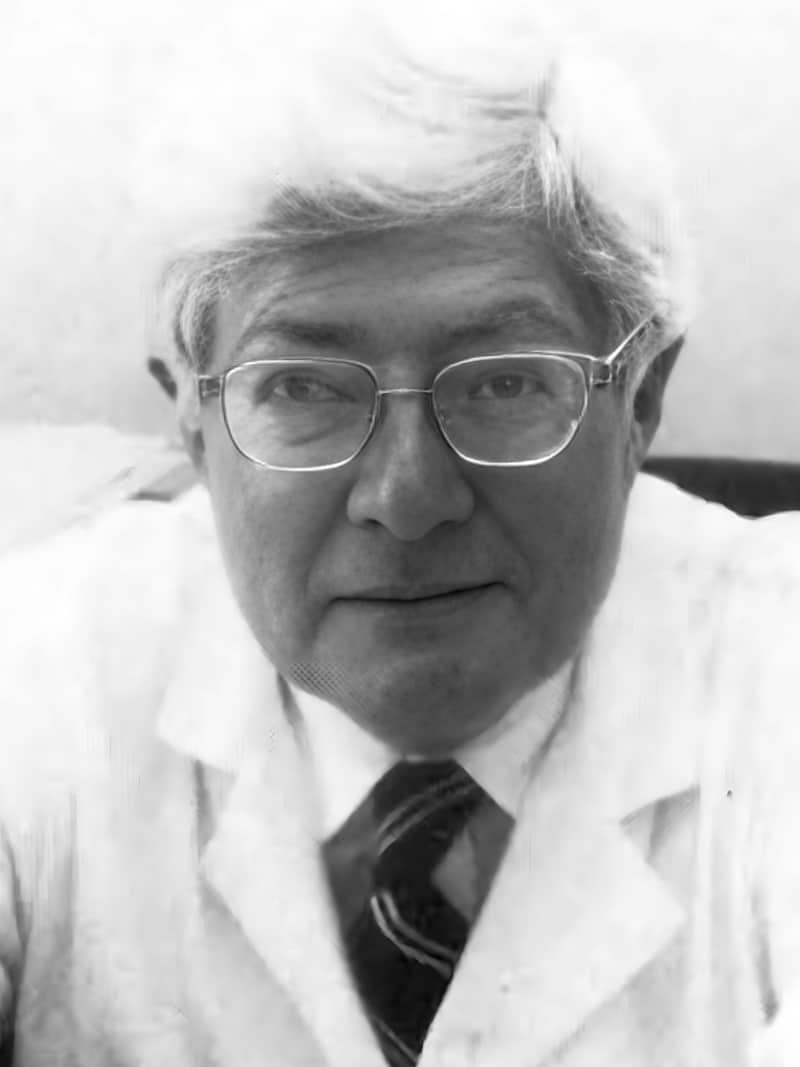
Thomas Evans Twitchell (1923-2017) was an American neurologist
Educated at the University of Michigan, he worked in neurology at Boston City Hospital, Harvard Medical School, Yale University, New England Medical Center, and Tufts University School of Medicine.
Twitchell’s detailed clinical study of motor recovery after hemiplegia became a foundation for modern stroke rehabilitation assessment. His 1951 paper, “The restoration of motor function following hemiplegia in man,” described the ordered return of motor function after stroke and influenced both Brunnstrom’s recovery stages and the later Fugl-Meyer Assessment.
Biographical Timeline
- Born September 4, 1923, Springfield, Ohio.
- 1946 – Awarded MD, University of Michigan.
- 1947 – Research fellow in physiology, Yale University School of Medicine.
- 1947–1948 – Intern in neurology, Boston City Hospital.
- 1948–1949 – Research fellow, Harvard Medical School and Boston City Hospital.
- 1949–1951 – United States Public Health Service research fellow, Yale University.
- 1951 – Published The restoration of motor function following hemiplegia in man in Brain.
- 1955 – Chief resident in neurology, New England Center Hospital.
- 1955–1988 – Faculty member, Tufts University School of Medicine, rising from instructor to professor of neurology (1983–1985)
- 1988 – Retired from Tufts Medical Center after over 30 years as neurologist
- Died March 12, 2017 aged 93, at Natick, Massachusetts.
Key Medical Contributions
Twitchell and the sequence of motor recovery
In 1951, Twitchell described hemiplegia as a dynamic sequence of recovery, rather than a static state of paralysis, flaccidity, or spasticity. He examined 121 patients, and followed 25 patients longitudinally from admission to a relatively stable condition, combining serial clinical examination with electromyographic studies.
Twitchell showed that motor return after cerebral hemiplegia commonly followed a recognisable but overlapping pattern. Early loss of voluntary movement and depressed reflexes, return and exaggeration of reflexes, development of spasticity, emergence of stereotyped flexor and extensor synergies, proprioceptive and tactile facilitation, and, in some patients, later recovery of more selective voluntary movement.
He did not establish a named rehabilitation method, but his observations on synergies, spasticity, proprioceptive facilitation, hand recovery, and plateau at different stages became foundational for later stroke rehabilitation assessment. In 1966, Signe Brunnstrom converted this descriptive sequence into a practical six-stage limb-testing framework, while acknowledging that hand recovery was more variable and drawing specifically on Twitchell’s account of hand-function restoration.
The Fugl-Meyer Assessment later developed the Twitchell–Brunnstrom concept of sequential motor return into a quantitative impairment scale. A later review summarised Twitchell’s contribution as the classic description of stepwise post-stroke motor recovery: reflex return, spasticity, stereotyped synergies, movement out of synergy, and possible normalisation of tone and reflexes.
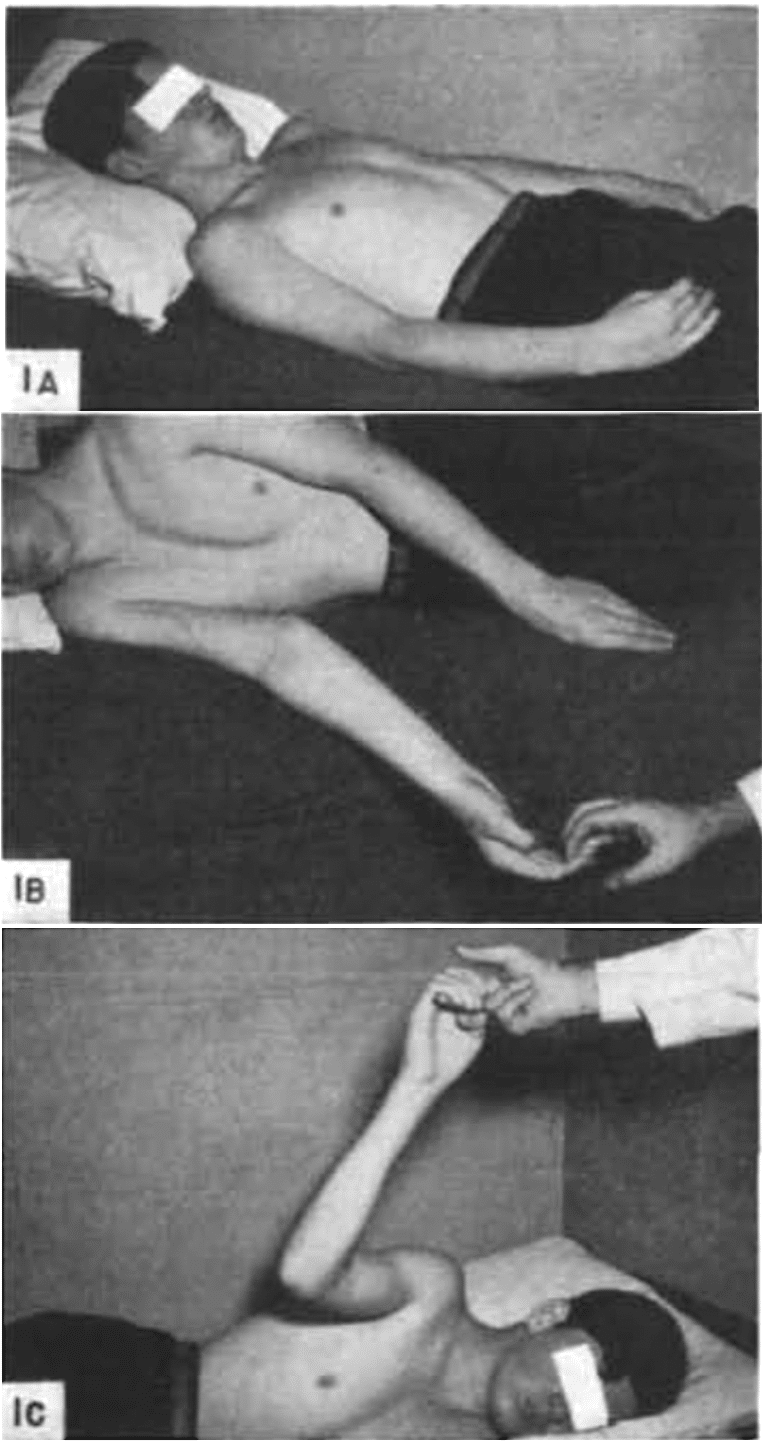
A, position of right arm with patient in supine position,
B, attempt at elicitation of proximal traction response with patient lying on his right side. Flexion of fingers is no more than that occurring with the patient in the supine position.
C elicitation of the proximal traction response with the patient lying on his left side.
Major Publications
- Twitchell TE. The restoration of motor function following hemiplegia in man. Brain. 1951 Dec;74(4):443-80.
- Twitchell TE. Sensory factors in purposive movement. J Neurophysiol. 1954 May;17(3):239-52.
- Twitchell TE. The prognosis of motor recovery in hemiplegia. Bull Tufts N Engl Med Cent. 1957 Jul-Sep;3(3):146-9
- Twitchell TE. The grasping deficit in infantile spastic hemiparesis. Neurology. 1958 Jan;8(1):13-21.
- Mother Mary Lauretana, Partan DL, Twitchell TE. Rehabilitation of the upper extremity in infantile spastic hemiparesis. Am J Occup Ther. 1959 Nov-Dec;13:264-7.
- Twitchell TE. The clinical differentiation and physiological nature of increased resistance to passive movement. Cereb Palsy Bull. 1961;3:110-6.
- Twitchell TE. Attitudinal reflexes. Phys Ther. 1965 May;45:411-8.
- Twitchell TE. Variations and abnormalities of motor development. Phys Ther. 1965 May;45:424-30
- Twitchell TE. Sensation and the motor deficit in cerebral palsy. Clin Orthop Relat Res. 1966 May-Jun;46:55-61.
- Rudel RG, Teuber HL, Twitchell TE. Levels of impairment of sensori-motor functions in children with early brain damage. Neuropsychologia. 1974 Jan;12(1):95-108.
References
Biography
- Thomas Twitchell, MD. Tufts University School of Medicine Yearbook 1985
- Twitchell, Thomas Evans. American men & women of science. 2003; 21: 185
- Twitchell, Thomas Evans. The Boston Globe, April 9, 2017.
Eponymous terms
- Crow JL, Harmeling-van der Wel BC. Hierarchical properties of the motor function sections of the Fugl-Meyer assessment scale for people after stroke: a retrospective study. Phys Ther. 2008 Dec;88(12):1554-67.
Eponym
the person behind the name

Studying for Bachelor of Science (Occupational Therapy) at Curtin University

BA MA (Oxon) MBChB (Edin) FACEM FFSEM. Emergency physician, Sir Charles Gairdner Hospital. Passion for rugby, medical history, medical education, and asynchronous learning #FOAMed evangelist. Editor-in-Chief and Webmaster of Life in the Fast lane, LITFL | On Call 4e| Eponyms | Books | Horology |