


Thomas George Morton
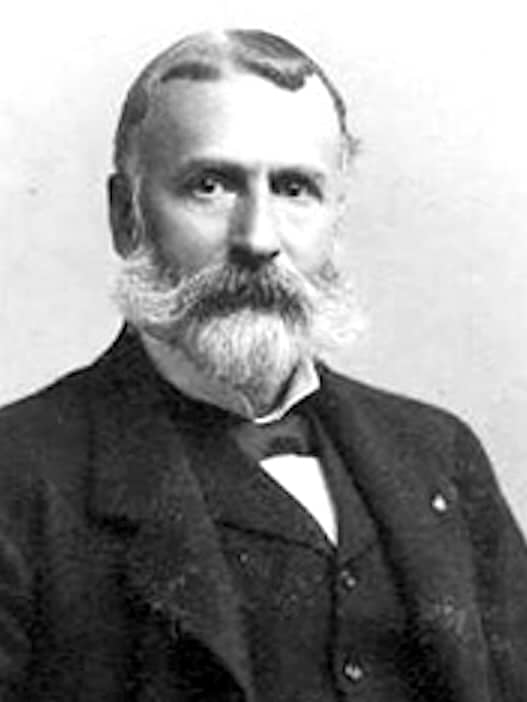
Thomas George Morton (1835-1903) was an American general surgeon and orthopaedic surgeon
Morton spent more than four decades associated with Pennsylvania Hospital, becoming surgeon in 1864, and founded the Philadelphia Orthopaedic Hospital in 1867. He also served as an Acting Assistant Surgeon in military hospitals during the American Civil War and later became a prominent surgical teacher and hospital administrator.
Morton is best remembered for his 1876 description of the painful forefoot syndrome subsequently termed Morton metatarsalgia, Morton neuralgia and Morton neuroma. His original explanation centred on pain around the fourth metatarsophalangeal articulation with suspected plantar digital nerve compression. The modern concept of a fibrotic interdigital nerve lesion developed through later anatomical, operative and pathological work.
He also made an important contribution to the emerging surgical treatment of acute appendicitis. In 1887 Morton performed the first recorded appendicectomy for acute appendicitis in which the patient survived. Morton subsequently advocated active exploration and removal of the diseased appendix and reported a series of seven operations for perforative appendicitis in 1890
Biographical timeline
- Born on August 8, 1835, in Philadelphia, Pennsylvania, the son of physician and anatomist Samuel George Morton (1799–1851).
- 1856 – Graduated MD from the University of Pennsylvania.
- 1856–1859 – Undertook resident appointments at St Joseph’s Hospital, Wills Eye Hospital and Pennsylvania Hospital, completing his residency at Pennsylvania Hospital in 1858.
- 1860–1864 – Served as Pathological Curator of Pennsylvania Hospital.
- 1861 – Elected a Fellow of the College of Physicians of Philadelphia. On November 12 married Ann Jenks Kirkbride, daughter of psychiatrist Thomas Story Kirkbride; they had five children including Thomas Story Kirkbride Morton (1865-1930).
- 1862–1865 – Served as an Acting Assistant Surgeon during the American Civil War in Philadelphia military hospitals.
- 1864 – Elected Surgeon to Pennsylvania Hospital, aged 29
- 1867 – Founded the Philadelphia Orthopaedic Hospital.
- 1870 – At Morton’s instigation, the hospital expanded to include a department for nervous diseases, with Silas Weir Mitchell (1829-1914) appointed physician. Renamed the Philadelphia Orthopaedic Hospital and Infirmary for Nervous Diseases in 1872
- 1876 – Published A peculiar and painful affection of the fourth metatarso-phalangeal articulation, describing the painful forefoot syndrome subsequently associated with Morton neoroma.
- 1880 – With William Hunt and colleagues published Surgery in the Pennsylvania Hospital, a historical and clinical compilation of surgical practice at the institution.
- 1880s – Held a range of surgical, charitable and professional appointments, including surgeon to Pennsylvania Hospital, Wills Eye Hospital, Philadelphia Orthopaedic Hospital, Jewish Hospital and Howard Hospital. Professor of Orthopaedic Surgery at the Philadelphia Polyclinic and College for Graduates in Medicine. President of the American Society for the Restriction of Vivisection and Vice-President of the Pennsylvania Society for the Prevention of Cruelty to Children.
- 1886 – Lectured on the antiseptic treatment of wounds at Pennsylvania Hospital, part of a broader surgical practice that increasingly incorporated antiseptic technique.
- 1887 – Performed the first successful appendicectomy following diagnosis of perforative pericaecal abscess.
- 1890 – Published Inflammation of the vermiform appendix, including seven cases of excision for perforative appendicitis.
- 1900 – Served as President of the Medical Staff of Pennsylvania Hospital and was influential in improvements to the hospital’s facilities.
- Died on May 20, 1903, aged 67 after a two-day illness attributed to cholera morbus
Medical Eponyms
Morton neuroma, Morton metatarsalgia (1876)
1876 – Morton described 16 patients with a distinctive painful forefoot syndrome in A peculiar and painful affection of the fourth metatarso-phalangeal articulation. Severe paroxysmal pain was typically localised around the fourth MTP region and provoked by walking or pressure from footwear. Although Morton suspected “neuroma or some nerve hypertrophy”, his mechanical model centred on compression around the lateral metatarsophalangeal articulations.
The disorder subsequently became known as Morton metatarsalgia, Morton neuralgia and ultimately Morton neuroma. Modern Morton neuroma is understood as a chronic compressive neuropathy with perineural fibrosis rather than a true neoplasm, and its anatomical and pathological history substantially predates and postdates Morton’s own description.
In March, 1873, was asked to see Miss H.S., aged 26 years, who while in Europe four years before, had injured her right foot by stepping upon a small stone. She said that she had at once experienced intense pain, which was soon followed by slight swelling and redness…The pain was referred to the head of the fourth metatarsal bone.
Morton TG, 1886
Key Medical Contributions
Appendicitis and appendicectomy
1887 – On April 27, Morton performed the first successful appendicectomy for acute appendicitis. Morton operated on a 26-year-old man with a three-day acute illness and generalized purulent peritonitis. At laparotomy he encountered an abscess around the caecum and a perforated diseased appendix, with a phosphatic concretion lying beside the perforation. He ligated and excised the appendix, the patient recovered uneventfully and remained well at follow-up.
This was not the first appendicectomy. Tait had removed a gangrenous appendix through an abdominal incision in 1880, and Krönlein performed the first operation specifically for acute appendicitis in 1884, although his patient died. Morton’s distinction is therefore the first recorded intentional appendicectomy for acute appendicitis followed by survival.
1888 – In diagnosis of pericæcal abscess, and its radical treatment by removal of the appendix vermiformis, Morton argued that most disease then labelled typhlitis, perityphlitis or pericaecal abscess arose from the appendix, stating that “pericaecal disease may… in most cases, be said to mean disease of the appendix vermiformis.”
1890 – Morton consolidated his experience in Inflammation of the vermiform appendix: its results, diagnosis and treatment, reporting seven cases of excision for perforative appendicitis, with five surviving. He advocated identifying and excising the appendix whenever disease was found rather than merely draining the surrounding abscess.
Laparotomy for perforative appendicitis, with removal of the organ, is now an established surgical procedure, and yet so recently has this operation been introduced that I am able to present the patient upon whom I operated in April, 1887, for pericecal abscess with peritonitis, which I believe represents the first successful operation for the removal of the vermiform appendix in a case of this kind, based upon correct diagnosis.
Morton TG, 1890
Major Publications
- Morton TG. A peculiar and painful affection of the fourth metatarso-phalangeal articulation. American Journal of the Medical Sciences. 1876; 71: 37–45.
- Morton TG. Painful affection of the foot. 1880: 107-113
- Morton TG, Hunt W. Surgery in the Pennsylvania Hospital. Philadelphia 1880
- Morton TG. On asymmetry of the lower limbs as a cause of lateral spinal curvature. 1886
- Morton TG. On the antiseptic treatment of wounds. Clinical lectures delivered at the Pennsylvania Hospital on October 2 and 23, 1886. Philadelphia Medical Times. 1886
- Musser JH, Pepper W, Morton TG. Peri-caecal inflammation. Philadelphia: WM. J. Dornan, Printer. 1888
- Morton TG. The diagnosis of pericæcal abscess, and its radical treatment by removal of the appendix vermiformis. JAMA 1888;X;(24):733-739.
- Morton TG. Inflammation of the vermiform appendix: its results, diagnosis and treatment, together with the reports of seven cases of excision of the vermiform appendix for perforative appendicitis, with exhibition of five of the patients. J.B. Lippincott Company, Philadelphia. 1890
- Morton TG. The history of the Pennsylvania Hospital, 1751-1895. Philadelphia: Times Printing House, 1895
- Morton TG. The Application of the X-rays to the Diagnosis of Morton’s Painful Affection of the Foot, or Metatarsalgia. International Medical Magazine 1896; 5(5): 322-324
References
Biography
- Lewis MJ. Memoir of Thomas G. Morton, M.D., and presentation of portrait. Transactions of the College of Physicians of Philadelphia. 1914
Eponymous terms
- Civinini F. Su d’un nervoso gangliare rigonfiamento alla pianta del piede. 1835
- The second annual report of the American Anti-Vivisection Society. Philadelphia, 1885
- Morton TSK. VI. Metatarsalgia (Morton’s Painful Affection of the Foot), with an Account of Six Cases Cured by Operation. Ann Surg. 1893 Jun;17(6):680-99.
- Morton DJ. Metatarsus Atavicus: The Identification of a Distinctive Type of Foot Disorder. The Journal of Bone & Joint Surgery, 1927; 9(3): 531–544.
- Larson EE, Barrett SL, Battiston B, Maloney CT Jr, Dellon AL. Accurate nomenclature for forefoot nerve entrapment. A historical perspective. Journal of the American Podiatric Medical Association 2005; 95(3): 298-306.
- G. Pasero, P. Marson. Filippo Civinini (1805-1844) and the discovery of plantar neuroma. Reumatismo 2006; 58(4): 319-22
- Di Caprio F, Meringolo R, Shehab Eddine M, Ponziani L. Morton’s interdigital neuroma of the foot. Foot and Ankle Surgery. 2018;24(2):92-98.
Eponym
the person behind the name

BA MA (Oxon) MBChB (Edin) FACEM FFSEM. Emergency physician, Sir Charles Gairdner Hospital. Passion for rugby, medical history, medical education, and asynchronous learning #FOAMed evangelist. Editor-in-Chief and Webmaster of Life in the Fast lane, LITFL | On Call 4e| Eponyms | Books | Horology |