


Barnett A. Greene
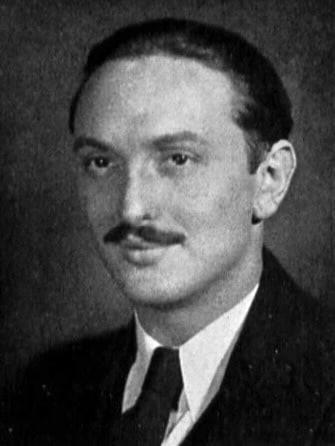
Barnett Alan Greene (1907-1999) was an American anaesthesiologist
Greene held multiple anaesthesia appointments across Brooklyn hospitals, including Cumberland, Adelphi, Lutheran and Prospect Heights. During the Second World War he served with the United States Army Medical Corps in North Africa and Italy, attaining the rank of Major and receiving the Bronze Star.
Greene is remembered for his work on obstetric spinal analgesia and prevention of post-spinal headache. In 1949, with Goldsmith and Lichtig, he reported that post-spinal headache after vaginal delivery could be reduced by hydration and the use of finer guage spinal needles. In 1950 he published on the use of a 26-gauge lumbar puncture needle to reduce CSF leakage and headache after obstetric spinal analgesia.
Greene published widely on spinal anaesthesia in obstetrics. He wrote a critical appraisal of spinal analgesia and anaesthesia for obstetrics, described the cough test for determining spinal anaesthetic level, reviewed obstetric practice for anaesthesiologists, and published on spinal analgesia with newer local anaesthetic agents. In retirement, Greene remained active professionally as a forensic anaesthesiologist and, away from medicine, enjoyed ballroom dancing.
Biographical Timeline
- Born July 30, 1907 in New York City.
- 1929 – Graduated BS cum laude, City College of New York.
- 1934 – Graduated MD, New York University & Bellevue Hospital Medical College
- 1934–1936 – Intern and house officer at Lincoln City Hospital, Bronx, New York.
- 1936–1939 – Resident in anaesthesiology at Lincoln City Hospital, Bronx.
- 1939–1947 – Anaesthesiologist at the Brooklyn Cancer Institute, Department of Hospitals, New York City.
- 1939–1970s – Held multiple Brooklyn anaesthesia directorships, including Prospect Heights Hospital, Unity Hospital, Adelphi Hospital, Brooklyn Women’s Hospital, Cumberland Hospital, and Lutheran Hospital.
- 1943–1946 – Served in the United States Army Medical Corps during the Second World War, in North Africa and Italy. He emerged with the rank of Major and was awarded the Bronze Star.
- 1946–1952 – Served as a clinical practice examiner for the American Board of Anesthesiology.
- 1950 – Published his major spinal needle paper: “A 26 gauge lumbar puncture needle: its value in the prophylaxis of headache following spinal analgesia for vaginal delivery”
- 1951–1955 – Visiting anaesthesiologist, and acting director of anaesthesiology, Kings County Hospital.
- 1958–1975 – Clinical Associate Professor of Anaesthesiology, State University of New York Downstate Medical Center.
- 1975 – Emeritus attending anaesthesiologist at Brooklyn-Cumberland Hospital Medical Center.
- 1978–1990 – Served on the malpractice mediation panel, Kings County Supreme Court.
- Died June 28, 1999, aged 91, at University Hospital at Stony Brook, following open heart surgery.
Key Medical Contributions
Fine-gauge spinal needles and post-spinal headache
In 1949, Greene along with Goldsmith and Lichtig studied headache after spinal analgesia for vaginal delivery. They argued that persistent CSF leakage through the dural puncture lowered CSF pressure and volume, producing traction on pain-sensitive intracranial structures. The trio proposed that the rate of leakage depended strongly on needle diameter, while postpartum dehydration and early ambulation increased susceptibility.
In their publication on the prevention of headache after spinal analgesia for vaginal delivery they found that in vaginal delivery patients receiving routine postpartum care, post-spinal headache fell from 26% with a 22G needle to 2.5% with a 24G needle. Increased hydration also reduced headache, but less dramatically, from 26% to 10% in a 22G group.
Greene needle attribution
Because the long, fine 24G needle was too flexible for easy use, Greene used a double-needle system. A larger outer guide needle (21G) was advanced toward the interspinous ligament or ligamentum flavum, and a fine inner needle (26G) was then passed through it into the subarachnoid space. He published his fine-gauge approach in 1950 with the publication of 26 gauge lumbar puncture needle: its value in the prophylaxis of headache following spinal analgesia for vaginal delivery.
The “Greene needle” attribution is historically a tad tricky as Herbert Merton Greene (1878-1962) had earlier described his round-pointed, atraumatic “Greene” lumbar puncture needle in 1923.
Major Publications
- Greene BA. Anesthetic safeguards in thyroid surgery; illustrative cases. Bull Adelphi Hosp Brooklyn. 1947 Mar;5(6):2-7.
- Greene BA. Ventricular fibrillation abolished by electric shock. J Am Med Assoc. 1948 Jan 24;136(4):279
- Greene BA. A critical appraisal of spinal analgesia and anesthesia for obstetrics. N Y State J Med. 1949 Jul 1;49(13):1527-30.
- Greene BA. The cough test for determination of level of spinal anesthesia. Anesthesiology. 1949 Sep;10(5):639-41
- Greene BA, Goldsmith M, Lichtig S. The prevention of headache after spinal analgesia for vaginal delivery by the use of hydration and a 24 gauge needle. Am J Obstet Gynecol. 1949 Oct; 58(4): 709-17.
- Greene BA, Goldsmith M. Obstetrics for the anesthesiologist. Anesthesiology. 1950 Jan;11(1):110-9.
- Greene BA. A 26 gauge lumbar puncture needle: its value in the prophylaxis of headache following spinal analgesia for vaginal delivery. Anesthesiology. 1950 Jul;11(4):464-9.
- Berkowitz S, Greene BA. Spinal anesthesia in children: report based on 350 patients under 13 years of age. Anesthesiology. 1951 May;12(3):376-87.
- Greene BA, Bieuzunski A. A specific method of spinal anesthesia for culdoscopic examination. N Y State J Med. 1952 Feb 15;52(4):461-3.
- Greene BA, Berkowitz S. An anesthesiologist’s program for the prevention of postoperative pulmonary complications. N Y State J Med. 1952 Aug 1;52(15):1871-8.
- Greene BA, Berkowitz S. Tobacco bronchitis; an anesthesiologic study. Ann Intern Med. 1954 Apr;40(4):729-42.
- Greene BA, Berkowitz S, Goldsmith M. The prevention of cranial nerve palsies following spinal anesthesia. Anesthesiology. 1954 May;15(3):302-9.
- Greene BA, Goldsmith M. Spinal analgesia with piridocaine hydrochloride for cesarean and vaginal deliveries. Surg Gynecol Obstet. 1955 Jan;100(1):88-90.
- Greene BA et al. Spinal analgesia with lucaine: a critical appraisal based on 6,000 cases. Anesthesiology. 1956 Jan;17(1):165-74.
Controversies
Barnett Alan Greene distinct from Herbert Merton Greene (1878-1962). H.M. Greene published on dural trauma and the ‘Greene’ round-point needle in 1923. B.A. Greene introduced his 26G needle / introducer technique to obstetric spinal analgesia in 1950.
References
Biography
- GREENE, BARNETT A., M.D. New York Times June 30, 1999
- Dr Barnett Alan Greene. Newsday (New York, New York) July 1, 1999
- Dr Barnett Alan Greene. Newsday (Nassau Edition) (Hempstead, New York) July 1, 1999
- Barnett Alan Greene. Prabook
- Harms R, Cadogan M. History of Spinal Needles. LITFL
Eponym
the person behind the name

BA MA (Oxon) MBChB (Edin) FACEM FFSEM. Emergency physician, Sir Charles Gairdner Hospital. Passion for rugby, medical history, medical education, and asynchronous learning #FOAMed evangelist. Editor-in-Chief and Webmaster of Life in the Fast lane, LITFL | On Call 4e| Eponyms | Books | Horology |