


Edward Shenton
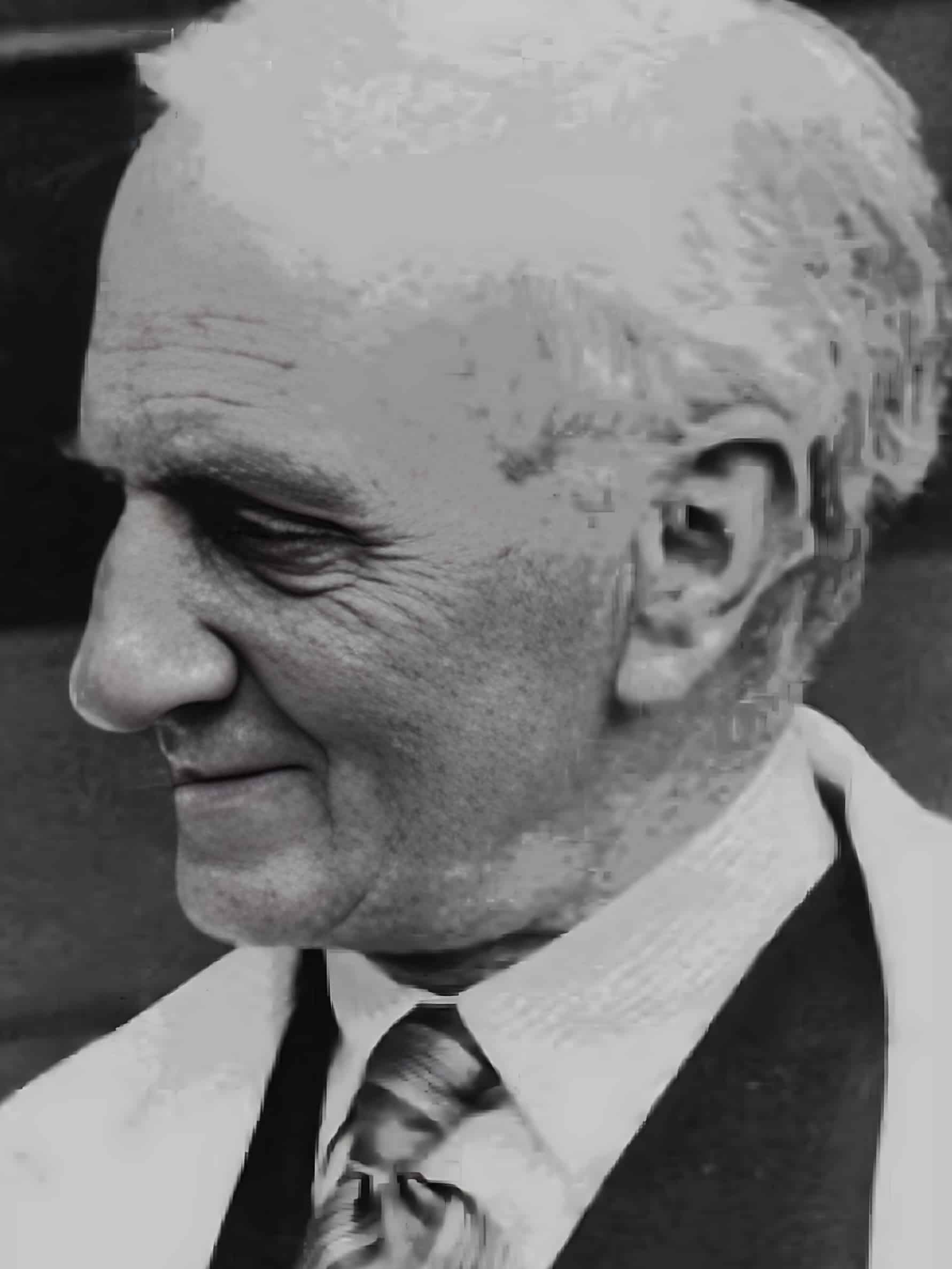
Edward Warren Hine Shenton (1872–1955) was an English radiologist
Shenton was a pioneer of diagnostic radiography. While still a medical student at Guy’s Hospital, London, he became involved in the hospital’s earliest X-ray work and subsequently helped establish a systematic approach to radiographic diagnosis at a time when radiology was still an emerging specialty.
Shenton developed practical techniques for radioscopy, radiography, fracture assessment and localisation of foreign bodies. His Guy’s Hospital Radiographic Day Book (1900) preserved almost 500 early skiagrams and provides an important record of the development of musculoskeletal radiology and fracture surgery at the turn of the twentieth century.
He is best remembered for the Shenton line, the smooth cervico-obturator arc used to assess alignment of the hip on an AP radiograph, which he formally described in 1902.
Biographical Timeline
- Born July 12, 1872 Edward Warren Hine Shenton.
- 1893 – Began medical studies at Guy’s Hospital, London
- 1897 – Guy’s Hospital established a skiagraphic service in the accident ward. Shenton became closely involved in its early development while still a medical student.
- 1899 – Appointed radiographer to Guy’s Hospital with fellow medical student A. H. B. Kirkman publishing The Roentgen rays as a means of diagnosis in the Guy’s Hospital Gazette
- 1900 – Compiled the Guy’s Hospital Radiographic Day Book, of 500 skiagrams documenting the early musculoskeletal radiology and fracture fixation at Guy’s.
- 1901 – Qualified by the London Conjoint diploma (MRCS, LRCP).
- 1902 – On January 10, presented A diagnostic line about the hip joint to the British Electrotherapeutic Society at the Medical Society of London. Later known as Shenton’s line.
- 1907 – Served as one of the honorary secretaries of the Electrical Section at the British Medical Association Annual Meeting in Exeter.
- 1911 – Published Disease in Bone and Its detection by the X-Rays with the earliest contemporary illustration of his diagnostic hip line.
- 1914–1918 – During the First World War worked as radiologist to the Royal Air Force Central Hospital. Awarded the Red Cross gold medal.
- 1919 – Resigned his position as senior surgical radiographer at Guy’s Hospital because of the pressure of emergency and wartime radiological work.
- Post-1919 – Developed consultant radiology practice in Harley Street. Honorary radiographer to St Peter’s Hospital. Medical officer in charge of the electrical department at the Royal London Ophthalmic Hospital.
- 1926 – With Alfred Pilkington Bertwistle (1896–1962), edited A Descriptive Atlas of Visceral Radiograms.
- 1933–1950 – Honorary radiologist to St Bartholomew’s Hospital, Rochester. He continued active radiological practice through the Second World War and remained available for air-raid casualties.
- 1944 – Elected an honorary member of Trinity College of Music, London, reflecting his parallel career as a violinist, composer and musical enthusiast.
- 1950 – Retired from professional practice at the age of 78.
- Died October 12, 1955 aged 83, at Middlesex Hospital, Marylebone, London.
Medical Eponyms
Shenton line (1902)
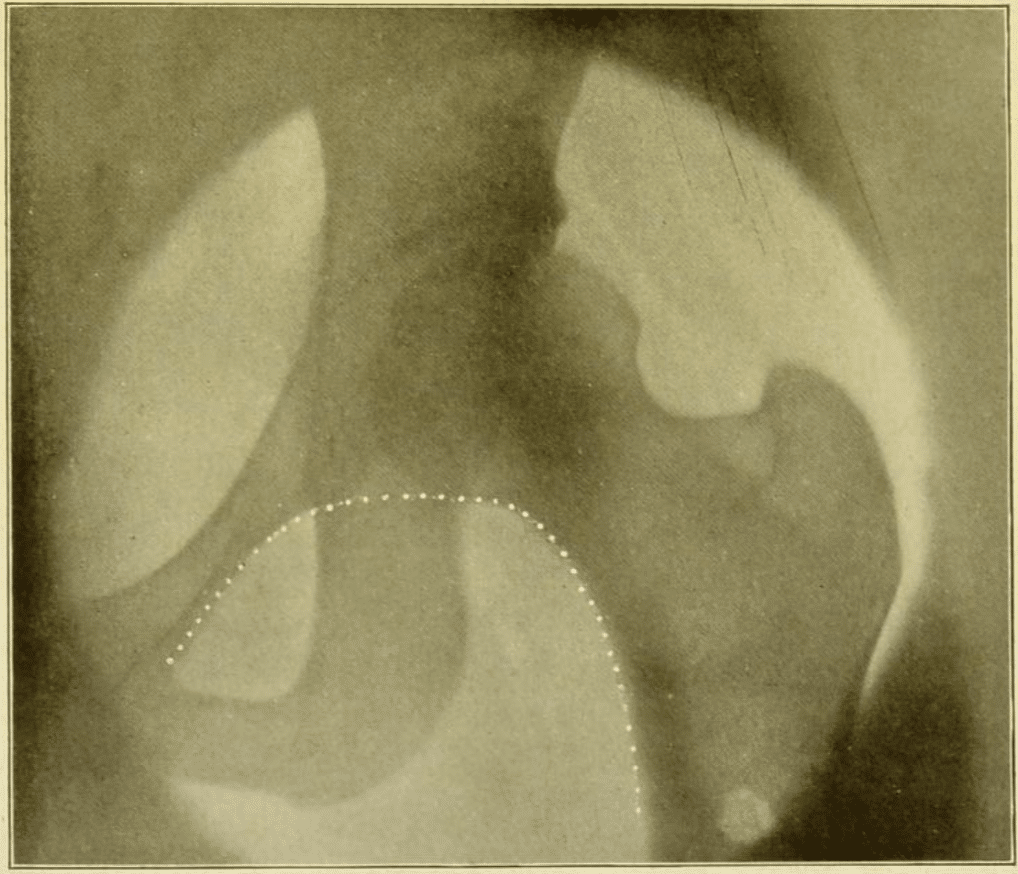
The Shenton line (Shenton arc; Shenton–Ménard line; cervico-obturator arch) is an imaginary smooth curve formed by the superior margin of the obturator foramen/inferior border of the superior pubic ramus continuing into the inferomedial border of the femoral neck.
1902 – February 6: Shenton presented A system of radiography to the Roentgen Society. While discussing the particular difficulty of diagnosing fractures around the hip, he wrote of a line whose “broken continuity” pointed to trouble in the hip region and again defined the curve by the upper obturator margin and inner femoral neck.
1902 – February 14: At the second meeting of the British Electrotherapeutic Society, Shenton presented A diagnostic line about the hip joint to the British Electrotherapeutic Society. He described an imaginary arch formed by the upper margin of the obturator foramen and inner margin of the femoral neck. Loss of continuity suggested hip displacement or disease such as dislocation, femoral-neck fracture, pelvic fracture and disease of the joint surfaces. Shenton cautioned that an intact line did not exclude an undisplaced fracture.
1907 – French orthopaedic surgeon Victor Ménard (1854-1934) independently described the same cervico-obturator arch, giving rise to the alternative term Shenton–Ménard line.
1911 – Shenton published Disease in Bone and Its detection by the X-Rays, containing the earliest illustration located of his diagnostic hip line. He emphasised its value in identifying subtle displacement, including tuberculous disease and congenital dislocation.
Key Medical Contributions
Shenton was practising radiology within a few years of Röntgen’s discovery of X-rays. At Guy’s Hospital he advocated a structured examination combining radioscopy with targeted radiography rather than relying on an isolated radiographic plate. His 1902 paper A system of radiography. set out practical principles for patient positioning, equipment, exposure and interpretation.
Shenton developed methods and apparatus for locating metallic foreign bodies. He favoured direct radioscopic localisation, using movement and parallax to estimate depth and relation to adjacent structures. This provided the surgeon with a practical operative target rather than a simple radiographic image.
Shenton advocated shorter exposures and greater X-ray output to reduce motion artefact and patient discomfort. He recognised prolonged exposure as a potential cause of radiation dermatitis and worked to make diagnostic radiology more efficient and safer.
Controversies
Name controversy: Shenton’s full name was Edward Warren Hine Shenton. Some later sources give Edward William Hine Shenton, apparently originating from a typographical error in the text of Jones’s 2010 historical review. Contemporary census/probate records and his 1955 BMJ obituary support Warren not William.
Major Publications
- Kirkman AHB, Shenton EWH. The Roentgen rays as a means of diagnosis. Guy’s Hospital Gazette. 1899; 13: 462-464.
- Shenton EWH. Guy’s Hospital Radiographic Day Book, 1900
- Shenton EWH. A system of radiography. Archives of the Roentgen Ray, 1902; 6(4): 62-70.
- Shenton EWH. A diagnostic line about the hip joint. Journal of Physical Therapeutics 1902;3:110-12. [Shenton line]
- Shenton EWH. Disease in Bone and Its detection by the X-Rays. 1912: 41-43
- Bertwistle AP, Shenton EWH. A Descriptive Atlas of Visceral Radiograms. 1926
References
Biography
- Obituary. E. W. H. SHENTON, M.R.C.S., L.R.C.P. Br Med J 1955; 2: 1273-4
Eponymous terms
- Campbell SE. Radiography of the hip: lines, signs, and patterns of disease. Semin Roentgenol. 2005 Jul;40(3):290-319.
- Jones DH. Shenton’s line. J Bone Joint Surg Br. 2010 Sep;92(9):1312-5.
- Vanhoenacker FM, Feydy A. History Page: Leaders in MSK Radiology Maxime Ménard, 1872-1926. Semin Musculoskelet Radiol. 2023 Aug;27(4):487-488.
- Jones J. Pelvis annotated x-ray. Radiopaedia
Eponym
the person behind the name

MBChB University of Manchester, PG Dip (SEM) University of Bath. Keen interest in Sport and Exercise Medicine. Currently working in emergency medicine in Perth, WA and intend to train as an ACSEP Registrar.

BA MA (Oxon) MBChB (Edin) FACEM FFSEM. Emergency physician, Sir Charles Gairdner Hospital. Passion for rugby, medical history, medical education, and asynchronous learning #FOAMed evangelist. Editor-in-Chief and Webmaster of Life in the Fast lane, LITFL | On Call 4e| Eponyms | Books | Horology |