


Emil Perman
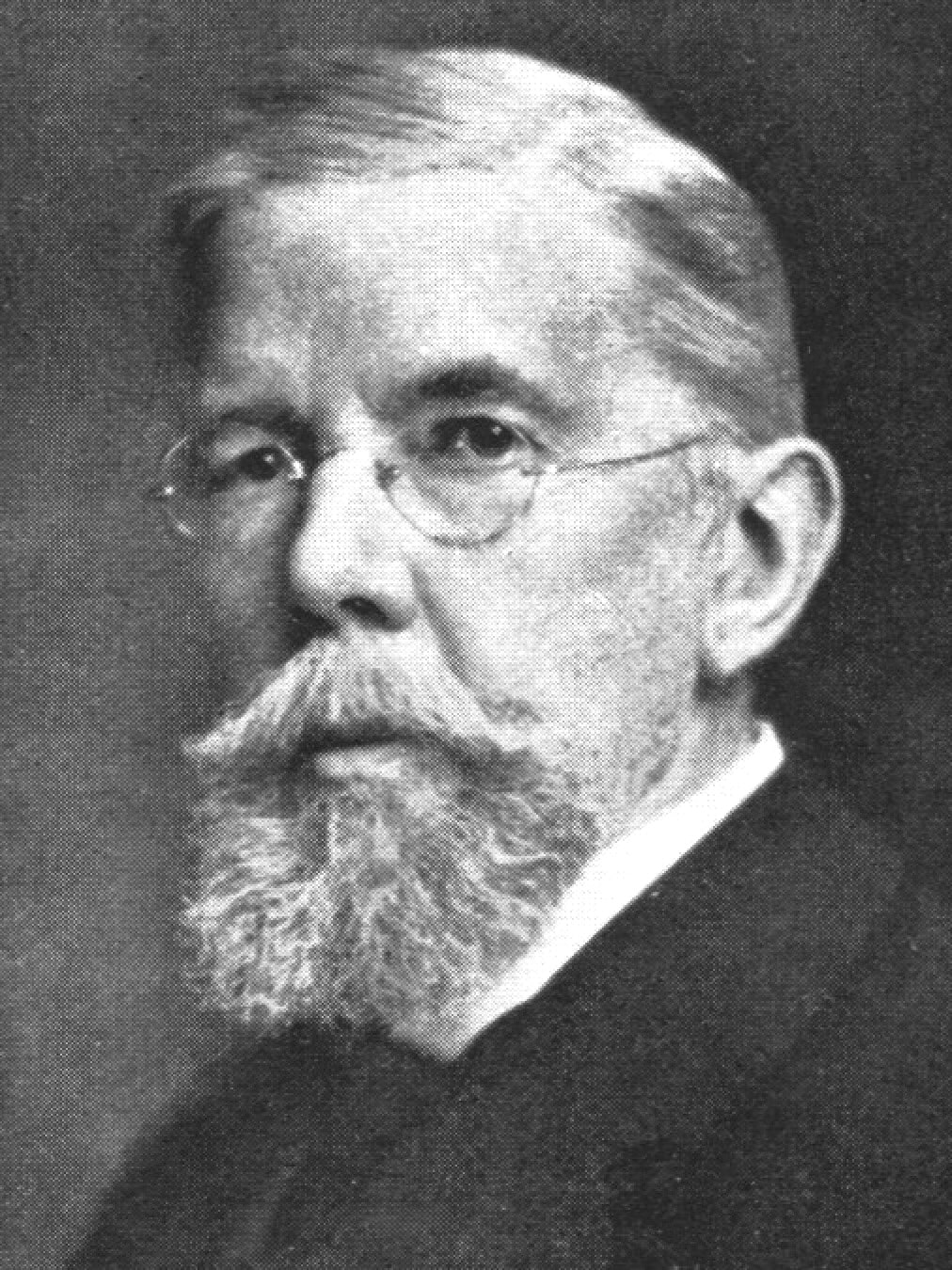
Emil Samuel Perman (1856–1946) was a Swedish surgeon specialising in abdominal surgery and orthopaedics.
Perman was an early Swedish advocate of operative treatment for appendicitis and gastric ulcer disease. His surgical interests also included gastroenterostomy, abdominal adhesions, incarcerated diaphragmatic hernia, childhood hernia and gastroptosis.
He is eponymously associated with the Perman sign of appendicitis, first described in 1904 as pain in the ileocaecal region elicited by pressure on the left side of the abdomen. The sign later became closely associated, and frequently conflated, with the Rovsing sign described by Niels Thorkild Rovsing in 1907.
Biographical timeline
- Born on June 6, 1856 in Östersund, Sweden, the son of Erik Emil Constantin Perman and Märta Maria Burman.
- 1876 – Commenced medical studies at Uppsala University.
- 1882 – Medicine candidate at Uppsala University.
- 1887 – Completed his medical licentiate.
- 1889 – Awarded his doctorate in medicine at Uppsala University.
- 1891–1896 – Docent in surgery at the Karolinska Institutet.
- 1892–1899 – Chief physician at the Kronprinsessan Lovisas vårdanstalt för sjuka barn (Crown Princess Lovisa’s Hospital for Sick Children), Stockholm.
- 1899–1916 – Chief physician of the surgical department at Sabbatsberg Hospital, Stockholm.
- Died on February 5, 1946, aged 89, at Lovö, Sweden. Buried at Norra begravningsplatsen, Stockholm, on February 21.
Medical Eponyms
Perman sign (1904)
Clinical sign associated with appendicitis in which pressure on the left side of the abdomen produces pain localised to the right iliac fossa or ileocaecal region.
1904 – Perman published Om indikationerna för operation vid appendicit samt redogörelse for å Sabbatsbergs sjukhus opererade fall [On the indications for operation in appendicitis and an account of cases operated upon at Sabbatsberg Hospital]. He reviewed 244 patients operated on for appendicitis at Sabbatsberg Hospital between 1899 and 1904 and discussed the clinical findings used to determine the need for early operation.
Within his discussion of findings suggesting significant pathological change in and around the appendix, Perman described:
Original
English
Ett symtom finnes, som är af stor betydelse och som jag alltid funnit visa rätt, dä det varit tydligt för handen, nämligen muskelspänningen öfver cekaltrakten och angrän sande del af buken vid beröring eller lätt tryck öfver den samma, hvars betydelse först påpekats af Dieulafoy (défense musculaire). Finnes detta symtom, kan man vara så godt som säker pâ, att det redan finnes höggradiga för ändringar i och kring appendix- gangrän eller perforation med börjande varig peritonit, fri eller begränsad. Därpå har jag äfven alltid funnit ett annat symtom tyda, nämligen en till ileooekaltrakten lokaliserad smärta vid tryck å- vänstra delen af buken.
A symptom exists which is of great importance and which I always found to hold true if it was evident to the hand, namely muscle tension across the cecal region and adjacent portion of the abdomen when touch or light pressure was applied, the significance of which was first pointed out by Dieulafoy (défense musculaire). If this symptom is found, you can be almost certain there is already a high level of change in and around the appendix – gangrene or perforation with developing permanent peritonitis, free or limited. I have also always found another symptom to indicate this, namely pain localised to the ileocaecal region on pressure upon the left part of the abdomen
Perman also provided a clinical example. Case 154 concerned a 25-year-old man with acute right-sided abdominal pain. On examination there was tenderness in the right iliac fossa, which was also elicited by pressure on the left side “Vid undersökning ömmade han nu i h. fossa iliac. äfven vid tryck å vänster sida...”
Operation the following day revealed abundant seropurulent fluid and an appendix with a small perforation at its tip.
Perman’s description was simply of pressure on the left abdomen producing pain localised to the ileocaecal region. He did not describe a particular direction of pressure or propose a mechanism for the phenomenon.
1907 – Niels Thorkild Rovsing (1862–1927) described a more specific manoeuvre involving pressure over the left colon directed proximally, intended to distend the caecum and appendix. The simpler phenomenon described by Perman has subsequently become widely conflated with, and commonly referred to as, Rovsing sign. The terms Perman sign and Perman–Rovsing sign are also encountered.
Key medical contributions
Perman specialised in abdominal surgery and orthopaedics and was an early advocate of operative treatment of appendicitis and gastric ulcer disease. He was also an early pioneer of gastroenterostomy in Sweden.
His publications addressed appendicitis and its surgical treatment, gastroenterostomy, abdominal adhesions, incarcerated diaphragmatic hernia, hernia in children and gastroptosis.
Major Publications
- Perman ES. Om indikationerna för operation vid appendicit samt redogörelse for å Sabbatsbergs sjukhus opererade fall [About the indications for surgery in appendicitis and an account of cases at Sabbatsberg Hospital]. Hygiea 1904; 66(2): 797-847 [Perman sign]
- Perman ES. Leber die Angiotripsie in der allgemeinen operativen Chirurgie. Nordisk Medicin, 1904
- Perman ES. Uber die Bedeutung des indirekten Druckschmerzes bei Appendizitis. Zentralblatt für Chirurgie. 1911; 38(2): 1593-1596
References
Biography
- Personal communication – Bengt Perman
- Allmaenna Svenska Laekartidningen. 1904: 620
Eponymous term
- Sundberg H. Salpingitis purulenta som komplikation till graviditet. Hygiea 1917; 79(2): 1178-1194
- Index-catalogue of the Library of the Surgeon-General’s Office, United States Army. Series III, Volume I. 1918: 537 and 676
- Wallerström C. Om diagnosen av den akuta appendiciten, särskilt med hänsyn till det s k Rovsings symtom. Svenska läkartidningen. 1931; 28: 1385-98.
- Räf L. Skandinaviska kirurger först med beskrivning av tecken pâ appendicit. [The men behind the syndrome: Emil Perman and Nils Thorkild Rovsing. Scandinavian surgeons were the first to describe signs of appendicitis] Läkartidningen 1984; 81(32-33): 2829-30
- Ráf L. Appendicit ett hett ämne från det första till det hundrade året. Läkartidningen 2004; 101(6): 454-455
- Cadogan M. Appendicitis eponymous signs. LITFL
Eponym
the person behind the name

David Yu, M.D., Ph.D. Full time anesthesiologist in the department of Perioperative medicine and Intensive Care (PMI), Karolinska University Hospital, Sweden. Dual board certified in internal medicine, and anesthesiology and critical care. Clinical interests are the critically ill patient, hemodynamic cases, perioperative echocardiography and procedural awareness, and of course all things ECG! | Squiggler |

BA MA (Oxon) MBChB (Edin) FACEM FFSEM. Emergency physician, Sir Charles Gairdner Hospital. Passion for rugby, medical history, medical education, and asynchronous learning #FOAMed evangelist. Editor-in-Chief and Webmaster of Life in the Fast lane, LITFL | On Call 4e| Eponyms | Books | Horology |