


Erich Seidel
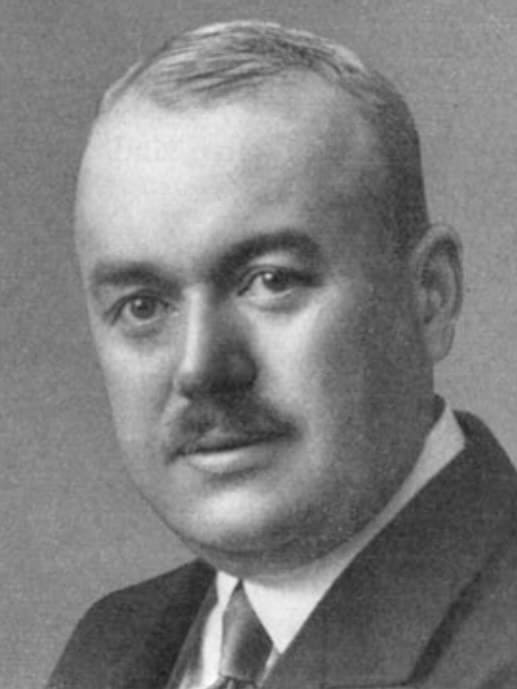
Erich Seidel (1882-1946) was a German ophthalmologist.
Across the early 1920s Seidel published a series of experimental and clinical studies on “intraokulare Saftströmung” (aqueous secretion and outflow). He explored how aqueous dynamics could be modified pharmacologically (notably by miotics and mydriatics) and used manometric testing to support the idea of a physiological pressure gradient driving outflow through the conventional pathways.
Seidel specialised in glaucoma, anaesthesia of the eye for operative surgery and field of view.. He described the Seidel test and demonstrated that a drop of 2% fluorescein could instantly reveal a previously invisible aqueous leak in the setting of post–Elliot trephination. His Seidel scotoma (Seidel sign) highlighted early, subtle Bjerrum-area field defects as an early warning sign of glaucoma.
Biography
- Born on December 30, 1882 in Apolda, Thüringen
- Schooling – Attended the Realgymnasium in Weimar.
- 1902 – Began medical studies in Berlin (Military Medical Academy), then continued in Erlangen, Strasbourg, Leipzig, and Jena.
- 1907 – Awarded MD at Jena; dissertation: “Über die Lidbildung mittels übertragener stielloser Hautlappen” (eyelid formation using transferred pedicle-free skin flaps).
- 1907–1910 – Worked in several hospitals; specialised in ophthalmology.
- 1910 – Training at the University Eye Clinic, Jena
- 1914 – Habilitation at Heidelberg; inaugural lecture: “Über die Probleme der Augengläser und ihre Lösung durch die moderne Brillenoptik” (spectacle lenses/optics).
- 1916 – Appointed Oberarzt at Heidelberg.
- 1919 – Appointed außerordentlicher Professor (associate/extraordinary professor).
- 1920–1924 – Published a concentrated series of 24 papers on intraocular fluid flow (“intraokulare Saftströmung”), largely based on animal experimentation, clarifying aqueous dynamics and outflow pathways.
- 1921 – Introduced the fluorescein test to demonstrate fistulising Elliot trephination scars (now the Seidel test / Seidel-Fistelprobe). Schmidt reproduces Seidel’s description of fluorescein revealing a pale fluid “stream” from the trephination site, and notes pharmacologic modulation with eserine/atropine.
- 1925 – Awarded the von Graefe Prize by the German Ophthalmological Society for his clarifying experimental findings.
- 1932–1946 – Ordinarius of Ophthalmology in Jena
- Died February 26, 1946
Medical Eponyms
Seidel Test (1920)
The Seidel test is a slit-lamp method for detecting aqueous humour leakage from a full-thickness corneal or scleral defect (post-operative wound leak, filtering bleb leak, corneal perforation, open globe injury). Fluorescein is applied to the ocular surface and examined under cobalt blue light. A positive test is the classic “washout/streaming” sign as clear aqueous dilutes and clears the dye, indicating an active leak and prompting urgent ophthalmic management.
Seidel’s test emerged from his Heidelberg programme studying aqueous formation and outflow and its pharmacologic modulation.
1920 – In III. Mitteilung he described an apparently quiet post-Elliot trephination eye with normal pressure. The application of topical 2% fluorescein revealed an otherwise invisible aqueous stream at the trephination site by diluting/“washing away” the dye, turning a minute leak into a visible clinical sign.
Original
English
Tropfte man … eine 2proz. Fluoresceinlösung, … die Form eines etwa 2 mm breiten Streifens, der sich senkrecht nach unten bis zur Übergangsfalte bewegte. Ein Kammerwasserstrom … wurde dadurch sichtbar, daß er die 2 proz. Fluoresceinlösung verdünnte bzw. größtenteils wegspülte. Seidel 1920
When a 2% fluorescein solution was dripped, it formed a strip approximately 2 mm wide, moving vertically downwards to the transitional fold. A flow of aqueous humor became visible as it diluted or largely washed away the 2% fluorescein solution. Seidel 1920
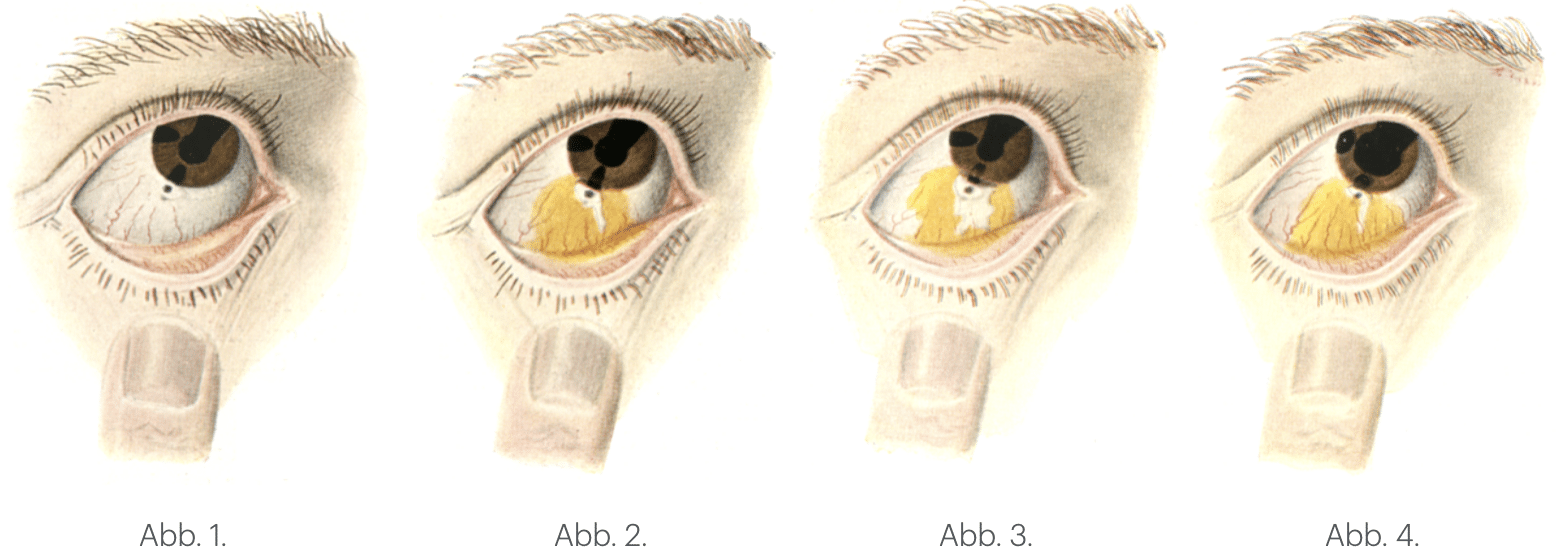
Abb. 1: “Before fluorescein (no visible leak)”
Abb. 2: “Fluorescein applied at trephination site”
Abb. 3: “Positive Seidel: aqueous ‘washout’ begins”
Abb. 4: “Streaming track to inferior fornix (classic sign)”
1921 – In VI. Mitteilung he formalised this as a practical “Fistelprobe” to confirm whether a trephination scar was truly filtering (a functioning communication between the anterior chamber and subconjunctival space). The same optical phenomenon was later generalised beyond glaucoma surgery to the modern Seidel test and is used for corneal perforation, post-operative wound leaks, and suspected open globe injury.
Seidel Scotoma (Seidel sign) (1914)
Arcuate or sickle-shaped scotoma that is a superior or inferior extension of the blind spot. Associated with glaucoma.
1914 – Seidel published a clinical study on the early diagnosis of glaucoma, applying Bjerrum-style central field testing with small targets. He highlighted that patients could have normal acuity, normal peripheral fields, and even apparently normal pressure, yet still show small paracentral scotomas adjacent to the blind spot, often superior or inferior to it. In some cases he described a characteristic sickle-shaped (“Sichelskotom”) configuration, effectively an extension of the blind spot into an arcuate defect—an early glaucomatous pattern that later carried his name.
Major Publications
- Seidel E. Beiträge zur Frühdiagnose des Glaukoms. Untersuchungen über das zentrale Gesichtsfeld mit Prüfungsobjekten unter kleinem Gesichtswinkel (Bjerrum). Albrecht von Graefes Archiv für Ophthalmologie. 1914; 88(1): 102-157
- Seidel E. Über die physiologischen Sekretionsvorgänge im Auge, Bericht über die Zusammenkunft der Deutschen Ophthalmologischen Gesellschaft. 1920; 42: 50–55
- Seidel E. Weitere experimentelle Untersuchungen über die Quelle und den Verlauf der intraokularen Saftströmung. III. Mitteilung. Über den Vorgang der physiologischen Kammerwasserabsonderung und seine pharmakologische Beeinflussung. Albrecht von Graefes Archiv für Ophthalmologie 1920; 102: 366–382
- Seidel E. Weitere experimentelle Untersuchungen über die Quelle und den Verlauf der intraokularen Saftströmung. VI. Mitteilung. Die Filtrationsfähigkeit, eine wesentliche Eigenschaft der Scleralnarben nach erfolgreicher Elliotscher Trepanation. Albrecht von Graefes Archiv für Ophthalmologie 1921; 104: 158–161 [Seidel Test]
- Seidel E. Weitere experimentelle Utersuchungen uber die Quelle und den Verlauf der intraokularen Safstromung: XII. Ueber den manometrischen Nachweis des physiologischen Druckgefalles zwischen Voderkammer und Schlemmschem Kanal. Albrecht von Graefes Archiv für Ophthalmologie . 1921; 107: 101-104.
References
Biography
- Serr H. In Memoriam Erich Seidel. Klinische Monatsblätter für Augenheilkunde und für augenärztliche Fortbildung 1956; 128(1): 93-94
Eponymous terms
- Harrington DO. The Bjerrum Scotoma. Transactions of the American Ophthalmological Society. 1964; 62: 324–348.
- Töpel S, Tost F. Augenheilkunde im Nationalsozialismus – Das Greifswalder Berufungsverfahren 1938. Klin Monbl Augenheilkd 2013; 230(11): 1146-1153
- FSchmidt D. Forschungsgeschichte der Kammerwasserphysiologie: Der Beitrag Erich Seidels zum Verständnis der Glaukomentwicklung. 2018
- Campbell TD, Gnugnoli DM. Seidel Test. 2022 Nov 5. In: StatPearls
Eponym
the person behind the name

BVisSci, MD, University of Notre Dame, Fremantle. Doctor, baker, avid traveller, aspiring ophthalmologist

BA MA (Oxon) MBChB (Edin) FACEM FFSEM. Emergency physician, Sir Charles Gairdner Hospital. Passion for rugby, medical history, medical education, and asynchronous learning #FOAMed evangelist. Co-founder and CTO of Life in the Fast lane | On Call: Principles and Protocols 4e| Eponyms | Books | Horology