


Robert F. Hustead
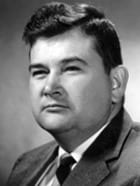
Robert Frank Hustead (1928-2008) was an American anesthesiologist.
Hustead’s career covered neuraxial, obstetric, and ophthalmic anaesthesia. He focused on safety, reproducibility, and ergonomics rather than technical innovation.
Hustead is best known in neuraxial anaesthesia for the Hustead epidural needle, a refinement of the curved, non-coring Huber–Tuohy needle design. The Hustead needle provided improved tactile feedback, and safer catheter handling in obstetric practice and gained wide acceptance.
Hustead was a major force in the professionalisation of obstetric anaesthesia, serving as a founding president of the Society for Obstetric Anesthesia and Perinatology (SOAP). He then played a similarly formative role in ophthalmic anaesthesia, co-founding the Ophthalmic Anesthesia Society.
Biographical Timeline
- Born February 18, 1928 Pueblo County, Colorado, USA
- 1950 – Graduated Bachelor’s degree from Yale University.
- 1952 – As a Yale medical student, began an externship providing night obstetric anaesthesia coverage, assuming responsibility for the obstetric anaesthesia.
- 1954 – Graduated MD from Yale University School of Medicine.
- 1954–1957 – Anaesthesia residency training, initially at Yale and subsequently in Hartford, Connecticut.
- 1957–1959 – Served as a Captain in the US Army Medical Corps, assigned to the Army Chemical Biological Center, Edgewood, Maryland. Top Secret clearance; conducted research on chemical warfare casualties. Collaborated with Peter Gruenwald on neonatal lung mechanics, contributing to early understanding of pulmonary surfactant deficiency in hyaline membrane disease.
- 1959 – Appointed Instructor in Anesthesiology at Johns Hopkins University School of Medicine; held joint appointments in Anesthesiology and Obstetrics & Gynecology. Close professional association with Virginia Apgar (1909–1974).
- 1961 – Appointed Assistant Professor, University of Kansas School of Medicine, Kansas City.
- 1963 – Left academic practice to join private practice in Kansas City
- 1967 – Returned to the University of Kansas School of Medicine following improvements in departmental support for obstetric anaesthesia.
- 1969 – Organised and chaired the first national meeting on obstetric anaesthesia (Kansas City, September 19–21). Founding President of the Society for Obstetric Anesthesia and Perinatology (SOAP).
- 1973 – Relocated to Wichita, Kansas, with his wife Joy Hustead (CRNA), establishing a private practice dedicated initially to obstetric anaesthesia.
- 1977 – Transitioned practice focus to ophthalmic anaesthesia, responding to changing clinical and economic conditions.
- 1978 – Survived a serious private aircraft crash, requiring prolonged intensive care and rehabilitation; subsequently returned to full clinical practice.
- 1986 – Co-founded the Ophthalmic Anesthesia Society (OAS)
- 1999 – Retired from active clinical practice.
- Died December 6, 2008 Baltimore, Maryland, from complications of pneumonia, aged 80.
Key contributions to neuraxial blockade
Hustead epidural needle
Hustead made his principal contribution to neuraxial anaesthesia through the development and refinement of a directional epidural needle optimised for obstetric practice.
During his training in anaesthesia in the early 1950s, Hustead provided extensive overnight obstetric anaesthesia coverage, performing large numbers of epidural blocks under variable conditions. This experience exposed limitations of existing curved-tip epidural needles, particularly the aggressiveness of the bevel, reduced tactile feedback during loss-of-resistance, and the risk of catheter damage during withdrawal.
According to Hustead’s later recollection, he initially modified existing Tuohy–Huber needles by hand, using a stone and needle sharpener to alter the tip geometry. He described blunting the sharp secondary bevel, shortening the effective bevel length, and smoothing the heel of the needle, with the aim of improving control and reducing the likelihood of cutting or trapping the epidural catheter.
Hustead did not initially patent the design, and for many years the needle existed only as a hand-modified instrument. It was not until 1965 that a commercial manufacturer (Sherwood Medical) agreed to produce a needle to his specifications and the Hustead needle entered wider clinical use.
The resulting Hustead needle is characterised by:
- A curved, directional tip allowing controlled catheter exit
- A short, less aggressive bevel compared with early Tuohy needles
- Improved hub alignment and balance, facilitating fine motor control
- Optimisation for loss-of-resistance to air or saline

Although never formally patented or published, the Hustead needle entered widespread use in North American obstetric anaesthesia through training programmes and commercial manufacture. It became a standard alternative to the Tuohy needle, particularly among clinicians who valued enhanced tactile control.
Obstetric anaesthesia & SOAP
In the 1960s, labour analgesia was often inconsistently delivered and frequently marginalised within anaesthetic practice. Hustead advocated for obstetric anaesthesia as a distinct clinical discipline, requiring dedicated expertise, training, and organisational representation.
He recognised the lack of a formal professional forum for obstetric anaesthetists, and organised the first national meeting devoted entirely to obstetric anaesthesia in Kansas City in 1969. This led to the formation of the Society for Obstetric Anesthesia and Perinatology (SOAP), with Hustead serving as its founding president. SOAP provided a long-missing institutional framework for research, education, and advocacy in obstetric anaesthesia and perinatology, and it became the principal professional body representing the subspecialty.
Ophthalmic anaesthesia
Hustead was a formative figure in the development of ophthalmic anaesthesia as a recognised subspecialty. In the 1970s and 1980s, as ophthalmic surgery expanded rapidly with the advent of microsurgical techniques, Hustead identified a growing mismatch between the complexity of eye surgery and the variable quality of anaesthetic care being provided. He advocated for anaesthetists with specific expertise in ocular physiology, regional techniques, and patient immobility, rather than ad hoc general anaesthesia.
After relocating to Kansas, Hustead shifted his practice from obstetric to ophthalmic anaesthesia. He developed a practice model centred on refinement of regional ocular blocks, and careful attention to haemodynamic stability, airway management, and patient cooperation, particularly in elderly and medically complex patients.
Hustead co-founded the Ophthalmic Anesthesia Society (OAS) in the mid-1980s. The Society provided a platform for education, standards development, and shared clinical experience in a rapidly evolving field. Hustead consolidated the subspecialty through co-authorship of the textbook Ophthalmic Anesthesia (1993), which became a standard reference text.
Major Publications
- Hustead RF, Avery ME. Observations on mask pressure achieved with the Kreiselman infant resuscitator. N Engl J Med. 1961 Nov 9;265:939-41.
- Hustead RF. Physiology of the newborn. Anesth Analg. 1963 Nov-Dec;42:665-74.
- Hustead RF. Nitrous oxide in obstetrics. Clin Anesth. 1964;3:97-114.
- Brown ES, Hustead RF. Resistance of pediatric breathing systems. Anesth Analg. 1969 Sep-Oct;48(5):842-7.
- Hervey WH, Hustead RF. Ketamine for dilatation and currettage procedures: patient acceptance. Anesth Analg. 1972 Jul-Aug;51(4):647-55.
- Morris JA, Hustead RF, Robinson RG, Haswell GL. Measurement of fetoplacental blood volume in the human previable fetus. Am J Obstet Gynecol. 1974 Apr 1;118(7):927-34.
- Gills JP, Hustead RF, Sanders DR. Ophthalmic anesthesia. 1993
- Hustead RF, Hamilton RC, Loken RG. Periocular local anesthesia: medial orbital as an alternative to superior nasal injection. J Cataract Refract Surg. 1994 Mar;20(2):197-201.
- Farley JS, Hustead RF, Becker KE Jr. Diluting lidocaine and mepivacaine in balanced salt solution reduces the pain of intradermal injection. Reg Anesth. 1994 Jan-Feb;19(1):48-51.
References
Biography
- Robert F. Hustead, M.D. SOAP, 2008
- Robert Frank Hustead. Ophthalmic Anesthesia Sociaety
Eponymous terms
- Frölich MA, Caton D. Pioneers in epidural needle design. Anesth Analg. 2001 Jul;93(1):215-20.
- Fanning GL. Robert F. Hustead Memorial Lecture. Ophthalmic Anesthesia Society
Eponym
the person behind the name

MBBS Newcastle University, UK. Currently working at Sir Charles Gairdner Hospital, Perth. Aspiring anaesthetist

BA MA (Oxon) MBChB (Edin) FACEM FFSEM. Emergency physician, Sir Charles Gairdner Hospital. Passion for rugby, medical history, medical education, and asynchronous learning #FOAMed evangelist. Editor-in-Chief and Webmaster of Life in the Fast lane, LITFL | On Call 4e| Eponyms | Books | Horology |