
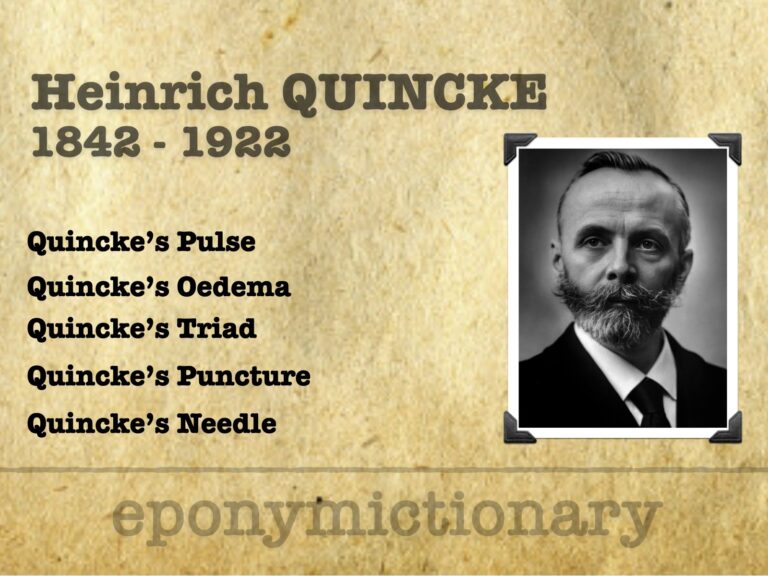
Heinrich Quincke
German physician Heinrich Quincke (1842–1922) pioneered lumbar puncture and described Quincke’s pulse, oedema, triad, and more thus shaping modern clinical medicine

German physician Heinrich Quincke (1842–1922) pioneered lumbar puncture and described Quincke’s pulse, oedema, triad, and more thus shaping modern clinical medicine
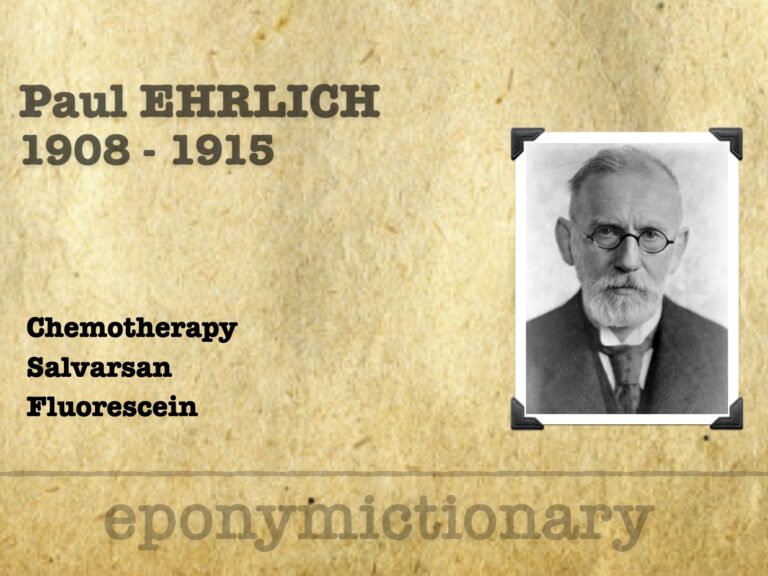
Paul Ehrlich (1854–1915), German physician. Pioneer of chemotherapy; fluorescein eye studies, immunology, and Salvarsan for syphilis.
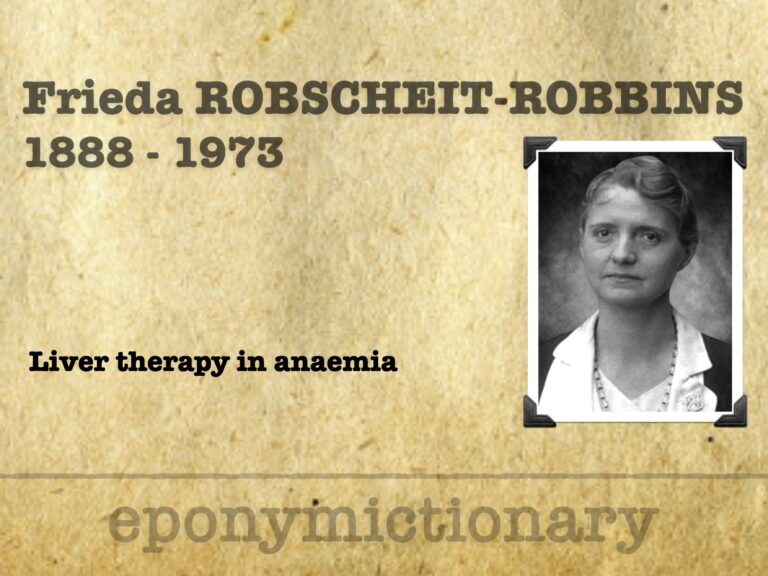
Frieda Robscheit-Robbins (1888–1973), pioneering pathologist who advanced aneamia research, yet was overlooked for the 1934 Nobel despite major contributions.
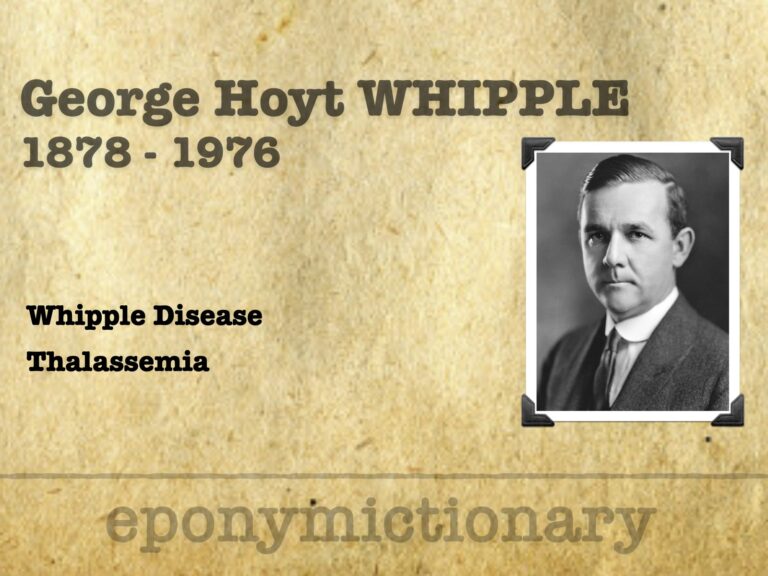
George Hoyt Whipple (1878–1976), Nobel winner, advanced anaemia therapy, coined thalassaemia, and described Whipple disease in 1907.
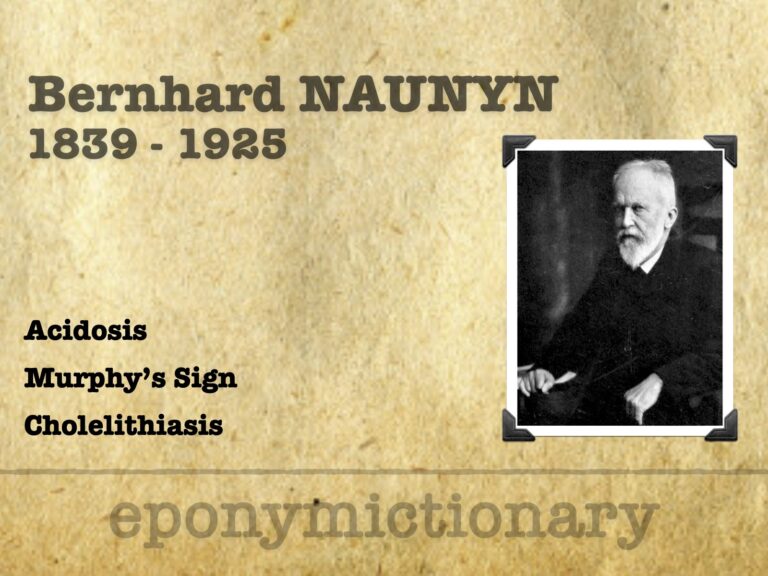
German physician Bernhard Naunyn (1839–1925), pioneer of experimental medicine, defined acidosis, advanced diabetes and gallstone research, and co-founded Naunyn–Schmiedeberg’s Archives
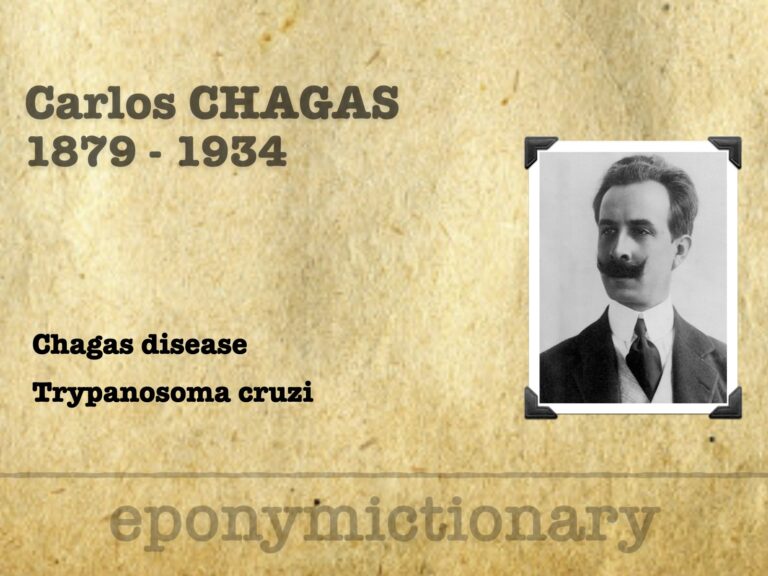
Carlos Chagas (1879–1934), Brazilian physician–scientist who identified Trypanosoma cruzi and described Chagas disease (1908–1909).
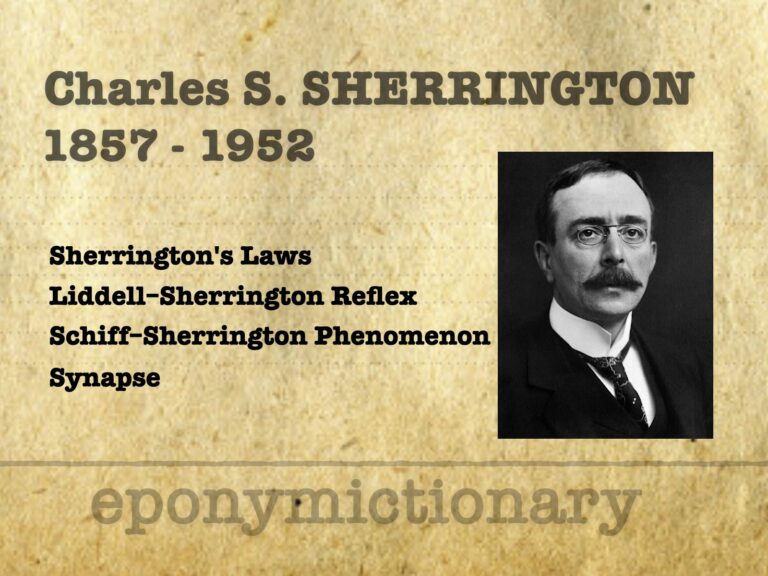
Sir Charles Scott Sherrington (1857-1952) was an English neurophysiologist. Sherrington’s Laws (1897–1900); Liddell–Sherrington Reflex (1924) and defining the synapse

André Frédéric Cournand (1895 – 1988) was a French physician and physiologist. Awarded the Nobel Prize for detailing heart catheterization
Karl Landsteiner (1868-1943) revolutionized medicine with the discovery of blood groups and the Rh factor, laying the foundation for modern transfusion and immunology.
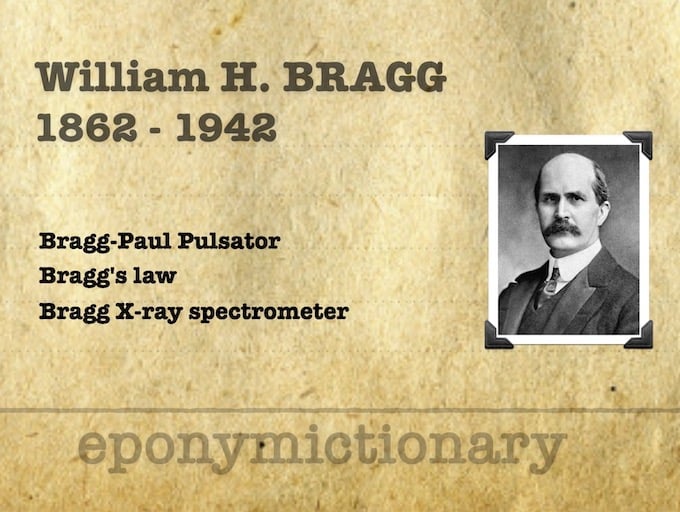
Sir William Henry Bragg (1862–1942) was an English physicist, mathematician, and chemist. Bragg's Law, Bragg Spectrometer and Bragg-Paul Pulsator
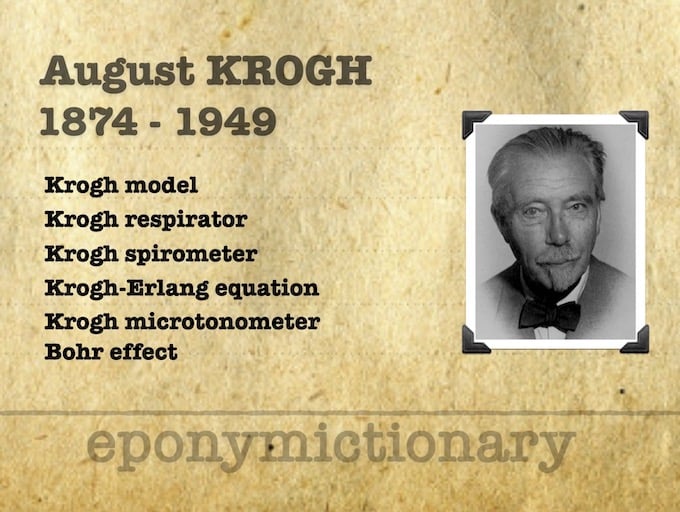
August Schack Steenberg Krogh (1874-1949) was a Danish physiologist and Nobel laureate who developed multiple apparatus that bear his name

Willem Einthoven (1860 – 1927) was a Dutch physician and physiologist. Invented the first practical electrocardiogram (ECG) in 1903