


Thyroid Storm
OVERVIEW
- life threatening exacerbation of hyperthyroid state with 1 or more organ dysfunction
- clinical diagnosis, very elevated thyroid markers not enough
ETIOLOGY
Hyperthyroidism due to:
- Graves Disease – most common
- Toxic Nodule or Toxic Multinodular Goitre
- Thyroiditis (infective or auto-immune)
Triggers for thyroid storm:
- Surgery (thyroid and non-thyroid) –> can occur 6 – 24 hours post op
- Discontinuation of anti-thyroid medication
- Trauma
- Burns
- Hyperemesis Gravidarum
- Parturition
- Acute illness
- Infective
- Non-infective: DKA, MI, CVA, TBI
- Iodine Use (iodinated contrast or radioiodine therapy)
- Medication Reactions (amiodarone, anaesthetics, salicylates)
CLINICAL FEATURES
General
- Fever
- Diaphoresis
Cardiovascular
- Tachycardia (sinus tachycardia is most common)/Tachyarrhythmia (AF with RVR most common tachyarrhythmia)
- Signs of cardiac failure (peripheral/pulmonary oedema)
Neurological
- CNS dysfunction of varying severity (agitation –> psychosis –> seizure –> coma)
Gastrointestinal
- diarrhoea/nausea/vomiting
- unexplained jaundice
DIAGNOSTIC SCORES
- Quantitative diagnostic scoring systems are used as adjunct to clinical assessment
- e.g elderly patients may present with “apathetic” thyroitoxicosis with atypical symptoms
- May help differentiate uncomplicated thyrotoxicosis from thyroid storm
Burch-Wartofsky Point Scale (introduced in 1993)
- Use in adults with biochemical thyrotoxicosis
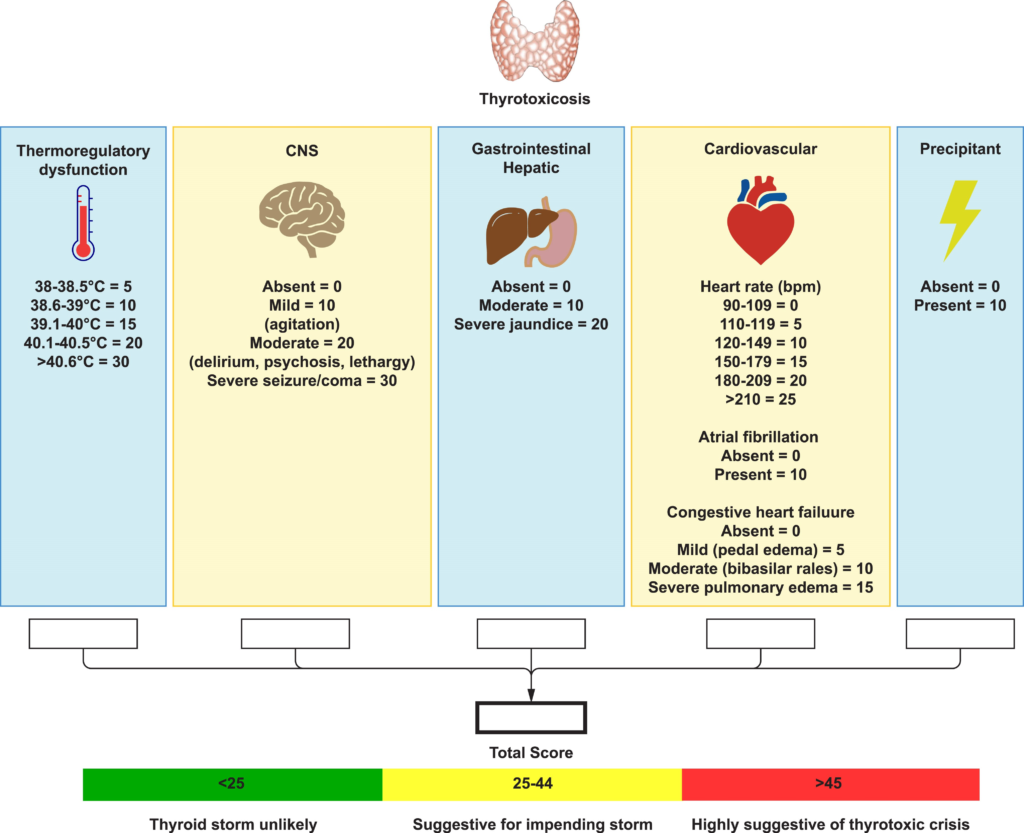
Figure 1. Reproduced from Kopp PA, Giordani I, Feldt-Rasmussen U, Forget-Renaud A. Approach to the patient with thyroid storm. J Clin Endocrinol Metab. 2026;111(5):1484–1494. doi:10.1210/clinem/dgag054. Licensed under CC BY 4.0.
Japanese Thyroid Association (JTA)/Japanese Endocrine Society (JES) Score
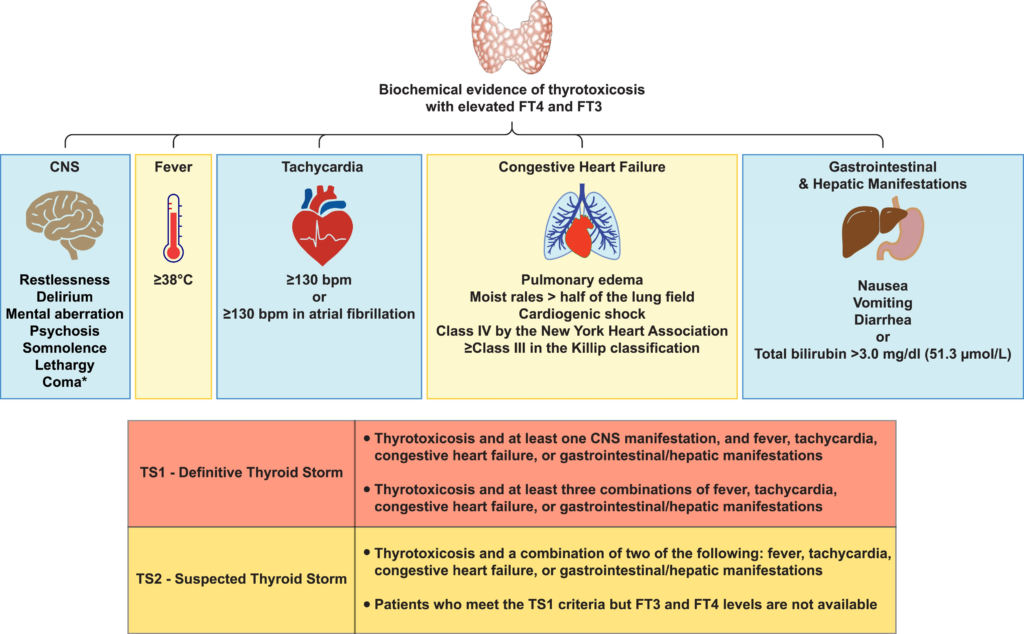
Figure 2. Reproduced from Kopp PA, Giordani I, Feldt-Rasmussen U, Forget-Renaud A. Approach to the patient with thyroid storm. J Clin Endocrinol Metab. 2026;111(5):1484–1494. doi:10.1210/clinem/dgag054. Licensed under CC BY 4.0.
MANAGEMENT
Supportive
- Disposition: ICU/HDU
- Temperature Management
- Passive +/- active cooling measures
- Antipyretic therapy: Paracetamol
- NSAIDs and Aspirin contraindicated –> displace thyroid hormones from binding proteins and increase free thyroid hormone levels
- Fluid Management
- IV fluids to replace losses from diaphoresis/GI losses
- Electrolyte Management
- Hyponatremia/Hypomagnesemia/Hypo- or Hyperkalemia
- Will need regular monitoring and intravenous replacement
- Hyponatremia/Hypomagnesemia/Hypo- or Hyperkalemia
- Blood Glucose Management
- Close monitoring due to risk of hypoglycemia
- Addition of IV dextrose
Treatment of Underlying Precipitant
Specific
- β-Blockade: Reduce peripheral sympathetic symptoms/manifestations
- Propranolol
- PO 60 – 80 mg PO q4hrly (can be upto 120 mg q4hrly)
- IV 0.5 – 1 mg over 10 minutes, followed by 1 – 3 mg over 10 minutes (for more rapid control)
- Esmolol
- Loading dose: 250 – 500 mcg/kg in 1 min IV
- Maintenance infusion: 50 – 200 mcg/kg/min IV
- Propranolol
- Anti-thyroid Agents: Reduce thyroid hormone production and secretion
- Propylthiouracil (PTU): (inhibits thyroid hormone synthesis by blocking thyroid peroxidase and also blocks peripheral conversion of T4 to T3)
- Loading dose: 500 – 1000 mg (Routes: PO/NG or PR)
- Daily: 800 – 1200 mg in divided doses (200 – 300 mg q4 – 6hrly)
- Adverse Effects: Hepatotoxicity/allergic hepatitis, ANCA-associated vasculitis, agranulocytosis
- Carbimazole: (pro-drug converted to methimazole post absorption which blocks thyroid peroxidase)
- Dose: 20 mg q 6 – 8 hrly (Route: PO/NG)
- Adverse Effects: Category D –> contraindicated in 1st trimester of pregnancy due to risk of congenital abnormalities
- Propylthiouracil (PTU): (inhibits thyroid hormone synthesis by blocking thyroid peroxidase and also blocks peripheral conversion of T4 to T3)
- Iodine: (Two-fold mechanism: 1. Wolff-Chaikoff Effect: autoregulatory response to an excess of iodine – resulting in acute inhibition of thyroid hormone synthesis by inhibiting both the oxidation of iodine and subsequent combination with tyrosine. 2. Plummer Effect: inhibition of thyroid hormone release in response to excess iodine.)
- 5% Lugol’s Iodine Solution (Iodine 5% + Potassium Iodide 10% in water)
- Dose: 0.5 mL (10 drops) q 6 – 8 hrly (each drop delivers ~ 6.25 mg iodine)
- Administer at least 1 hour after giving antithyroid drugs – risk of increased substrate for thyroid hormone production if given before thionamides.
- 5% Lugol’s Iodine Solution (Iodine 5% + Potassium Iodide 10% in water)
- Steroids (Reduce peripheral conversion of T4 to T3 + supplement for relative adrenal insufficiency)
- Hydrocortisone (Preferred in thyroid storm due to both glucocorticoid + mineralocorticoid effect)
- Loading dose: 300 mg IV
- Dose: 100 mg IV q 8hrly
- Dexamethasone (higher glucocorticoid potency, no mineralocorticoid effect)
- Dose 4 – 8 mg BD (Route: PO or IV)
- Hydrocortisone (Preferred in thyroid storm due to both glucocorticoid + mineralocorticoid effect)
- Bile Acid Sequesterants
- Cholestyramine (increased elimination of T4 by preventing reabsorption after biliary excretion)
- Dose: 4 g q 8hrly PO
- Cholestyramine (increased elimination of T4 by preventing reabsorption after biliary excretion)
Adjunct
- Plasmapheresis (remove circulating thyroid hormones/cytokines)
- Rescue for severe or refractory thyroid storm
- Consider if no improvement with maximal medical therapy within 24 – 48 hours or if significant adverse effects from thionamides
- Anticoagulation
- For patients with persistent AF depending on CHADS2VA score
References and Links
Journal articles
- Bello G, Ceaichisciuc I, Silva S, Antonelli M. The role of thyroid dysfunction in the critically ill: a review of the literature. Minerva Anestesiol. 2010 Nov;76(11):919-28. PMID: 20935602.
- Carroll R, Matfin G. Endocrine and metabolic emergencies: thyroid storm. Ther Adv Endocrinol Metab. 2010 Jun;1(3):139-45. PMC3475282.
- Kopp PA, Giordani I, Feldt-Rasmussen U, Forget-Renaud A. Approach to the patient with thyroid storm. J Clin Endocrinol Metab. 2026 May;111(5):1484-1494. PMID: 41655224
- Muller C, Perrin P, Faller B, Richter S, Chantrel F. Role of plasma exchange in the thyroid storm. Ther Apher Dial. 2011 Dec;15(6):522-31. PMID: 22107688.
FOAM and web resources
- ALIEM — Diagnosing hyperthyroidism: Answers to 7 common questions (2013)
- ALIEM — Thyroid Storm: Treatment Strategies (2013)
Critical Care
Compendium

Chris is an Intensivist and ECMO specialist at The Alfred ICU, where he is Deputy Director (Education). He is a Clinical Adjunct Associate Professor at Monash University, the Lead for the Clinician Educator Incubator programme, and a CICM First Part Examiner. He is an internationally recognised Clinician Educator with a passion for helping clinicians learn and for improving the clinical performance of individuals and collectives. He was one of the founders of the FOAM movement (Free Open-Access Medical education) has been recognised for his contributions to education with awards from ANZICS, ANZAHPE, and ACEM.
His one great achievement is being the father of three amazing children.
On Bluesky, he is @precordialthump.bsky.social and on the site that Elon has screwed up, he is @precordialthump. | INTENSIVE | RAGE | Resuscitology | SMACC

ICU Transition Year Fellow at Albury Wodonga Health. Mum of a two-nager. Fashionphile.