
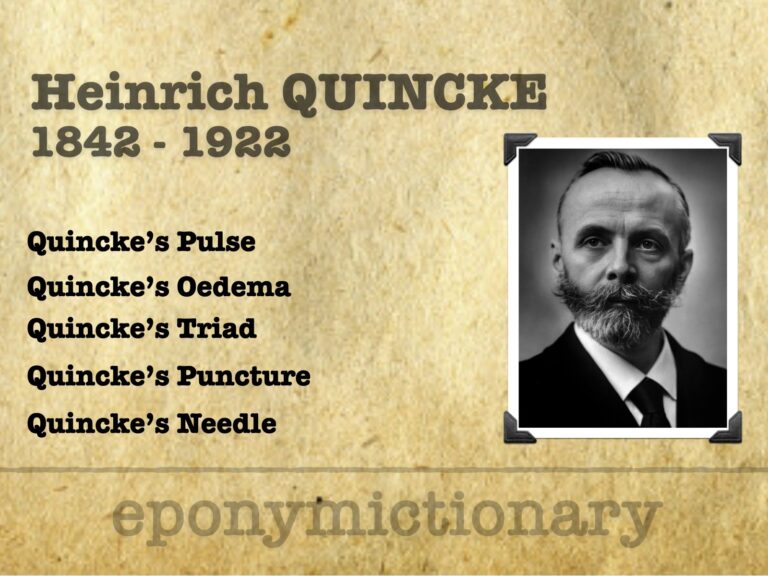
Heinrich Quincke
German physician Heinrich Quincke (1842–1922) pioneered lumbar puncture and described Quincke’s pulse, oedema, triad, and more thus shaping modern clinical medicine


German physician Heinrich Quincke (1842–1922) pioneered lumbar puncture and described Quincke’s pulse, oedema, triad, and more thus shaping modern clinical medicine
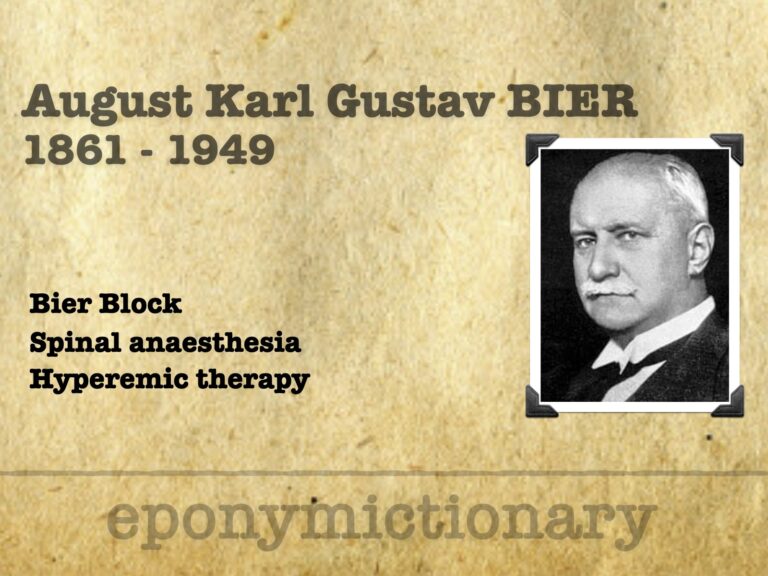
August Karl Gustav Bier (1861-1949) German Surgeon. Used Esmarch tourniquet forming the basis of his eponymous Bier block regional anaesthesia
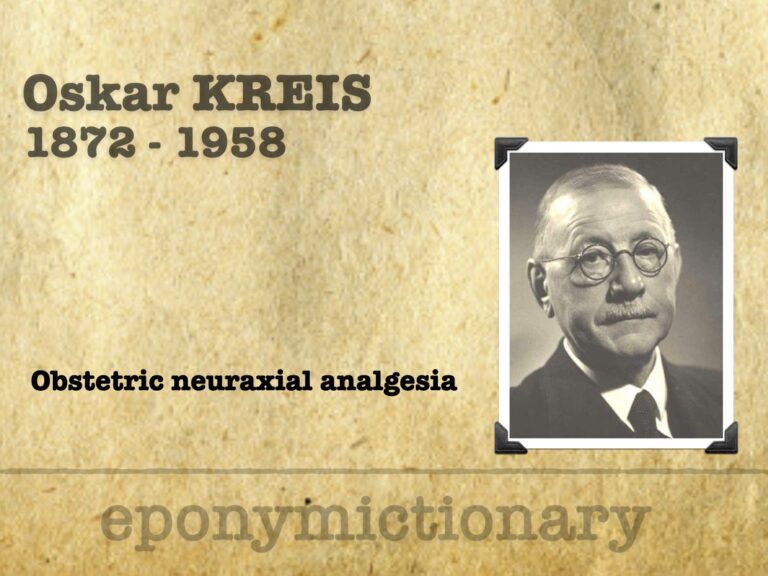
Oskar Kreis (1872–1958), Swiss obstetrician who pioneered obstetric spinal analgesia with intrathecal cocaine (1900), enabling forceps delivery and shaping neuraxial practice
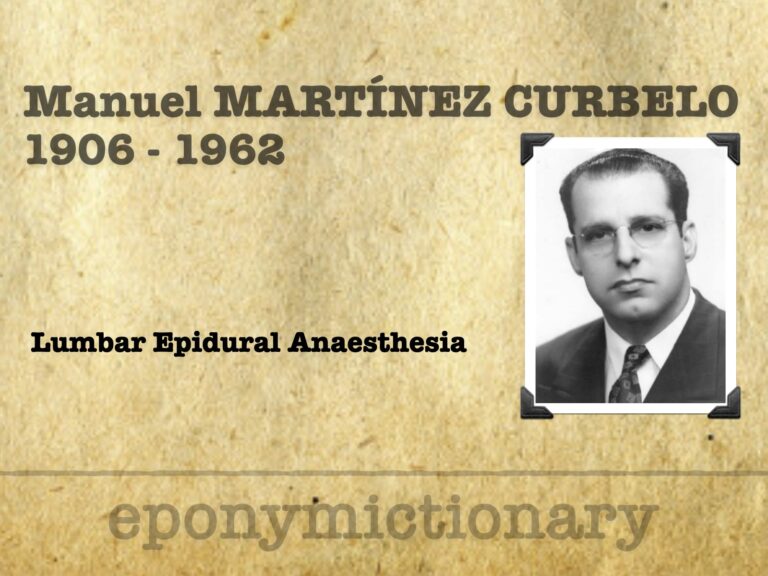
Pío Manuel Martínez Curbelo (1906–1962), Cuban anaesthesiologist who pioneered the first lumbar epidural catheter and published continuous epidural anaesthesia (1947–49).
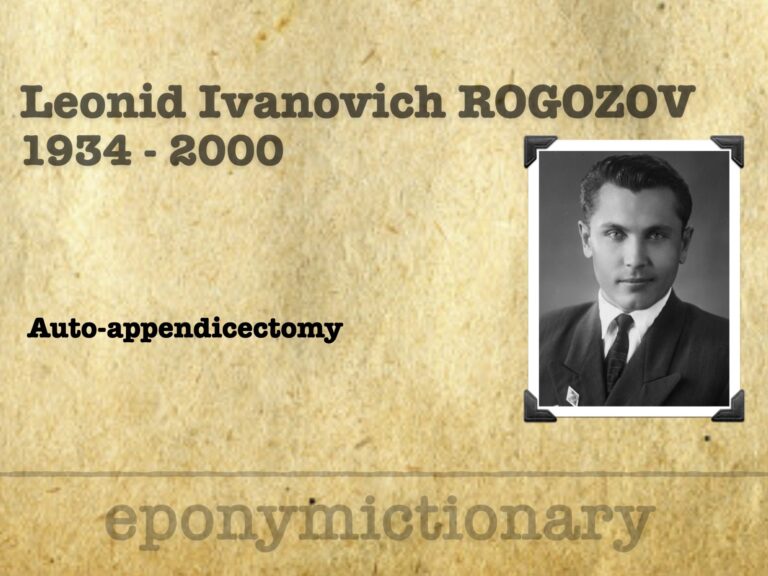
Leonid Rogozov (1934–2000): Soviet surgeon who performed a self-appendicectomy in Antarctica (1961) when evacuation was impossible—an iconic feat of austere medicine.
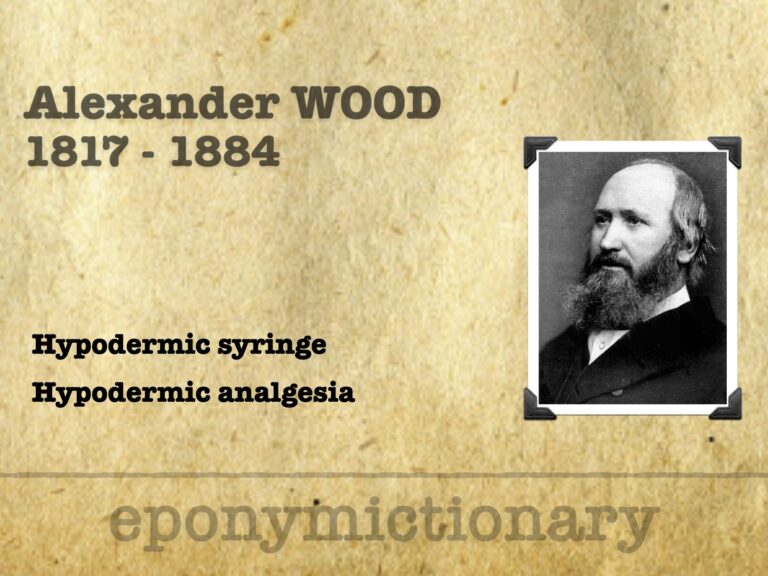
Alexander Wood (1817–1884), Scottish physician; popularised hypodermic morphine injection for neuralgia and helped establish the Wood syringe.
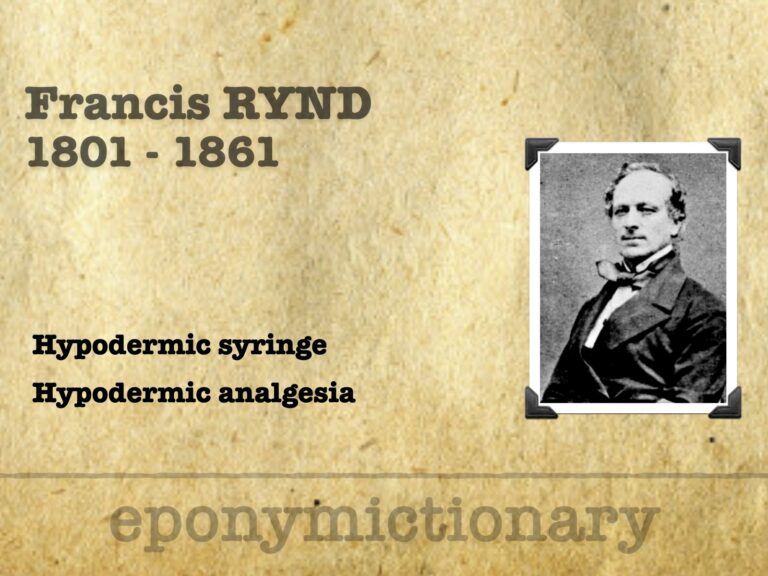
Francis Rynd (1801–1861), Irish surgeon who pioneered subcutaneous morphia injection for neuralgia (1844/1845) and described his cannula device in 1861.
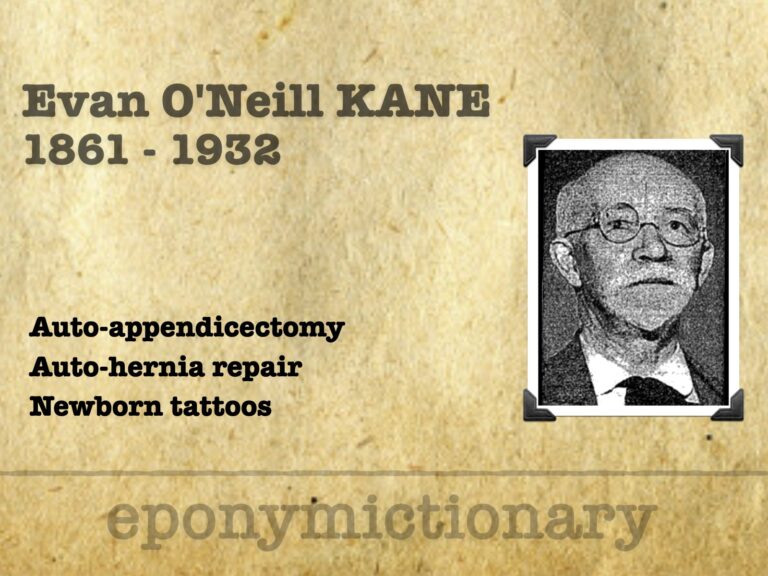
Evan O’Neill Kane (1864–1932), American country surgeon. Railway accident specialist and medical inventor, famed for his 1921 auto-appendicectomy.
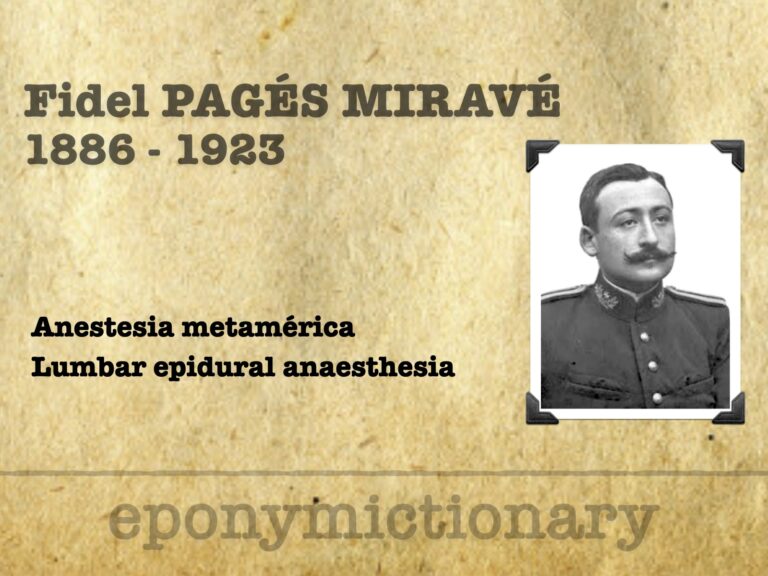
Fidel Pagés (1886–1923): Spanish military surgeon who described “anestesia metamérica” (1921), an early, practical lumbar epidural technique.
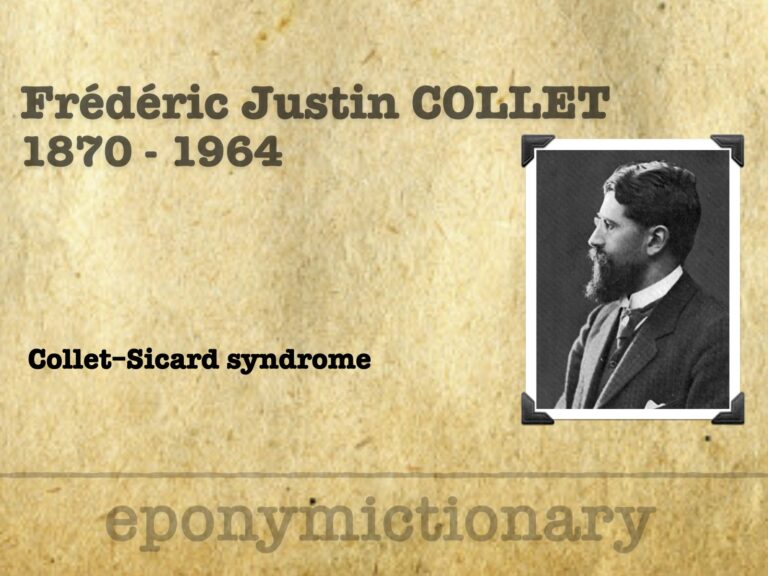
Frédéric Justin Collet (1870–1964), Lyon physician and ENT professor; described the 1915 skull-base palsy of CN IX–XII later known as Collet–Sicard syndrome
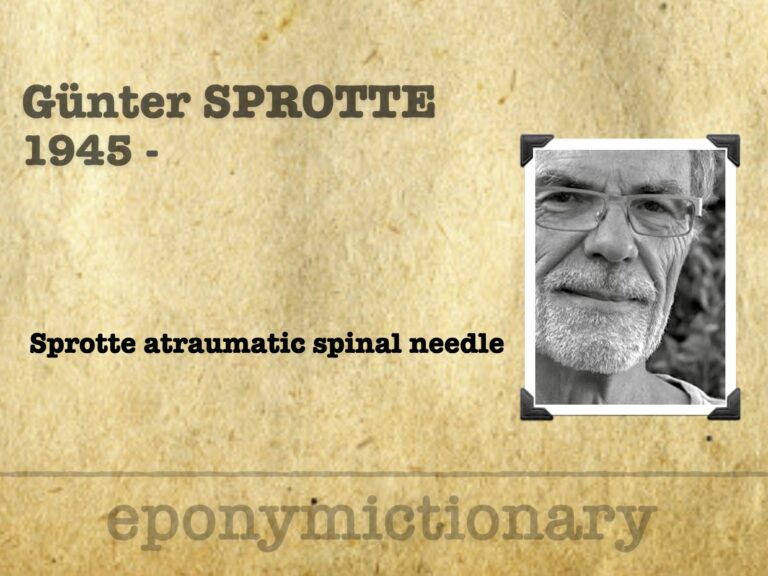
Günter Sprotte (b. 1945), German anaesthetist who designed the Sprotte atraumatic spinal needle, reducing post–dural puncture headache and improving CSF flow.
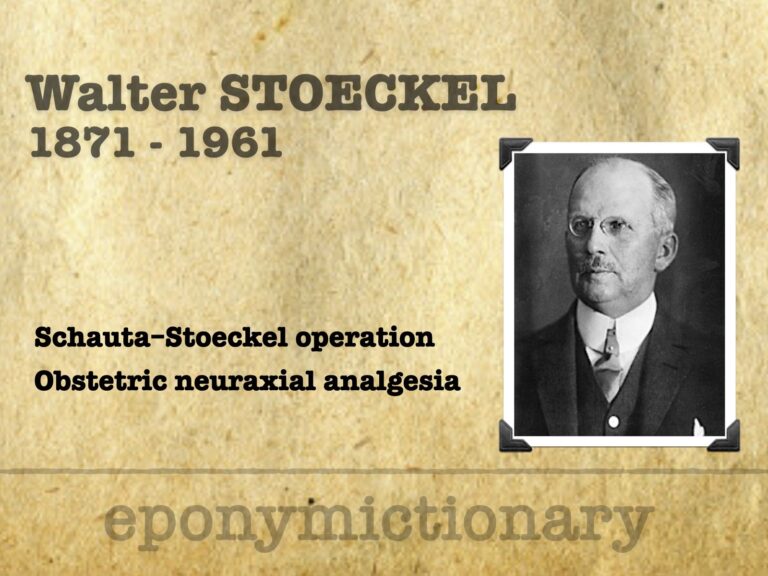
Walter Stoeckel (1871–1961), German gynaecologist who advanced caudal epidural analgesia in labour (1909) and shaped radical vaginal surgery and teaching.