
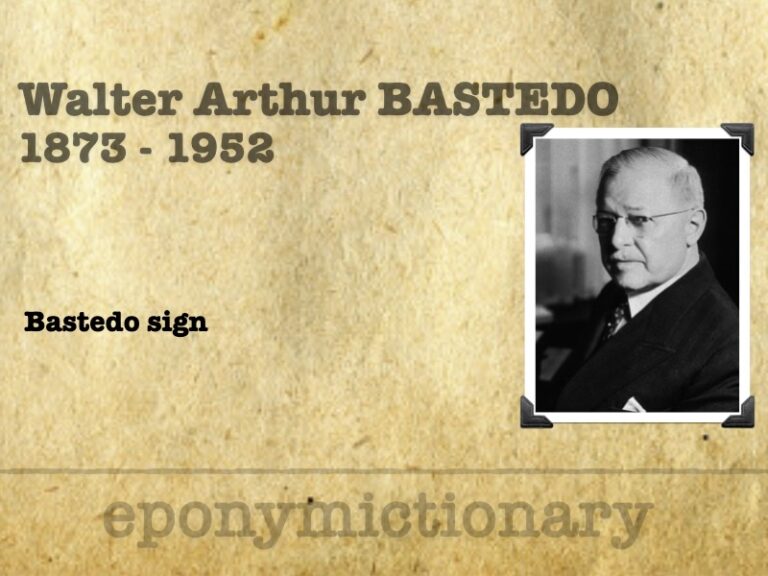
Walter Bastedo
Walter Arthur Bastedo (1873–1952), American physician, pharmacologist and gastroenterologist who described Bastedo sign for chronic appendicitis.


Walter Arthur Bastedo (1873–1952), American physician, pharmacologist and gastroenterologist who described Bastedo sign for chronic appendicitis.

Charles Dettie Aaron (1866–1951) was an American gastroenterologist, author and educator who described the eponymous Aaron sign for chronic appendicitis.

Fritz de Quervain (1868 – 1940) was an Swiss surgeon. He described the chronic tendonitis that bears his name (De Quervain disease)
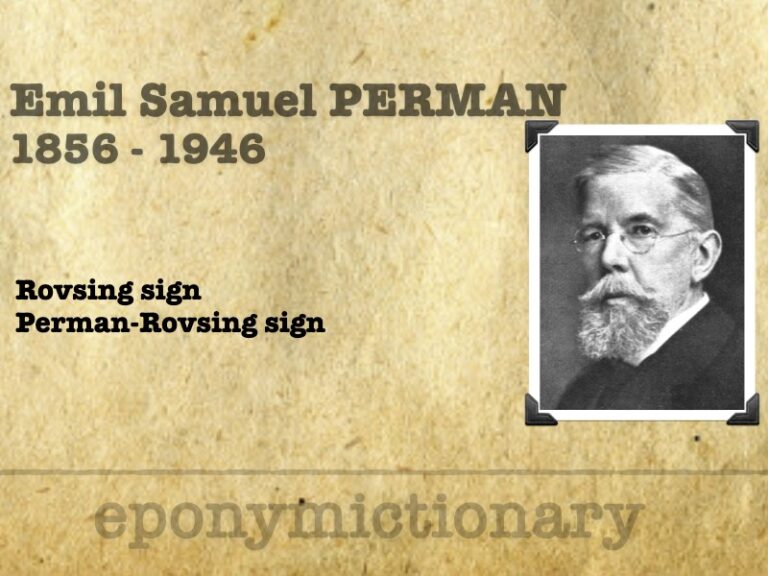
Emil Samuel Perman (1856 - 1946) was a Swedish general surgeon. Eponymsously associated with the Perman-Rovsing sign

Clinical updates in cardiology, antimicrobial stewardship, and febrile infants, followed by a case-based discussion of The Pitt Episode 2.
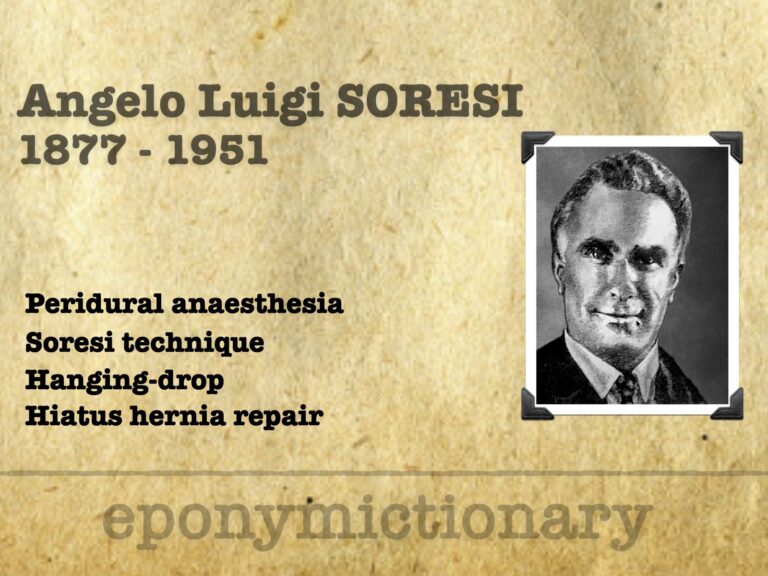
Angelo Luigi Soresi (1877–1951), Italian-born American surgeon who described peridural (epidural) anaesthesia and an early “hanging drop” endpoint for locating the epidural space (1932).

George Phalen (1911–1998), American hand surgeon known for the Phalen test and his defining work on carpal tunnel syndrome.
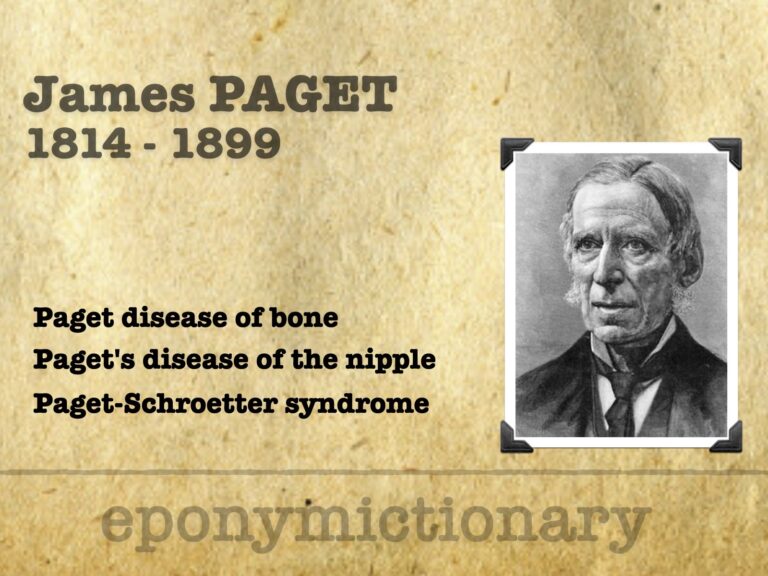
Sir James Paget (1814 - 1899) was a renowned English surgeon. In a career spanning eight decades, with research and practice in surgery, as well as serving the royal family during Queen Victoria’s reign
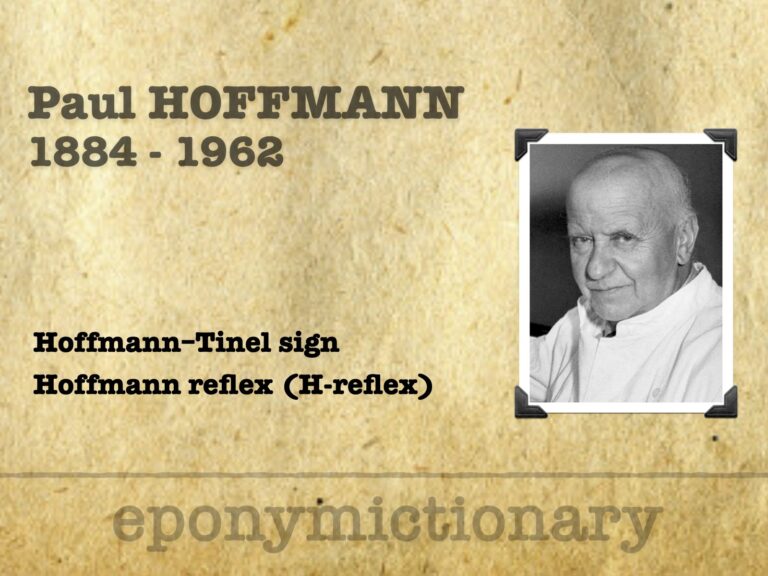
Paul Hoffmann (1884-1962), German neurophysiologist. Hoffmann-Tinel sign to assess nerve regeneration and Hoffmann reflex
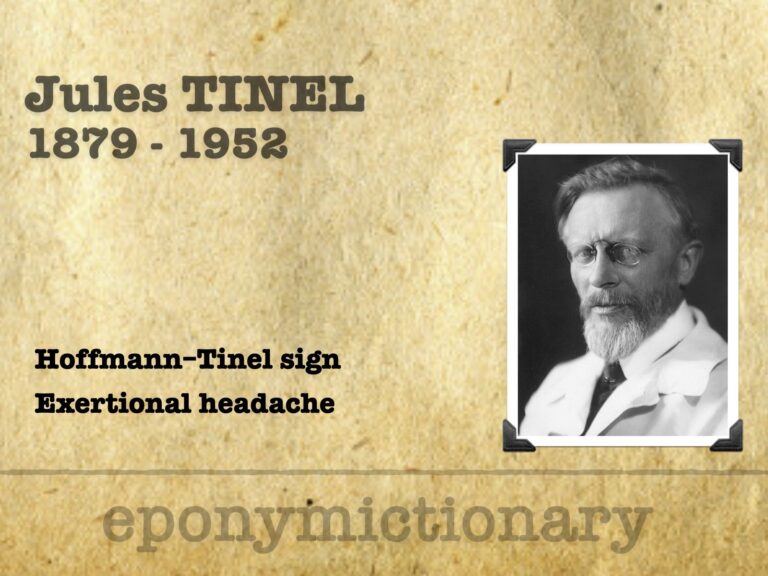
Jules Tinel (1879–1952), French neurologist remembered for Tinel sign, nerve regeneration research and early work on phaeochromocytoma.
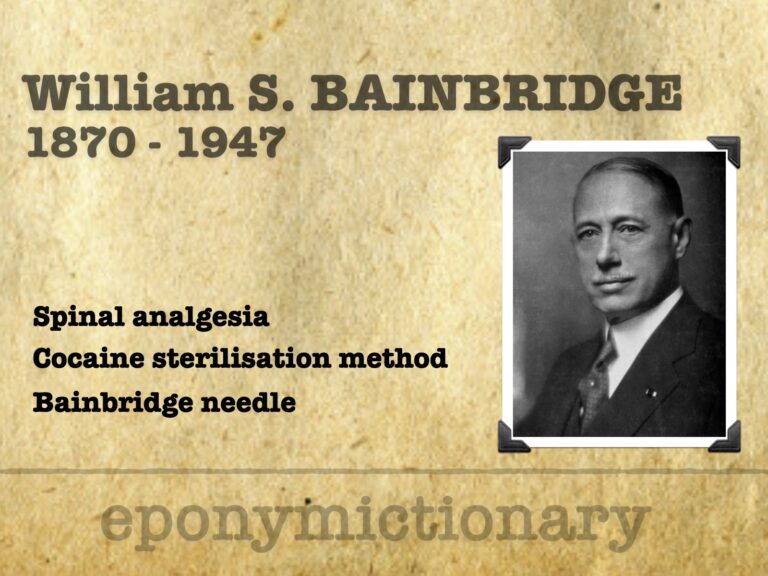
William Seaman Bainbridge (1870-1947), American surgeon, cancer educator, naval physician and early advocate of spinal analgesia in children.

John A. Durkan, American orthopaedic surgeon linked with the Durkan test and CTS gauge for diagnosing carpal tunnel syndrome.