
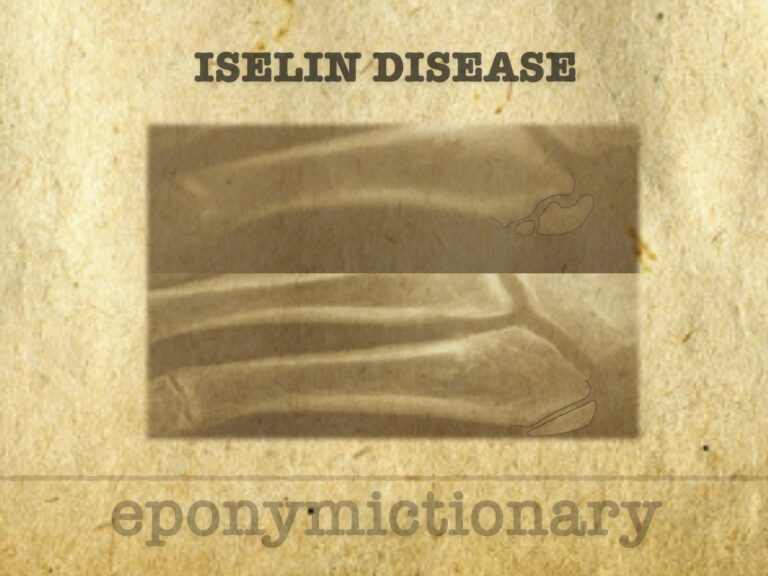
Iselin disease
Iselin disease is traction apophysitis of the fifth metatarsal in adolescents. Review diagnosis, imaging, management, history and eponym origins.


Iselin disease is traction apophysitis of the fifth metatarsal in adolescents. Review diagnosis, imaging, management, history and eponym origins.

Hans Iselin (1878–1953), Swiss surgeon and pioneer of accident medicine, described Iselin disease, traction apophysitis of the 5th metatarsal
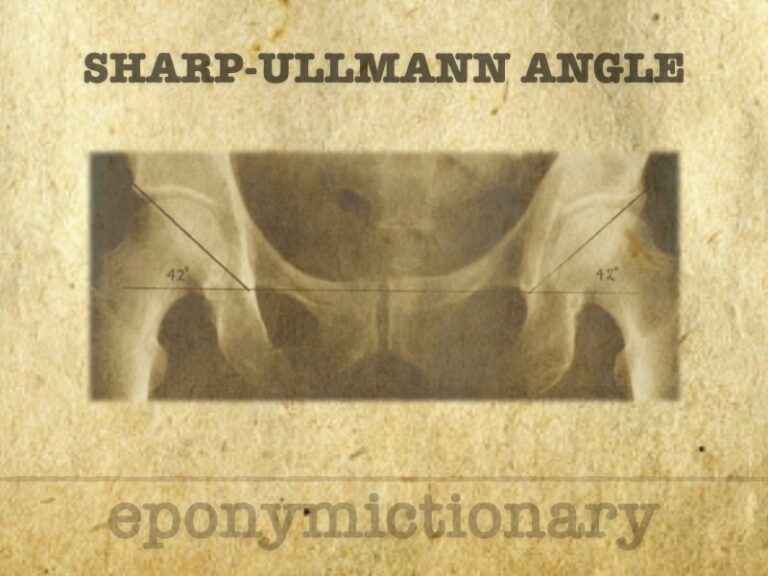
Sharp angle measures acetabular inclination on AP pelvic radiographs. Review the measurement, normal values, history and Ullmann–Sharp attribution.
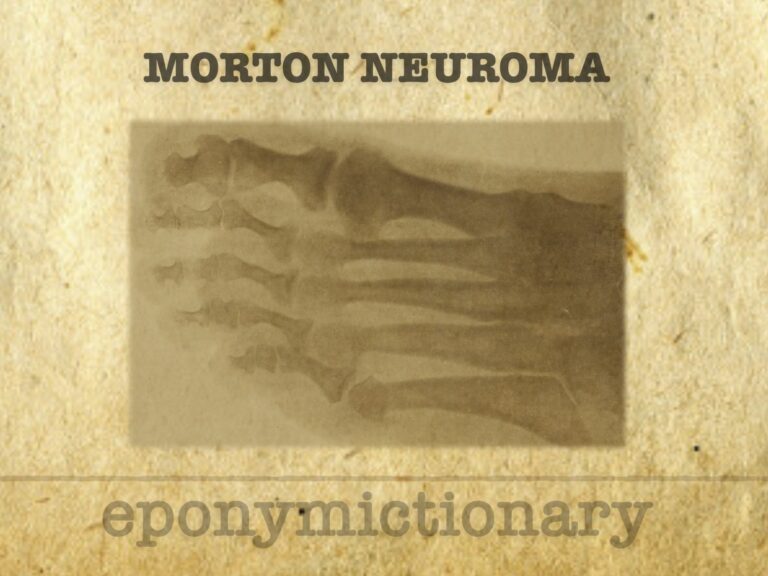
Morton neuroma is a painful interdigital nerve compression causing forefoot pain. Review diagnosis, management, history, pathology and eponym origins.
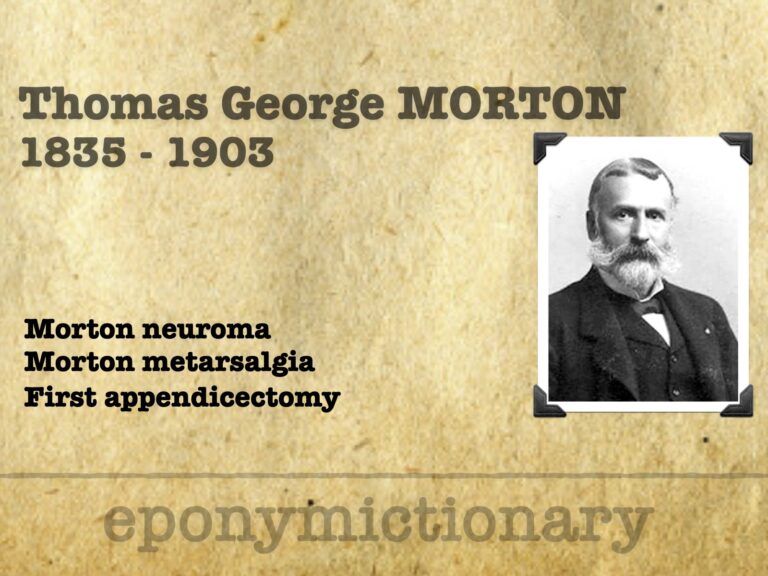
Thomas George Morton (1835 – 1903) was an American surgeon. Eponyms include Morton's neuroma; neuralgia and metarsalgia

Dudley Joy Morton (1884–1960), American physician and anatomist associated with Morton foot, Morton toe, first-ray hypermobility and Morton extension.
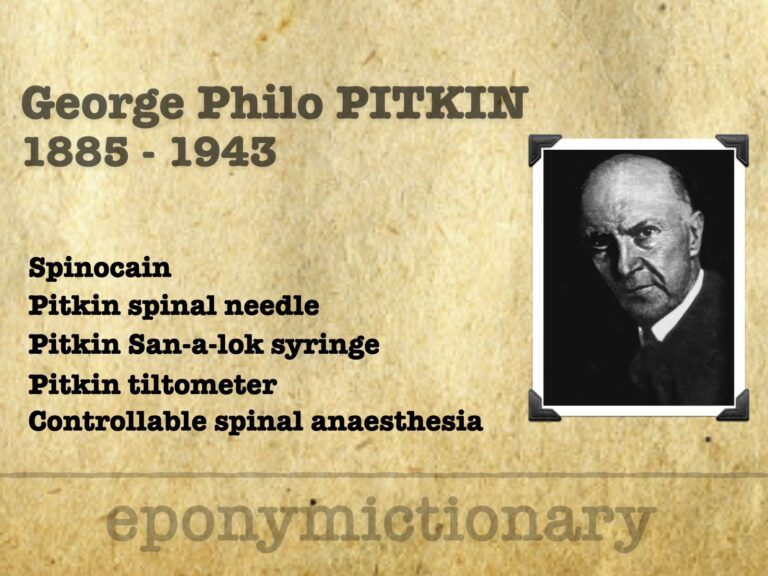
George Philo Pitkin (1885-1943), American surgeon. Inventor of Spinocain, Pitkin spinal needle, syringe and tiltometer for controllable spinal anaesthesia.
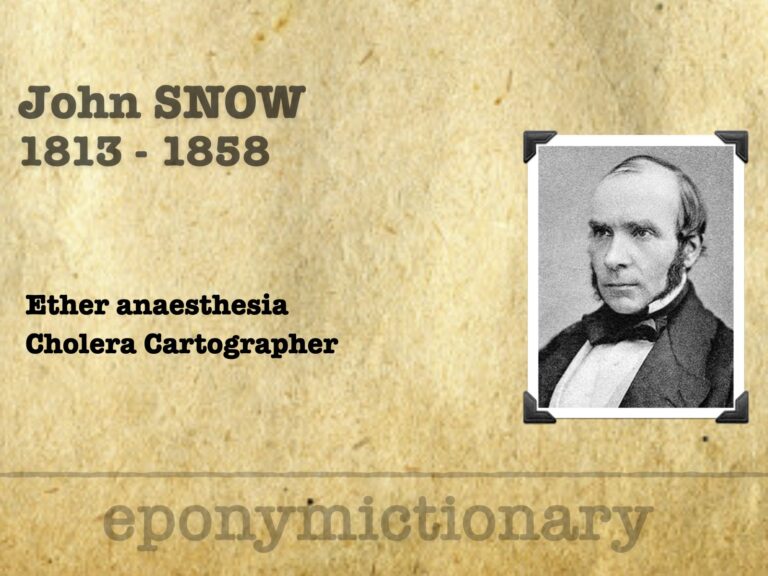
John Snow (1813-1858), English physician. Pioneer of anaesthesia and epidemiology. Defined etherization stages and traced cholera outbreaks to contaminated water in London.

Emery A. Rovenstine (1895–1960), American anaesthesiologist linked to directional spinal needle, nerve block and geriatric anaesthesia.
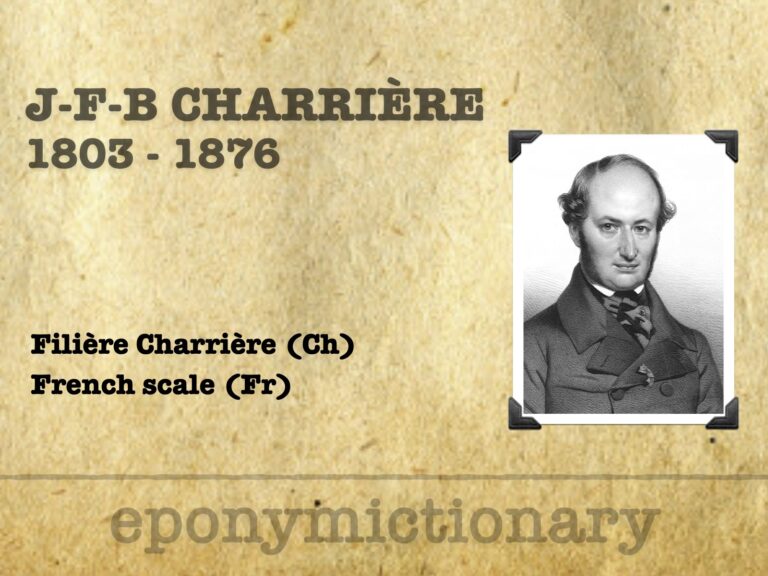
Joseph-Frédéric-Benoît Charrière, Swiss-born French instrument maker, created the Charrière/French scale for catheters and surgical tubes.

Charles Gabriel Pravaz (1791–1853). French orthopaedic surgeon developed the Pravaz syringe, an early controlled injection device for aneurysm treatment.
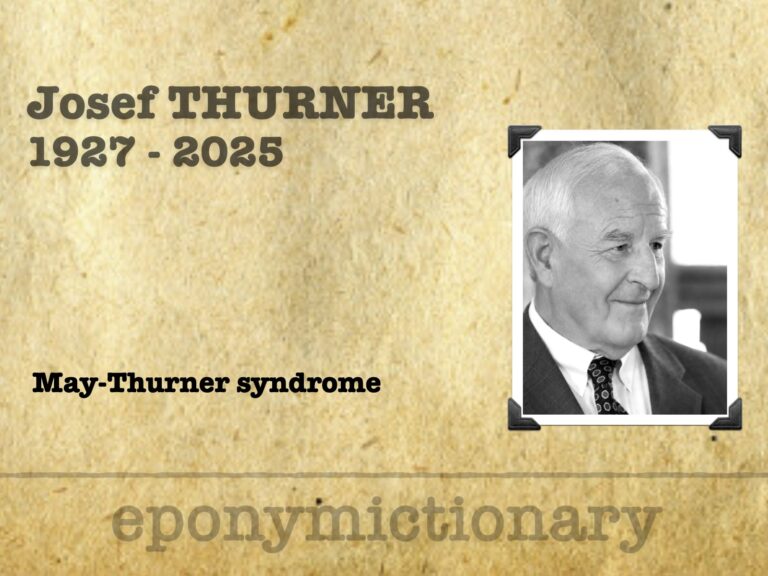
Josef Thurner (1927-2025), Austrian pathologist; May–Thurner syndrome; led pathology in Salzburg; published widely on venous disease.