
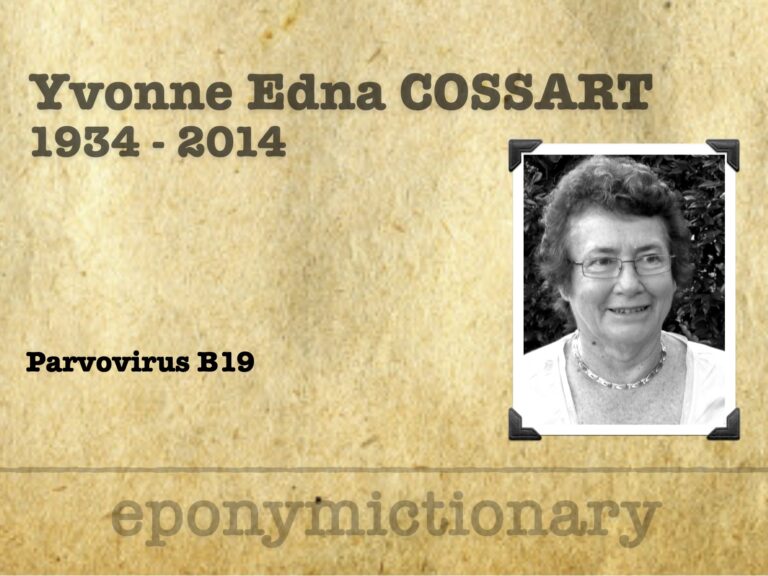
Yvonne Cossart
Australian virologist Yvonne Cossart (1934–2014), pioneer of parvovirus B19 research, teacher, and reformer of medical education.


Australian virologist Yvonne Cossart (1934–2014), pioneer of parvovirus B19 research, teacher, and reformer of medical education.
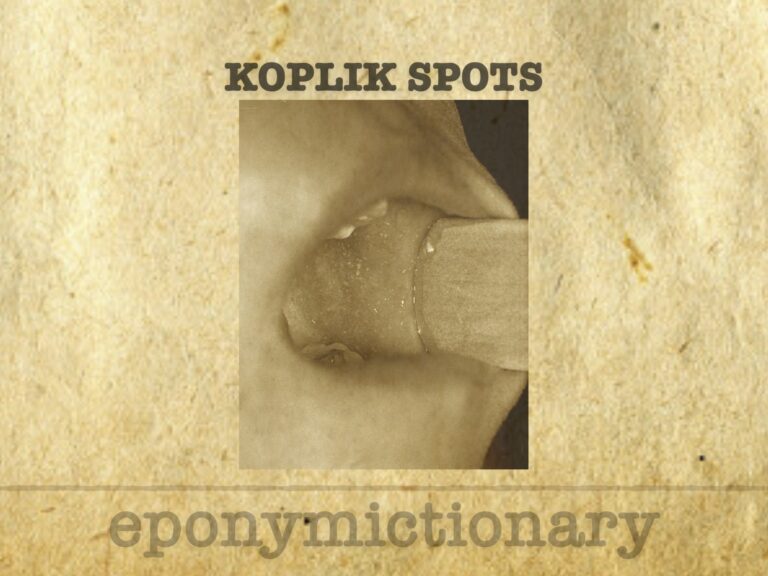
Koplik spots are pathognomonic buccal lesions in early measles, first described by Henry Koplik in 1896, aiding pre-rash diagnosis and outbreak control.
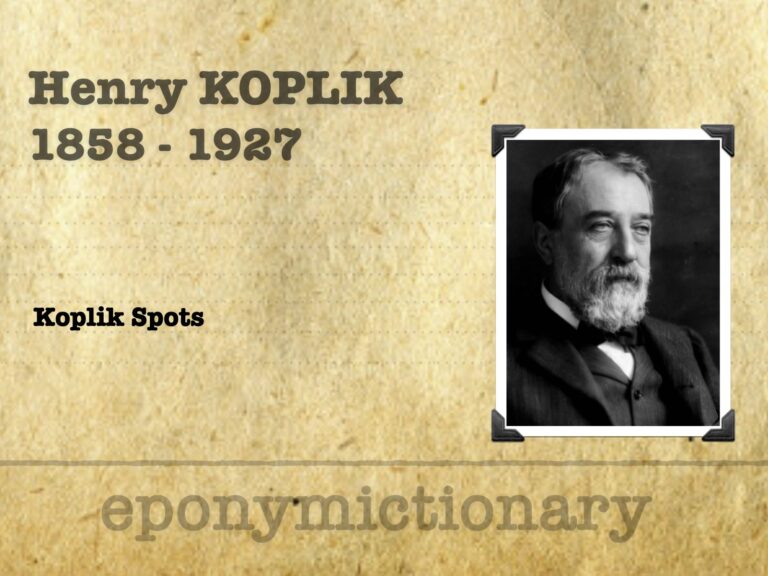
Henry Koplik (1858–1927), American pediatrician, discovered Koplik’s spots—an early diagnostic sign of measles—and pioneered infant health reform
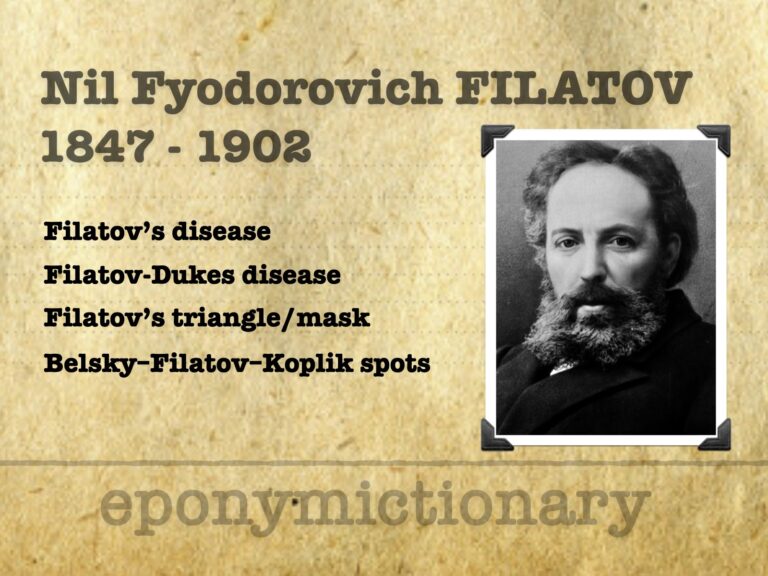
Nil Filatov (1847–1902), founder of Russian paediatrics, described key signs in measles, rubella, and mononucleosis; led Moscow’s first children’s hospital.
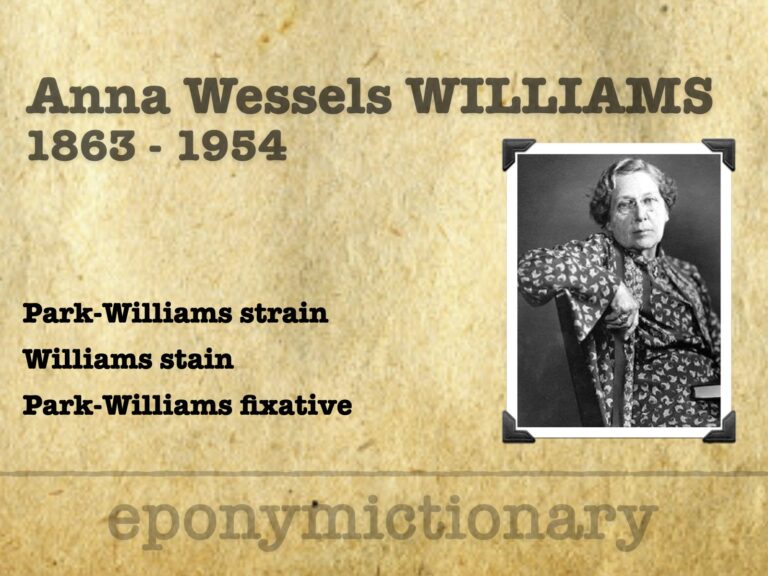
Anna Wessels Williams (1863–1954), American bacteriologist and public health pioneer, advanced diphtheria treatment and women in medicine

Walter Essex Wynter (1860–1945), Middlesex Hospital physician who pioneered incision-based lumbar thecal puncture and continuous CSF drainage for meningitis “cerebral pressure” (1889–1891).
Melioidosis is a severe infectious disease caused by the bacterium Burkholderia pseudomallei. It is widespread in Southeast Asia and Northern Australia, with increasing recognition in other tropical and subtropical regions. It presents with a wide range of clinical manifestations, from localized infections to severe sepsis and septic shock.
CCC entry for fusariosis / Fusarium infections (infectious disease)

Ben J. Wilson (1920–2015), American surgeon who coined 'necrotizing fasciitis' in 1951, Parkland Hospital leader, and pioneer in surgical infection care
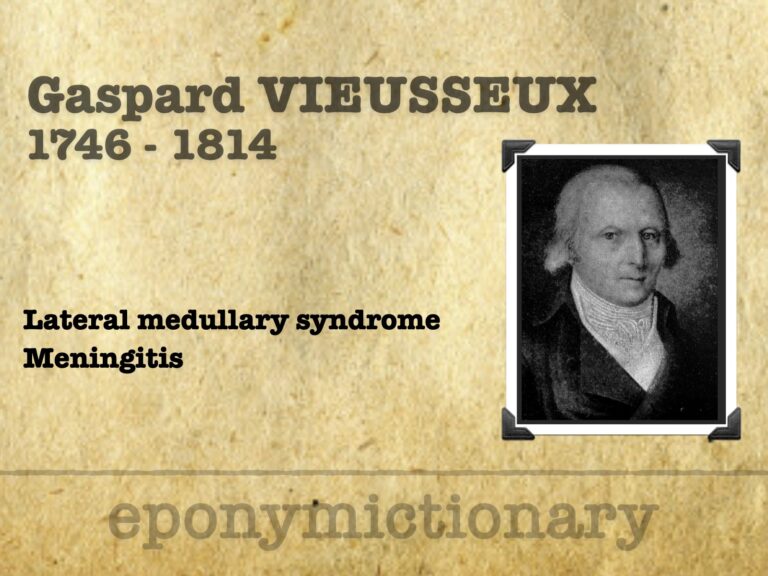
Swiss physician Gaspard Vieusseux (1746–1814) described cerebrospinal meningitis in 1805 and gave the first clinical account of lateral medullary syndrome.
The COVID-19 resource pack you need to keep up with the constant stream of new variants, new research, and changing guidelines!
Biography Major Publications References Biography