

Tenth Cranial Nerve Lesions
Overview of vagus nerve anatomy, innervation, clinical examination, and common causes of tenth cranial nerve lesions including central and peripheral pathologies.


Overview of vagus nerve anatomy, innervation, clinical examination, and common causes of tenth cranial nerve lesions including central and peripheral pathologies.
Overview of glossopharyngeal nerve (CN IX) anatomy, function, clinical assessment, and causes of lesions, including central and peripheral pathology.

Ben J. Wilson (1920–2015), American surgeon who coined 'necrotizing fasciitis' in 1951, Parkland Hospital leader, and pioneer in surgical infection care
Pelviureteric junction obstruction (PUJO) describes obstruction of urine flow from the renal pelvis into the proximal ureter. It can be congenital or acquired and may be asymptomatic. Severe cases can lead to infection and renal function loss.
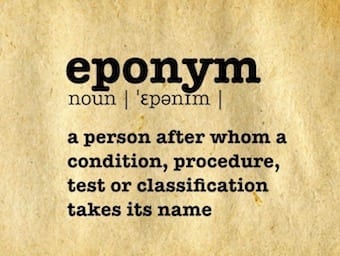
Alexander Burns Wallace (1906–1974) was a Scottish plastic surgeon. Published the Wallace Rules of nine for burn size estimation in 1951

Heinrich Adolf Rinne (1819-1868) was a German otologist best remembered for the eponymous Rinne test — a fundamental clinical tool in the assessment of hearing loss.
Eighth cranial nerve (CN VIII) lesions: causes, clinical features, hearing tests, investigations and management — including assessment of both cochlear and vestibular function
Macroscopic haematuria (visible/gross haematuria) refers to blood clearly visible in urine, unlike microscopic haematuria which is detected only via dipstick.
Seventh cranial nerve (CN VII) lesions: causes, clinical signs, investigations, and management — with focus on Bell’s palsy and central vs peripheral patterns.
Overview of sixth cranial nerve (CN VI) lesions — causes, clinical features, investigations, and management for Emergency Medicine and Neurology.
Fifth cranial nerve (CN V) lesions: causes, anatomy, clinical signs, investigations, and management for Emergency Medicine and Neurology
Overview of fourth cranial nerve (CN IV) lesions, causes, clinical signs, investigations, and management in Emergency Medicine