

Aaron sign
Aaron sign is referred pain induced by continuous firm pressure over McBurney point, described by Charles D. Aaron in 1913 for chronic appendicitis.


Aaron sign is referred pain induced by continuous firm pressure over McBurney point, described by Charles D. Aaron in 1913 for chronic appendicitis.
Rovsing sign: original 1907 technique, Perman's earlier 1904 sign, history, mechanism, diagnostic accuracy and evolution of the appendicitis sign.
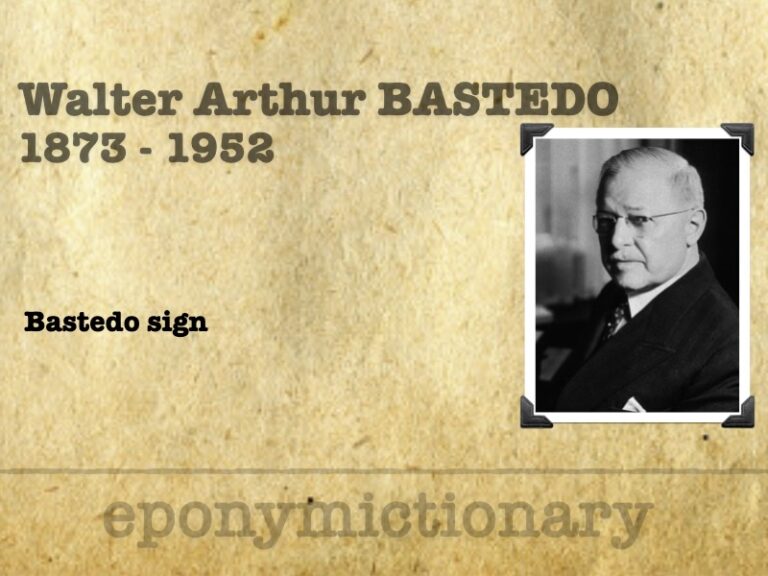
Walter Arthur Bastedo (1873–1952), American physician, pharmacologist and gastroenterologist who described Bastedo sign for chronic appendicitis.
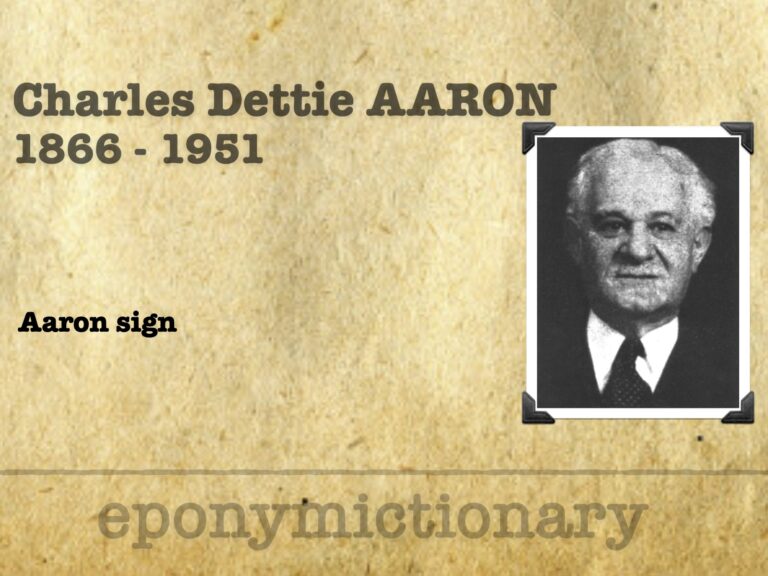
Charles Dettie Aaron (1866–1951) was an American gastroenterologist, author and educator who described the eponymous Aaron sign for chronic appendicitis.

Fritz de Quervain (1868 – 1940) was an Swiss surgeon. He described the chronic tendonitis that bears his name (De Quervain disease)
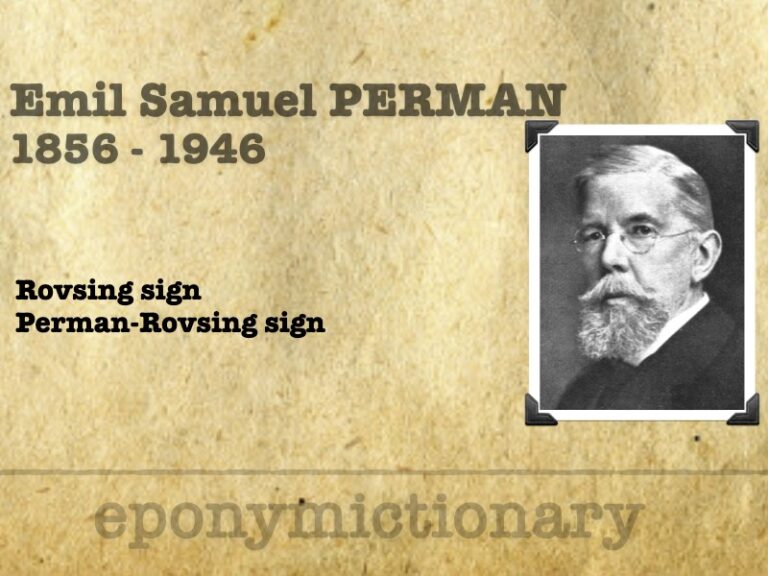
Emil Samuel Perman (1856 - 1946) was a Swedish general surgeon. Eponymsously associated with the Perman-Rovsing sign
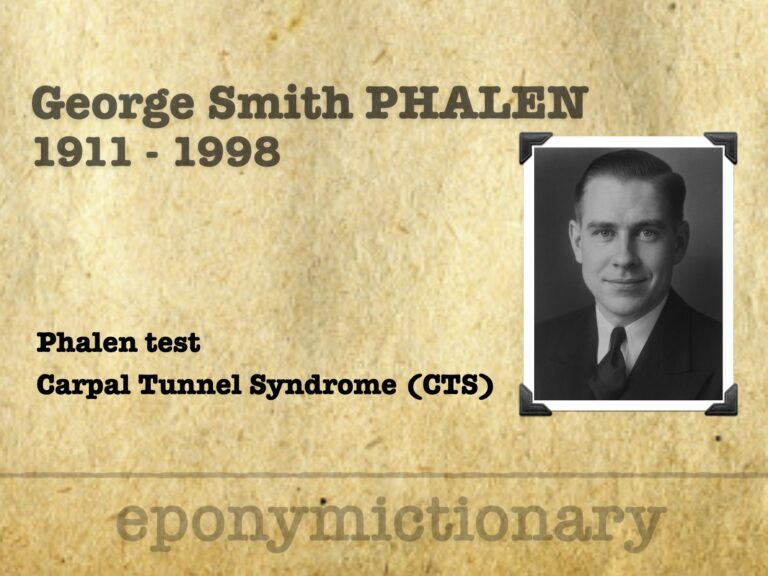
George Phalen (1911–1998), American hand surgeon known for the Phalen test and his defining work on carpal tunnel syndrome.
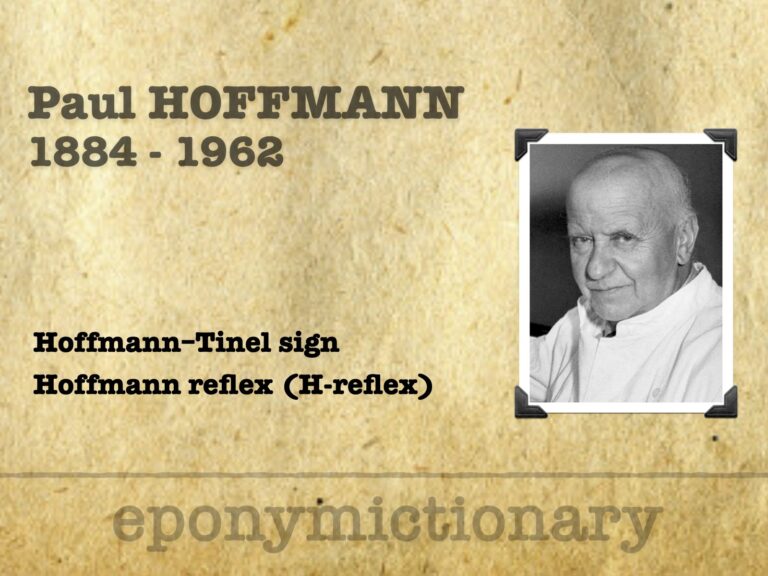
Paul Hoffmann (1884-1962), German neurophysiologist. Hoffmann-Tinel sign to assess nerve regeneration and Hoffmann reflex
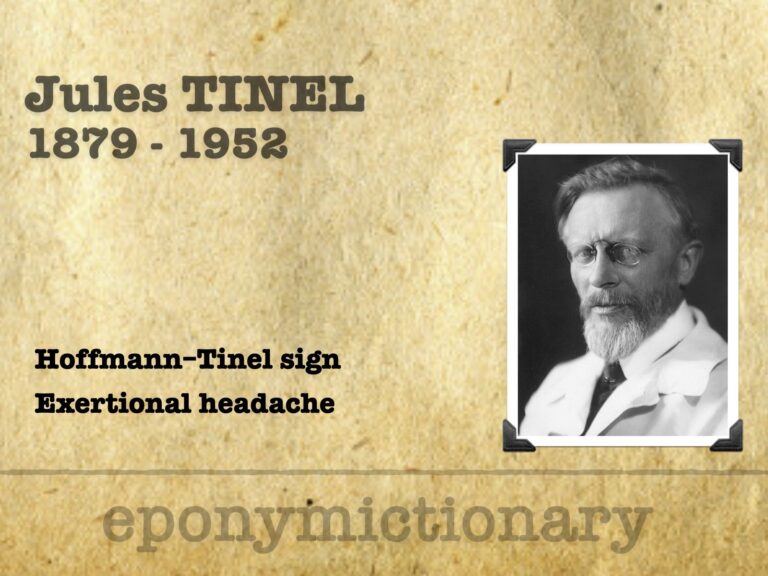
Jules Tinel (1879–1952), French neurologist remembered for Tinel sign, nerve regeneration research and early work on phaeochromocytoma.
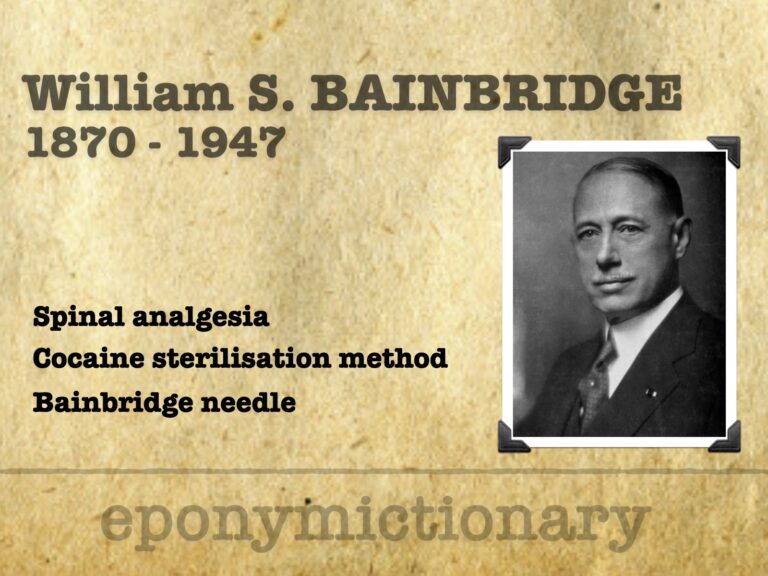
William Seaman Bainbridge (1870-1947), American surgeon, cancer educator, naval physician and early advocate of spinal analgesia in children.

John A. Durkan, American orthopaedic surgeon linked with the Durkan test and CTS gauge for diagnosing carpal tunnel syndrome.

A 35 year old male presents with recurrent episodes of spontaneous bleeding from his right ear. What does the CT angiogram show?