
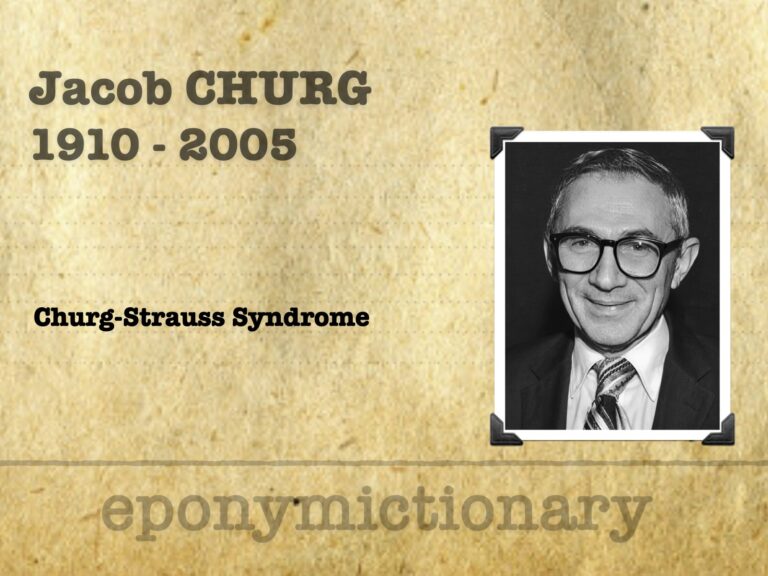
Jacob Churg
Jacob Churg (1910–2005), pioneering pathologist, co-described Churg–Strauss syndrome and transformed renal pathology through biopsy-based diagnostics


Jacob Churg (1910–2005), pioneering pathologist, co-described Churg–Strauss syndrome and transformed renal pathology through biopsy-based diagnostics
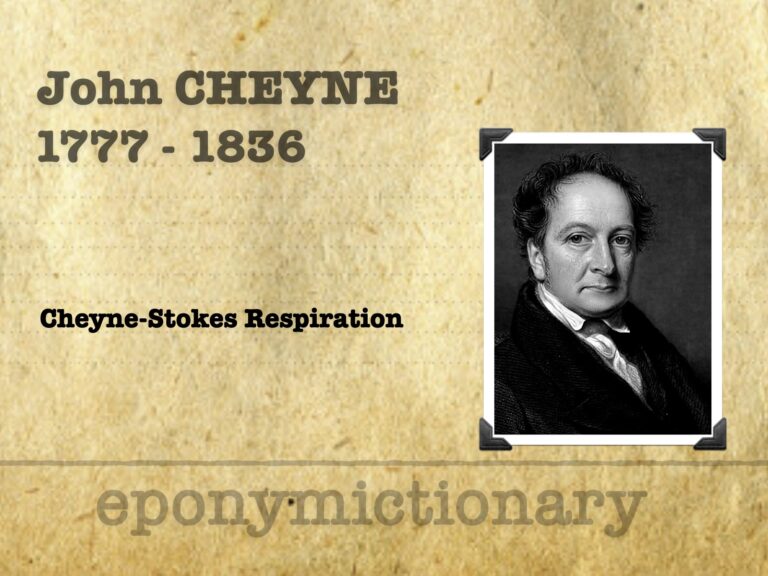
John Cheyne (1777–1836), Irish physician, co-described Cheyne-Stokes respiration, advanced clinical neurology, and linked pupils to brain injury

Cheyne-Stokes respiration is a cyclical breathing pattern of apnoea and hyperpnoea, seen in heart failure, brain injury, and end-of-life settings.

Pancoast Syndrome occurs secondary to local compression of brachial plexus and sympathetic chain by superior (pulmonary) sulcus tumors.

Pancoast Tumour is a primary bronchogenic carcinoma which arises in the apex of the lung at the superior pulmonary sulcus.

Henry Khunrath Pancoast (1875 – 1939) was an American radiologist. The Pancoast tumour and Pancoast syndrome is named after him

COPD is a chronic respiratory disease with irreversible airflow limitation, often due to smoking, marked by exacerbations needing oxygen and ventilatory support.
Asthma is a chronic disease with acute, potentially fatal exacerbations. ED care hinges on severity assessment, rapid bronchodilation, and appropriate escalation.
Aspiration can cause chemical pneumonitis or bacterial pneumonia; management depends on severity and suspicion of infection, with antibiotics if in doubt.
Asbestosis is a progressive fibrotic lung disease from asbestos inhalation, with restrictive pattern, pleural disease, and risk of mesothelioma and lung cancer.
Pleural effusion is fluid accumulation in the pleural space, classified as transudate or exudate. Diagnosis is clinical and radiological; aspiration guides cause and therapy.
Nasal High Flow oxygen delivers humidified, warmed high-flow oxygen via nasal cannula, providing a well-tolerated alternative to NIV in mild to moderate respiratory distress.