


Charles E. Flowers Jr
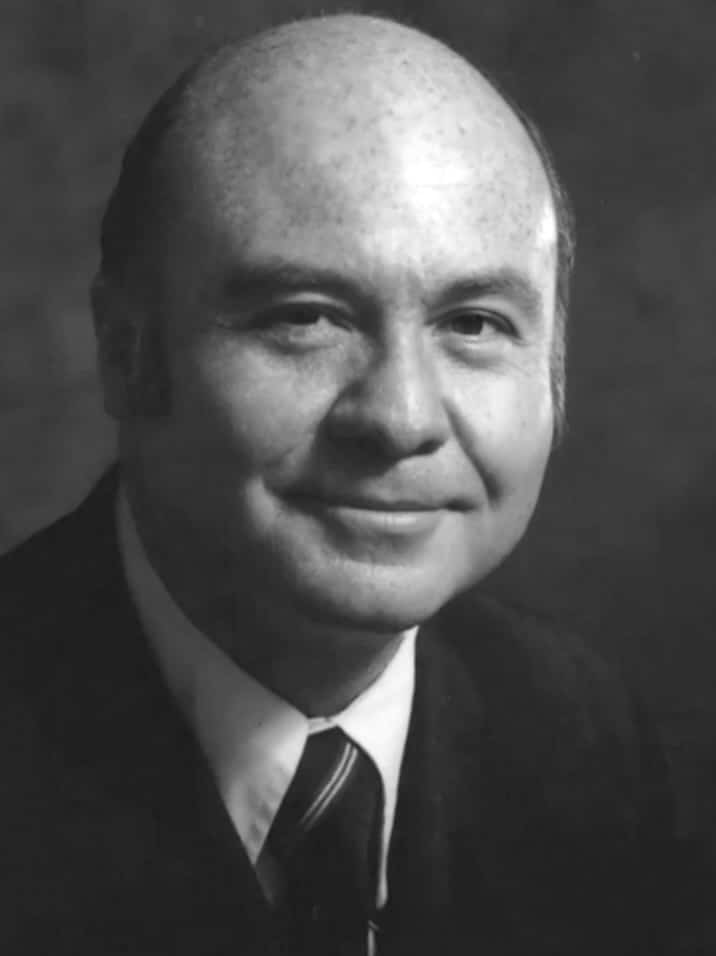
Charles Ely Flowers Jr (1920-1999) was an American obstetrician-gynaecologist
Trained at The Citadel, the University of North Carolina, and Johns Hopkins, Flowers developed a career in academic obstetrics, later becoming the first full-time Chair of Obstetrics and Gynecology at UAB. His broader contribution was the development of modern obstetric services, residency training, subspecialty development, and support for advanced nursing practice in women’s health.
Flowers is remembered in anaesthetic history for his work on continuous peridural anaesthesia in obstetrics. He reported the use of continuous peridural anaesthesia and analgesia for labour, delivery, and caesarean section in 1949. He later refined the technique using plastic tubing passed through a blunted Tuohy needle, allowing repeated segmental dosing while avoiding intentional dural puncture. Flowers considered the method particularly useful for caesarean section and selected high-risk obstetric patients, although measured in his assessment of its value for routine labour analgesia.
His eponymic contribution was the Tuohy–Flowers needle. Flowers blunted and slightly lengthened the Huber point of a 16-gauge Tuohy needle and used a sharper protruding stylet to penetrate skin and subcutaneous tissue. The design was intended to improve tactile recognition of the ligamentum flavum and reduce accidental dural puncture, but the protruding stylet and softened tip made it vulnerable to bending and catheter-passage problems.
Biographical Timeline
- Born Charles Ely Flowers Jr on July 20, 1920 at Zebulon, Wake, North Carolina
- 1941 – Graduated BS, The Citadel.
- 1943 – Certificate in medicine University of North Carolina at Chapel Hil
- 1944 – Graduated MD, Johns Hopkins University School of Medicine.
- 1945–1950 – Completed residency in obstetrics and gynecology at Johns Hopkins. Served in the armed forces as Captain in the Medical Corps (1946-1948). Held teaching experience at the State University of New York College of Medicine.
- 1949 – With Louis M. Hellman and Robert A. Hingson, Flowers reported continuous peridural anaesthesia and analgesia for labour, delivery, and caesarean section. Published as Continuous peridural anesthesia and analgesia for labor, delivery and cesarean section
- 1950 – Appointed Instructor in Obstetrics and Gynecology at the State University of New York, Downstate/New York. Published a technique of continuous peridural anesthesia using a blunt needle. Flowers described a modified blunt 16-gauge Tuohy needle with “pop” localisation through the ligamentum flavum.
- 1953 – Appointed Associated Professor, Department of Obstetrics and Gynecology, School of Medicine of the University of North Carolina
- 1954 – Published Continuous peridural analgesia in obstetrics. Flowers had studied his method in 200 obstetric cases, and concluded that it was less useful for routine labour analgesia than initially hoped, but valuable for caesarean section and selected high-risk maternal conditions.
- 1961 – Promoted to Professor of Obstetrics and Gynecology at the University of North Carolina.
- 1966 – Became Professor and Chairman of Obstetrics and Gynecology at Baylor University College of Medicine, Houston, Texas.
- 1969 – Appointed Professor and Chairman of Obstetrics and Gynecology at the University of Alabama School of Medicine / UAB; served as chairman for 16 years.
- 1970s – Supported early nurse practitioner training within the UAB Department of Obstetrics and Gynecology. His wife, Juanzetta S. Flowers, later recalled that he respected nurses’ clinical abilities and believed advanced nursing roles could improve patient care.
- 1985 – The Charles E. Flowers Symposium on Obstetrics and Gynecology was held in Birmingham on April 19, 1985, in his honour prior to retirement.
- Died April 24, 1999 Birmingham, Jefferson County, Alabama
Key Medical Contributions
Continuous peridural anaesthesia in obstetrics
In 1949 Flowers, Louis M. Hellman and Robert A. Hingson reported the use of continuous peridural anaesthesia and analgesia for labour, delivery, and caesarean section. Their technique used a plastic tube rather than a ureteral catheter through a blunt-tipped 16-gauge Tuohy needle.
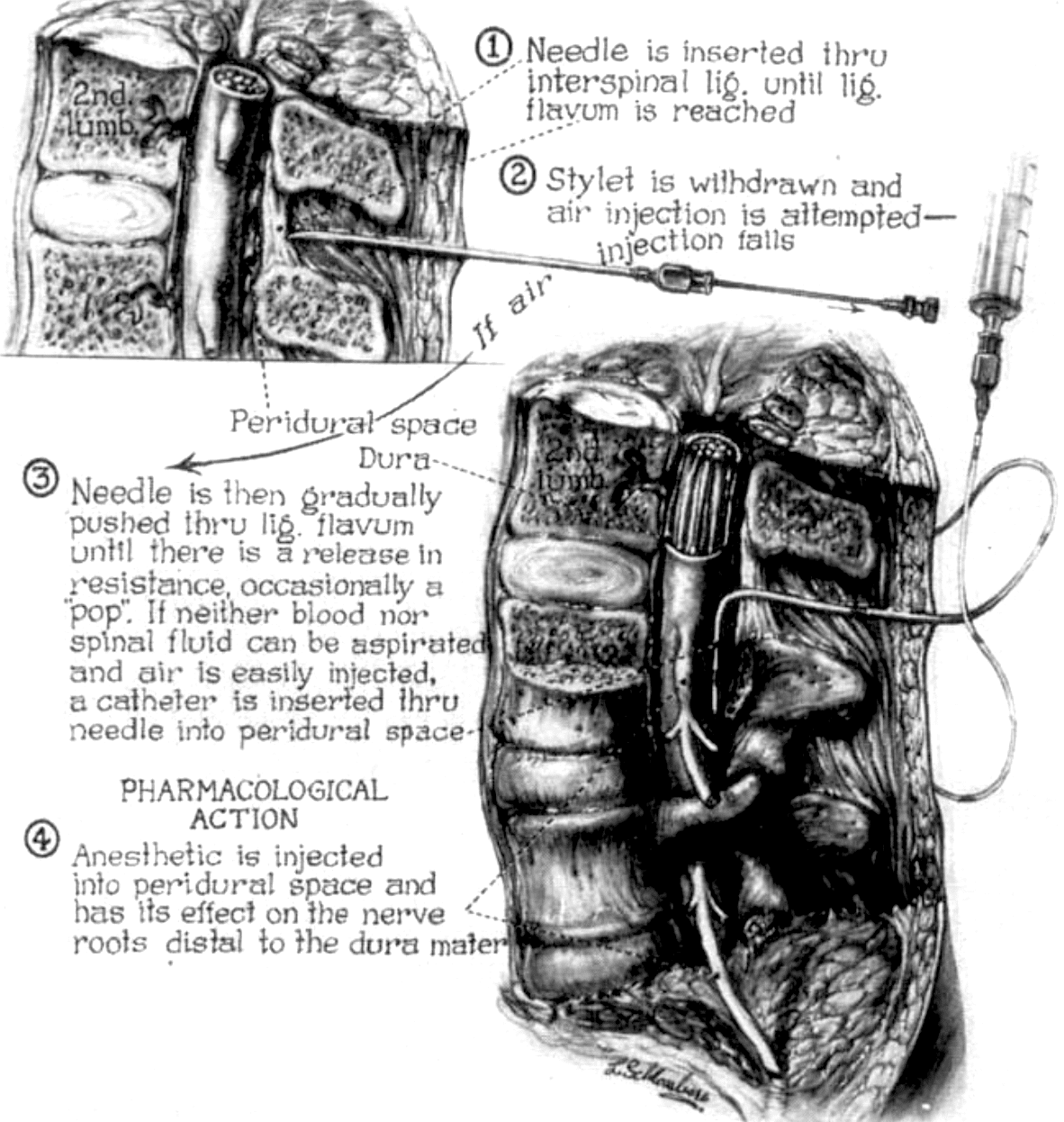
In 1950, Flowers described continuous lumbar peridural anaesthesia as a segmental extradural block made continuous by passing a plastic tubing through a Tuohy spinal needle into the peridural space and connecting it to a closed system of syringe, tubing, and local anaesthetic solution. He emphasised segmental control, reduced hypotension compared with extensive sympathetic blockade, avoidance of medullary spread, and elimination of post-spinal headache.
Flowers blunt epidural needle
Flowers attempted to improve the Tuohy–Huber needle for continuous peridural anaesthesia by modifying a 16-gauge Tuohy needle. He lengthened and blunted the Huber point so that the terminal portion was flat, and designed a longer, broader, sharper stylet to pierce skin and subcutaneous tissue. If a special needle was unavailable, he suggested blunting a 16- or 17-gauge Tuohy needle, discarding the stylet, and using an 18-gauge intravenous needle to pierce the skin.

His rationale was tactile and safety-based: the dense ligamentum flavum resisted a blunt needle, while entry into the epidural space produced a sudden release of resistance or audible “pop.” Flowers argued that a sharp needle could traverse the ligamentum flavum with little warning, whereas the blunt needle gave a clearer endpoint and reduced the likelihood of entering the dura.
The blunt-tip concept influenced later epidural needle refinements by Crawford, Weiss, Sprotte, and Hustead.
Catheter placement and continuous dosing
Once the epidural space was entered and no CSF aspirated, Flowers passed a ureteral catheter or plastic tubing cephalad or caudad to the desired segment. He used a test dose before therapeutic injection and then gave repeated small doses according to catheter direction, patient response, desired segmental level, gravity, and blood pressure.
In 1954, Flowers refined this for obstetric practice using marked Becton-Dickinson plastic tubing #442T, introduced 8–10 cm through the needle and withdrawn to leave approximately 5 cm in the peridural space. He described a lignocaine test dose, repeated lignocaine dosing every 45–60 minutes, close blood pressure monitoring, and vasopressor infusion to maintain normotension.
Flowers concluded that lumbar peridural analgesia offered little advantage over caudal or systemic analgesia for labour, partly because sacral block and perineal relaxation were often incomplete. However, he considered it particularly valuable for caesarean section.
His standardised series reported rapid satisfactory analgesia, no hypotension, and no fetal loss attributable to the technique; he also highlighted usefulness in selected maternal complications including toxaemia, heart disease, and tuberculosis, while excluding severe anaemia, haemorrhage, and major fetal peril.
Major Publications
- Flowers CE Jr, Hellman LM, Hingson RA. Continuous peridural anesthesia and analgesia for labor, delivery and cesarean section. Curr Res Anesth Analg. 1949 Jul-Aug;28(4):181-9.
- Flowers CE Jr. A technique of continuous peridural anesthesia using a blunt needle. Curr Res Anesth Analg. 1950 Jan-Feb;29(1):39-42
- Flowers CE Jr. Technics and indications for anesthesia in cesarean sections. N Y State J Med. 1952 Nov 15;52(22):2753-8
- Flowers CE Jr. A pharmacologic approach to obstetric anesthesia and analgesia. N C Med J. 1953 Apr;14(4):140-4
- Flowers CE Jr. Continuous peridural analgesia in obstetrics. Anaesthesia. 1954 Jul;9(3):146-52.
- Flowers CE Jr. Obstetric analgesia and anesthesia. 1967
References
Biography
- Hester LL Jr. Charles E. Flowers, Jr., MD. Alabama journal of medical sciences. 1986 Jul;23(3):284-5.
- Festschrift: The Charles E. Flowers Symposium on Obstetrics and Gynecology. Ala J Med Sci. 1986 Jul;23(3):284-95.
- Mourning the death of DR. CHARLES E. FLOWERS of Birmingham, Alabama. Alabama legislative acts, 1999
Eponymous terms
- Frölich MA, Caton D. Pioneers in epidural needle design. Anesth Analg. 2001 Jul;93(1):215-20.
- Goerig M, Freitag M, Standl Th. One hundred years of epidural anaesthesia—the men behind the technical development. International Congress Series, 2002; 1242: 203–212
- Toledano RD, Tsen LC. Epidural catheter design: history, innovations, and clinical implications. Anesthesiology. 2014 Jul;121(1):9-17.
- Benhardt AC, Kodali BS. All epidural needle bevels are not the same. Indian J Anaesth. 2021 Apr;65(4):328-330.
Eponym
the person behind the name

MB ChB University of Glasgow. Interest in Remote & Rural Medicine, Prehospital, and Anaesthetics. Moved from Scotland to work in SCGH ED 2026.

BA MA (Oxon) MBChB (Edin) FACEM FFSEM. Emergency physician, Sir Charles Gairdner Hospital. Passion for rugby, medical history, medical education, and asynchronous learning #FOAMed evangelist. Editor-in-Chief and Webmaster of Life in the Fast lane, LITFL | On Call 4e| Eponyms | Books | Horology |