


The Epstein–Macintosh–Oxford (EMO) inhaler was a portable draw-over ether vaporiser developed by Hans Georg Epstein and Sir Robert Reynolds Macintosh at the Nuffield Department of Anaesthetics, Oxford, during the early 1950s.
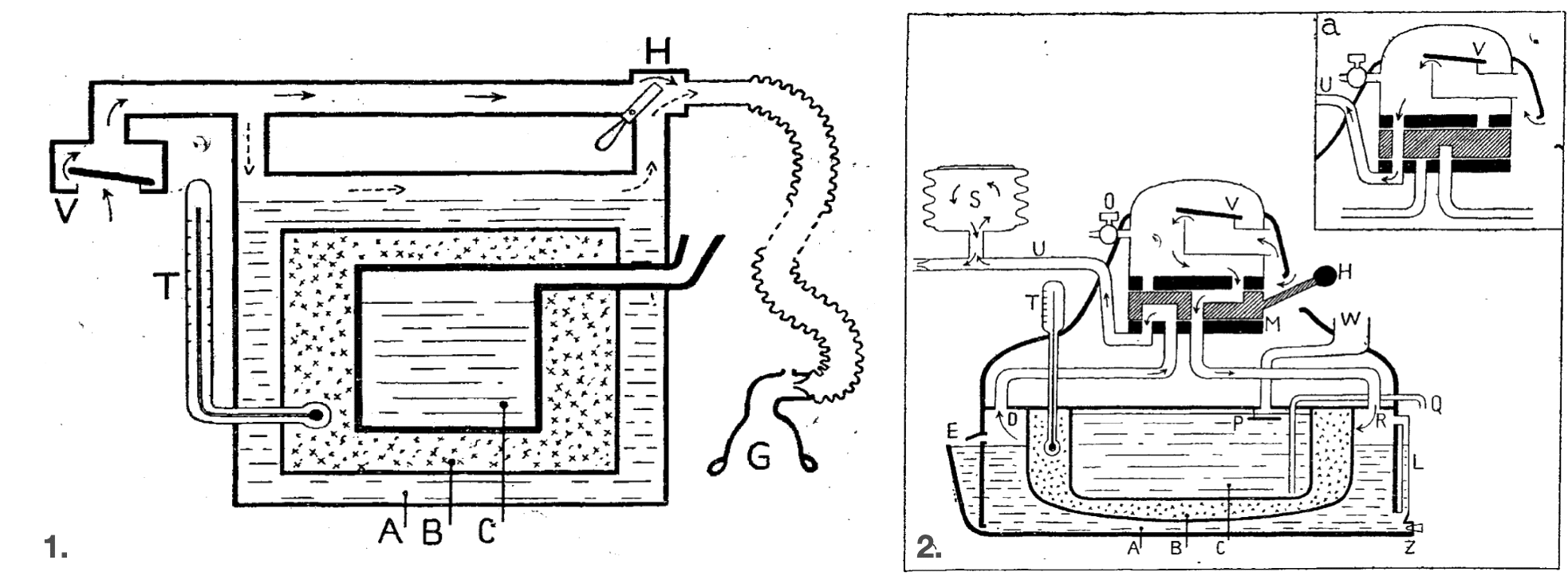
The EMO evolved from the Oxford Vaporiser No. 1, developed by Epstein, Macintosh and Kurt Mendelssohn in 1941. The earlier apparatus combined a variable-bypass system with thermal buffering to provide a controlled concentration of ether without dependence on compressed-gas cylinders.
The EMO refined these principles through automatic thermo-compensation, adjusting the proportion of air passing through the vaporising chamber as the temperature of the ether changed. The robust portable apparatus became widely used where electricity, compressed gases and sophisticated anaesthetic infrastructure were unavailable.
Developmental history
1941 – Epstein, Macintosh and Mendelssohn described the Oxford Vaporiser No. 1, a portable draw-over ether vaporiser using a variable-bypass system to control the concentration of anaesthetic delivered.
Inspired air could either bypass the ether chamber or be diverted across the liquid ether, with a calibrated mixing tap controlling the final concentration. A thermal reservoir containing hydrated calcium chloride reduced cooling of the ether during vaporisation and helped stabilise vapour output.
An important practical advantage was independence from compressed-gas cylinders, making the apparatus suitable for anaesthesia outside a conventional operating theatre.
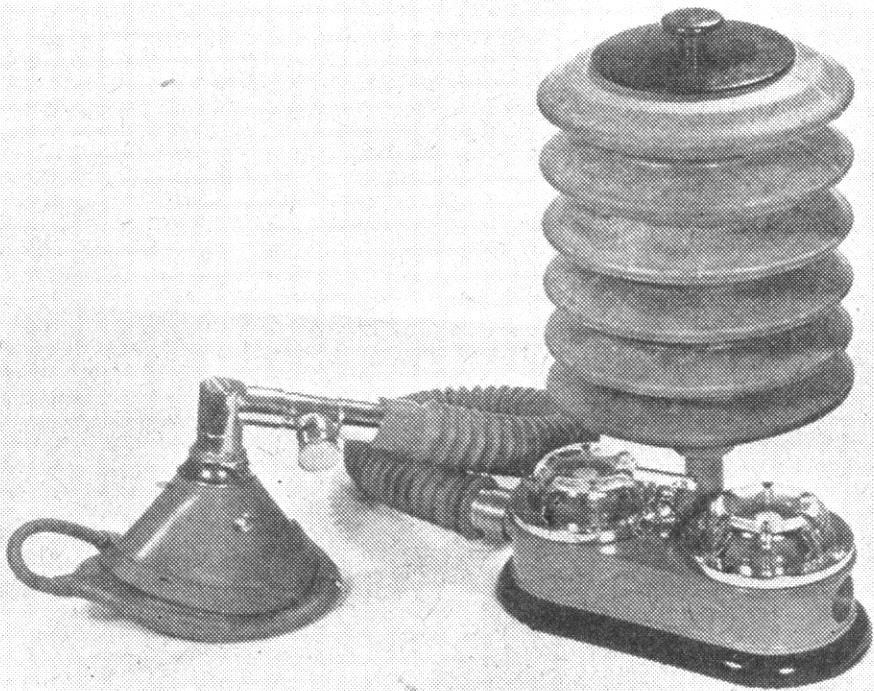
1950–1953 – In 1953 Macintosh reported that he had used the independent Oxford inflating bellows for the preceding three years. The spring-loaded concertina bellows originally incorporated into the Oxford vaporiser became a separate hand-operated device for artificial ventilation.
Two one-way valves provided unidirectional flow and prevented rebreathing, while additional oxygen could be introduced when available. The apparatus could ventilate the lungs with air alone and required neither electricity nor a compressed-gas supply.
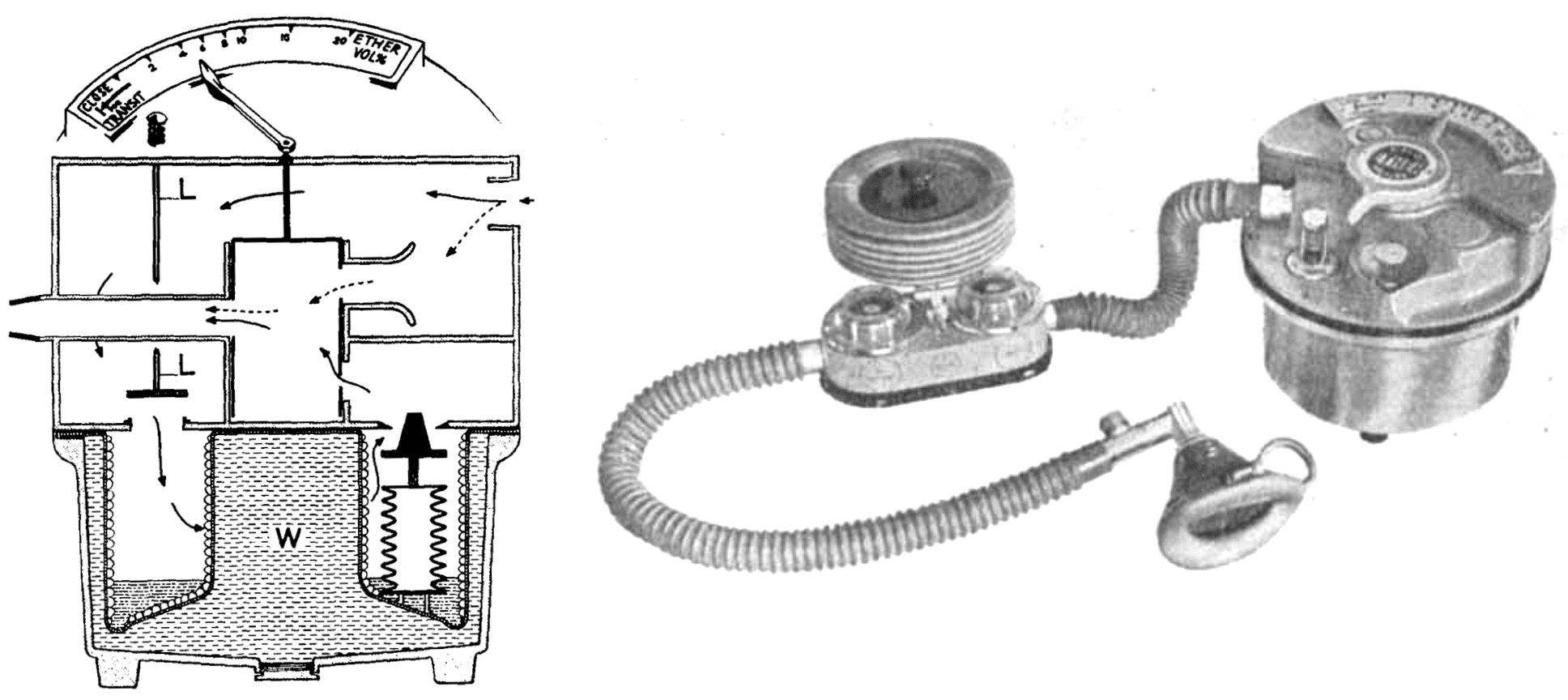
1952–1953 – In 1952 a refined Oxford vaporiser was incorporated into the Epstein–Macintosh–Oxford inhaler. The first commercial instruments were produced by the Pentland Scientific Company in 1953.
The new design retained the draw-over and variable-bypass principles of its predecessor but introduced a more sophisticated mechanism to compensate automatically for changes in ether temperature.
1956 – Epstein and Macintosh published An anæsthetic inhaler with automatic thermo-compensation in Anaesthesia:
This inhaler, the EMO, has been designed to deliver any desired concentration of anaesthetic vapour, irrespective of variations in the temperature of the liquid anaesthetic…
At a given control setting, inspired air was divided between a bypass channel and the vaporising chamber. Because the concentration of ether vapour varies markedly with temperature, the EMO incorporated an automatic thermo-compensator.
A liquid-filled metal bellows expanded as temperature increased and contracted as it fell. Movement of the bellows altered the position of a conical plunger within the vaporiser outlet, changing resistance to flow through the vaporising chamber. A surrounding water jacket provided additional thermal buffering.
The result was a relatively constant delivered ether concentration despite changes in the temperature of the liquid anaesthetic.
The final design was not derived from theory alone. Epstein and Macintosh credited Richard Salt, Senior Technician of the Nuffield Department, with building the various prototypes.. The pair acknowledged the importance of repeated laboratory testing as “trial and error contributed significantly to the final design.”
Worldwide use and legacy
The EMO was designed primarily as a draw-over inhaler used with the Oxford Inflating Bellows. Its low resistance permitted spontaneous ventilation, while the bellows allowed controlled ventilation when required. The apparatus could also be incorporated into a plenum anaesthetic system.
Its simplicity, portability and independence from electricity or compressed gases made the EMO particularly valuable in military, remote and resource-limited environments.
In 1995, Margaret Morgan described the EMO as a “robust, calibrated, accurate and portable anaesthetic vaporizer“. She noted that the EMO had been used safely in hundreds of thousands of patients, particularly in regions where oxygen and high-technology anaesthesia were unavailable.
Although ether use declined in major hospitals from the 1960s, the EMO remained in clinical service internationally for several decades. Operational units were retained in Hong Kong hospitals into the early 1980s. Ronald Lo recalled administering his last ether anaesthetic using an EMO in 1982.
Eponymythology
The acronym EMO is an unusual combination of personal eponyms and a toponym. It combines the names of its designers and the institution in which it was developed:
E – Epstein
M – Macintosh
O – Oxford
As with many eponymous terms, the EMO simplifies the history of collaborative development. Kurt Mendelssohn co-developed the Oxford Vaporiser from which the EMO evolved, and Richard Salt constructed the prototypes of the 1956 inhaler. Neither appears in the final acronym.
Associated Persons
- Kurt Alfred Georg Mendelssohn (1906-1980) – German physicist who co-developed the EMO and earlier Oxford vaporisers.
- Richard Salt – Senior Technician in the Nuffield Department of Anaesthetics who constructed the EMO prototypes.
- Hans Georg Epstein (1909-2002)
- Sir Robert Reynolds Macintosh (1897–1989)
Alternative names
- Epstein, Macintosh, Oxford inhaler
- Epstein Macintosh Oxford inhaler
- EMO inhaler, EMO ether inhaler, EMO anaesthetic apparatus
References
Historical references
- Epstein HG, Macintosh RR, Mendelssohn K. The Oxford Vaporiser No. 1. Lancet 1941; 238(6151): 62-64
- Macintosh RR. Oxford inflating bellows. Br Med J. 1953 Jul 25;2(4829):202.
- Epstein HG, Macintosh RR. An anæsthetic inhaler with automatic thermo-compensation. Anaesthesia 1956; 11(1): 83-88
Eponymous term review
- Epstein HG, Macintosh R. An anaesthetic inhaler with automatic thermo-compensation. 1956. Anaesthesia. 1995 Mar;50(3):240-2; discussion 239
- Lo R. Epstein-Macintosh-Oxford Inhaler (EMO anaesthetic apparatus). Hong Kong Med J. 2020 Aug;26(4):358-359.
eponymictionary
the names behind the name

Engineering student, Curtin University. Mechanical engineering, Land Cruisers and horology

BA MA (Oxon) MBChB (Edin) FACEM FFSEM. Emergency physician, Sir Charles Gairdner Hospital. Passion for rugby, medical history, medical education, and asynchronous learning #FOAMed evangelist. Editor-in-Chief and Webmaster of Life in the Fast lane, LITFL | On Call 4e| Eponyms | Books | Horology |